Why Every Hotel Needs a Professional Website
A professional hotel website is one of the most valuable marketing tools for attracting guests and increasing direct bookings. It serves as the first impression of your property, allowing potential guests to explore your rooms, amenities, location, and unique hospitality experience before making a reservation. A well-designed website also builds trust through high-quality visuals, guest reviews, and clear information while making it easy to check availability and book a stay. By combining engaging content with a seamless booking experience, a hotel website can strengthen your brand, reduce reliance on third-party booking platforms, and drive long-term business growth.
What Makes the Best Hotel Websites Stand Out
The best hotel websites combine stunning visuals with an effortless user experience. They showcase beautiful photography, compelling storytelling, and detailed room information that help guests imagine their stay before they arrive. Clear navigation, mobile-friendly design, and a simple booking process make it easy for visitors to find information and complete reservations. Strong trust signals, such as guest reviews, awards, and local recommendations, further enhance credibility and encourage direct bookings, creating a website that is both visually inspiring and highly effective.
10 Best Hotel Website Examples
Luxury Hotel Websites
Luxury hotel websites are designed to inspire before they persuade. Rather than simply displaying rooms and rates, they immerse visitors in the atmosphere, lifestyle, and unique experiences each property offers. Through cinematic photography, elegant typography, and refined storytelling, the best luxury hotel websites create an emotional connection that encourages guests to imagine their stay long before making a reservation.
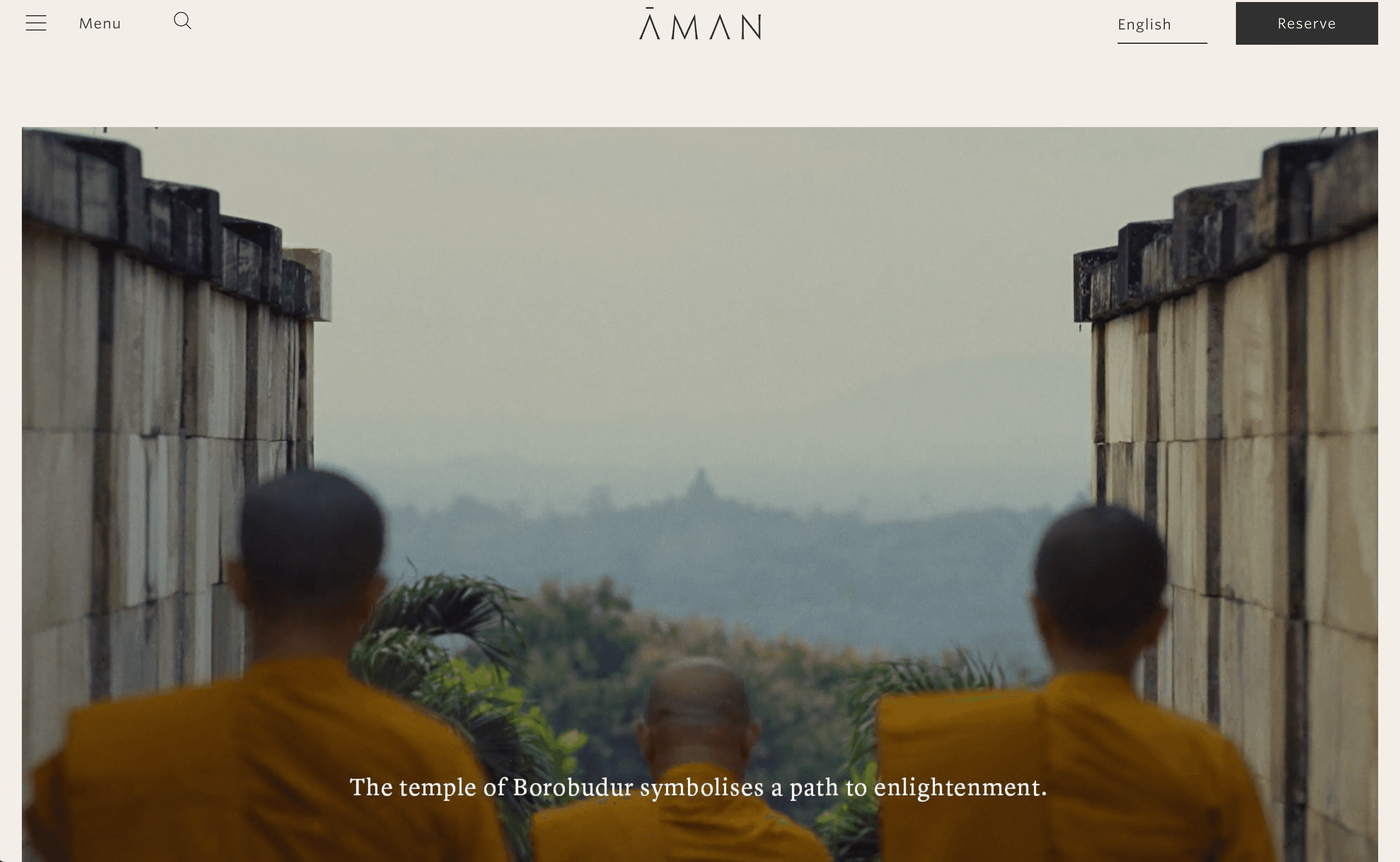
Aman
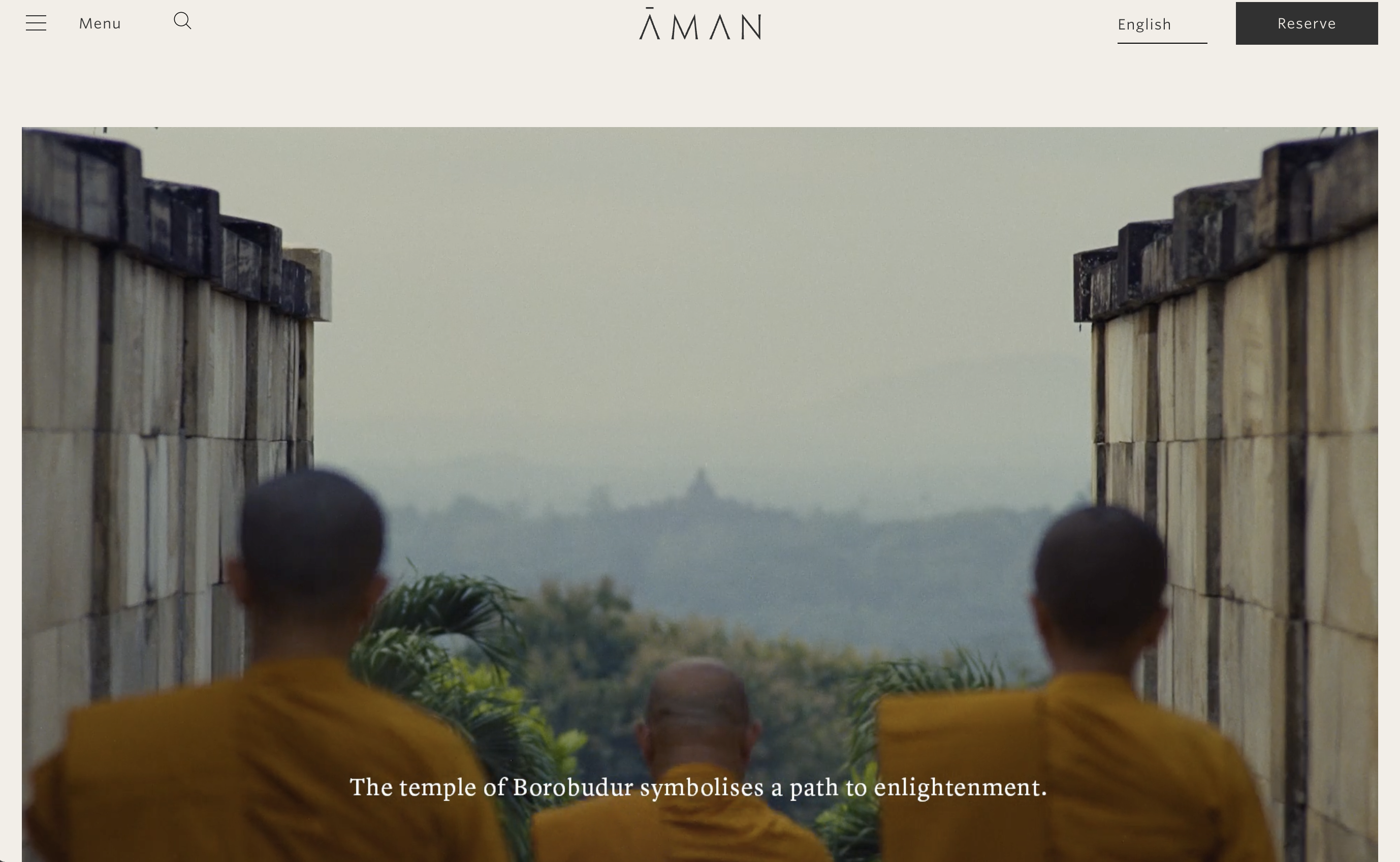
Aman is renowned for its ultra-luxury resorts and tranquil retreats located in some of the world's most breathtaking destinations. Its website perfectly reflects the brand's philosophy of understated luxury, using immersive full-screen photography, elegant typography, and minimal design to create a calm, sophisticated browsing experience that mirrors an Aman stay.
Why it works:
- Stunning full-screen imagery immediately transports visitors into each destination and creates a strong emotional connection.
- A minimalist interface keeps the focus on the landscapes, architecture, and guest experience.
- Elegant typography and generous white space reinforce the brand's premium positioning.
- Destination pages combine beautiful visuals with compelling storytelling to inspire travel rather than simply describe accommodations.
- A streamlined booking experience allows visitors to move from inspiration to reservation with ease.
Best takeaway: Luxury hotel websites should sell an experience, not just a room. Combining immersive visuals with elegant storytelling creates a memorable first impression that inspires guests to book.
Four Seasons
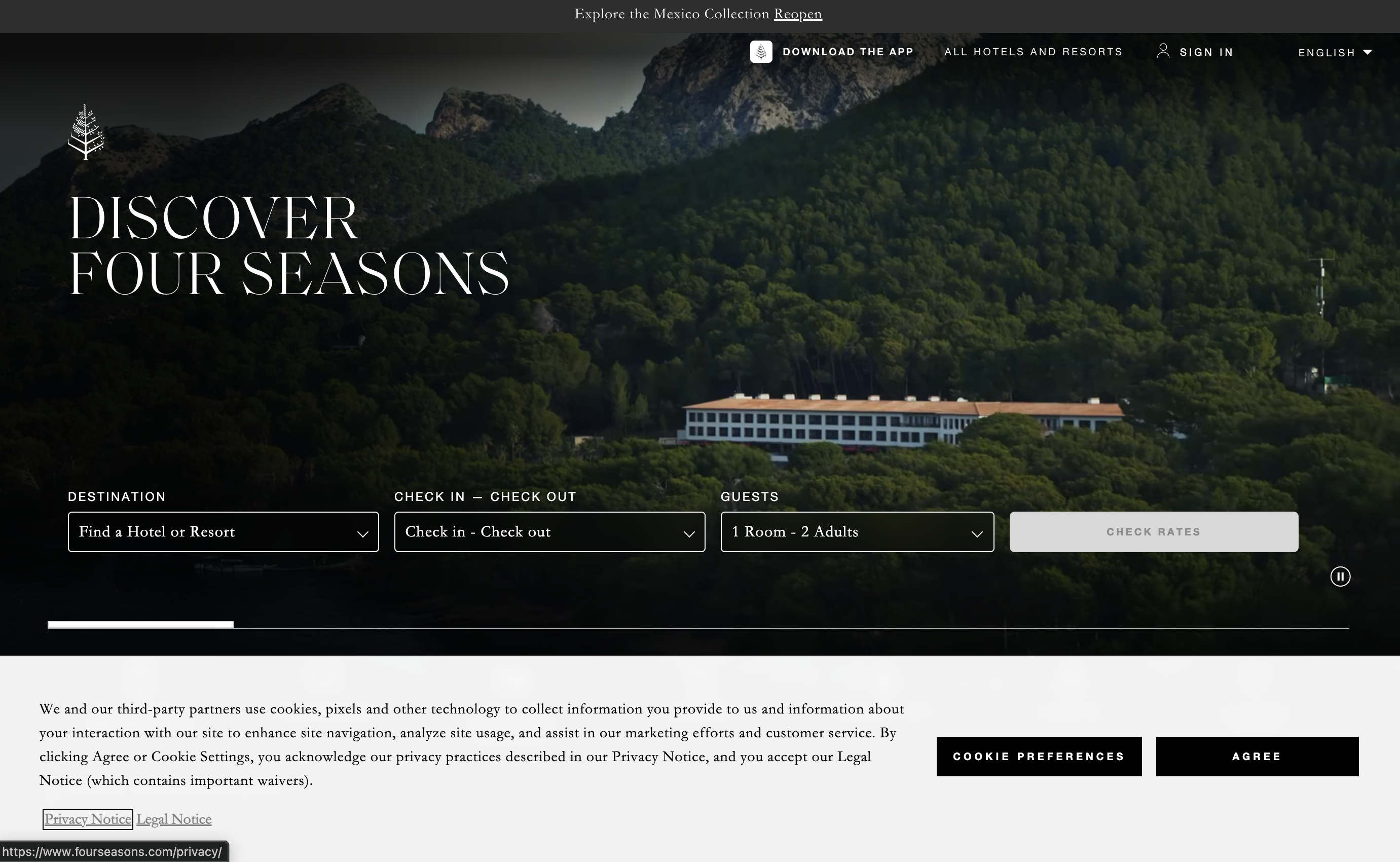
Four Seasons is one of the world's most recognized luxury hotel brands, offering exceptional hospitality across resorts, city hotels, and private residences. Its website balances sophisticated design with practical usability, allowing visitors to easily explore destinations, compare properties, and book accommodations while reinforcing the brand's reputation for world-class service.
Why it works:
- High-quality photography showcases each property's unique atmosphere while maintaining a consistent global brand identity.
- Clear navigation helps visitors browse destinations, accommodations, dining experiences, and exclusive offers with ease.
- Rich destination content encourages travelers to explore local experiences in addition to hotel amenities.
- Consistent branding and polished visuals reinforce trust and premium quality across every page.
- The booking process is simple, intuitive, and optimized for both desktop and mobile users.
Best takeaway: Great hotel websites combine inspiring visuals with practical functionality. Beautiful design should always support a smooth path from discovery to booking.
Six Senses
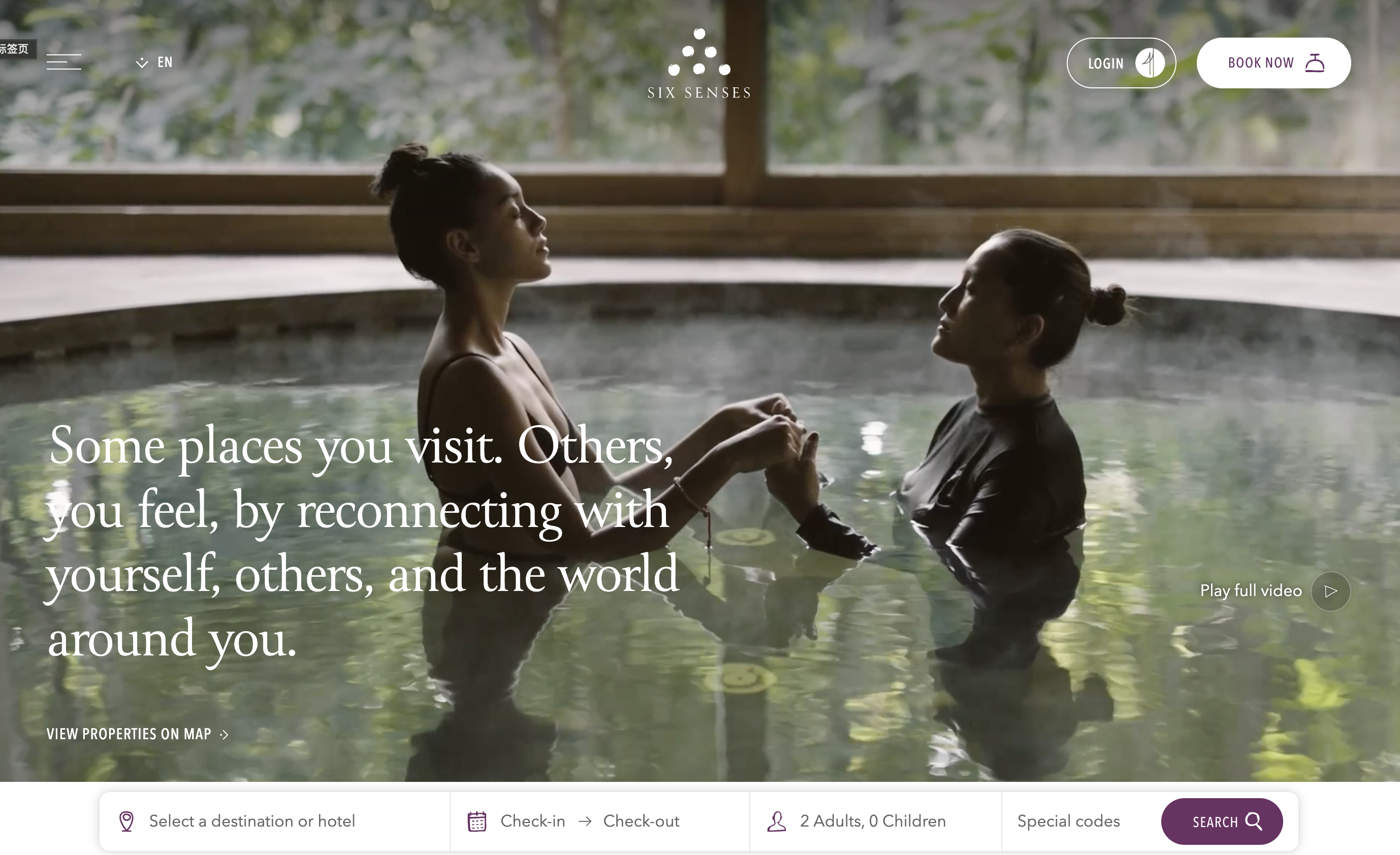
Six Senses is a luxury hospitality brand known for its wellness retreats, sustainable resorts, and immersive travel experiences. Its website reflects these values through nature-inspired visuals, calming design, and experience-focused storytelling that encourages visitors to connect with both the destination and the brand's philosophy.
Why it works:
- Natural photography and soft visual elements communicate wellness, sustainability, and relaxation from the first screen.
- Story-driven content highlights unique experiences such as spa treatments, wellness programs, and local cultural activities.
- Clean page layouts and intuitive navigation make it easy to explore resorts, destinations, and accommodations.
- Consistent branding reinforces the company's commitment to responsible luxury and memorable travel experiences.
- Clear booking options and destination pages help visitors plan their stay without unnecessary complexity.
Best takeaway: Luxury hospitality websites become more memorable when they communicate a lifestyle and brand philosophy, not just accommodation. Authentic storytelling and immersive visuals help create a stronger emotional connection with potential guests.
Boutique Hotel Websites
Boutique hotel websites stand out through personality rather than scale. Instead of relying solely on luxury, they use distinctive branding, creative design, and local storytelling to create memorable guest experiences. The best boutique hotel websites showcase each property's unique character while making it easy for visitors to explore rooms, discover nearby attractions, and book their stay with confidence.
Ace Hotel
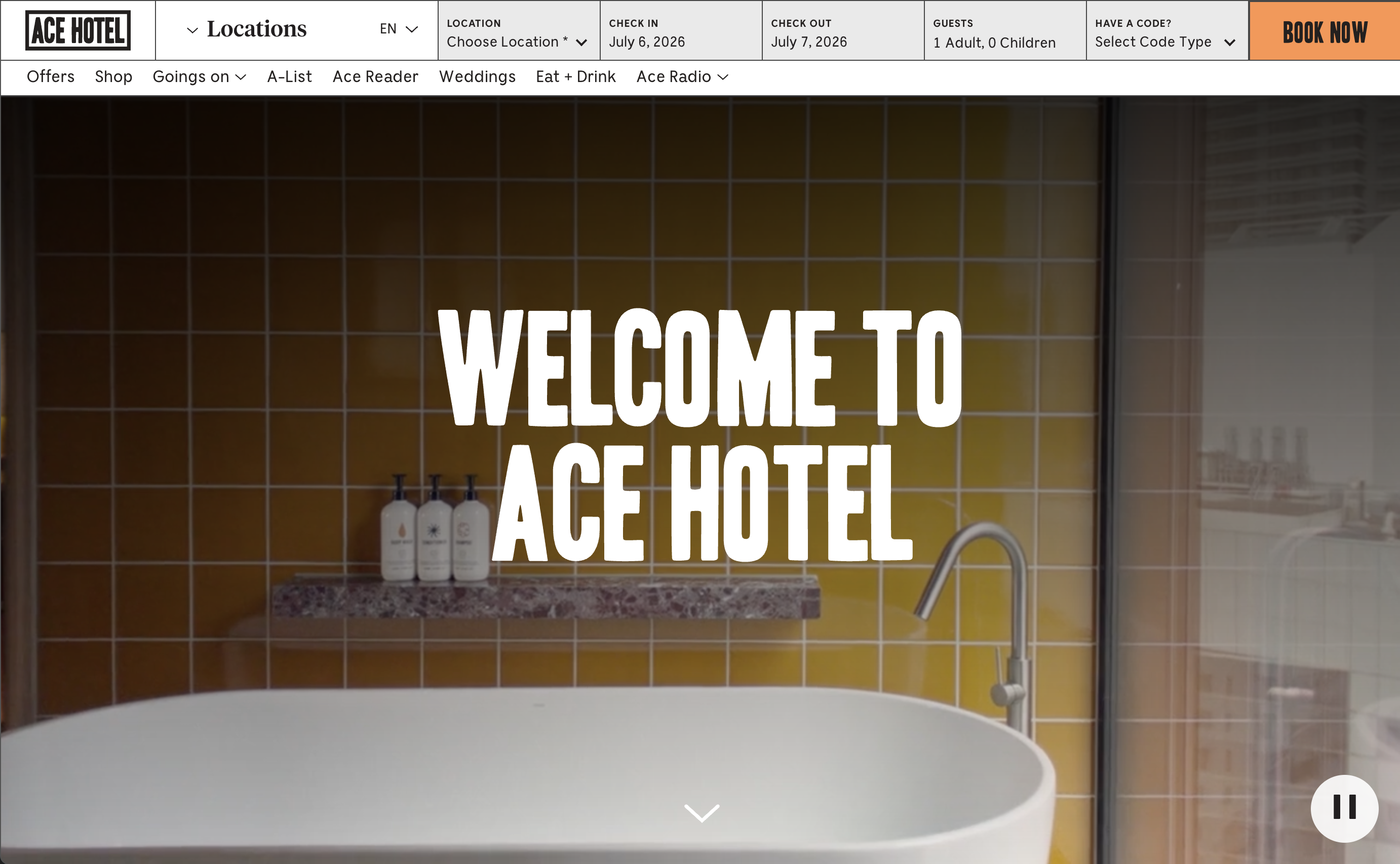
Ace Hotel is known for its creative atmosphere, community-driven spaces, and design-forward properties located in vibrant cities around the world. Its website reflects this personality through bold photography, editorial-style layouts, and storytelling that celebrates local culture as much as the hotel itself.
Why it works:
- Editorial-inspired design creates a unique browsing experience that feels more like a lifestyle magazine than a traditional hotel website.
- High-quality photography highlights both the hotel interiors and the surrounding neighborhood, encouraging guests to experience the local culture.
- Event listings, restaurant information, and community activities reinforce the brand's creative identity.
- Clean navigation allows visitors to easily browse locations, accommodations, and upcoming experiences.
- Consistent branding gives every property its own personality while maintaining a recognizable overall identity.
Best takeaway: Boutique hotel websites should showcase more than rooms—they should tell the story of the destination and the lifestyle guests can experience during their stay.
The Hoxton
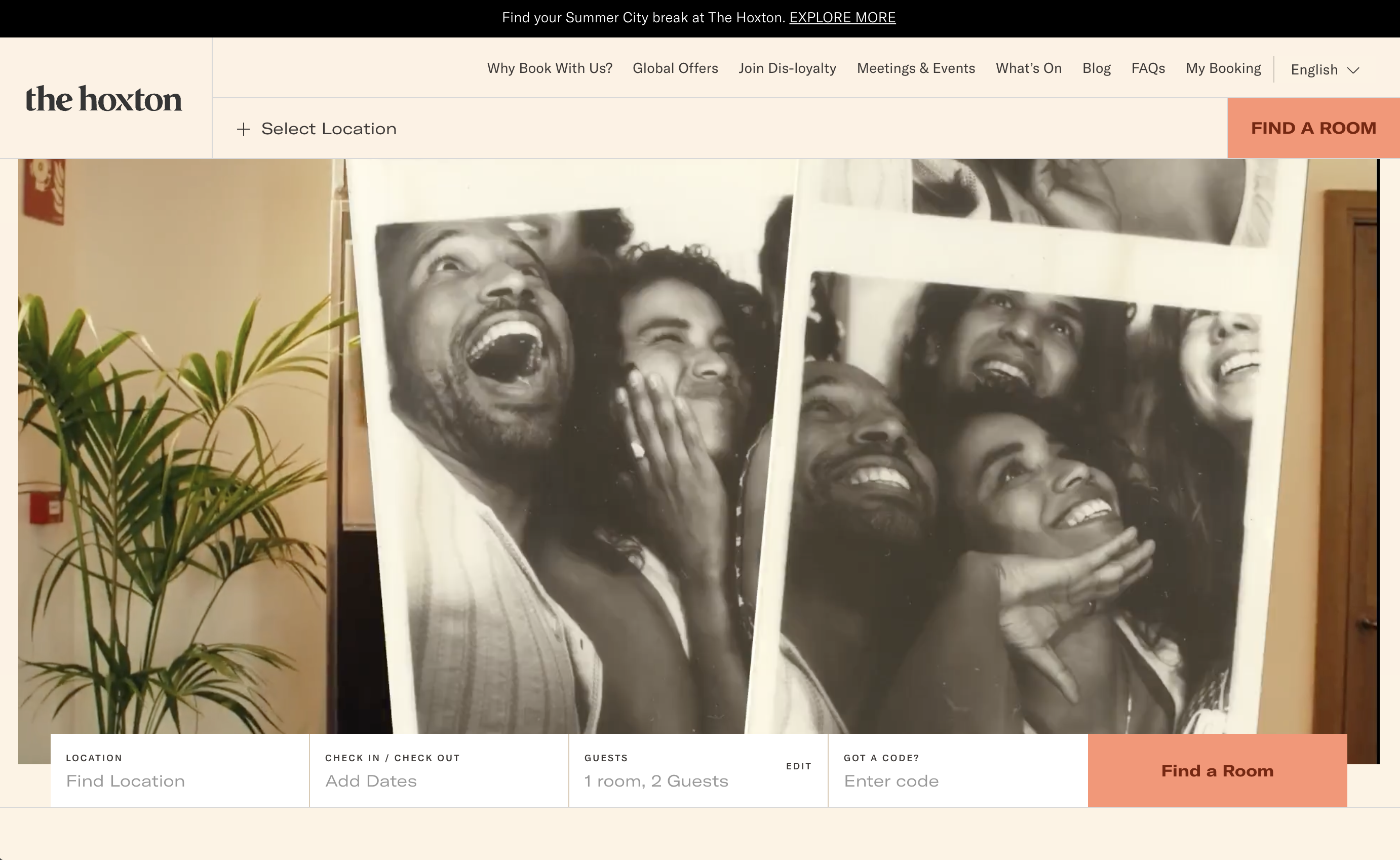
The Hoxton is a collection of boutique hotels that blends stylish accommodations with vibrant social spaces, local dining, and neighborhood experiences. Its website combines contemporary design with engaging content, making every destination feel welcoming, modern, and full of character.
Why it works:
- Beautiful photography captures not only guest rooms but also restaurants, coworking spaces, and community events.
- Destination pages introduce local attractions and neighborhood guides, inspiring guests to explore beyond the hotel.
- A modern layout and intuitive navigation make it easy to compare locations and book accommodations.
- Consistent branding creates a cohesive experience while allowing each hotel to reflect its own local identity.
- Clear booking calls to action keep the reservation process simple and accessible.
Best takeaway: Travelers choose boutique hotels for unique experiences. Highlighting local culture, lifestyle, and community can make your website more engaging and memorable.
21c Museum Hotels
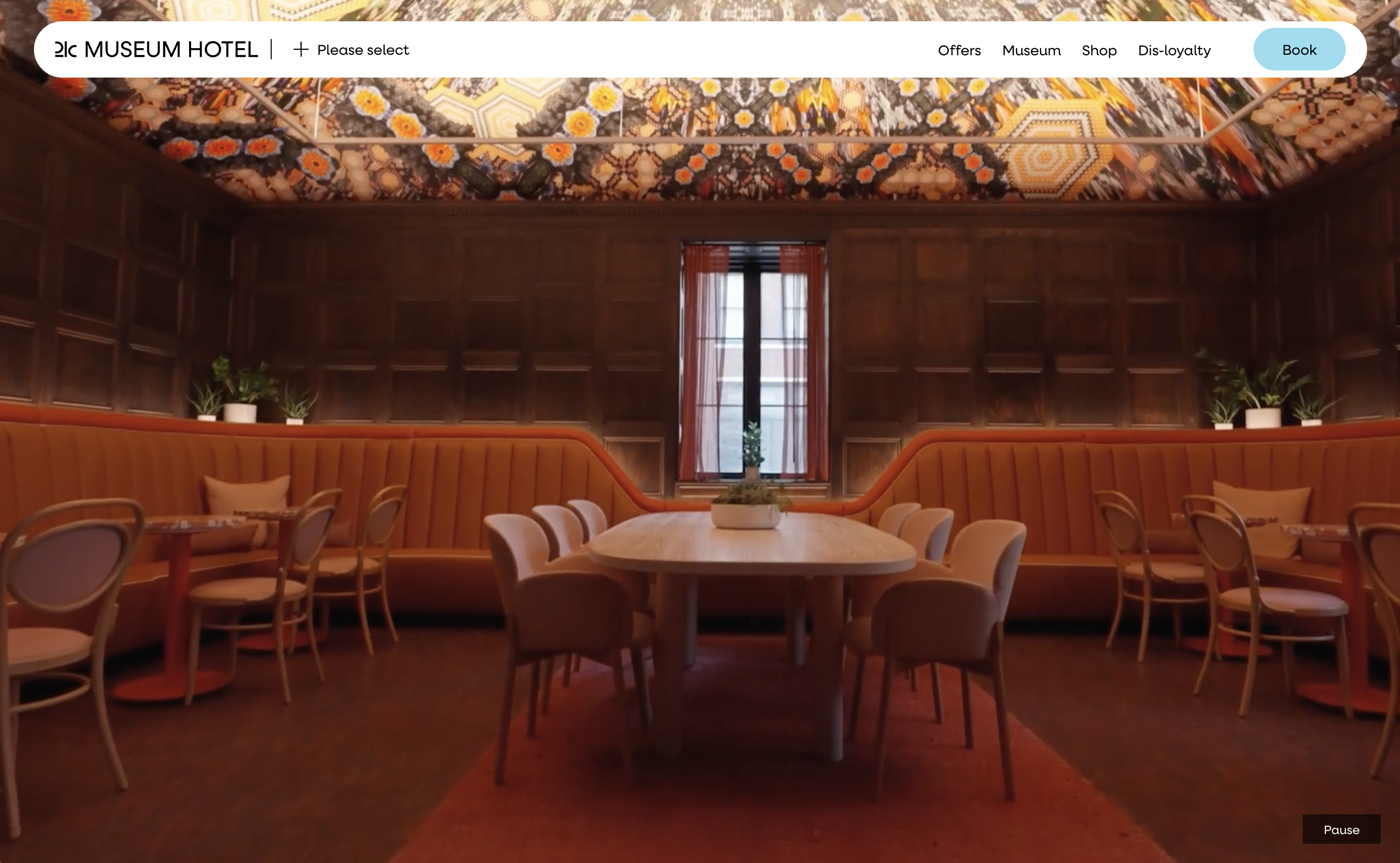
21c Museum Hotels combines boutique accommodations with contemporary art museums, offering guests a stay that blends hospitality, culture, and creativity. Its website reflects this unique concept through immersive visuals, artistic branding, and content that balances hotel information with cultural experiences.
Why it works:
- The homepage immediately communicates the hotel's distinctive identity by integrating art into the overall visual experience.
- Rich photography showcases guest rooms, museum exhibitions, restaurants, and event spaces, giving visitors a complete picture of the brand.
- Story-driven content highlights exhibitions and local cultural events, encouraging guests to engage with more than just the hotel.
- Clear navigation makes it easy to explore locations, accommodations, dining, and upcoming programs.
- A streamlined booking experience allows visitors to reserve a stay without interrupting the storytelling experience.
Best takeaway: A memorable boutique hotel website reflects what makes the brand unique. Combining visual storytelling with a strong sense of identity helps create a lasting impression and encourages direct bookings.
Resort & Lifestyle Hotel Websites
Resort and lifestyle hotel websites are designed to inspire travelers long before they make a reservation. Instead of focusing solely on accommodations, they highlight memorable experiences, wellness activities, local culture, and stunning destinations. Through immersive photography, lifestyle storytelling, and intuitive booking journeys, these websites encourage visitors to imagine their next getaway while making it easy to plan and book their stay.
Habitas
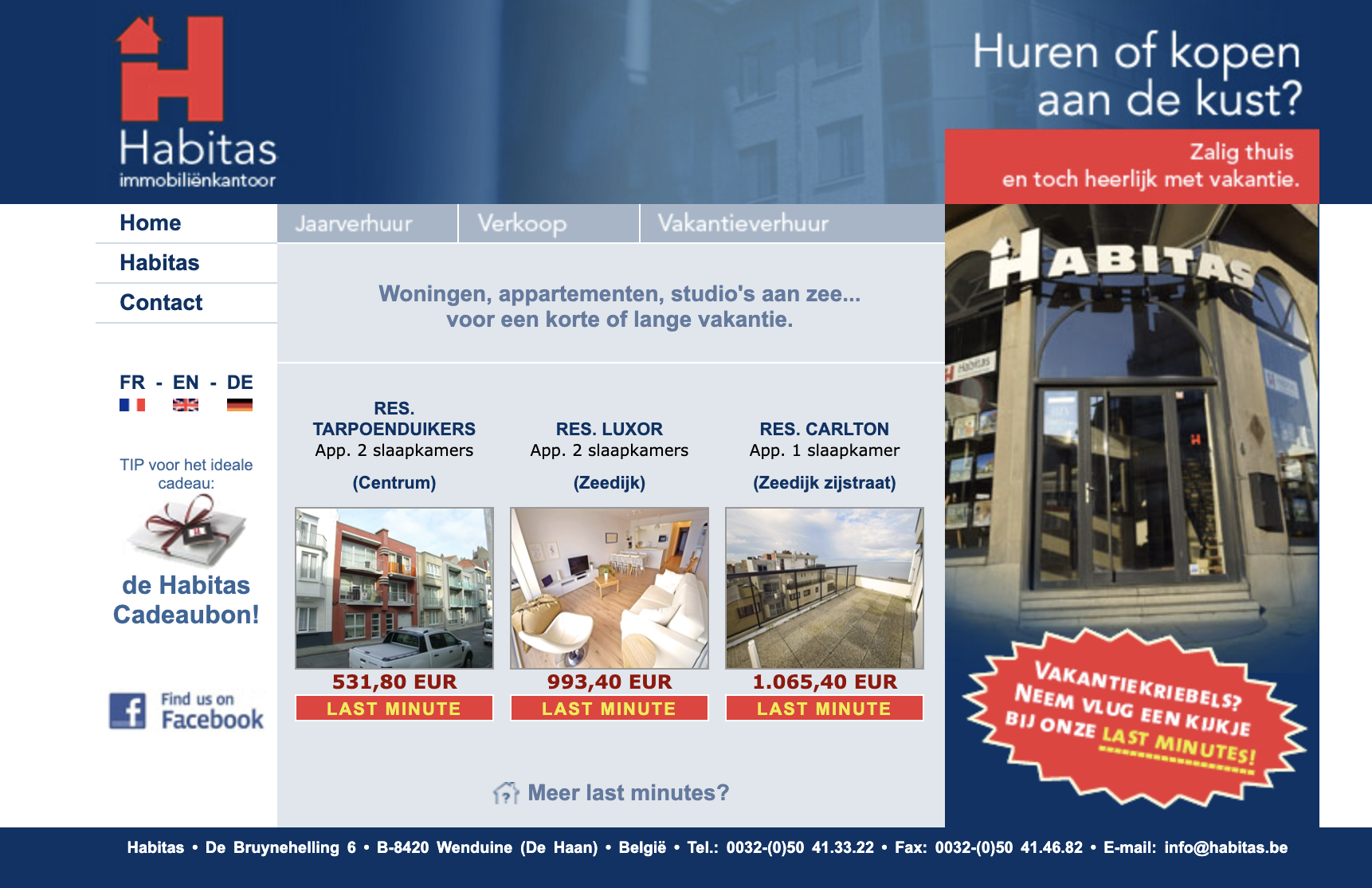
Habitas is a global hospitality brand that creates immersive travel experiences centered around community, wellness, and meaningful connections. Its website reflects this philosophy through cinematic imagery, inspiring storytelling, and destination-focused content that encourages visitors to experience each location beyond the hotel itself.
Why it works:
- Full-screen photography and videos immediately immerse visitors in the atmosphere of each destination.
- Storytelling emphasizes community, wellness, and local culture instead of simply promoting rooms and amenities.
- Clean navigation allows users to browse destinations, experiences, and accommodations with ease.
- Consistent branding creates a recognizable lifestyle identity across every property.
- Simple booking calls to action guide visitors naturally from inspiration to reservation.
Best takeaway: Resort websites should inspire travelers emotionally before asking them to book. Combining immersive visuals with authentic storytelling creates a stronger connection with potential guests.
COMO Hotels and Resorts
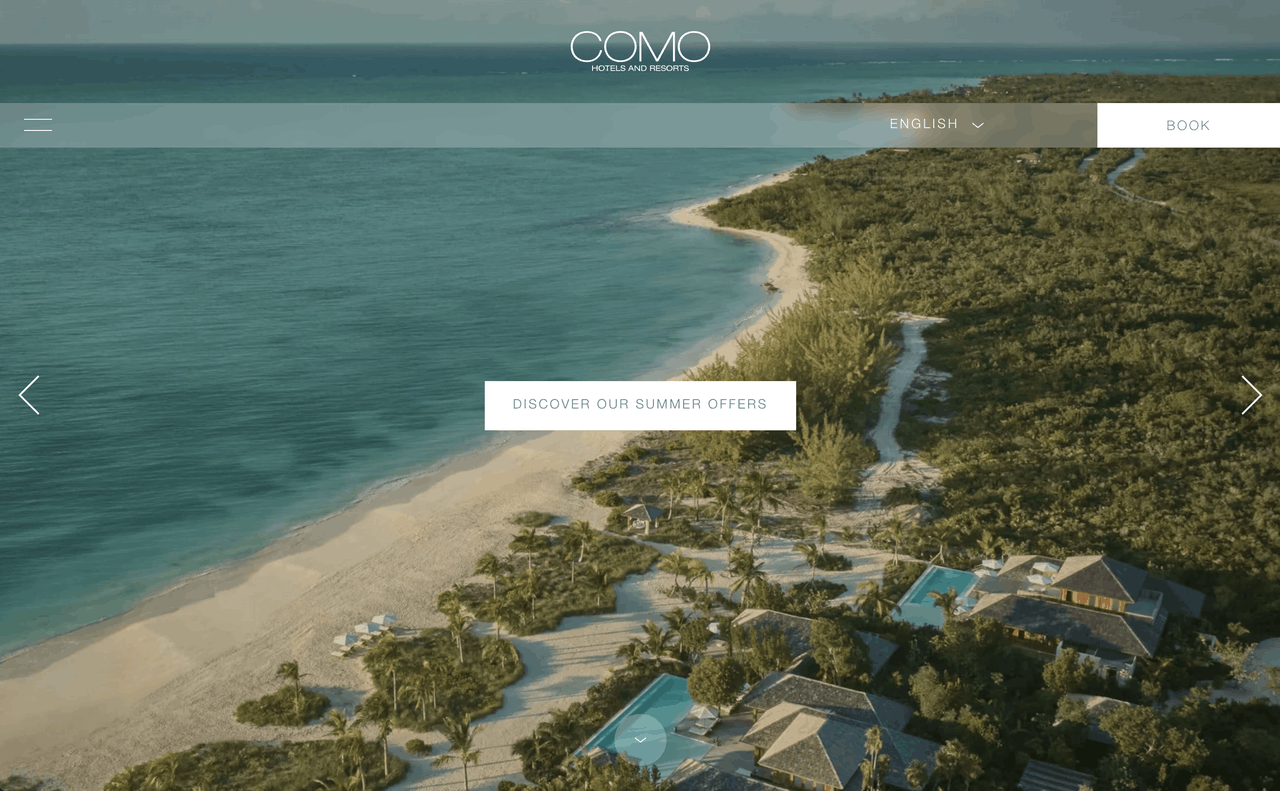
COMO Hotels and Resorts is a luxury hospitality brand known for combining elegant accommodations with wellness, fine dining, and curated travel experiences. Its website showcases these offerings through refined design, destination-focused storytelling, and beautiful imagery that reflects the brand's calm and sophisticated identity.
Why it works:
- Elegant photography highlights both the destinations and the guest experience, creating an aspirational first impression.
- Dedicated sections for wellness, dining, and local experiences encourage visitors to explore more than just accommodations.
- A clean information structure makes it easy to browse resorts, offers, and travel inspiration.
- Consistent visual branding reinforces the company's premium positioning across every page.
- A streamlined booking experience ensures guests can quickly move from inspiration to reservation.
Best takeaway: Lifestyle hotel websites should communicate a complete travel experience. Showcasing wellness, dining, and destination experiences alongside accommodations helps guests envision a richer and more memorable stay.
Modern Hotel Booking Websites
Modern hotel booking websites prioritize speed, convenience, and a seamless user experience. They combine clean interfaces, intuitive navigation, and mobile-friendly design to help travelers quickly compare options, explore accommodations, and complete reservations. The best examples reduce friction throughout the booking journey while maintaining a strong brand identity and engaging visual experience.
citizenM
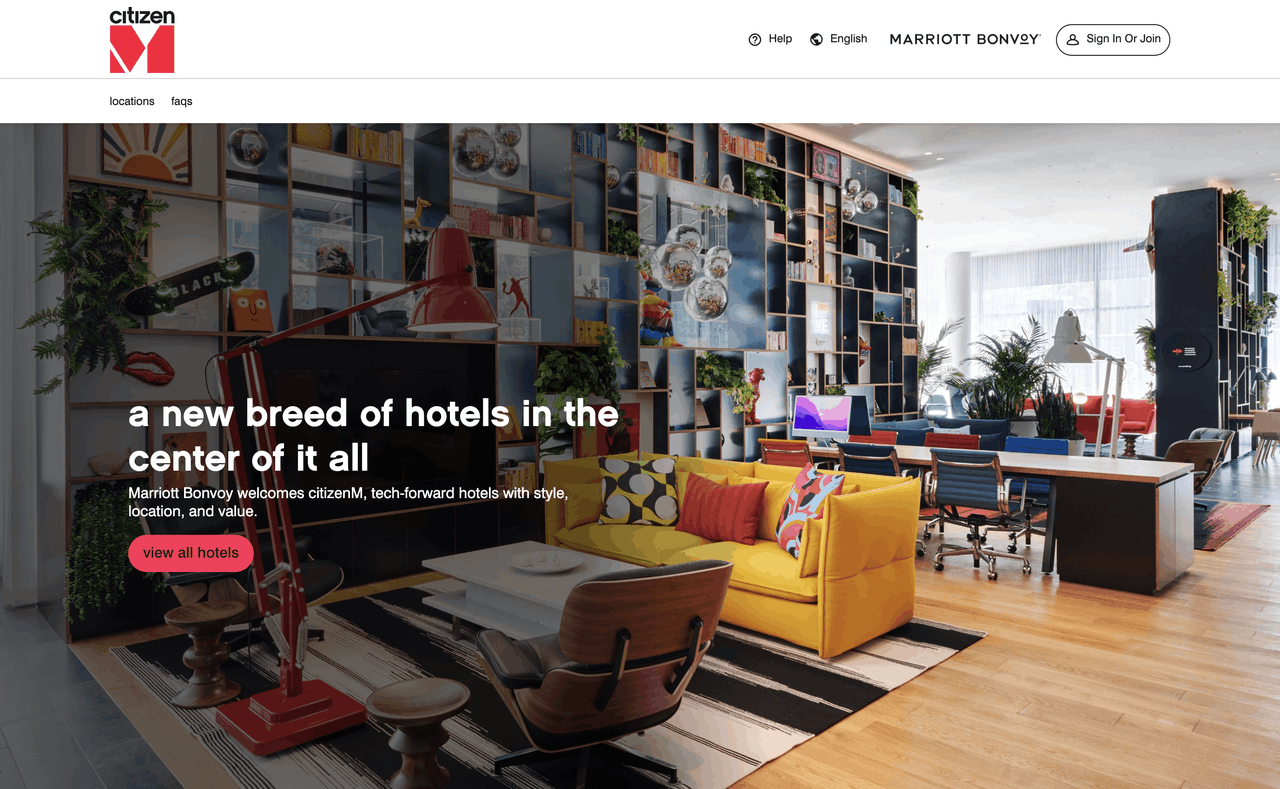
citizenM is a modern hotel brand designed for today's travelers, offering smart rooms, self-service technology, and stylish communal spaces. Its website reflects this innovative approach with bold visuals, concise messaging, and a streamlined booking experience that makes planning a stay quick and effortless.
Why it works:
- Modern layouts and vibrant photography communicate the brand's contemporary personality.
- Clear room information and hotel features help visitors quickly compare locations and amenities.
- Mobile-friendly navigation and booking tools provide a smooth experience across all devices.
- Benefit-focused messaging highlights convenience, technology, and flexible travel.
- Prominent booking buttons encourage direct reservations with minimal friction.
Best takeaway: A hotel website should make booking feel effortless. Clear information, intuitive navigation, and a streamlined reservation process can significantly improve the guest experience.
Zoku
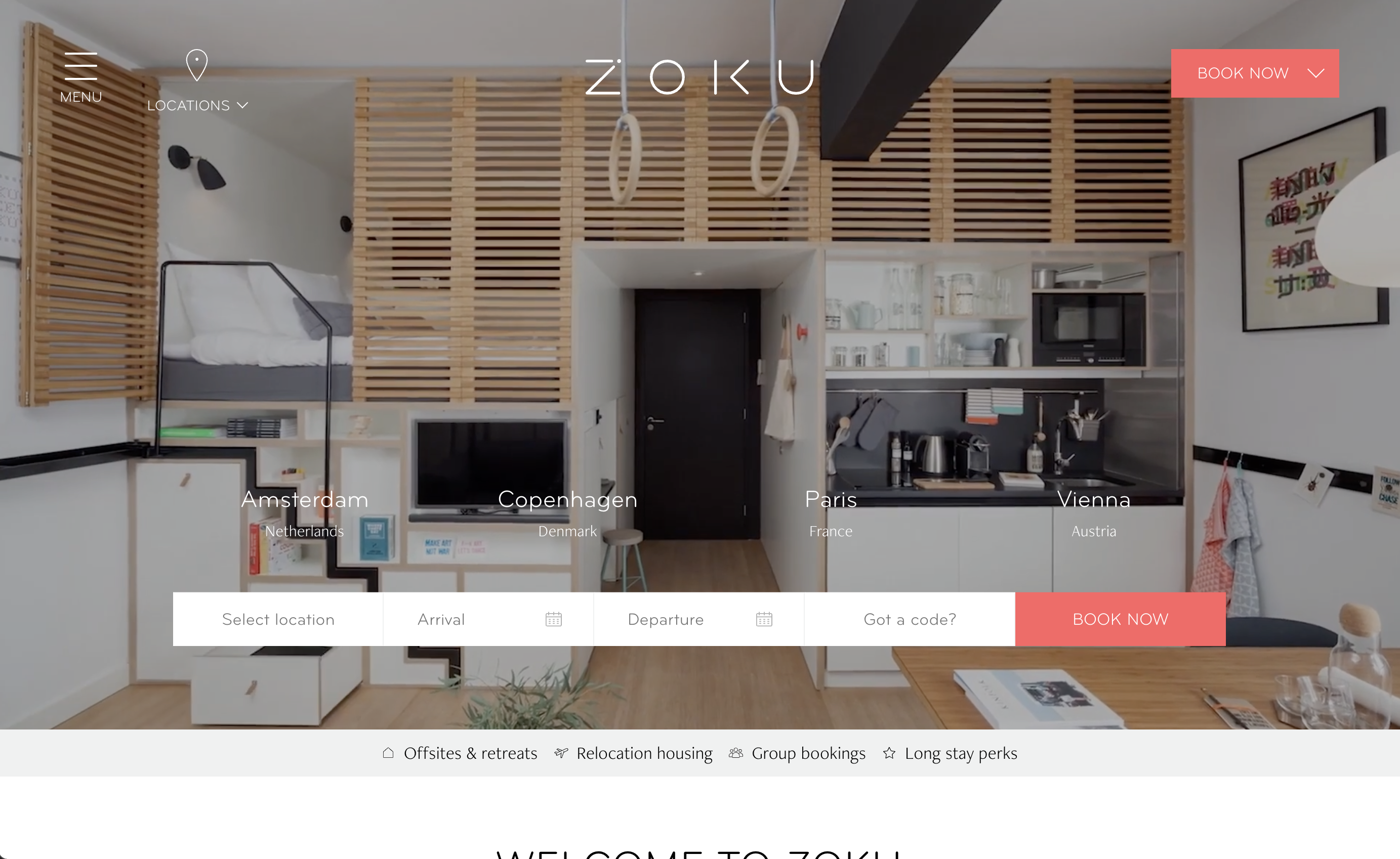
Zoku offers apartment-style accommodations designed for business travelers, digital nomads, and long-stay guests. Its website reflects this unique positioning by combining modern visuals, flexible workspace concepts, and community-focused storytelling that clearly communicates the lifestyle Zoku provides.
Why it works:
- The homepage immediately explains Zoku's unique concept, helping visitors understand how it differs from traditional hotels.
- High-quality photography showcases living spaces, coworking areas, and social environments that appeal to modern travelers.
- Well-organized content highlights accommodations, amenities, and local experiences in a clear, engaging way.
- Consistent branding reinforces Zoku's identity as a home-office hybrid rather than a conventional hotel.
- A simple booking flow and responsive design make reservations fast and convenient.
Best takeaway: Clearly communicating your unique value proposition helps your hotel stand out. Pairing distinctive branding with a seamless booking experience creates a stronger connection with your target audience.
What These Hotel Website Examples Can Teach You
Create a Memorable First Impression
A hotel's website should immediately capture visitors' attention with stunning visuals, thoughtful branding, and a welcoming atmosphere. High-quality photography, engaging headlines, and a clear brand identity help guests connect emotionally with your property and encourage them to continue exploring.
Make Booking Fast and Effortless
A seamless booking experience is essential for increasing direct reservations. The best hotel websites make it easy for guests to check availability, compare room options, and complete a reservation with minimal steps. Clear calls to action and intuitive navigation help reduce friction throughout the booking journey.
Showcase the Guest Experience Through Visuals
Professional photography, videos, and virtual tours allow visitors to experience the hotel before they arrive. Displaying guest rooms, amenities, dining options, and nearby attractions helps potential guests imagine their stay and builds excitement about booking.
Build Trust with Reviews and Local Stories
Guest testimonials, awards, and authentic local recommendations help establish credibility and make your hotel stand out. Sharing nearby attractions, unique experiences, and destination guides not only builds trust but also demonstrates the value of staying at your property, encouraging guests to book directly.
Frequently Asked Questions
What should a hotel website include?
A hotel website should include high-quality photos, room descriptions, pricing or availability information, amenities, location details, guest reviews, contact information, and a secure online booking system. It should also provide clear calls to action and a mobile-friendly experience to help guests easily make reservations.
How can a hotel website increase direct bookings?
A hotel website can increase direct bookings by offering a simple reservation process, showcasing compelling visuals, highlighting exclusive offers, and building trust through guest reviews and testimonials. Optimizing the website for SEO, fast loading speeds, and mobile devices can also attract more visitors and improve conversion rates.
Can I build a hotel website without coding?
Yes. Modern AI-powered website builders and no-code platforms make it easy to create a professional hotel website without any coding experience like Wegic. With customizable templates, drag-and-drop editing, and built-in booking features, you can quickly launch a website that reflects your brand and provides an excellent guest experience.