Perché ogni terapeuta ha bisogno di un sito web professionale
Un sito web professionale è uno strumento essenziale per i terapeuti che vogliono connettersi con potenziali clienti e far crescere il proprio studio. Per molte persone che cercano supporto per la salute mentale, il sito web di un terapeuta è spesso la prima impressione prima di mettersi in contatto. Un sito ben progettato può comunicare chiaramente le tue specializzazioni, l'approccio terapeutico, le credenziali e la disponibilità, creando al contempo un ambiente accogliente che aiuta i visitatori a sentirsi sicuri e compresi. Rendendo facile conoscere i tuoi servizi, prenotare appuntamenti e accedere a risorse utili, un sito web professionale per terapeuti può costruire fiducia, ridurre l'incertezza e incoraggiare più persone a fare il primo passo verso la terapia.
Cosa rende i migliori siti web per terapeuti unici
I migliori siti web per terapeuti combinano un design curato con una comunicazione chiara e focalizzata sul cliente. Creano un'esperienza calma e accogliente attraverso layout puliti, immagini rilassanti e contenuti facili da leggere, fornendo informazioni essenziali su servizi, specializzazioni, tariffe e opzioni di appuntamento. I siti web per terapeuti di qualità costruiscono anche credibilità evidenziando qualifiche professionali, valori orientati al cliente e domande frequenti che affrontano preoccupazioni comuni. Con una navigazione intuitiva, design responsive e chiare call to action, questi siti aiutano i visitatori a sentirsi informati, a proprio agio e sicuri nel chiedere supporto.
10 migliori esempi di siti web per terapeuti
Un sito web per terapeuti ben progettato dovrebbe fare più che presentare uno studio: dovrebbe aiutare i visitatori a sentirsi compresi, supportati e sicuri nel mettersi in contatto. I seguenti esempi di siti web per terapeuti mostrano diversi approcci al personal branding, storytelling, esperienza utente e costruzione della fiducia. Che tu stia creando un sito per uno studio privato o ridisegnando uno esistente, questi esempi offrono idee pratiche per ispirare la tua presenza online.
Siti web per terapeuti con personal brand
I siti web per terapeuti con personal brand si concentrano sulla costruzione di connessioni umane genuine attraverso uno storytelling autentico, competenza professionale e un design accessibile. Piuttosto che enfatizzare solo i servizi, questi siti mettono in evidenza la filosofia, l’esperienza e la voce unica del terapeuta, aiutando i potenziali clienti a sentirsi a proprio agio prima di prenotare la prima seduta. Gli esempi seguenti mostrano come un personal branding forte possa creare fiducia mantenendo una presenza online professionale.
Lori Gottlieb
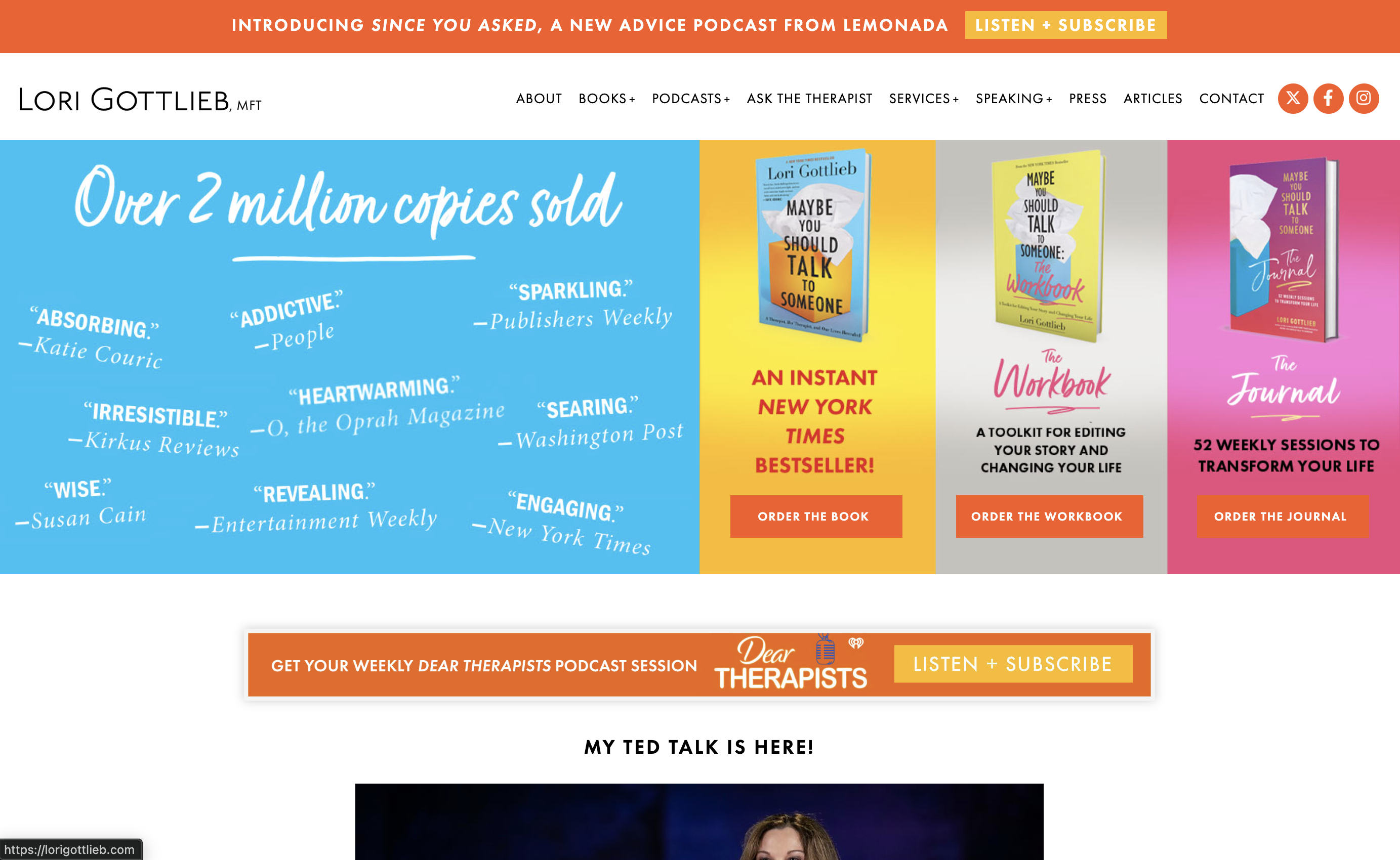
Lori Gottlieb è una psicoterapeuta, autrice bestseller e speaker pubblica il cui sito web unisce credibilità professionale a una personalità calda e accessibile. Invece di concentrarsi solo sui servizi di terapia, il sito mette in risalto i suoi libri, le apparizioni in podcast, gli interventi pubblici e le apparizioni sui media, creando un personal brand completo che ispira fiducia mostrando la sua competenza.
Perché funziona:
- La homepage stabilisce immediatamente l'autorità attraverso libri bestseller, riconoscimenti mediatici e credenziali professionali.
- Fotografie calde e testi conversazionali creano un'esperienza accessibile che appare sia personale che professionale.
- Una navigazione chiara rende facile esplorare libri, eventi pubblici, articoli e risorse legate alla terapia.
- Un branding coerente rafforza la voce di Lori in ogni sezione del sito web.
- Call to action ben posizionate incoraggiano i visitatori a esplorare il suo lavoro e saperne di più senza risultare troppo promozionali.
Lezione migliore: Il sito web di un terapeuta dovrebbe mettere in evidenza la competenza mantenendo un approccio accessibile. Combinare risultati professionali con uno storytelling autentico aiuta a costruire fiducia prima della prima conversazione.
Esther Perel
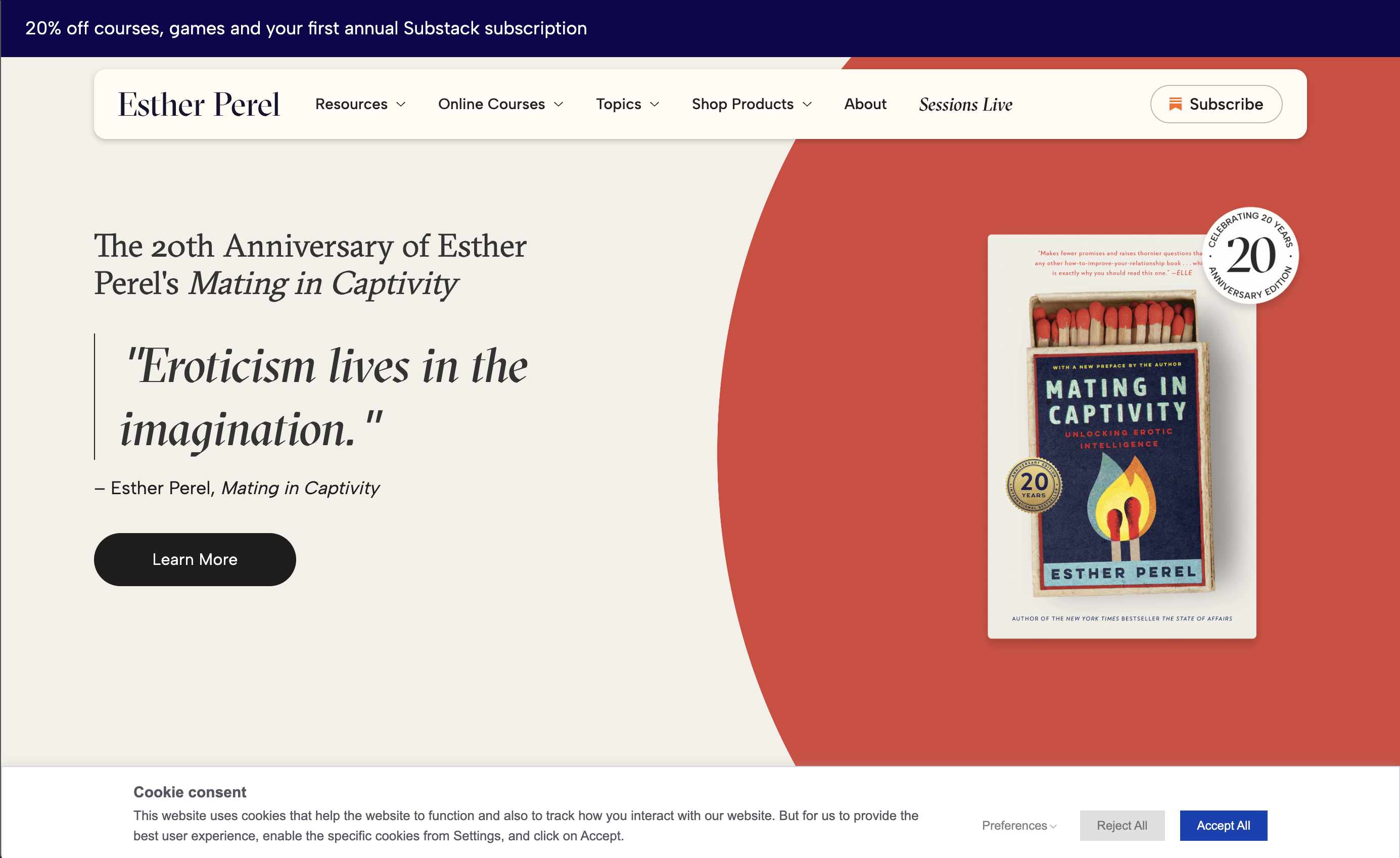
Esther Perel è una psicoterapeuta e esperta di relazioni riconosciuta a livello mondiale, il cui sito riflette un personal brand sofisticato e basato sui contenuti. Piuttosto che concentrarsi sui tradizionali servizi di terapia, il sito funge da centro per podcast, libri, corsi e risorse educative, permettendo ai visitatori di interagire con la sua competenza attraverso molteplici canali.
Perché funziona:
- Un design visivo elegante crea una prima impressione premium e affidabile.
- Contenuti educativi—tra cui podcast, libri e workshop—posizionano Esther come leader di pensiero nella terapia delle relazioni.
- Una chiara organizzazione dei contenuti aiuta i visitatori a scoprire rapidamente risorse in linea con i loro interessi.
- Un branding coerente rafforza il riconoscimento attraverso diversi tipi di media.
- Call to action strategiche guidano i visitatori verso newsletter, eventi e opportunità di apprendimento.
Lezione migliore: I contenuti educativi possono essere potenti quanto le pagine di servizi. Condividere risorse di valore aiuta i terapeuti a costruire credibilità, raggiungere un pubblico più ampio e favorire una fiducia a lungo termine.
Nedra Glover Tawwab
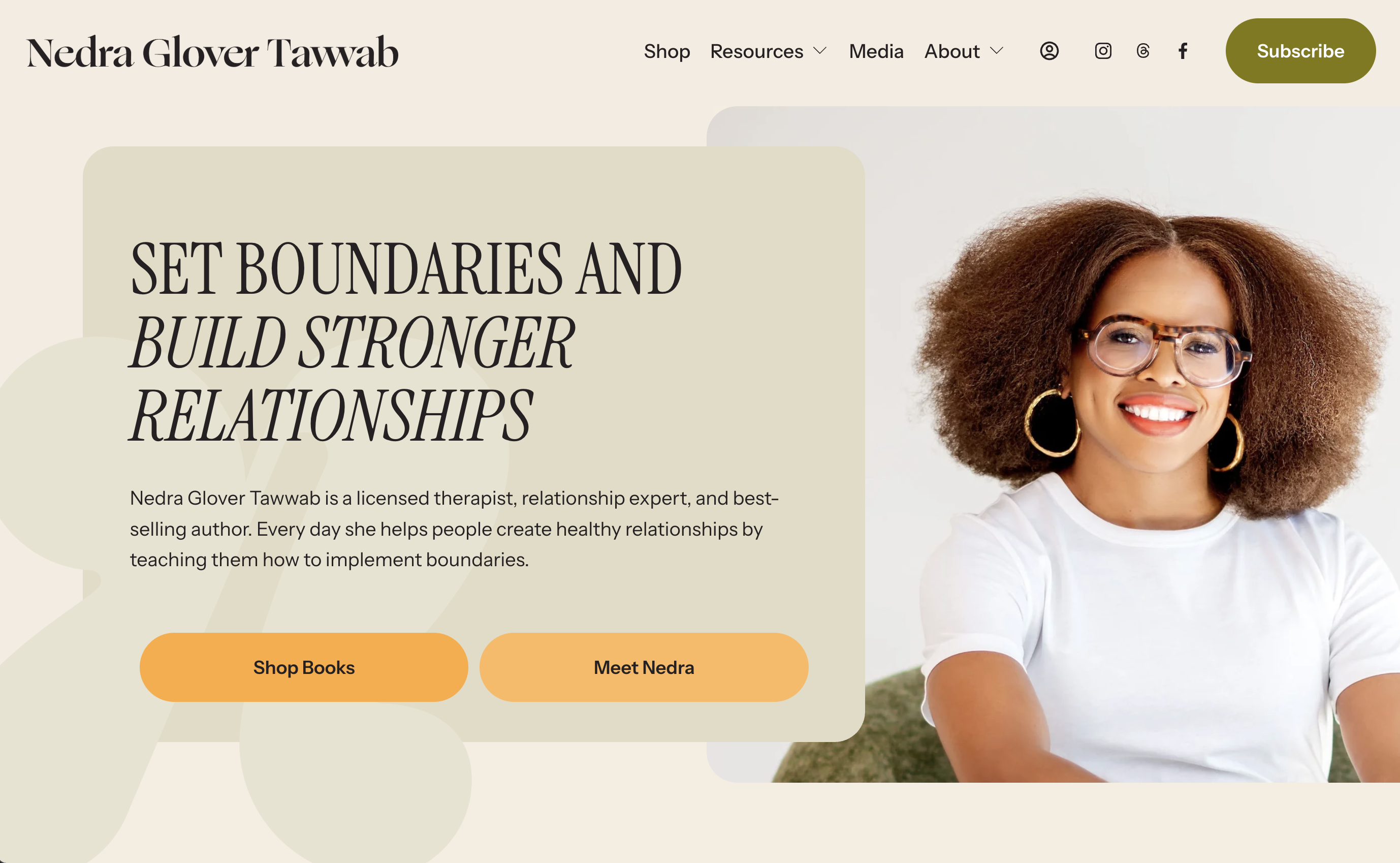
Nedra Glover Tawwab è una terapista autorizzata, autrice bestseller ed esperta di relazioni nota per rendere accessibili i temi della salute mentale attraverso consigli chiari e pratici. Il suo sito web combina un design moderno con contenuti riflessivi, creando uno spazio accogliente dove i visitatori possono esplorare libri, articoli, interventi pubblici e risorse per il benessere, collegandosi al suo brand personale.
Perché funziona:
- Un design pulito e minimalista mantiene l'attenzione su contenuti utili e risorse educative.
- Un forte personal branding crea coerenza tra libri, apparizioni mediatiche e piattaforme online.
- Contenuti facili da navigare incoraggiano i visitatori a esplorare articoli, libri e opportunità di intervento.
- Fotografia professionale e immagini rilassanti creano un'atmosfera calda e di supporto.
- Chiare call to action rendono semplice iscriversi, approfondire o interagire con il suo lavoro.
Principale insegnamento: Semplicità e coerenza possono rendere un sito web di un terapista più invitante. Un design pulito abbinato a contenuti educativi di valore aiuta a costruire connessioni significative con potenziali clienti.
Siti web per terapisti in studio privato
I siti web per terapisti in studio privato sono progettati per creare un'esperienza accogliente e rassicurante per i potenziali clienti. Solitamente si concentrano nel spiegare chiaramente i servizi di terapia, presentare l'approccio del terapista e facilitare la prenotazione di un appuntamento. I migliori esempi combinano messaggi compassionevoli, immagini rilassanti e una navigazione intuitiva per aiutare i visitatori a sentirsi a loro agio nel fare il primo passo verso il supporto.
The Expansive Group
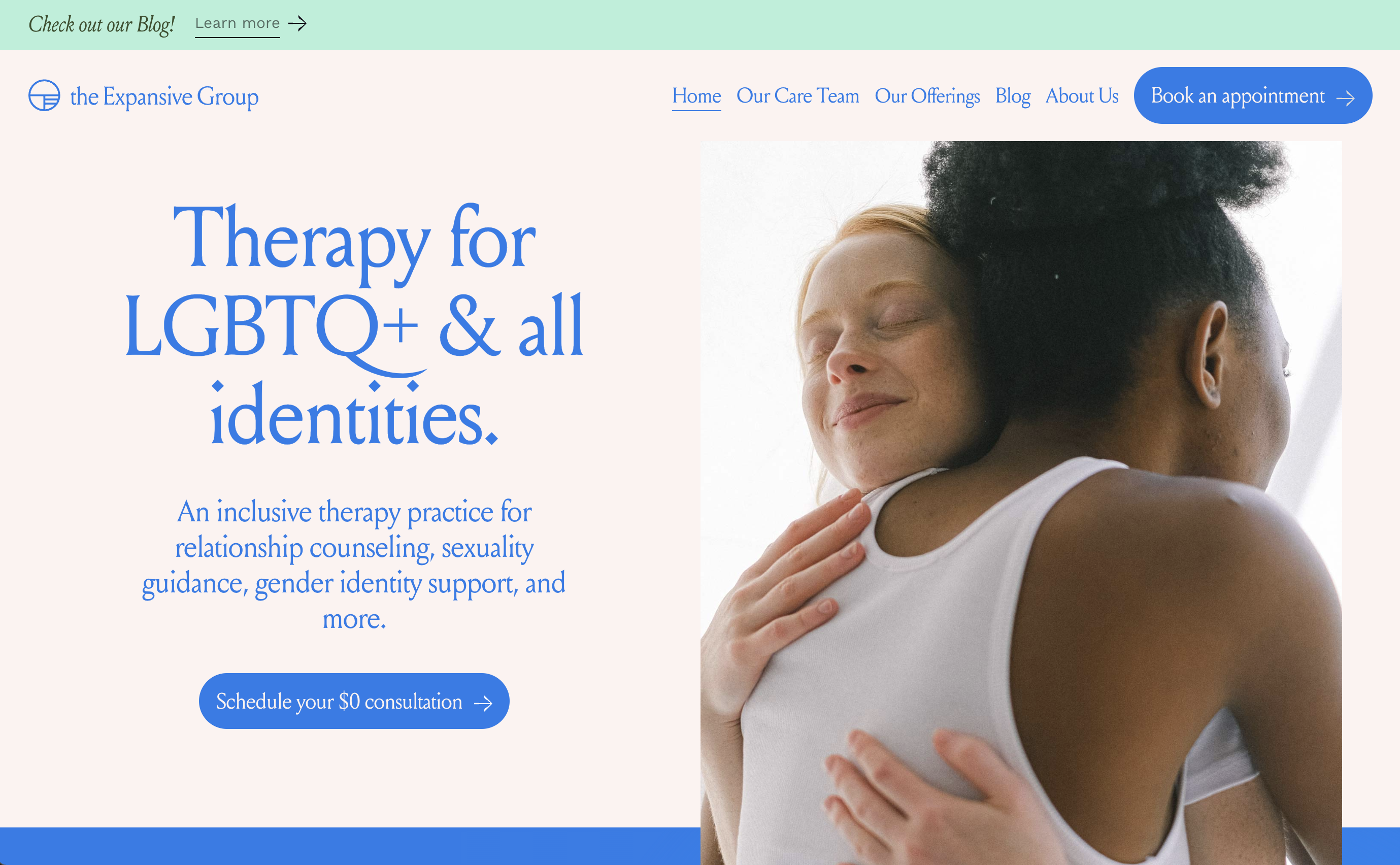
The Expansive Group è uno studio di psicoterapia moderno che offre terapia individuale, di coppia e familiare in un ambiente caldo e di supporto. Il suo sito utilizza immagini rilassanti, messaggi ponderati e un layout pulito per creare un immediato senso di fiducia, aiutando i visitatori a comprendere facilmente i servizi disponibili.
Perché funziona:
- Colori tenui e ampi spazi bianchi creano un'atmosfera calma e accogliente.
- Descrizioni chiare dei servizi aiutano i visitatori a identificare rapidamente il tipo di terapia più adatto alle loro esigenze.
- I profili dei terapisti presentano ogni clinico con un linguaggio professionale ma accessibile, rendendo lo studio più personale.
- Una navigazione intuitiva permette agli utenti di esplorare servizi, specialità e informazioni sugli appuntamenti senza confusione.
- Opzioni di prenotazione e contatto ben visibili incoraggiano i visitatori a fare il passo successivo con fiducia.
Principale insegnamento: Un sito di studio privato dovrebbe far sentire i potenziali clienti sicuri e supportati fin dal loro arrivo. Un design calmo, messaggi compassionevoli e un processo di prenotazione chiaro possono ridurre significativamente le barriere alla ricerca di terapia.
Grow Therapy
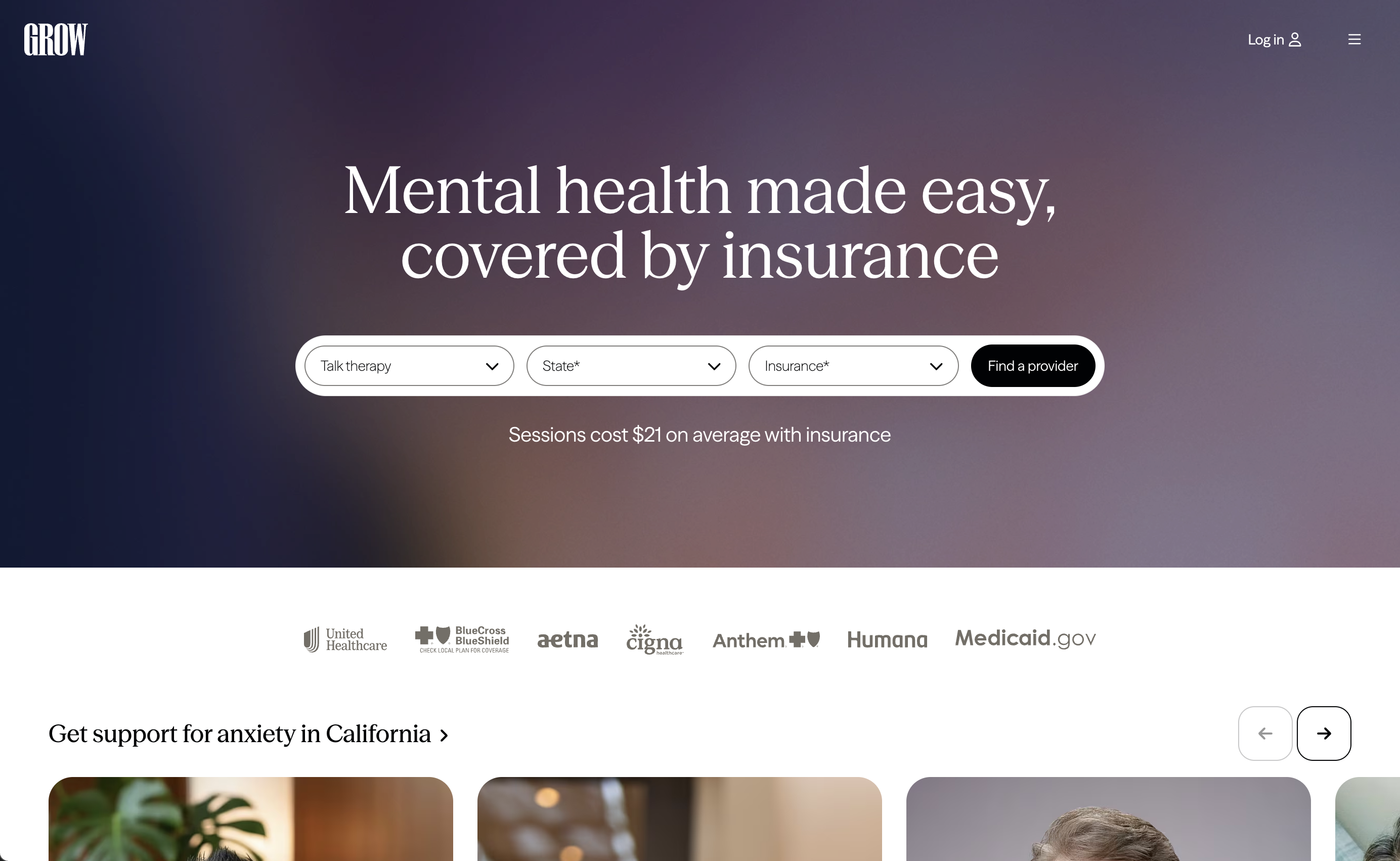
Grow Therapy è una piattaforma online che collega individui con terapisti autorizzati in una vasta gamma di specialità. Il suo sito enfatizza accessibilità e comodità, aiutando i visitatori a cercare rapidamente terapisti in base alla posizione, copertura assicurativa e specifiche esigenze di salute mentale.
Perché funziona:
- La homepage mette subito in evidenza il valore principale della piattaforma: rendere la terapia più facile da trovare e accedere.
- Un'esperienza di ricerca guidata aiuta gli utenti a filtrare i terapisti per specialità, assicurazione, disponibilità e preferenze.
- Illustrazioni amichevoli e testi rassicuranti riducono l'ansia per chi cerca terapia per la prima volta.
- Risorse educative rispondono a domande comuni su terapia, assicurazione e processo di prenotazione.
- Chiare call to action incoraggiano i visitatori a trovare un terapista in pochi clic.
Principale insegnamento: Ridurre gli ostacoli è essenziale per i siti di terapia. Rendere semplice trovare il terapista giusto e prenotare un appuntamento aiuta i visitatori a passare dall'incertezza all'azione.
Therapy for Women Center
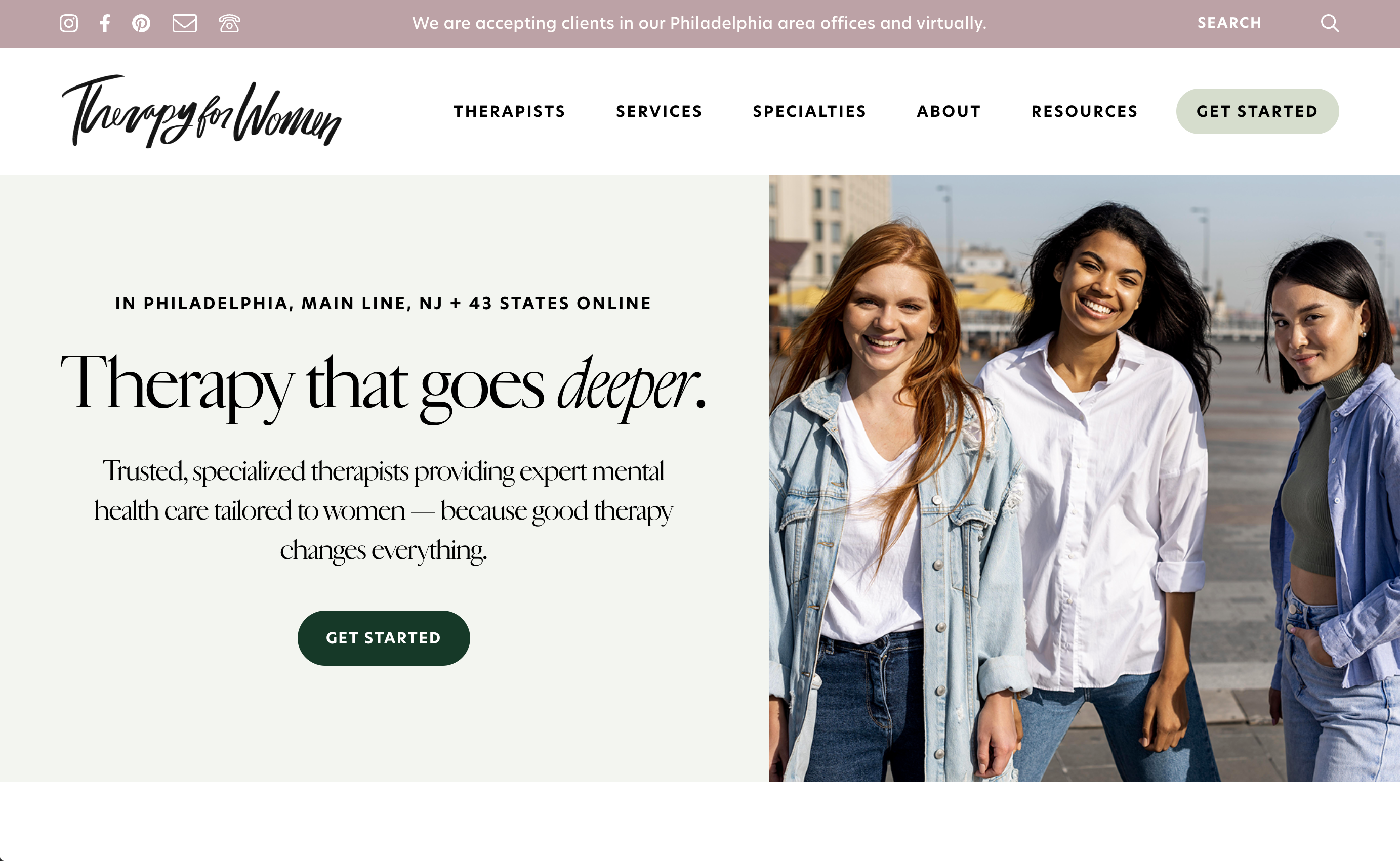
Therapy for Women Center è uno studio di consulenza dedicato a supportare le donne nelle sfide della vita, tra cui ansia, relazioni, maternità e crescita personale. Il suo sito combina messaggi empatici con un design pulito e accessibile, creando uno spazio sicuro e accogliente dove i visitatori possono esplorare i servizi e sentirsi compresi.
Perché funziona:
- Il sito parla direttamente al suo pubblico target con messaggi compassionevoli e riconoscibili.
- Immagini calde e palette di colori tenui rafforzano un senso di comfort e sicurezza emotiva.
- I servizi sono organizzati attorno alle preoccupazioni comuni dei clienti, facilitando la ricerca di supporto rilevante.
- Le presentazioni dei terapisti e le informazioni sullo studio aiutano a costruire familiarità e fiducia prima della prima seduta.
- Opzioni di contatto chiare e prenotazioni online facilitano il contatto da parte dei potenziali clienti.
Principale insegnamento: Parlare direttamente a un pubblico specifico può rendere un sito di terapia più personale e significativo. Combinare contenuti empatici con un'esperienza utente intuitiva aiuta a costruire fiducia e incoraggia i visitatori a cercare supporto.
Piattaforme moderne per la salute mentale
Le piattaforme moderne per la salute mentale rendono la terapia più accessibile combinando tecnologia e assistenza professionale. Invece di concentrarsi su un singolo terapeuta o studio privato, queste piattaforme aiutano gli utenti a trovare rapidamente professionisti autorizzati, confrontare opzioni e accedere al supporto online. I migliori esempi danno priorità a una navigazione intuitiva, messaggi rassicuranti e un'esperienza di prenotazione fluida per ridurre le barriere all'accesso alle cure per la salute mentale.
BetterHelp
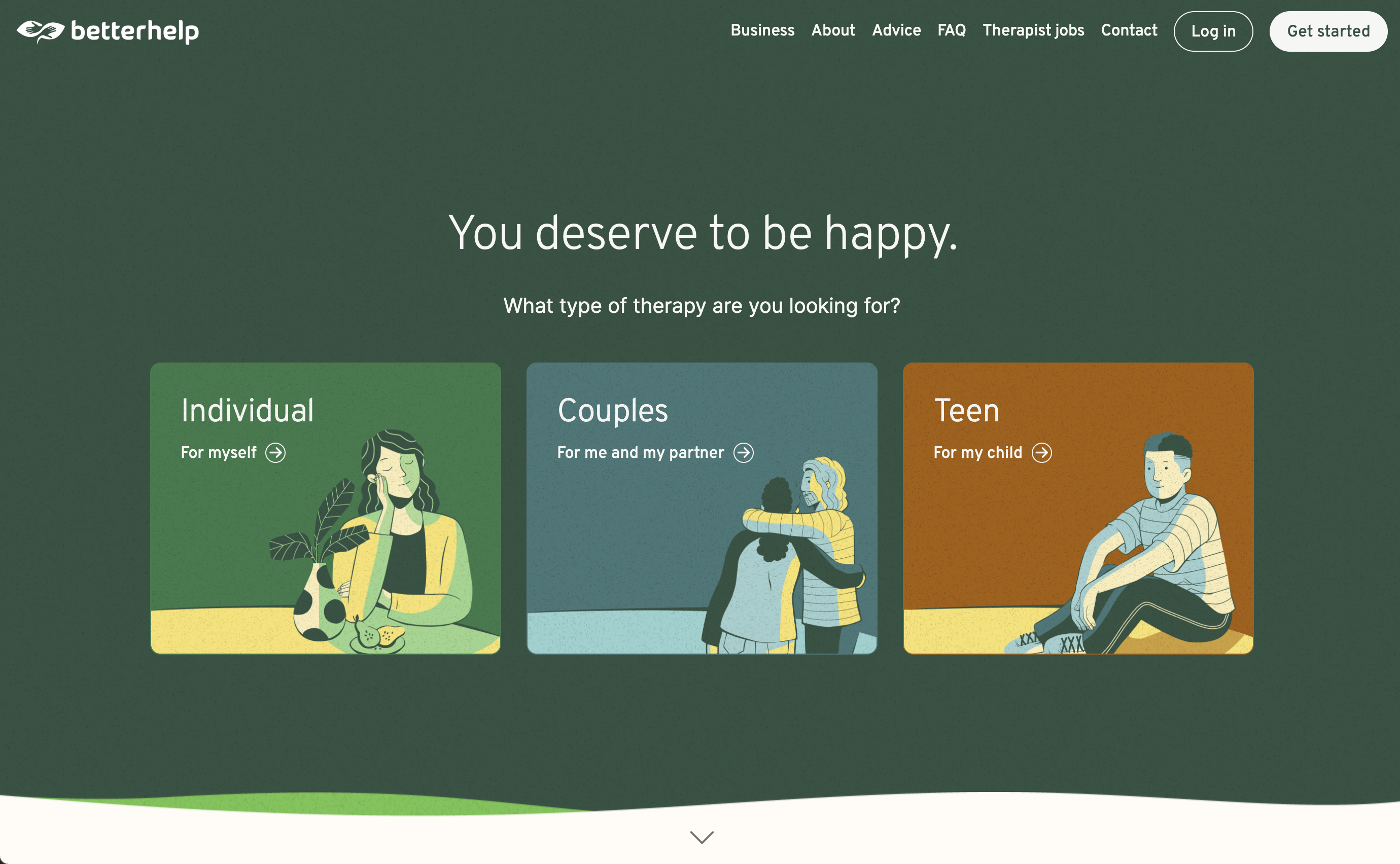
BetterHelp è una delle più grandi piattaforme di terapia online al mondo, che collega individui con terapeuti autorizzati tramite sessioni video, telefoniche e di messaggistica. Il suo sito è progettato per rendere semplice e accessibile la ricerca di supporto per la salute mentale, utilizzando messaggi chiari, onboarding guidato e uno stile visivo rassicurante per aiutare i visitatori a fare il primo passo con fiducia.
Perché funziona:
- La homepage spiega immediatamente come funziona la piattaforma usando un linguaggio semplice e facile da comprendere.
- Un processo di abbinamento guidato aiuta gli utenti a connettersi con terapeuti in base alle loro esigenze e preferenze.
- Layout puliti e immagini rilassanti creano un'esperienza accogliente che riduce l'ansia per i visitatori alla prima visita.
- FAQ, informazioni sui terapeuti e risorse per la salute mentale rispondono alle domande comuni prima che gli utenti si impegnino.
- Chiare call to action incoraggiano i visitatori a trovare un terapeuta in pochi semplici passaggi.
Principale insegnamento: Una grande piattaforma per la salute mentale elimina le incertezze rendendo ogni passaggio — dall'apprendere la terapia al trovare un terapeuta — il più chiaro e senza stress possibile.
Talkspace
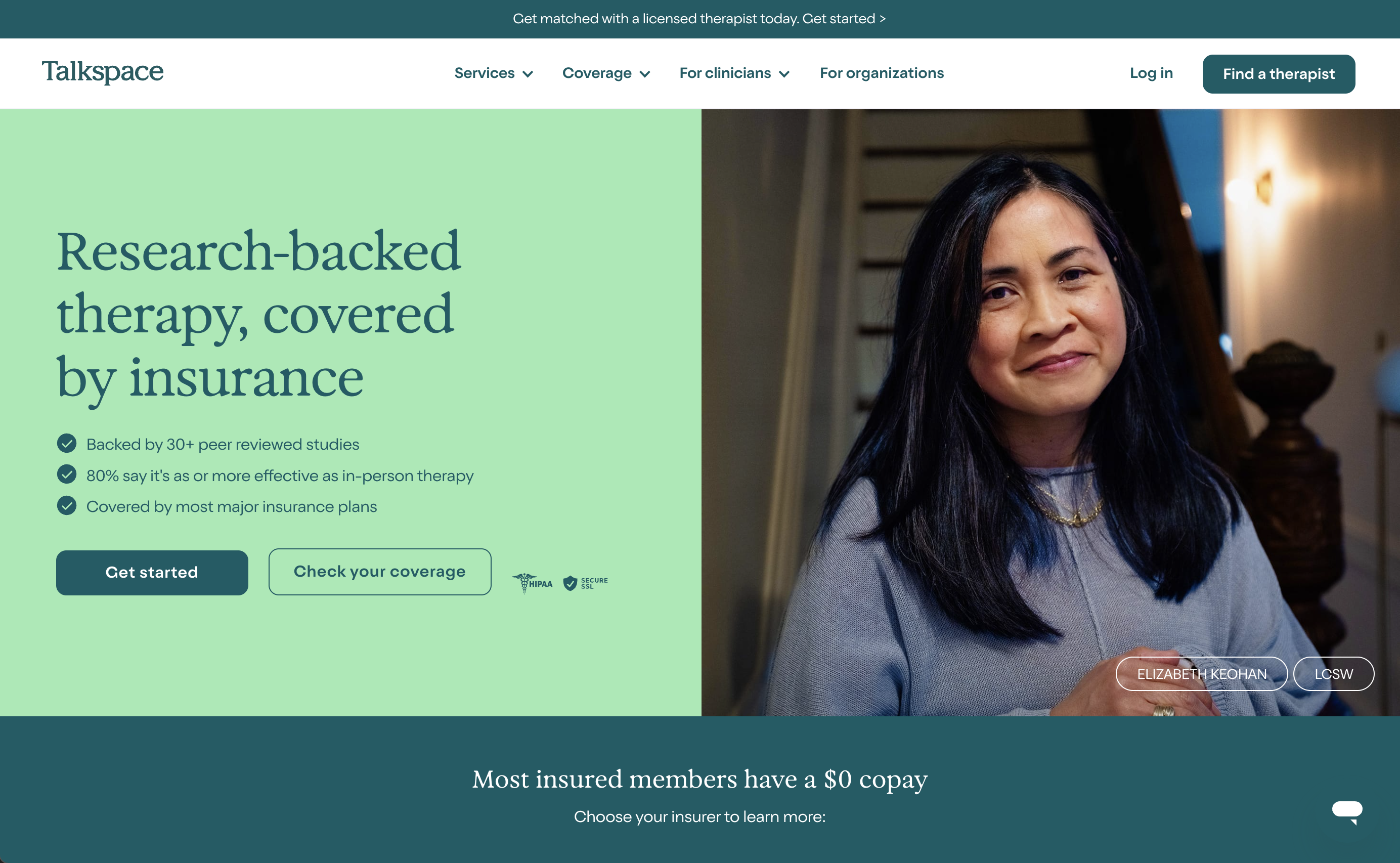
Talkspace è una piattaforma leader per la salute comportamentale online che offre servizi di terapia e psichiatria tramite comunicazioni digitali sicure. Il suo sito combina credibilità professionale con un design user-friendly, facilitando ai visitatori la comprensione dei servizi disponibili, l'esplorazione delle opzioni di trattamento e l'inizio del loro percorso di salute mentale online.
Perché funziona:
- Categorie di servizi chiare aiutano gli utenti a navigare rapidamente tra terapia, psichiatria e supporto specializzato per la salute mentale.
- Il sito enfatizza l'accessibilità evidenziando opzioni di comunicazione flessibili e cure online convenienti.
- Segnali di fiducia, inclusi fornitori autorizzati, informazioni cliniche e testimonianze di clienti, rafforzano la credibilità.
- Un design visivo moderno e una struttura dei contenuti organizzata rendono facile comprendere informazioni sanitarie complesse.
- Call to action forti guidano i visitatori attraverso il processo di iscrizione e abbinamento con un terapeuta con attrito minimo.
Principale insegnamento: I siti web sanitari devono bilanciare professionalità e accessibilità. Combinando informazioni affidabili, navigazione intuitiva e un'esperienza di onboarding fluida, le piattaforme per la salute mentale possono rendere più facile e accessibile la ricerca di supporto.
Design minimalisti per siti di terapia
I siti di terapia minimalisti dimostrano come la semplicità possa creare un'esperienza più calma e user-friendly. Utilizzando layout puliti, ampi spazi bianchi, palette di colori morbidi e messaggi focalizzati, questi siti facilitano la ricerca di informazioni senza sovraccaricare. Gli esempi seguenti mostrano come un design attento possa supportare fiducia, accessibilità e un'esperienza cliente più confortevole.
Alma
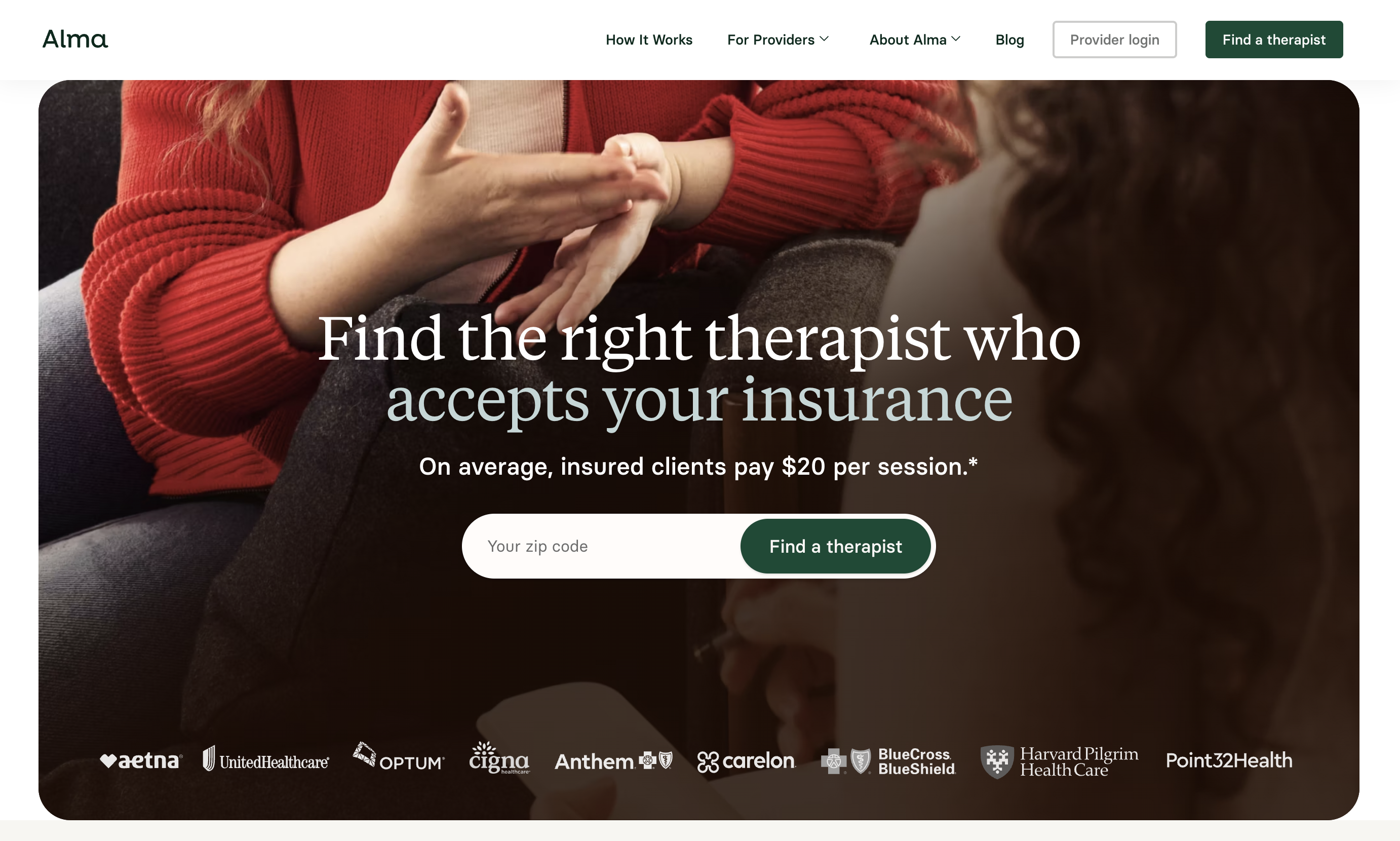
Alma è una piattaforma che aiuta le persone a trovare terapeuti in rete supportando anche i professionisti della salute mentale nella crescita del loro studio privato. Il suo sito abbraccia un'estetica pulita e moderna con ampi spazi bianchi, illustrazioni amichevoli e messaggi concisi, rendendo l'esperienza accessibile e rassicurante fin dalla prima visita.
Perché funziona:
- Un layout minimalista mantiene il focus sulla ricerca di assistenza in modo rapido e semplice.
- Colori morbidi e immagini accoglienti creano un'atmosfera calma e di supporto senza risultare eccessivamente clinici.
- Una navigazione chiara separa le risorse per clienti e terapeuti, permettendo a ciascun pubblico di trovare informazioni rilevanti senza sforzo.
- Testi brevi e focalizzati sui benefici spiegano i servizi in modo semplice, riducendo la confusione per i visitatori alla prima visita.
- Call to action ben posizionate guidano gli utenti verso la ricerca di un terapeuta o l'approfondimento della piattaforma.
Principale insegnamento: Il design minimalista è più efficace quando migliora la chiarezza. Rimuovendo le distrazioni e mettendo in evidenza le informazioni di cui i visitatori hanno più bisogno, i siti web di terapia possono creare un'esperienza più accogliente e affidabile.
Headway
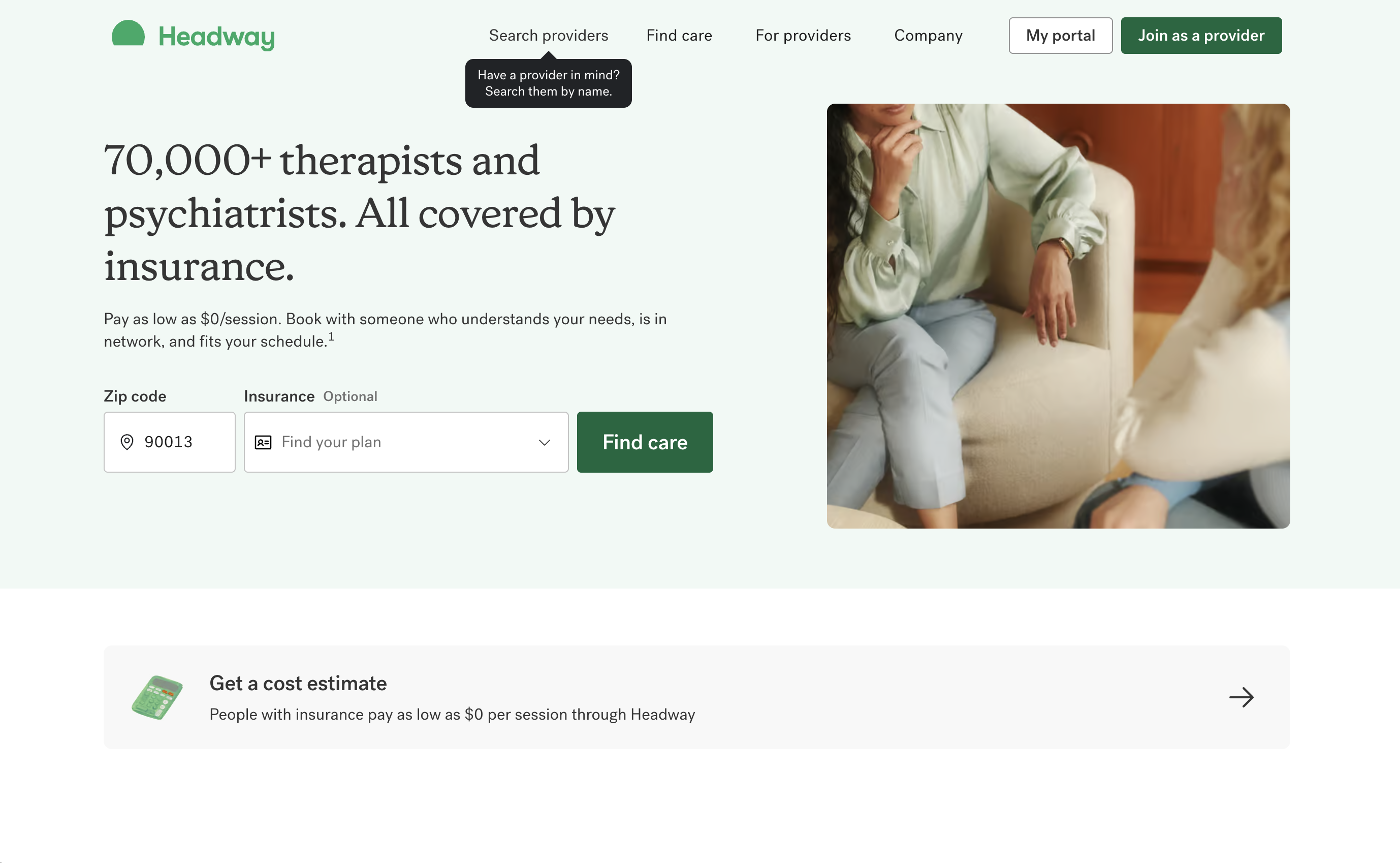
Headway è una piattaforma di assistenza mentale che semplifica il processo di ricerca di terapeuti che accettano assicurazioni. Il suo sito web combina un design moderno con un'esperienza utente altamente intuitiva, aiutando i visitatori a comprendere rapidamente il valore della piattaforma e iniziare la ricerca con fiducia.
Perché funziona:
- La homepage comunica chiaramente la missione della piattaforma con un messaggio diretto e incentrato sull'utente.
- Tipografia pulita, layout spaziosi e illustrazioni sottili creano un'interfaccia moderna che appare sia professionale che accessibile.
- Gli strumenti di ricerca guidata facilitano la ricerca di terapeuti in base alla copertura assicurativa, alla posizione e alle preferenze di cura.
- Contenuti educativi utili rispondono alle domande comuni su terapia e assicurazioni, aumentando la fiducia prima che gli utenti inizino.
- Call to action efficaci e un percorso utente semplificato riducono gli ostacoli e incoraggiano i visitatori a compiere il passo successivo.
Principale insegnamento: I siti web minimalisti di successo non sono semplicemente visivamente puliti: eliminano la complessità inutile. Dare priorità alla chiarezza, all'accessibilità e a un percorso utente fluido aiuta i visitatori a sentirsi supportati durante tutta l'esperienza.
Cosa possono insegnarti questi esempi di siti web per terapeuti
Costruisci fiducia attraverso un branding autentico
I migliori siti web per terapeuti creano fiducia presentando un brand personale autentico e accessibile. Una foto professionale, un'introduzione curata e una spiegazione chiara del tuo approccio terapeutico aiutano i visitatori a sentirsi più connessi prima della prima seduta. Condividere le tue qualifiche, esperienze e valori rassicura inoltre i potenziali clienti che sono in mani competenti e premurose.
Crea un'esperienza calma e accogliente
Un sito web di terapia dovrebbe far sentire i visitatori a proprio agio dal momento in cui arrivano. Layout puliti, colori rilassanti, tipografia leggibile e ampi spazi bianchi creano un'esperienza di navigazione tranquilla che riflette la natura di supporto della terapia. Un design semplice e senza distrazioni aiuta anche gli utenti a concentrarsi sulle informazioni più importanti.
Rendi la prenotazione semplice e accessibile
Molte persone che cercano terapia possono sentirsi già sopraffatte, quindi il processo di prenotazione dovrebbe essere il più semplice possibile. Navigazione chiara, informazioni di contatto visibili, strumenti di prenotazione online e call to action dirette riducono gli ostacoli e facilitano la prenotazione di una consulenza o il contatto con fiducia.
Educa i clienti con contenuti utili
Contenuti utili possono rispondere alle domande comuni e rendere la terapia meno intimidatoria. Articoli di blog, FAQ, risorse per la salute mentale e spiegazioni dei diversi approcci terapeutici aiutano i visitatori a capire meglio cosa aspettarsi. I contenuti educativi dimostrano anche la tua competenza, costruiscono credibilità e migliorano la visibilità del tuo sito nei motori di ricerca.
Domande frequenti
Cosa dovrebbe includere un sito web per terapeuti?
Un sito web professionale per terapeuti dovrebbe presentare chiaramente i tuoi servizi, specializzazioni, approccio terapeutico, credenziali e informazioni di contatto. Dovrebbe includere anche un sistema di prenotazione facile da usare, testimonianze dei clienti (dove appropriato), domande frequenti e risorse utili per la salute mentale. Un design pulito, mobile-friendly con call to action chiare può facilitare la ricerca delle informazioni da parte dei potenziali clienti e farli sentire sicuri nel contattarti.
Come attirano clienti i terapeuti online?
I terapeuti possono attirare più clienti creando un sito web professionale, ottimizzandolo per i motori di ricerca (SEO), pubblicando contenuti informativi sul blog e mantenendo una presenza online costante. Condividere risorse preziose per la salute mentale, spiegare chiaramente le proprie aree di competenza e facilitare la prenotazione di una consulenza può aiutare a costruire fiducia e incoraggiare i potenziali clienti a fare il primo passo.
Posso creare un sito web per terapeuti senza programmare?
Sì. Molti moderni website builder permettono ai terapeuti di creare siti web professionali senza alcuna conoscenza di programmazione. Con modelli personalizzabili, editing drag-and-drop e strumenti di creazione di siti web basati su AI comeWegic, puoi costruire rapidamente un sito web di terapia personalizzato che rifletta la tua pratica, supporti le prenotazioni online e offra un'esperienza accogliente ai potenziali clienti