Prima di immergersi negli esempi di siti web per ristoranti, i dati che dovrebbero guidare ogni decisione di progettazione di un sito web per ristoranti nel 2026:
- Il 77% dei clienti visita il sito web di un ristorante prima di mangiare o ordinare da asporto, secondo il sondaggio originale di MGH Marketing ampiamente citato nell'industria.
- Il 68% di questi clienti è stato attivamente discoraggiato da visitare un ristorante a causa del suo sito web (stessa fonte). Il sito non è solo un marketing neutro - uno cattivo allontana i clienti che erano già interessati.
- Le prime impressioni si formano in 50 millisecondi, secondo la ricerca peer-reviewed di Lindgaard su Behaviour & Information Technology.
- Il 75% degli utenti giudica la credibilità di un'azienda in base al design del sito web, secondo il Progetto di Credibilità del Web di Stanford.
- Il 53% degli utenti mobile abbandona le pagine che impiegano più di 3 secondi per caricarsi, secondo le linee guida di Google per il mobile.
- I limiti "buoni" di Google per Core Web Vitals: LCP sotto i 2,5s, INP sotto i 200ms, CLS sotto lo 0,1.
Aggiungi il cambiamento strutturale: circa il 34% del fatturato dei ristoranti arriva ora attraverso canali digitali, e la preferenza dei clienti si sposta verso l'ordinazione diretta - i clienti preferiscono dare i loro soldi senza che le app di consegna terze ne prendano il 15-30%. Questo rende il tuo sito web per l'ordinazione online meno un "asset di marketing" e più uno strumento per proteggere i margini.
I 12 esempi di siti web per ristoranti seguenti mostrano come quattro diverse categorie di operatori ottengano questo risultato. Se hai cercato esempi di siti web per cibo, modelli di pagina iniziale per ristoranti, o semplicemente come creare un sito web per ristoranti che converte nel 2026, le categorie seguenti dovrebbero corrispondere direttamente al tuo business.
Categoria 1: Michelin & Cucina di lusso (Quando la storia è più importante del menu)
I primi tre esempi di siti web per ristoranti provengono dalla fascia più alta, dove atmosfera e narrazione del brand fanno la maggior parte del lavoro di conversione.
1. Atelier Crenn — Quando il sito legge come un poema
Categoria: Ristorazione di lusso con tre stelle Michelin, San Francisco
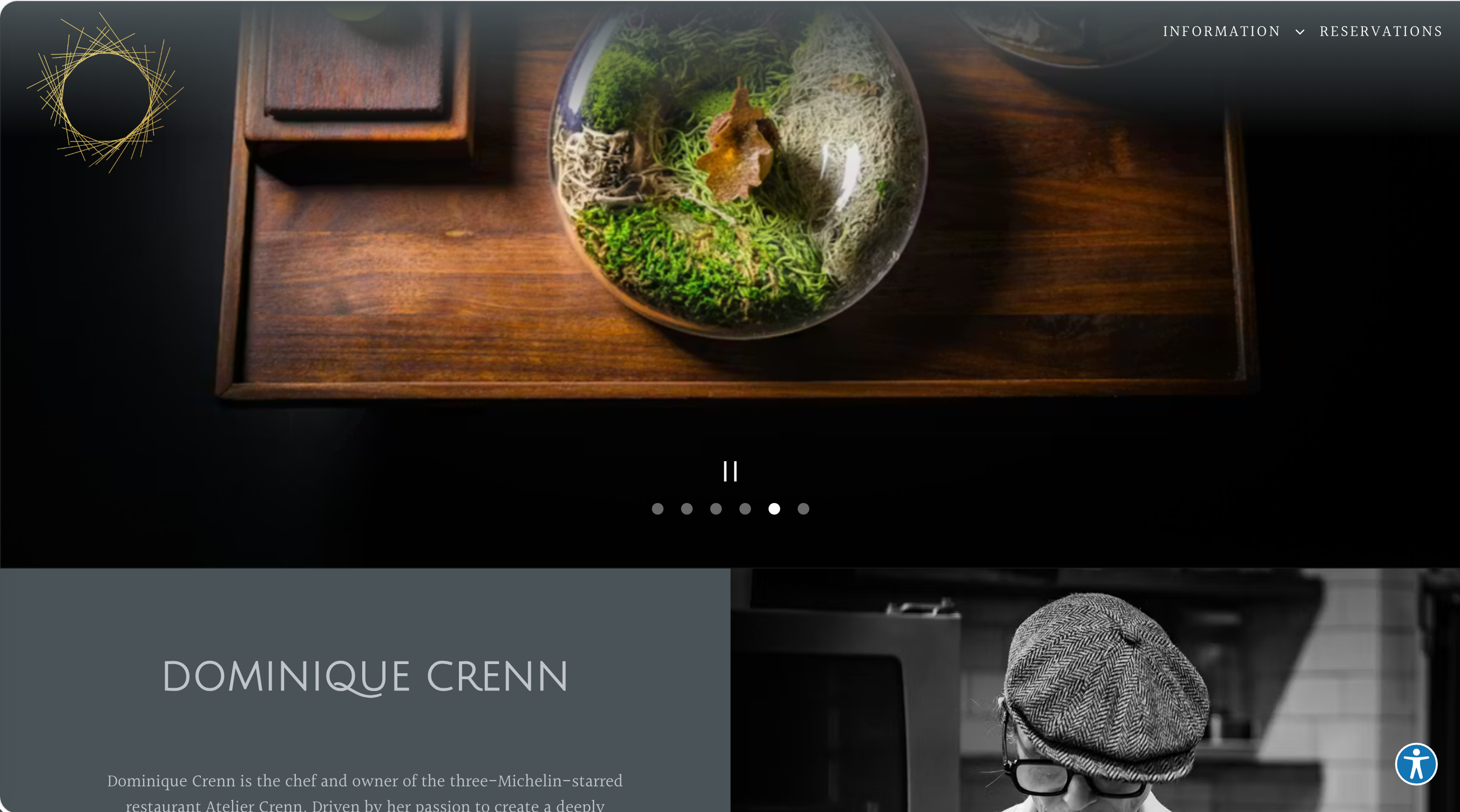
Atelier Crenn è l'unico ristorante negli Stati Uniti guidato da una chef donna con tre stelle Michelin. Il sito web è il contrario di una homepage con ordini immediati - legge come un sito letterario per il concetto di "Culinaria Poetica" della chef Dominique Crenn. Non c'è un chiaro "Prenota online". Non c'è un download del menu in formato PDF. L'immagine principale è una foto piena di immagini; la navigazione è minima; il prezzo del menu degustazione ($405–$445) viene menzionato indirettamente attraverso il processo di prenotazione, non esposto in modo evidente sulla homepage.
Tre cose da copiare:
- Tratta la tua homepage come una copertina di una rivista, non come un tabellone del menu. Se il tuo ticket medio è di 200 dollari o più e l'esperienza è il prodotto, il compito del tuo sito web è comunicare l'atmosfera, non convertire in due clic.
- Un livello di "Abbonamento" o "Collezione" crea prenotazioni di lusso. Il programma Crenn Collection 2026 è essenzialmente un livello di fedeltà pagato per i fan più appassionati - un modello da copiare per qualsiasi ristorante in cui la domanda supera la capacità.
- Sostenibilità come elemento di navigazione, non come banner. Atelier Crenn ha pagine dedicate alla fonte Bleu Belle Farm, alle accoglienze per diete particolari e alle partnership etiche con latticini - tutte costruite nell'IA, non attaccate a un disclaimer in fondo.
Questo è uno dei siti web per ristoranti di lusso più disciplinati in internet perché ogni scelta di design serve il marchio, non la conversione.
2. Cutler & Co. — La fotografia del protagonista porta il messaggio
Categoria: Ristorazione di lusso moderna australiana, Melbourne
Riferimento: Ampiamente citato nei pareri dell'industria del 2026 come standard per il design raffinato di ristoranti di lusso.
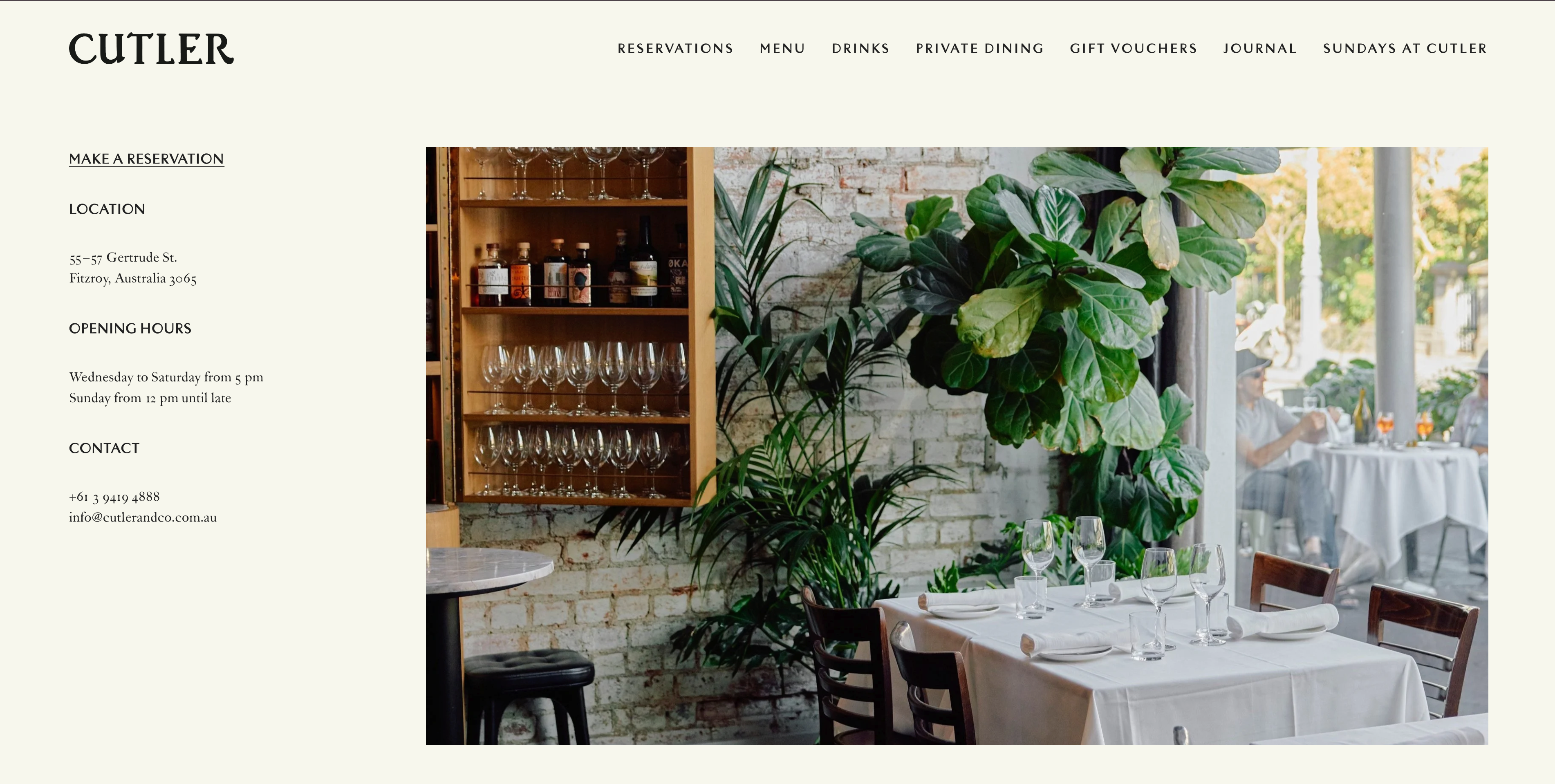
La foto principale del sito web di Cutler & Co. - vino su un tavolo con clienti sfocati sullo sfondo - è l'applicazione di "mostra, non dire" al design della homepage per ristoranti. Località, orari, contatti e CTA principali (Guarda il menu / Prenota) si trovano tutti visibili nella prima scorciata. Nessun carosello di homepage. Nessun video in riproduzione automatica.
Tre cose da copiare:
- Orari e indirizzo devono essere visibili sopra la piega, punto e basta. La metà dei siti web dei ristoranti li sposta nel piè di pagina; le marche che li posizionano nell'hero mantengono più visitatori potenziali.
- Un'unica immagine hero ben composta batte un'immagine a carosello con cinque immagini. Il modello a carosello è morto nel 2026 - scegli la foto che vorresti appendere al muro.
- Massimo due CTAs: uno per il menu, uno per la prenotazione. Immagina che il terzo pulsante non esista.
3. Fiola - La sobrietà come marchio
Categoria: ristorazione di lusso con stella Michelin, Washington DC
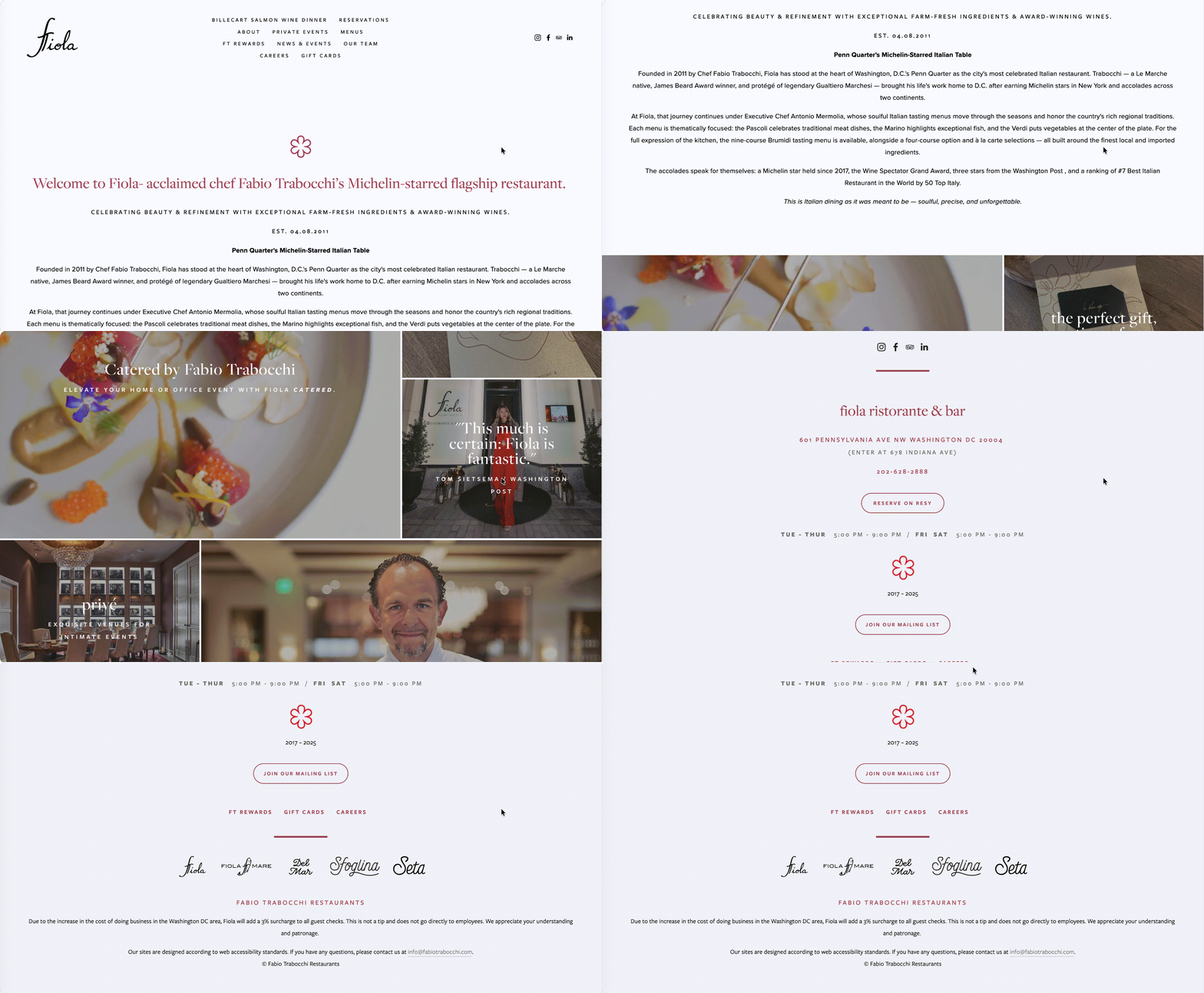
Il sito di Fiola utilizza una palette morbida, tipografia raffinata e spaziatura generosa. Le immagini del cibo sono curate ma mai sovra-stilizzate. La progettazione del menu del ristorante è una sezione, non un download - leggibile su mobile, con la struttura dei piatti intatta.
Tre cose da rubare:
- Lo spazio bianco generoso è un segnale di lusso a costo quasi zero. I layout affollati sembrano casuali; i layout spaziosi sembrano sicuri.
- Incorpora il menu in HTML; non collegarti mai a un PDF. I PDF non funzionano sui dispositivi mobili, danneggiano il SEO e costringono i clienti a un passo di download che li perde.
- Usa la tipografia serif in modo deliberato. Una sola famiglia di testi serif raffinati separa il lusso dal mercato più accessibile in modo più efficiente rispetto alla fotografia costosa.
Categoria 2: Fast-casual sano (Quando il sito è il canale)
I prossimi tre esempi di siti web per ristoranti provengono dal segmento fast-casual sano, dove il sito è funzionalmente indistinguibile dall'app di ordinazione - e questo è intenzionale.
4. Sweetgreen - Quando il tuo sito è metà ristorante, metà software
Categoria: catena fast-casual sana
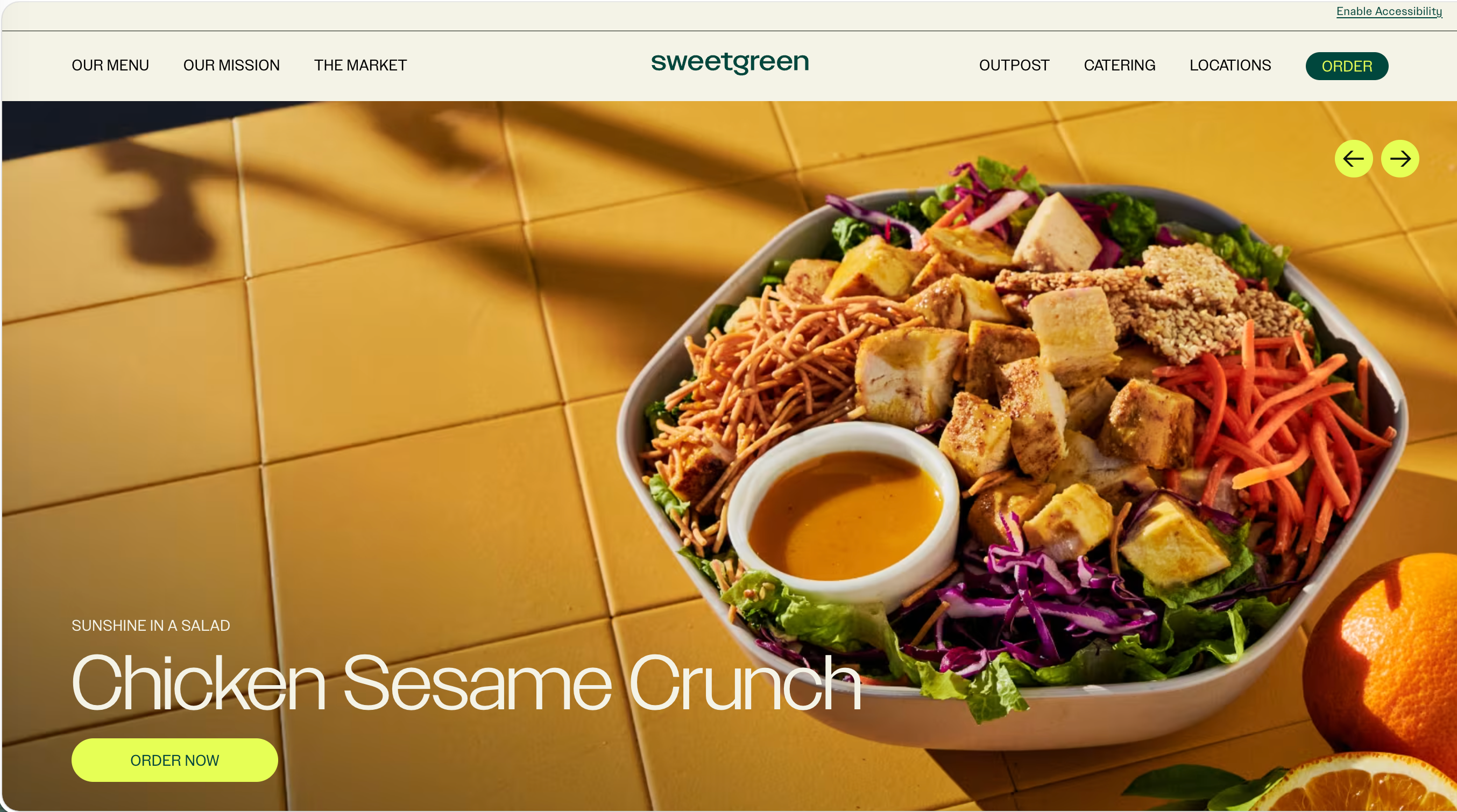
Sweetgreen è il modello per qualsiasi catena che vive o muore sulle ordinazioni digitali. Il sito di marketing (
sweetgreen.com) gestisce la marca, la storia e la scoperta. Un'esperienza separata dedicata all'ordinazione (order.sweetgreen.com insieme alle app iOS e Android) gestisce la transazione. La fedeltà (Sweet Rewards) e la prenotazione hanno ciascuna le proprie pagine costruite appositamente. La trasparenza sugli allergeni e sull'origine degli ingredienti è visibile su tutte le pagine del menu.Tre cose da rubare:
- Separare il sito di marca dall'esperienza di ordinazione UX se la scala lo richiede. Una catena con molte sedi ha bisogno di una homepage di marca e di un'app di ordinazione veloce e orientata. Una sola pagina non può svolgere entrambi i compiti quando il volume supera le 1.000 prenotazioni settimanali per sede.
- Gli incentivi per la fedeltà devono essere visibili sopra il menu, non sotto. Il CTA di Sweet Rewards di Sweetgreen si trova nella barra di navigazione superiore di ogni pagina. "Salad gratis per il primo ordine" attira i nuovi clienti; gli incentivi per i clienti esistenti li richiamano.
- Rendere i dati sugli allergeni e diete una classe prima. Sweetgreen contrassegna ogni voce del menu con avvisi sugli allergeni e sulle diete direttamente nell'elenco. Questo è anche puro SEO - Google Schema per MenuItem riconosce questi segnalatori e li mostra nei risultati ricchi.
Questo è uno dei migliori modelli di siti web per ordinazioni online in funzione oggi.
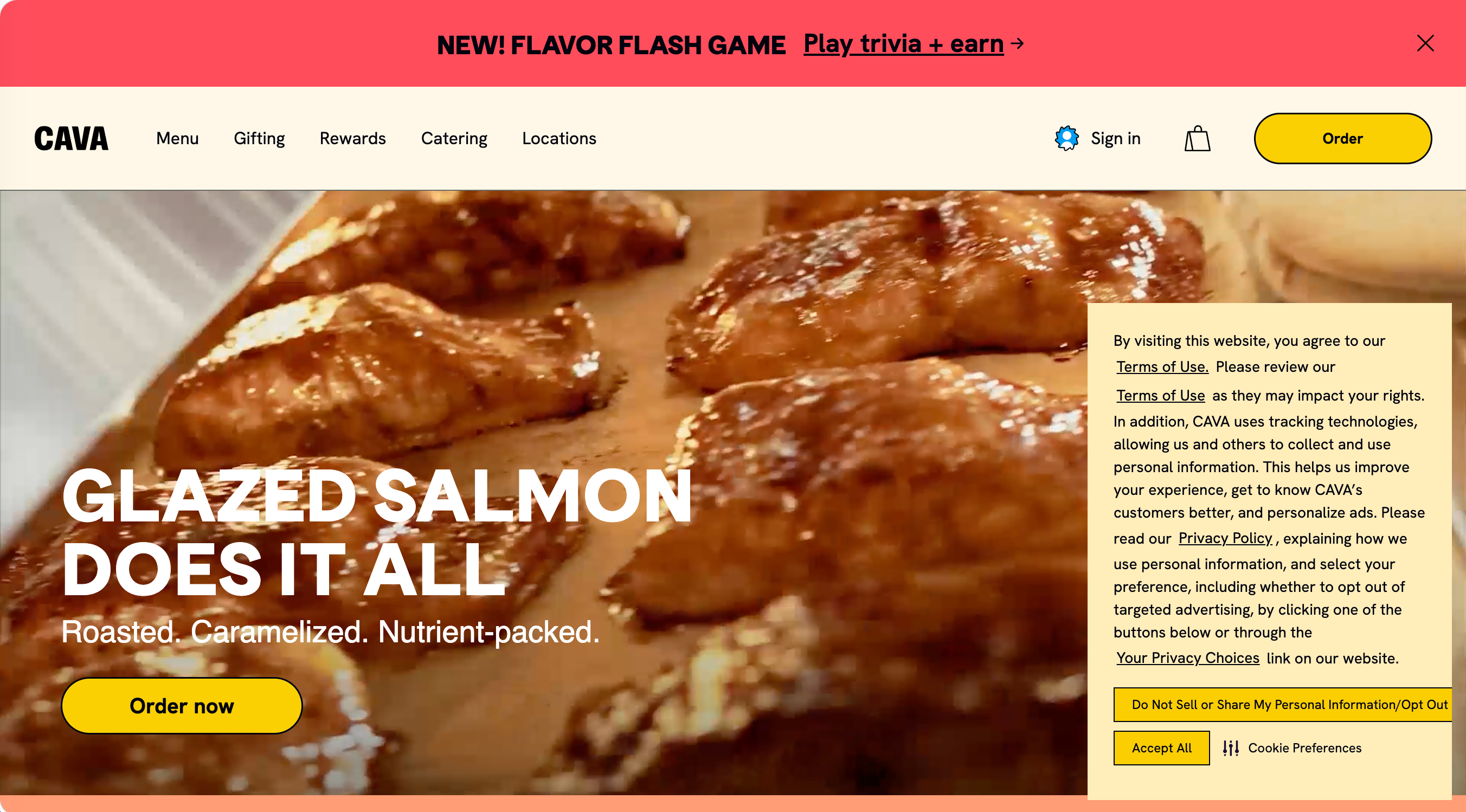
5. Cava - Il modello "Crea il tuo piatto" fatto bene
Categoria: catena fast-casual mediterranea
La homepage di Cava costruisce l'intero sito intorno al flusso di personalizzazione "Crea il tuo piatto". Ogni passo (base, salse, proteine, condimenti) ha la sua sezione con foto. Quando si arriva in fondo alla pagina, si è già mentalmente creato il pasto - e il pulsante "Ordina ora" appare esattamente nel momento giusto.
Tre cose da rubare:
- Per i concetti di personalizzazione, la homepage è il configuratore. Non farti cliccare su una pagina "menu" separata per vedere le opzioni.
- Fotografie per ingrediente, non per piatto finito. I concetti personalizzabili fotografano i componenti individuali in modo meraviglioso; le foto del piatto finito non sono performanti perché non rappresentano l'ordine di nessun cliente.
- Differire il CTA di conversione fino a quando l'utente ha fame. Mettere "Ordina ora" in cima alla pagina non ha senso quando non hai venduto ancora il cibo. Metterlo dopo l'esperienza di costruzione converte molto meno.
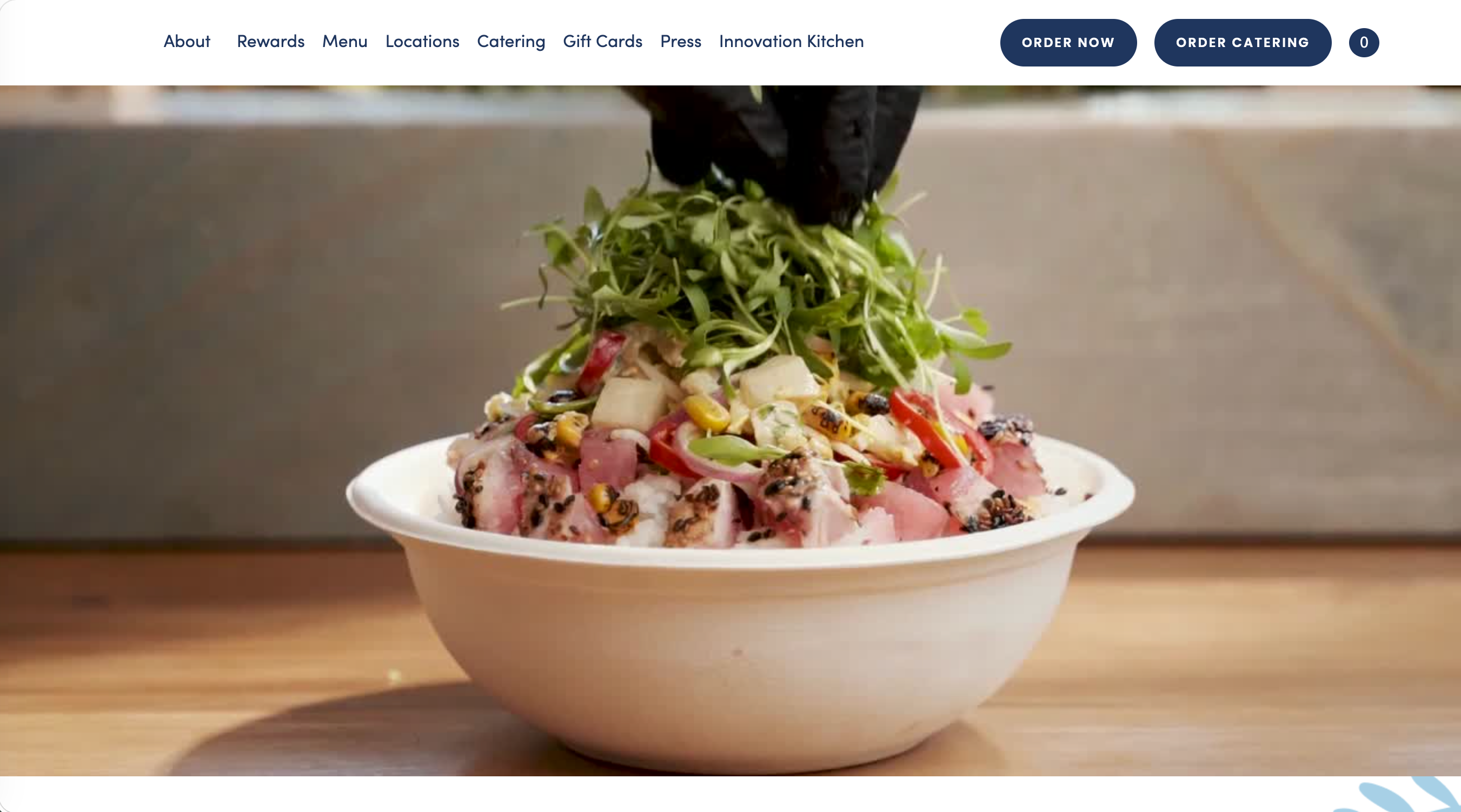
6. Sweetfin - Polire una singola vetrina in un layout di catena
Categoria: catena di poke sani, California
Sweetfin utilizza un'immagine principale a stile rivista con una foto di cibo ingrandita, quindi passa a una sezione pulita a tre colonne (approvvigionamento, freschezza, sostenibilità). Il design sembra di lusso per la categoria - più vicino al ristorante di lusso che al fast casual.
Tre cose da rubare:
- La posizione sana richiede un design editoriale, non cliché "benessere". Salta gli iconi di foglie e le parole "sano" e "nutriente" - le marche di alta gamma sana sembrano più Bon Appétit che una palestra.
- La pagina delle località deve essere una mappa reale, non solo un elenco. I clienti cercano "vicino a me" per primi; soddisfa questa intenzione con una mappa interattiva reale.
- La trasparenza nella scelta degli ingredienti è contenuto che converte i clienti più giovani. Da dove proviene il pesce, chi coltiva il riso, cosa significa veramente "responsabile" - rendilo specifico.
Categoria 3: Servizio rapido e Multi-canale (Quando la capacità è la chiave)
I prossimi tre esempi di siti web per ristoranti appartengono a operatori che trattano l'ottimizzazione della capacità come disciplina del sito web. Quando 5.000 ordini passano attraverso un'unica location al giorno, ogni secondo risparmiato nell'ordine è denaro reale.
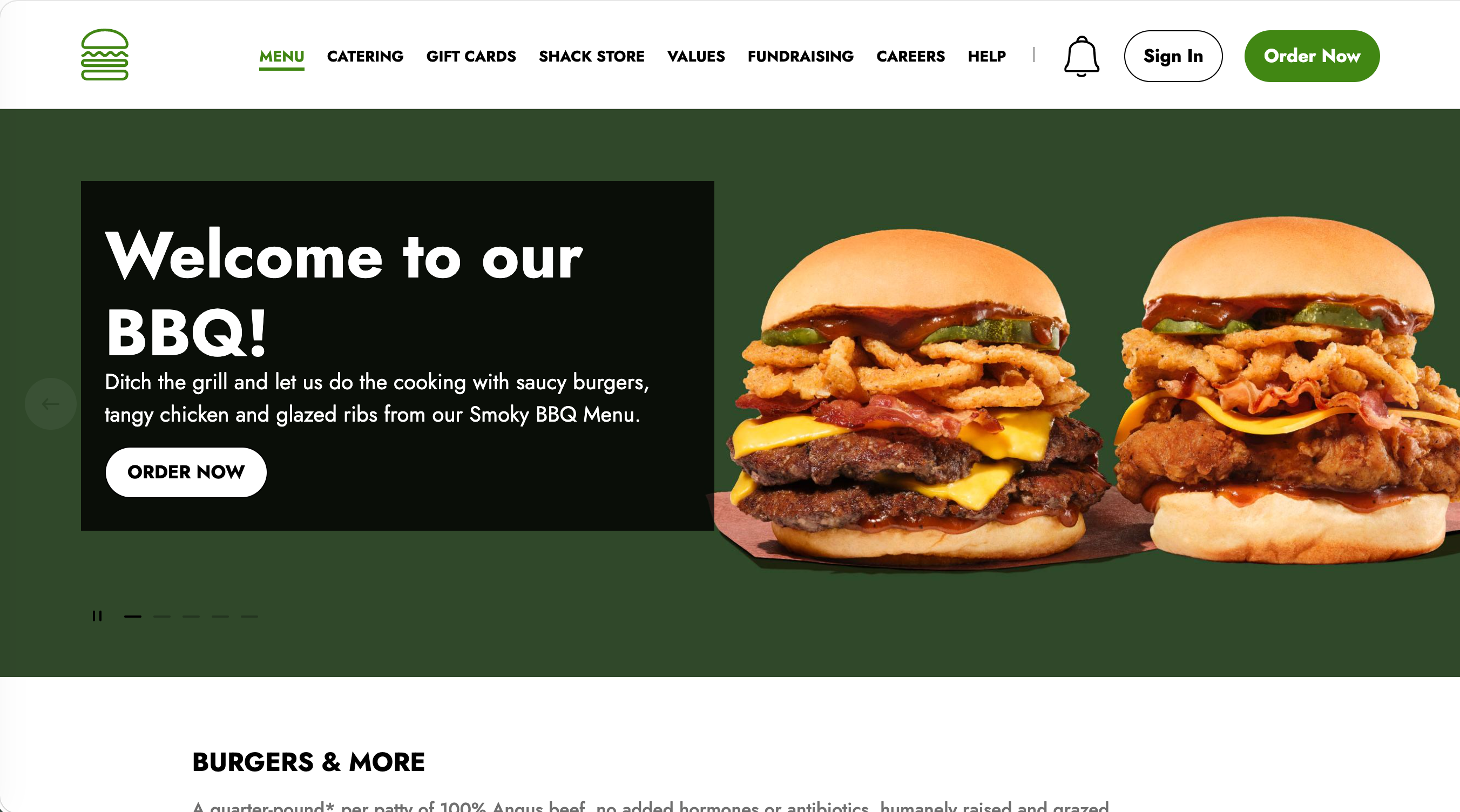
7. Shake Shack - Un masterclass sull'ordinazione multi-canale
Categoria: Catena di hamburger fast food (più di 250 sedi)
Verifica: Attivo aprile 2026, sistema di ordinazione multi-canale "Shack Track" attivo.
Shake Shack ha il flusso più avanzato di ordinazione online nel settore della ristorazione veloce. Il loro sistema Shack Track unifica cinque percorsi di consegna diversi - sportello per clienti che vengono a piedi, sportello per clienti che arrivano in auto, ritiro a bordo strada, scaffale per ritiro all'interno del ristorante e consegna tramite app - attraverso un'esperienza di ordinazione unica. I clienti scelgono il percorso; il sistema operativo si occupa del resto. La consegna tramite app costa 1,99 dollari ("ora e per sempre"), con consegna gratuita per ordini superiori a 35 dollari.
Tre cose da copiare:
- La gestione multi-canale è il nuovo fattore di differenziazione rispetto alle app di terze parti. Quando un cliente può scegliere esattamente come vuole ricevere il cibo (arrivo in auto vs. ritiro a bordo strada vs. consegna), non ha bisogno di DoorDash. Questo risparmia dal 15% al 30% per ordine.
- La trasparenza sui costi di consegna converte più ordini delle offerte di sconto. "Consegna a 1,99 dollari, punto e basta" batte le tariffe variabili di terze parti che i clienti non possono prevedere.
- I flussi di riacquisto sono lo schermo con il maggiore ritorno di investimento nel settore della ristorazione veloce. La maggior parte dei clienti del fast food vuole la stessa cosa che aveva la volta precedente. L'ordinazione con un solo tocco converte a un tasso molto più alto rispetto ai flussi di primo acquisto.
Questo è uno dei migliori siti web per ristoranti per studiare il design operativo - il sito web è il sistema di ingresso della cucina.
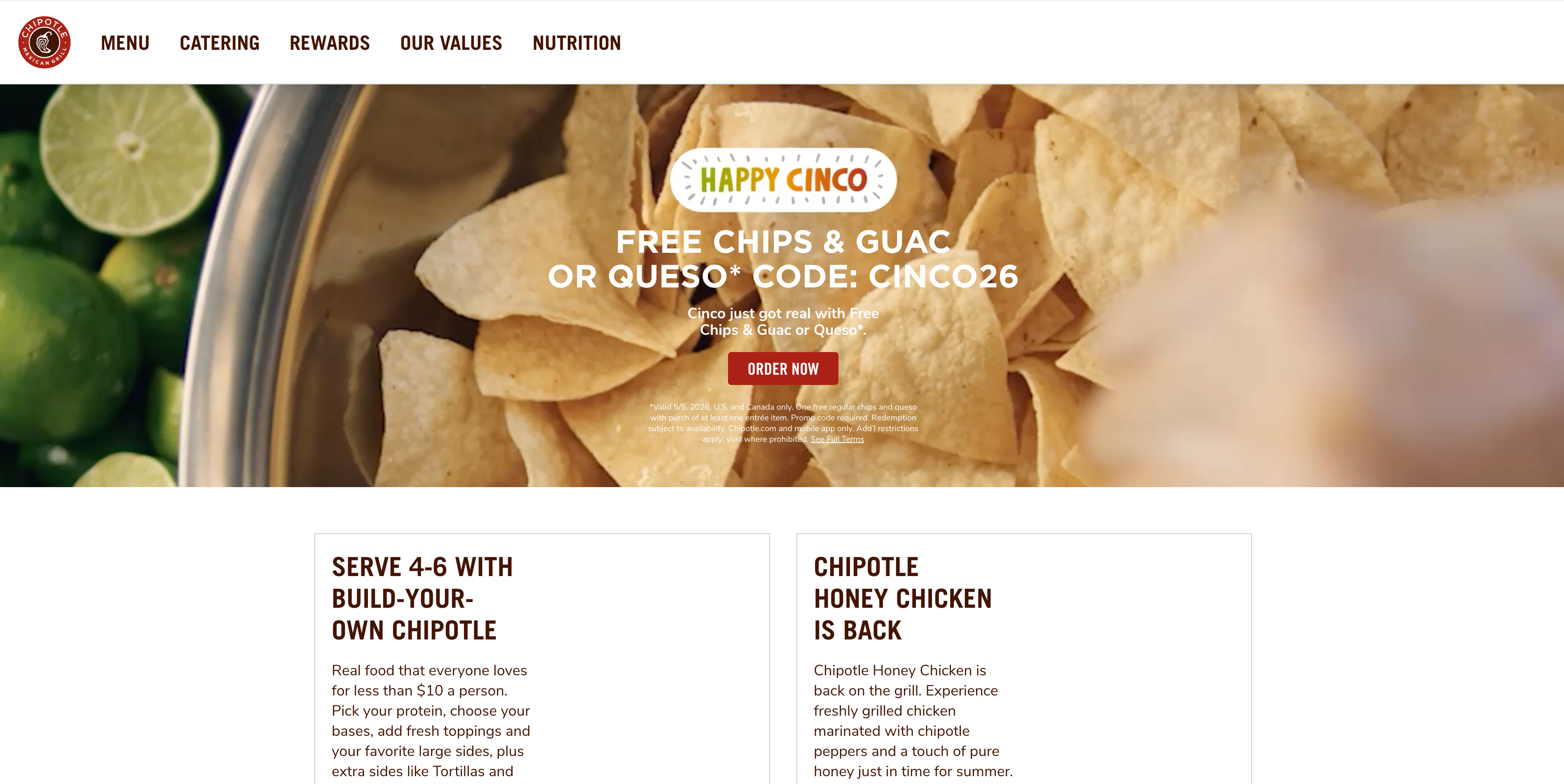
8. Chipotle - Ordinazione Mobile-First che Funziona davvero
Categoria: Catena di cibo messicano veloce
Chipotle è stato un caso di studio sull'ordinazione digitale dal 2017, quando ha vinto il premio Webby. L'ordinazione ottimizzata per dispositivi mobili, gli scaffali per ritiro in ogni sede e gli ordini anticipati digitali generano ora una percentuale significativa di vendite totali.
Tre cose da copiare:
- Lo scaffale per ritiro come funzione. Dare un nome e segnalare lo scaffale per ritiro all'interno del ristorante è una decisione di marketing, non solo un'operazione. I clienti che vedono ripetutamente "Ordina in anticipo, salta la fila" diventano clienti digitali regolari.
- Le combinazioni di ordini salvati come schermo di riacquisto predefinito. "Il tuo solito: piatto di pollo, riso bianco, fagioli neri, formaggio, panna acida" converte in due tocchi.
- Upsell attivati da geofence. Quando un cliente è vicino a una sede, un'offerta rilevante ("Prova il nostro nuovo pollo al miele - ordina in anticipo ora") converte a un tasso 3-5 volte superiore rispetto al marketing freddo.
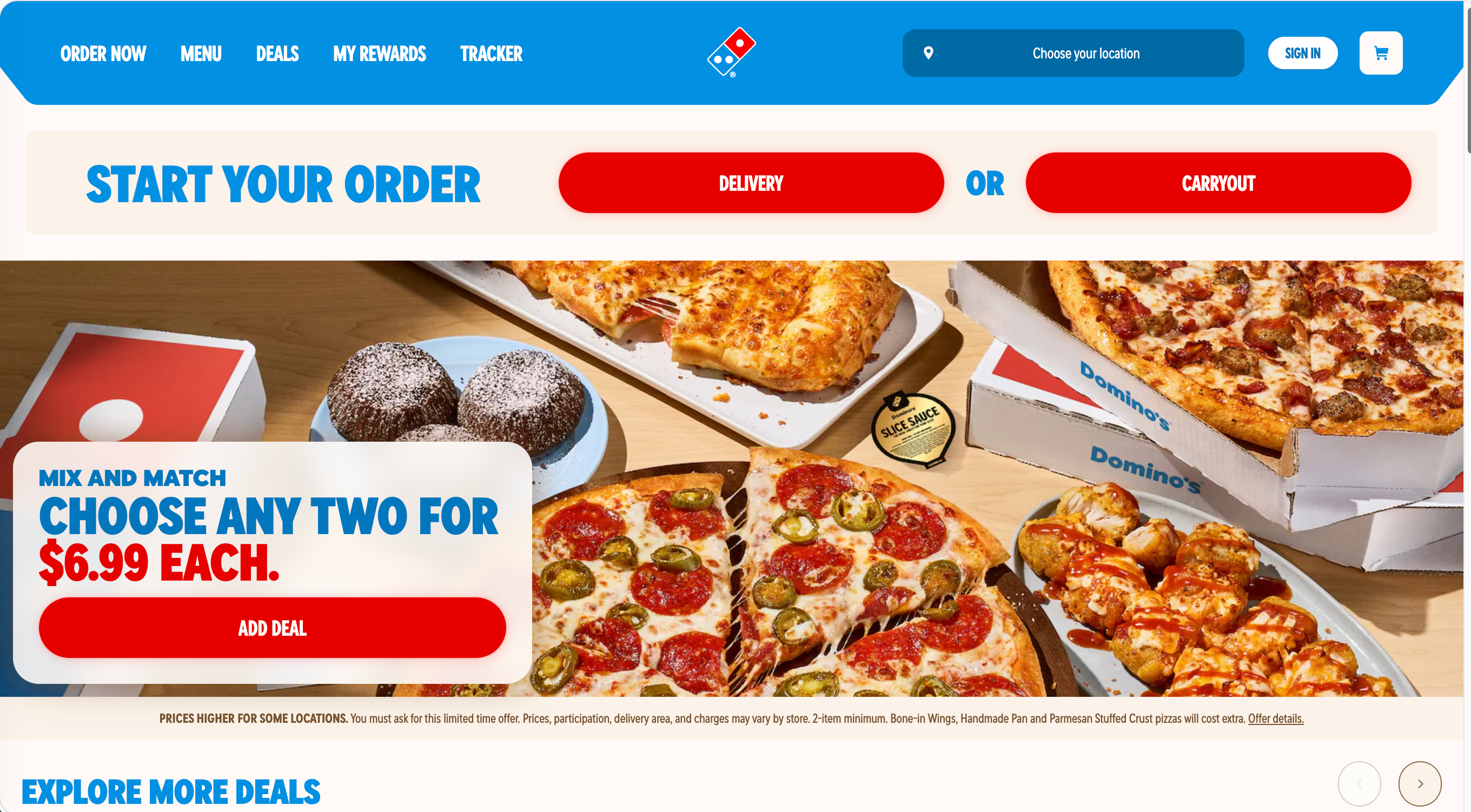
9. Domino's - L'Ordine della Pizza in 30 Secondi
Categoria: Catena di pizzerie
Domino's ha speso un decennio per semplificare il flusso di ordinazione fino a completarlo in circa 30 secondi per un cliente che torna. Il follow-up della consegna basato sul tracker ("La tua pizza è nel forno") è ora uno standard dell'industria che hanno quasi inventato.
Tre cose da copiare:
- Il tracker degli ordini è costruzione del marchio. I clienti che fanno screenshot del loro stato di cottura della pizza è contenuto generato dagli utenti gratuito che rafforza il marchio.
- Il tempo necessario per completare l'ordine è un metrico del sito web. Misura quanti secondi impiega un cliente che torna da "apertura del sito" a "ordine effettuato". Ogni cosa superiore a 60 secondi lascia denaro per strada.
- Predefinisci il percorso più semplice. Compila l'ordine con l'ultimo ordine del cliente. Rendi possibile cambiarlo ma non necessario.
Categoria 4: Locali Indipendenti del Quartiere (Quando la Personalità Vince)
I prossimi tre esempi di siti web per ristoranti sono operatori indipendenti del quartiere. Con un budget minore e un volume inferiore, il leva di progettazione che usano è *personalità*. Nessuno di questi siti funzionerebbe per Atelier Crenn o Shake Shack - ma ciascuno è esattamente giusto per il proprio quartiere.
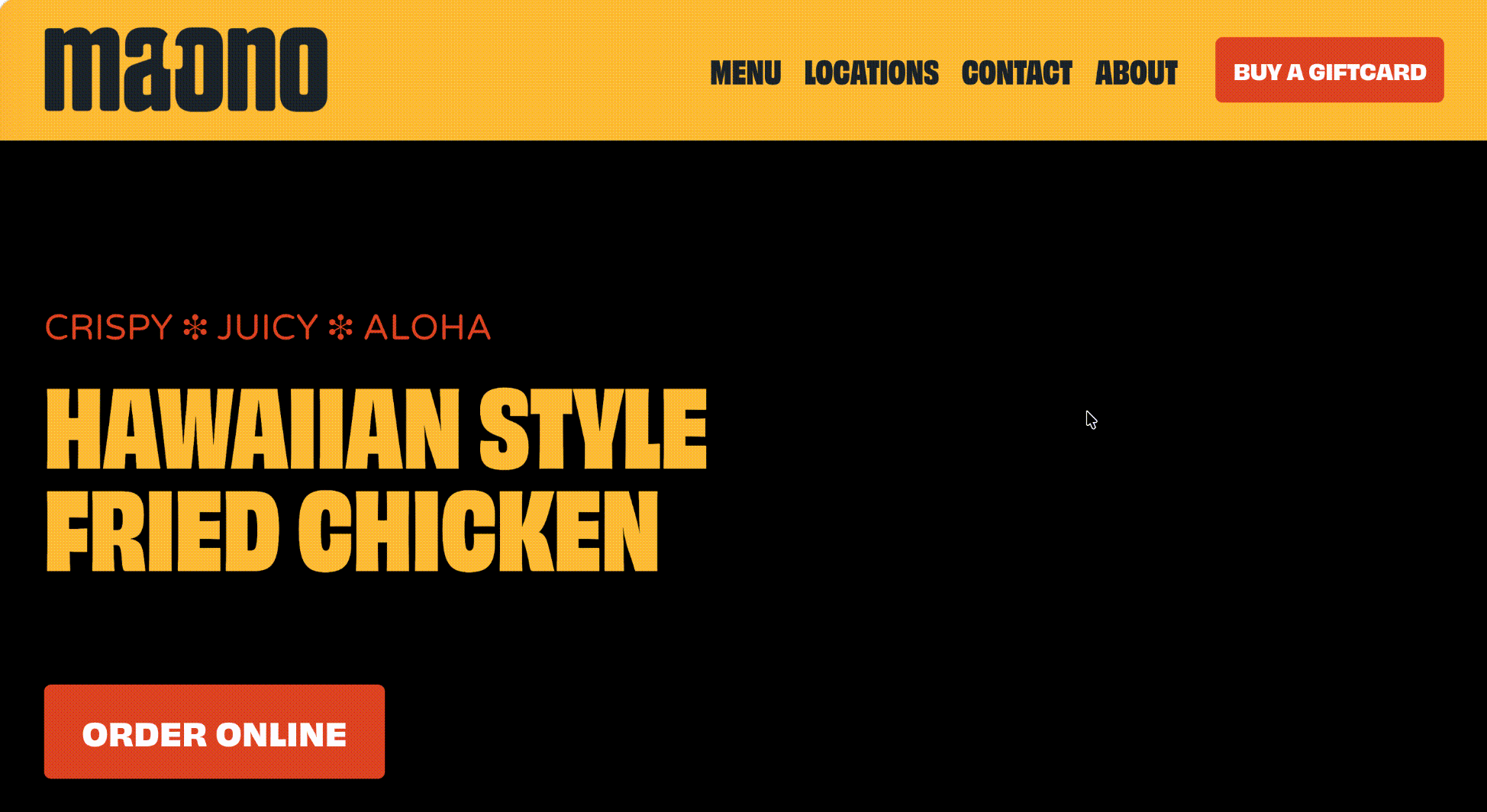
10. Ma'ono - Marchio Locale con Priorità alla Personalità
Categoria: Ristorante indipendente di pollo fritto hawaiano, Seattle
Ma'ono è un modello classico di esempi di siti web per caffè su scala ristorante: intestazione gialla brillante, logo nero ingrandito, foto del prodotto principale (il pollo fritto), e un chiaro CTA "Ordina Online" sopra la piega. Nessun carosello principale; nessun menu in PDF; il cibo fa il lavoro.
Tre cose da copiare:
- Un colore di marca distintivo > un palette "elegante". Il giallo di Ma'ono è riconoscibile da un quarto di miglio di distanza in un paesaggio pieno di loghi sobri. Scegli un colore e impegna.
- La foto del protagonista dovrebbe essere il tuo miglior prodotto in vendita, non "l'atmosfera". Le foto del protagonista con "atmosfera" non hanno un buon rendimento perché sono generiche. La foto di piatto specifico che le persone entrano a ordinare converte.
- Ogni posizione dovrebbe avere la sua propria micropagina. Quando hai 3 o più posizioni, ciascuna ha bisogno di orari, indirizzo e informazioni sul parcheggio. Una singola pagina generica per le posizioni non ha un buon rendimento.
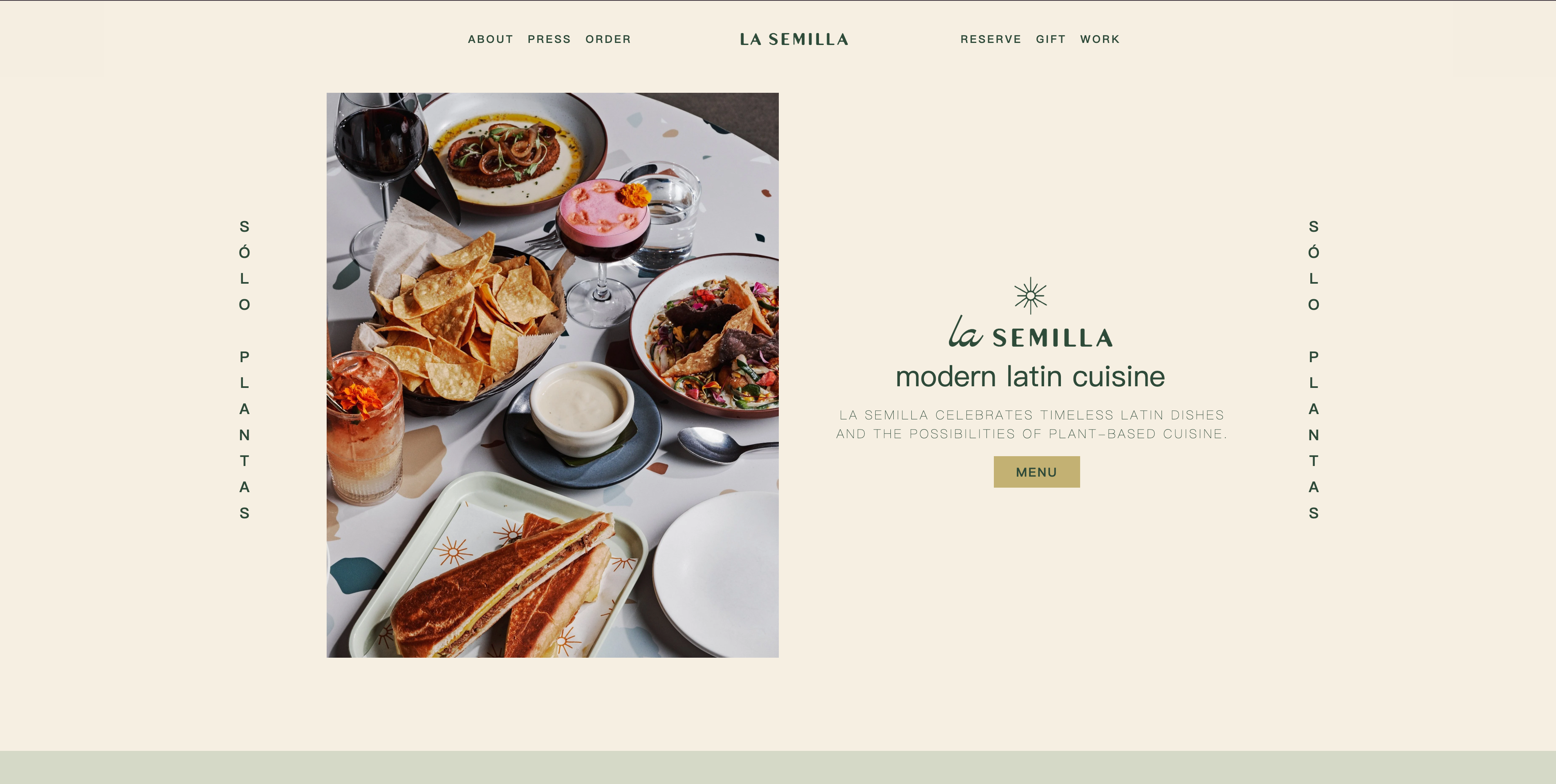
11. La Semilla — Moderno cibo vegetale latino fatto in modo distintivo
Categoria: Ristorante latino a base vegetale, Brooklyn
La Semilla utilizza una palette terrosa, una tipografia stravagante e un menu presentato come una galleria di immagini invece che un download. L'identità visiva sembra attuale e orientata al design senza sacrificare la funzionalità.
Tre cose da copiare:
- La posizione dietetica ("vegetariano", "vegano", ecc.) è aiutata da non iniziare con essa. La Semilla non grida "VEGANO" alla porta; il cibo e il design guadagnano prima la curiosità del pubblico.
- Un menu HTML è indispensabile; i menu basati su immagini sono quasi secondi. I PDF sono morti. Le gallerie di immagini sono la seconda scelta (ancora meglio del menu strutturato HTML). Scegli una e non tornare indietro.
- Tipografia stravagante per un elemento, tipografia neutra ovunque else. Una sola fonte fa il lavoro della personalità; tutto il resto rimane leggibile.
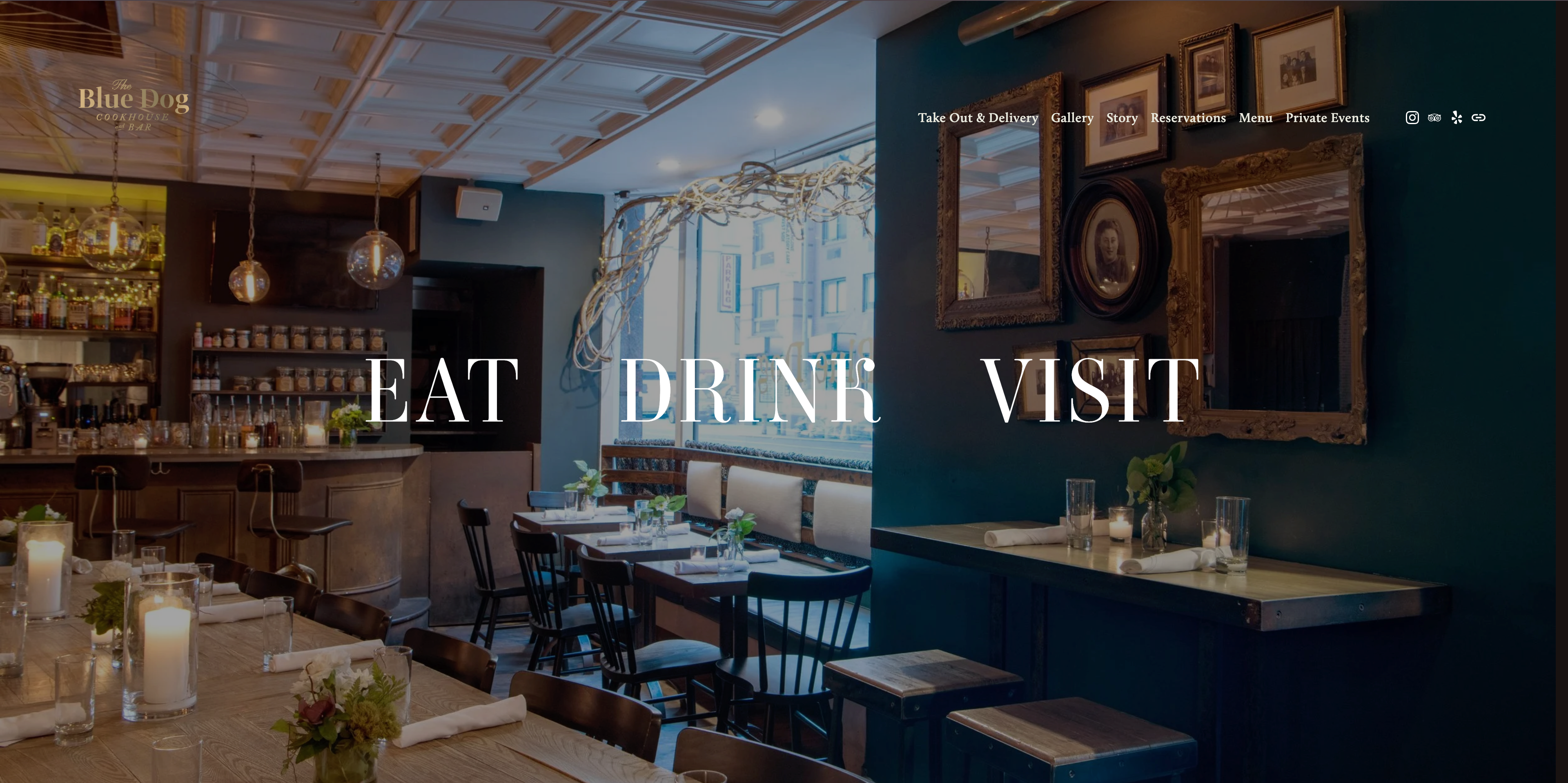
12. Blue Dog — Il modello "Mangia / Bevi / Visita" con tre CTA
Categoria: Ristorante indipendente del quartiere
La homepage di Blue Dog offre al visitatore tre pulsanti: Mangia, Bevi, Visita. È l'intera homepage. Ogni pulsante conduce alla sua pagina corrispondente. È il modello di progettazione più leggibile per le homepage dei ristoranti casuali: l'intento di un visitatore è uno dei tre, e il sito non finge altrimenti.
Tre cose da copiare:
- Riduci le scelte della homepage alle tue tre principali intenzioni degli utenti. Per la maggior parte dei ristoranti casuali, queste intenzioni sono: vedere il menu dei cibi, vedere il menu delle bevande, trovare la posizione/orari. Costruisci per queste tre e fermati.
- Evita di mescolare le intenzioni in una sola navigazione. "Chi siamo" non appartiene accanto a "Ordina online". Pubblici diversi, percorsi diversi.
- Test per una comprensione di 5 secondi. Mostra la homepage a uno sconosciuto per 5 secondi. Può dire con precisione di che tipo di ristorante si tratta e come agire? Se no, semplifica.
I 5 errori mobili che uccidono le conversioni dei siti web dei ristoranti
I 12 esempi di siti web per ristoranti sopra hanno avuto successo ottenendo i fondamentali giusti. La maggior parte dei siti web dei ristoranti che non funzionano nel 2026 fallisce almeno uno di questi trappole specifiche per il mobile. Dopo ricerche dell'industria e le mie analisi di oltre 100 siti web indipendenti di ristoranti nell'ultimo anno, questi sono i principali killer mobili:
- Testo piccolo - il 57% dei siti web dei ristoranti utilizza fonti di corpo sotto i 16px. Questo è al di sotto dei limiti di accessibilità di Apple e Google. Utilizza un minimo di 16px, 18px ideale.
- Elementi di tocco più piccoli di 44×44 pixel. HIG di Apple e Design Material di Google richiedono entrambi 44pt/48dp. Gli elementi di tocco difficili da colpire su un telefono sono responsabili della maggior parte delle abbandoni mobili nelle audits dei siti web per ristoranti amichevoli per il mobile.
- Foto di cibo non ottimizzate che fanno superare il tempo di caricamento i 5 secondi. Un'unica foto JPG di 4MB uccide il fold mobile. Comprimi aggressivamente, fornisci WebP, carica in modo ritardato al di sotto del fold.
- Menu in PDF. I clienti non possono ingrandire comodamente su mobile, i motori di ricerca non possono leggere i nomi dei piatti e il tuo menu non si aggiorna senza ricaricarlo. Passa immediatamente ai menu HTML.
- Un secondo elemento di riproduzione automatica sopra un video del protagonista. Video del protagonista + banner dei cookie + widget di chat che si caricano contemporaneamente su una connessione 4G è ciò che appare il 90% delle abbandoni mobili.
Per un'analisi più approfondita dei modelli di layout che sopravvivono agli audit mobili, consulta la nostra guida agli esempi di homepage dei siti web.
La matematica dell'ordine di prima parte che davvero conta
Ecco la parte che la maggior parte delle guide su "idee per siti web per ristoranti" salta ma che ogni gestore necessita. Nessuno degli esempi di siti web per ristoranti sopra si basa principalmente su app di consegna di terze parti per il ricavo - e questa è la ragione:
Terze parti (DoorDash, Grubhub, Uber Eats) | Prima parte (il tuo sito) | |
Commissione per ordine | 15–30% | 0% (solo costi di elaborazione dei pagamenti del 2–3%) |
Dati dei clienti | Appartiene alla piattaforma | Appartiene a te |
Fedeltà / riconversione | La piattaforma decide | Tu decidi |
esperienza del marchio | Controllata dalla piattaforma | Controllata da te |
I clienti preferiscono? | 33% preferisce | 67% preferisce, secondo ricerche dell'industria |
Dipendenza dalla marketing | Alta (non puoi contattare direttamente i tuoi clienti) | Bassa (hai la relazione) |
Un ristorante che guadagna 40.000 dollari al mese con le consegne paga 6.000-12.000 dollari di commissioni su piattaforme di terze parti. Un sito web per gli ordini online funzionante sposta abbastanza volume da interno per finanziare una piccola ristrutturazione della cucina ogni anno.
È per questo che, tra tutte le categorie di questa guida, gli esempi di siti web per ristoranti di servizio rapido multi-canale sono quelli che gli operatori indipendenti dovrebbero studiare con maggiore attenzione - i risparmi crescono.
Come funziona effettivamente l'SEO per i ristoranti nel 2026
La maggior parte dei ristoranti perde traffico organico a causa di quattro problemi, tutti risolvibili in un weekend:
- Menu in formato PDF che Google non può indicizzare. Un ristorante il cui menu è in HTML ottiene risultati per le query "[nome del piatto] vicino a me"; uno il cui menu è un PDF no.
- Profilo Google Business non presente o errato. Assicurati che nome, indirizzo, orari e numero telefonico siano esattamente uguali tra il sito web e l'elenco GBP. Richiedi l'elenco se non è già stato richiesto.
- Assenza di dati strutturati (Schema.org / JSON-LD). Aggiungi lo schema
Restaurant,Menu,MenuItem,RevieweLocalBusiness. Questo attiva i risultati ricchi: stelle delle recensioni, orari di apertura, intervallo di prezzo - visibili direttamente nei risultati di ricerca di Google. - Assenza di backlink locali. Ottieni una lista su blog locali di cibo, sul sito turistico della città e sul directory dell'associazione del quartiere. Tre buoni backlink locali valgono di più di cinquanta casuali.
Aggiungi tempi di caricamento veloci (sotto i 2,5 secondi LCP), foto reali con testi alternativi descrittivi e un dominio canonico unico (non
www. e radice entrambi indicizzabili), e la maggior parte dei ristoranti indipendenti salta 5-10 posizioni nei risultati locali entro 60 giorni. La maggior parte degli siti web per ristoranti in questa guida controlla silenziosamente tutti e quattro i punti - è il minimo necessario.Come creare un sito come questi con Wegic
Sia che gestisci una sala degustazione con stelle Michelin o un caffè con un'unica location, il costruttore di siti web per ristoranti di Wegic genera un sito adatto alla categoria da un breve colloquio. Wegic non è una serie di modelli di siti web per ristoranti da scegliere - è un sistema di crescita dei siti web con intelligenza artificiale conversazionale che scrive il codice da zero in base alla tua descrizione. Diverse industrie, forme diverse:
- Per il ristorante di alta cucina: il flusso del sito web per chef di Wegic ottimizza la narrazione del marchio, i sistemi di prenotazione e la presentazione del menu di degustazione.
- Per gli operatori indipendenti di ristoranti: il costruttore per ristoratori di Wegic enfatizza orari, posizione, menu e prenotazione in default mobile-first.
- Per le catene con più sedi: il flusso del gestore di Wegic gestisce pagine per sede e ordinazioni unificate.
- Per ristoranti di servizio rapido e da asporto: il costruttore di ordinazioni online di Wegic e il flusso per ristoranti da asporto enfatizzano il ciclo di ordine e ritiro.
- Per le brand con cucina specifica: flussi specifici per settore come il costruttore per ristoranti indiani corrispondono alle linee visive culturali di default.
Fase 1: Briefing con l'AI
Apri Wegic e chatta con Kimmy, il tuo project manager AI. Usa uno qualsiasi dei 12 esempi sopra come riferimento:
"Costruisci un sito web per ristorante come Ma'ono - sensazione di quartiere indipendente, accento giallo acceso, foto principale del nostro piatto iconico (pollo fritto coreano), menu in formato HTML (non PDF), CTA "Ordina online" sopra la piega, e una pagina separata per ogni sede con Google Maps incorporato."
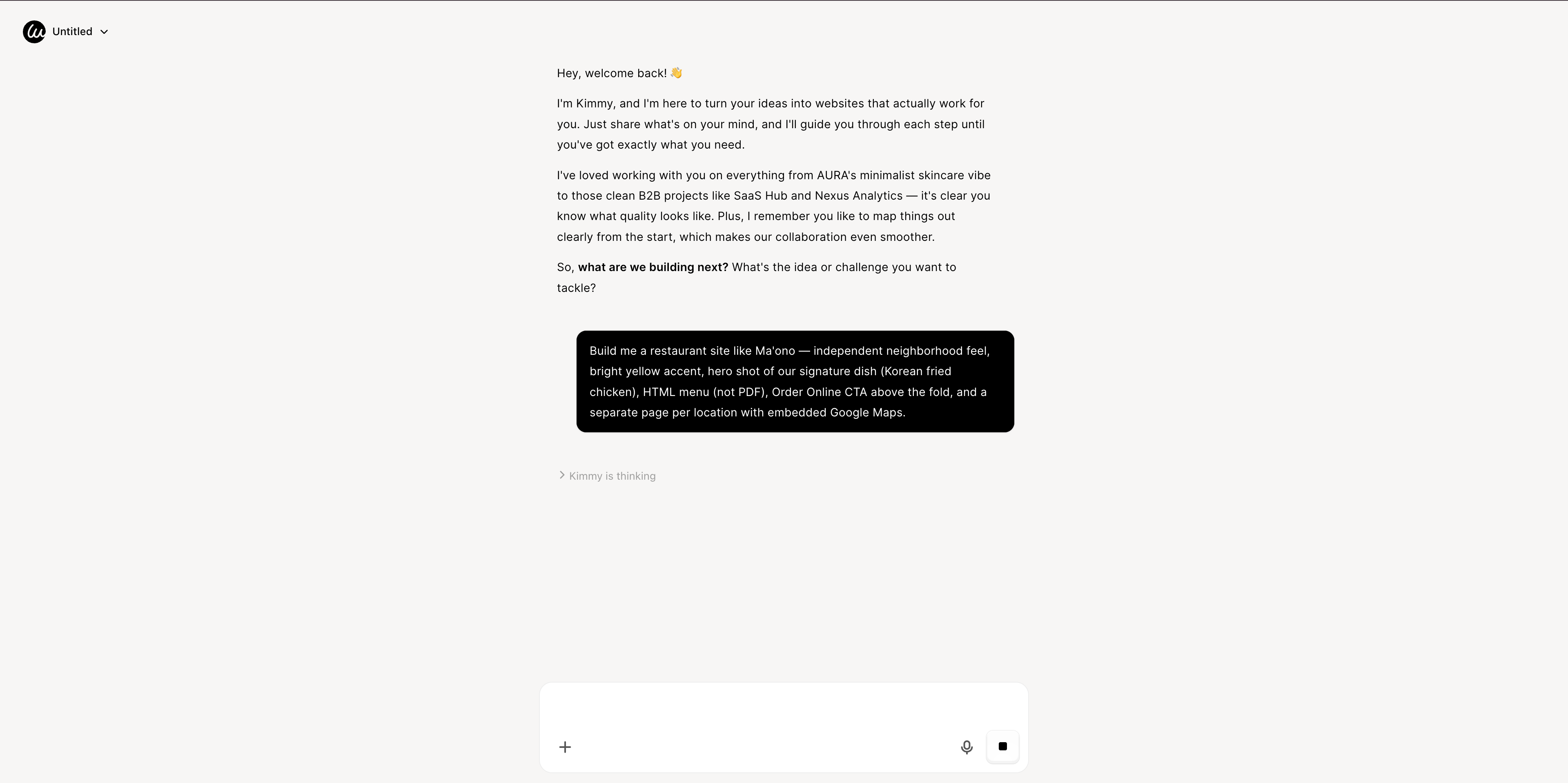
Fase 2: Assemblaggio dell'AI in meno di un minuto
Il motore alimentato da GPT di Wegic scrive il codice da zero. In meno di 60 secondi otterrai un sito multi-pagina completamente responsivo con struttura menu HTML, default mobile-first, markup schema e ottimizzazione per Core Web Vitals.
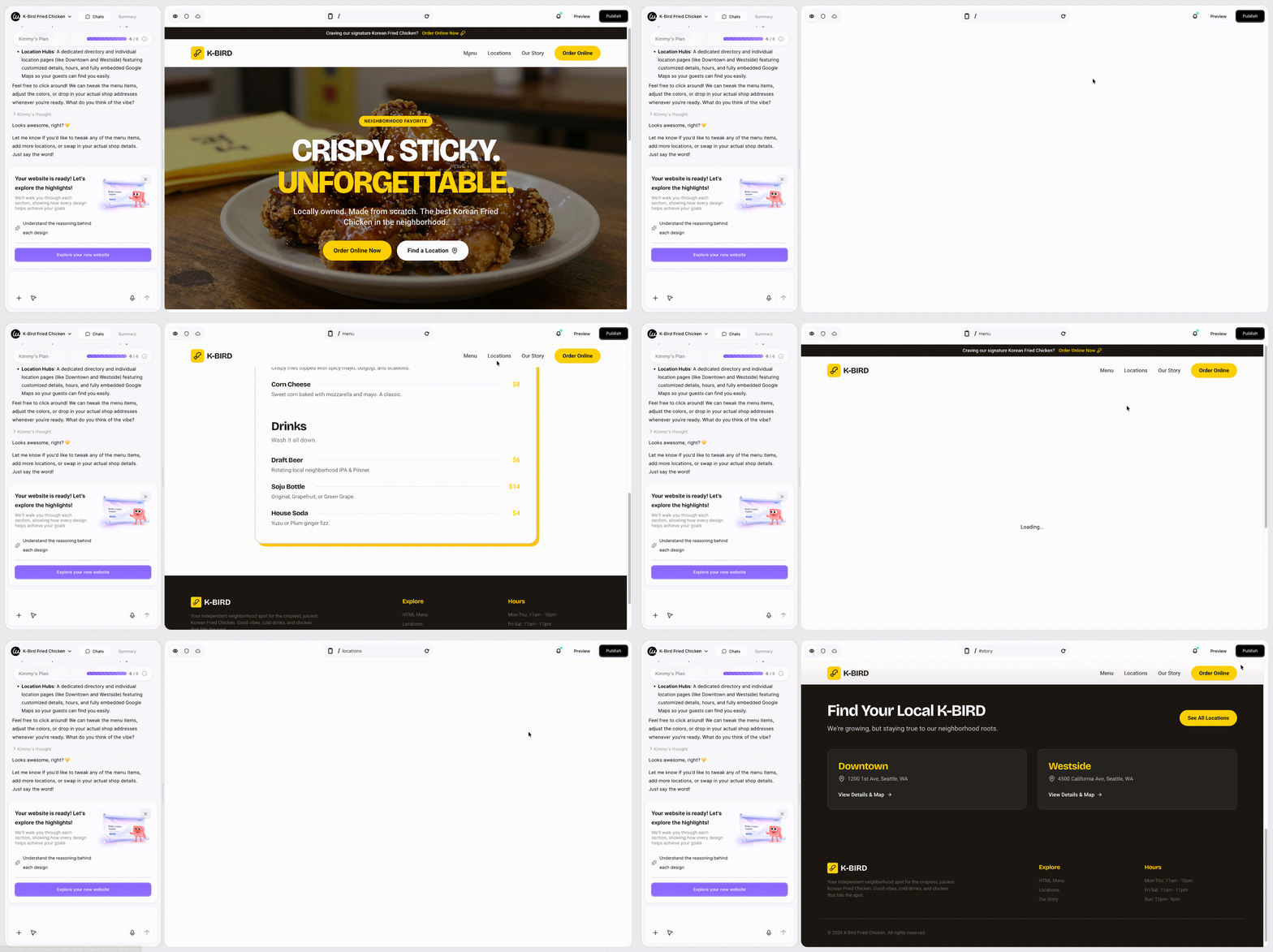
Fase 3: Modifica tramite conversazione
"Aggiungi un widget di prenotazione connesso a OpenTable. Aggiungi un banner fedeltà simile a Sweet Rewards sulla homepage che dica 'Ottieni un dolce gratis per il tuo primo ordine.'"
Wegic propone 2-3 opzioni di design con motivazione prima di applicarle - in modo da non rompere la visualizzazione mobile o il tuo schema menu.
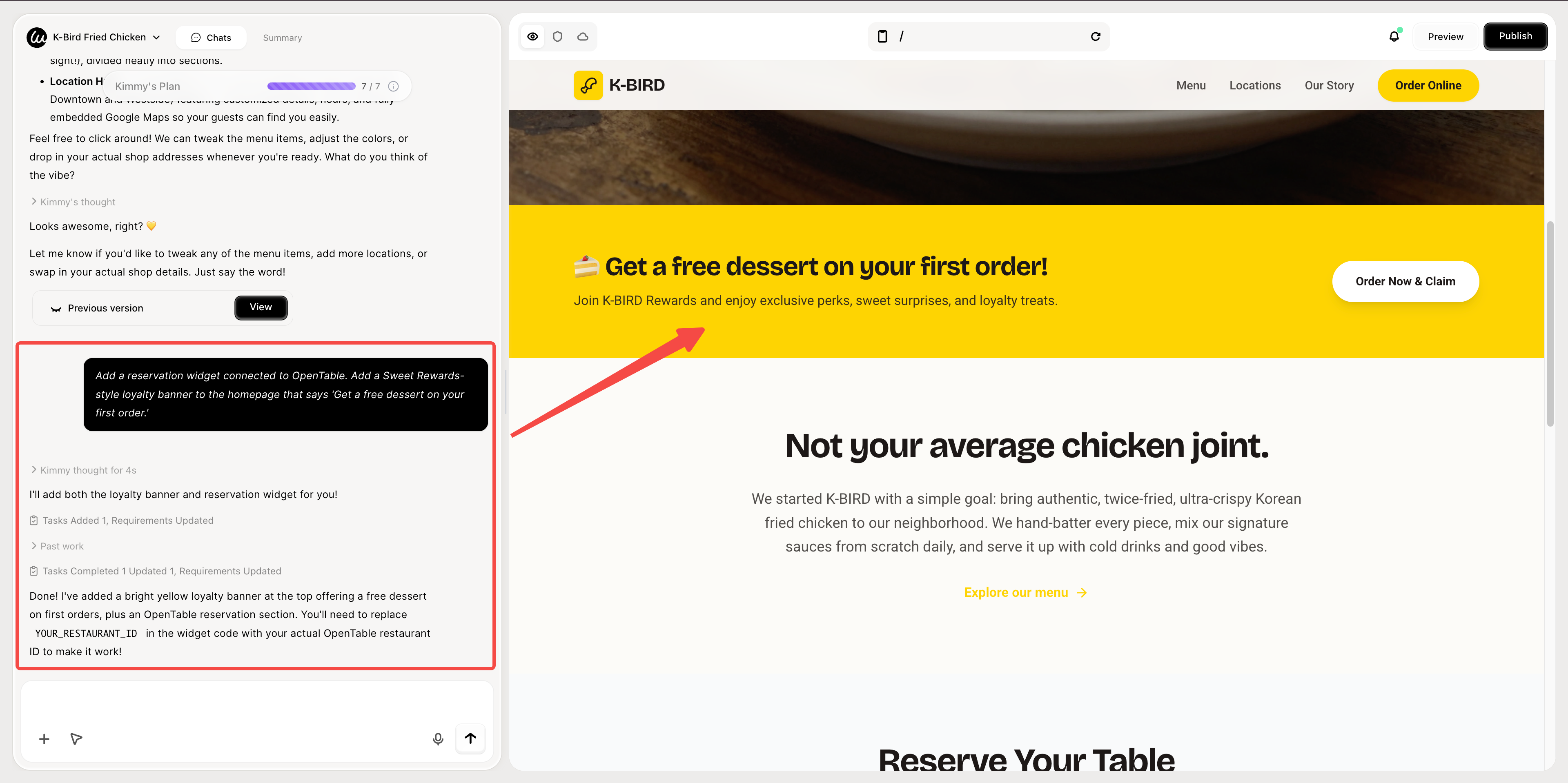
Fase 4: Pubblica con hosting incluso
Pubblica. Hosting, opzione di dominio personalizzato, sitemap.xml generato automaticamente e dati strutturati sono tutti inclusi. Per un walkthrough passo passo di questi controlli di progettazione, consulta la guida di Wegic. Per un confronto più ampio su come Wegic si confronta con Wix, Webflow, Framer e Uizard, consulta la nostra recensione approfondita di 5 strumenti per la progettazione web AI.
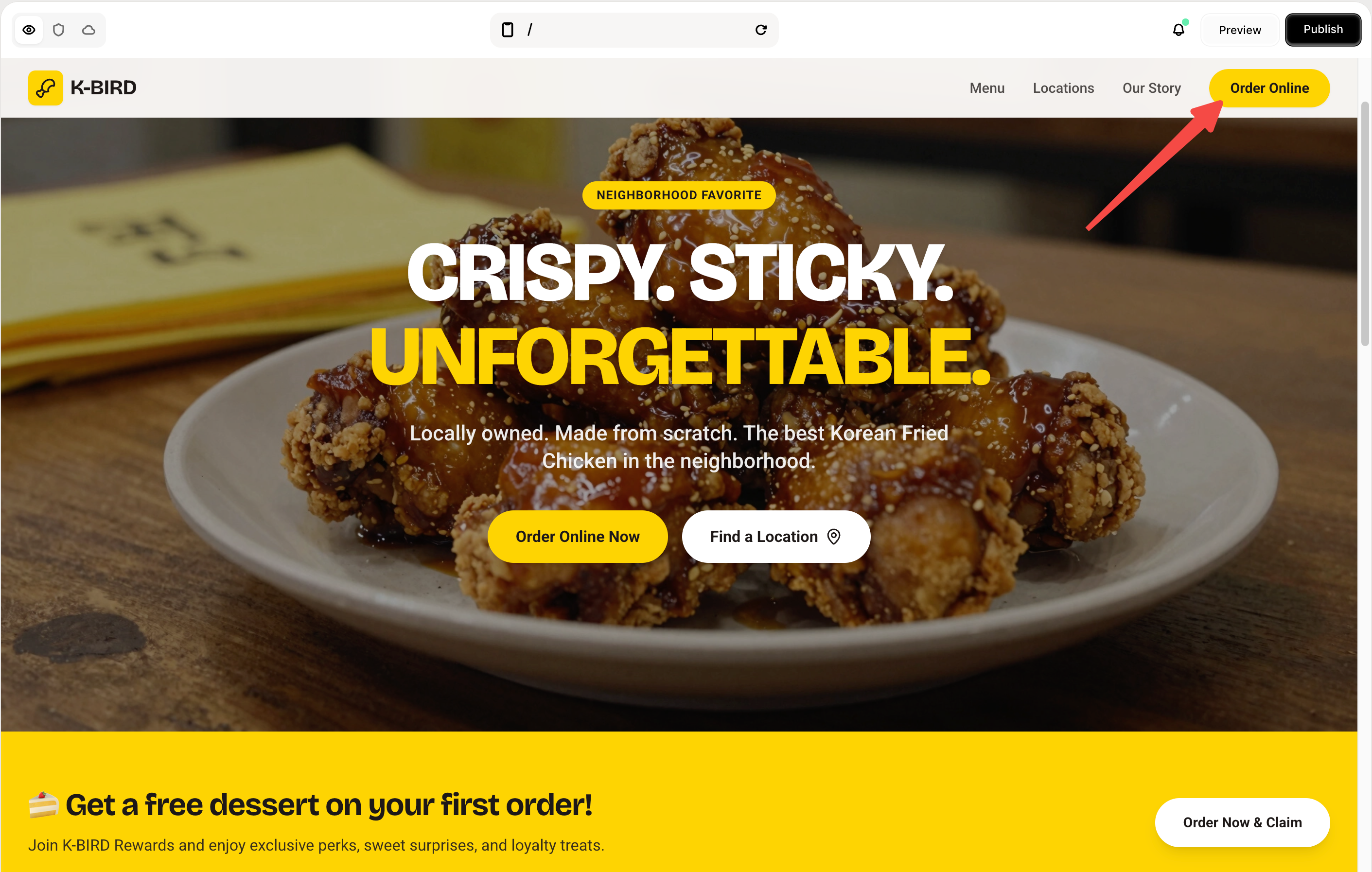
Conclusione: Scegli la tua categoria prima di scegliere il tuo modello
Gli esempi di siti web per ristoranti sopra funzionano perché ognuno si impegna chiaramente a un unico modello di business. Atelier Crenn non cerca di essere Sweetgreen; Shake Shack non cerca di essere La Semilla. Il fallimento progettuale più grande che vedo negli audit dei ristoranti è il sito con personalità multipla - tipografia per ristoranti di lusso sopra un hero per servizi veloci, con una pagina di storia editoriale accanto a un CTA per il ritiro.
Scegli la tua categoria per prima. Poi costruisci il sito che aspetta quella audience. Di tutti gli esempi di siti web per ristoranti in questa guida, quello più vicino al tuo modello di business è quello da studiare più attentamente - non quello con l'immagine hero più bella.
Per ulteriore ispirazione su come i modelli di layout si adattano alle diverse categorie, consulta la nostra guida più ampia sugli esempi di homepage dei siti web. Per confronti su siti web estetici per settore e suggerimenti su costruire siti web da zero senza modelli, le guide di Wegic vanno più in profondità.
👇 Clicca qui sotto per iniziare con Wegic's builder per ristoranti
FAQ
Come creare un sito web per ristorante che converte realmente?
Sei passaggi basati sui 12 esempi di siti web per ristoranti verificati sopra: (1) decidi per primo il tuo modello di business - ristorante di lusso, fast-casual, quick-service o indipendente - perché il design giusto è specifico per categoria; (2) costruisci la homepage attorno al tuo unico intento primario (Prenota / Ordina online / Visualizza il menu); (3) mostra orari, indirizzo e numero di telefono sopra la piega; (4) rendi il menu HTML, mai PDF; (5) testalo su un telefono reale, non su un simulatore desktop; (6) aggiungi lo schema
Restaurant e MenuItem per i risultati ricchi di Google. Strumenti come il builder per ristoranti di Wegic incorporano tutti e sei i passaggi nell'output predefinito.Quali funzionalità dovrebbe avere ogni sito web per ristorante nel 2026?
Basato sui 12 esempi di siti web per ristoranti verificati in questa guida, i must-have universali sono: (1) orari e indirizzo visibili sopra la piega, (2) menu basato su HTML (non un download PDF), (3) un unico CTA primario in linea con il tuo modello di business - Prenota, Ordina online o Visualizza il menu, (4) progettazione responsive mobile-first testata su telefoni reali, (5) profilo Google Business riconosciuto e sincronizzato con il sito web, e (6) markup schema
Restaurant e MenuItem per i risultati ricchi di Google. Nessuno degli esempi di siti web per ristoranti che ho analizzato ha saltato più di uno di questi - la differenza tra i siti top quartile e quelli bottom quartile è principalmente nel verificare questi sei punti.Quanto costa un sito web per ristorante nel 2026?
Tre livelli: (1) DIY su Squarespace/Wix/Wegic con un dominio personalizzato costa circa 200-500 dollari all'anno e un fine settimana di lavoro. (2) Un sito costruito da un'agenzia costa 3.000-15.000 dollari iniziali più hosting. (3) Siti web personalizzati per brand di ristoranti di lusso o catene costano 25.000-200.000 dollari+. Strumenti come Wegic si trovano nel livello 1 - la maggior parte dei ristoranti indipendenti può lanciare un sito corretto per categoria in meno di un giorno per meno di 300 dollari all'anno in totale.
Qual è il miglior builder per siti web per ristoranti per operatori indipendenti?
Per ristoranti indipendenti con meno di 5 sedi, i builder AI come Wegic sono il percorso più veloce per un sito appropriato alla categoria. Per catene con 5 o più sedi e ordinazioni complesse per sede, piattaforme dedicate come Toast, BentoBox, ChowNow o un'implementazione personalizzata su Webflow o Shopify iniziano a superare. La decisione dipende solitamente dal fatto che tu abbia bisogno di un POS integrato - se sì, un builder per siti web per ristoranti dedicato come Toast vince; se no, i siti generati da AI come Wegic sono più veloci e economici.
Il mio menu per ristorante dovrebbe essere HTML o PDF?
Sempre HTML. I PDF non funzionano bene sui dispositivi mobili (non c'è un ingrandimento con il dito che è comodo, e molti telefoni scaricano invece di mostrare un anteprima), sono invisibili ai motori di ricerca (Google può indicizzarne il testo ma lo valuta male), e richiedono un nuovo caricamento ogni volta che cambi un prezzo. I menu HTML si aggiornano istantaneamente, sono cercabili, supportano la markup di Schema.org per i risultati ricchi e si caricano in millisecondi invece che in secondi.
Quanto è importante l'ottimizzazione per dispositivi mobili per i siti web dei ristoranti?
Critico. Oltre il 68% del traffico dei siti web dei ristoranti proviene da dispositivi mobili, e i siti ottimizzati per dispositivi mobili catturano circa il 42% in più di ordini online rispetto a quelli con problemi di usabilità su dispositivi mobili. Google utilizza ora l'indicizzazione mobile per tutti i siti web - se il tuo sito web per ristoranti amichevole per dispositivi mobili si carica lentamente o ha pulsanti troppo piccoli, il tuo posizionamento su desktop crollerà insieme a quello mobile.
Ho bisogno di un sito web per ordini online se sono già su DoorDash e Uber Eats?
Se effettui un volume significativo di consegne, sì - con forza. Le piattaforme di terze parti addebitano 15-30% per ordine, possiedono i dati dei clienti e ti bloccano l'accesso al riferimento diretto. Un sito web per ordini online di prima parte mantiene quel margine, costruisce il database dei clienti e ottiene il 67% di preferenza dei clienti per ricerca dell'industria. La maggior parte dei ristoranti indipendenti con un volume di consegna mensile di 25.000 dollari risparmia di più in commissioni in tre mesi di quanto costi costruire un sito web di prima parte.
Qual è il miglior modo per gestire le prenotazioni sul mio sito web per ristoranti?
Per ristoranti di lusso e posti molto richiesti, i widget di prenotazione integrati da OpenTable, Resy o Tock incorporati direttamente nel sito convertono meglio rispetto a reindirizzare a una pagina esterna. Per ristoranti indipendenti con un volume più basso, un semplice modulo connesso a email o SMS funziona bene - non è necessario sovradimensionare. Qualsiasi integrazione del sistema di prenotazione per sito web sceglierai, assicurati che funzioni su dispositivi mobili (la maggior parte del traffico di prenotazione proviene da dispositivi mobili) e assicurati che la disponibilità sia in tempo reale, non "ti risponderemo entro 24 ore."
Come faccio a far apparire il mio sito web per ristoranti su Google?
Tre priorità, in ordine: (1) Richiedi e completa il tuo Google Business Profile, con nome, indirizzo, orari, foto e categoria esattamente come sul tuo sito web. (2) Usa menu HTML e aggiungi la markup di Schema.org per Restaurant/MenuItem/LocalBusiness. (3) Ottieni 3-5 backlink locali di alta qualità (sito turistico della città, blog culinari, directory di associazioni del quartiere). Con queste tre cose fatte, la maggior parte dei ristoranti indipendenti raggiunge i primi 3 risultati della sezione locale entro 60 giorni. L'efficace SEO per ristoranti è focalizzato sulle aree locali, non sulle parole chiave generiche.