The 2026 Peptide Landscape — Why a Generic Website Won't Cut It
Before any peptide website design discussion, four 2026-specific facts about FDA peptide regulations 2026 that should reshape how you build:
- February 27, 2026: HHS Secretary Robert F. Kennedy Jr. announced on The Joe Rogan Experience an intent to move ~14 of the 19 peptides currently on the FDA's Category 2 restricted list back to Category 1 — restoring legal compounding-pharmacy access. As of April 2026, the FDA has not yet published formal reclassification rulemaking, which means the legal status of peptides like BPC-157, TB-500, and CJC-1295 has not actually changed yet.
- The "research peptide" gray market remains unlawful for human use. The FDA reaffirmed in early 2024 that selling peptides labeled "for research use only" while marketing them for human consumption is a federal violation, and warning letters have been issued continuously through 2025–2026.
- Cosmetic peptides (copper tripeptide-1, palmitoyl tripeptide-1, acetyl hexapeptide-8) sit in a completely different regulatory bucket — they're cosmetic ingredients regulated by the FDA's Cosmetic Office under the MoCRA framework, not drugs.
- B2B research-grade synthesis (sold to academic and pharmaceutical labs for non-human research) is fully legal under existing chemical-supplier frameworks when properly documented.
These four buckets — research, cosmetic, prescription, and gray market — define which peptide website examples you can actually copy. The first three are legitimate. The fourth, this guide will not help with. More on that later.
The implication is concrete: when you go searching for peptide website examples to model after, sort them by compliance bucket before you sort them by visual style. A gorgeous site that's modeling on the wrong bucket will fail the moment regulators read it.
Now, the bar your site has to clear technically:
- First impressions form in 50 milliseconds, per Lindgaard's peer-reviewed research in Behaviour & Information Technology.
- 75% of users judge company credibility on web design, according to the Stanford Web Credibility Project.
- 53% of mobile visitors abandon pages over 3 seconds to load (Google mobile benchmarks).
- Google's Core Web Vitals "good" thresholds: LCP under 2.5s, INP under 200ms, CLS under 0.1.
For peptide categories — where buyers (whether scientists, dermatologists, or wellness-conscious consumers) are unusually skeptical — failing the credibility test in the first three seconds is fatal. Every example below clears it differently.
6 Verified Peptide Website Examples Across the 4 Legitimate Categories
The six peptide website examples below are organized by compliance category, not by visual style. Each was HTML-verified live in April 2026.
Category 1: B2B Research Peptide Synthesis (For Academic / Pharma Labs)
1. JPT Peptide Technologies (Berlin, Germany)
Compliance bucket: B2B research / pharmaceutical raw material
Verification: HTML inspected April 2026, copyright 2026, active product launches dated April 2026.
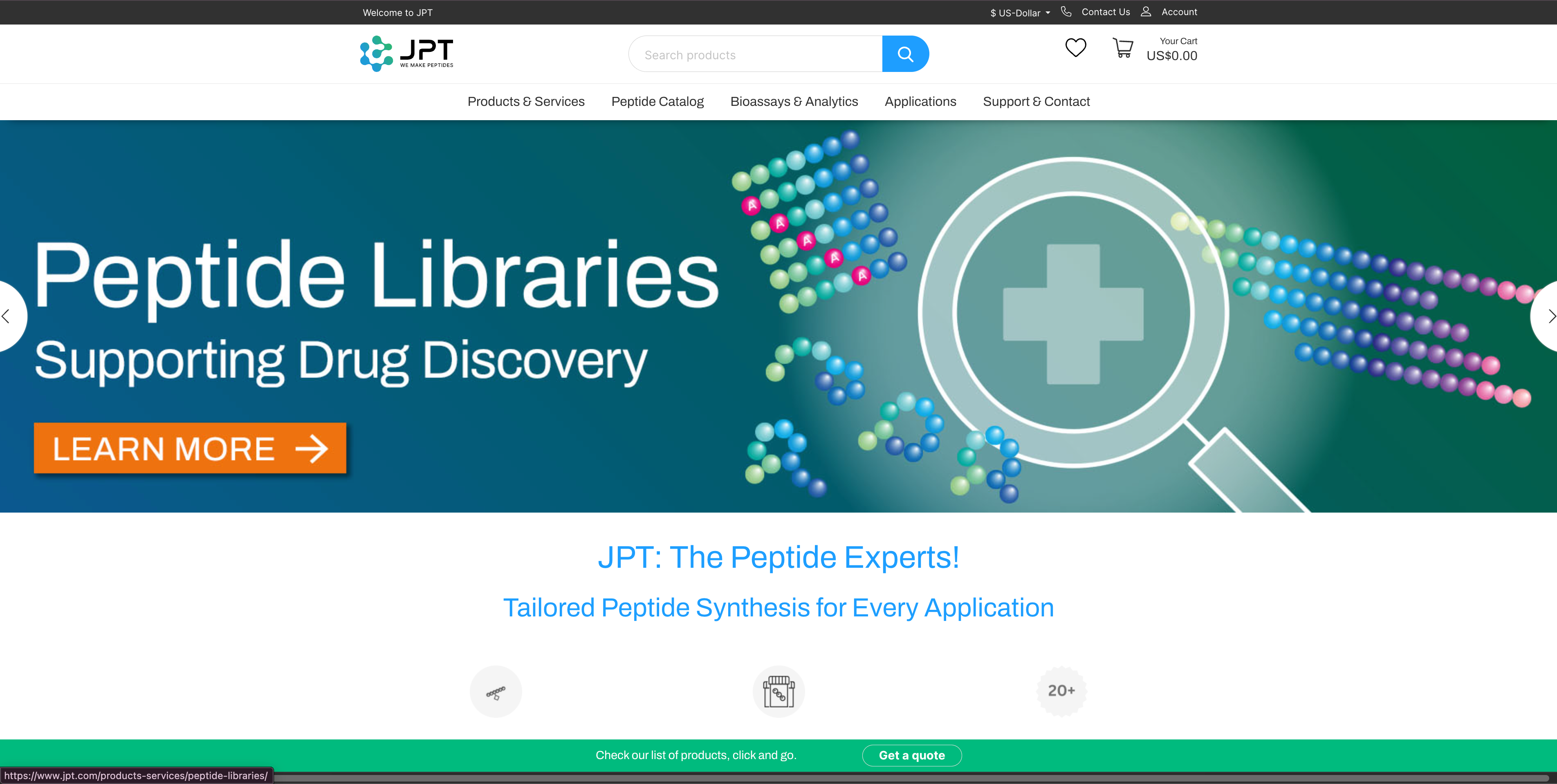
JPT is the textbook B2B peptide synthesis website. The homepage opens with three icon tiles — *Custom Peptide Synthesis*, *Scalable Peptide Solutions*, 20+ Years of Experience — followed by a deep multi-level catalog (Peptide Catalog, Peptide Libraries, Peptide Modifications, Peptide Pools, Peptide Arrays, Custom Peptide Synthesis, Bioassays & Analytics).
What works:
- ISO 9001:2015 certification badge displayed prominently, with a click-through to a dedicated Quality Management page describing TÜV Rheinland independent auditing since 2004. For B2B science buyers, this single badge does more conversion work than any hero illustration.
- Named-PI testimonials with institutions: Dr. Ann Leen (Baylor College of Medicine), Christopher M. Colangelo (Yale), Dr. Laura Pallett (UCL). Each testimonial cites the specific JPT product used and links to it. This is one of the most-imitated research peptide website patterns in the category.
- Granular product filtering by HLA allele, organism, protein name, condition, and application — built for scientists who arrive knowing exactly which sequence they need.
- Trust badges from regulatory partners: BioNTech logo, "Made in Germany" health authority mark, Authorized Economic Operator (AEO) certification, EU Regional Development Fund.
What to adapt: If you sell research peptides for scientific labs, your homepage's first job is *credibility, not aesthetics*. Lead with your QMS certification, your most prestigious customer institutions (with permission), and a quote-request flow that mirrors how actual scientists buy. Don't hide certifications in the footer — they belong above the fold.
2. GenScript (Same Bucket, Different Scale)
Compliance bucket: B2B research / pharmaceutical raw material
GenScript serves the same buyer as JPT but at higher volume — they advertise "10,000+ scientists worldwide for 18+ years" with their TurboTIDE platform synthesizing peptides "as fast as 5 days." Their peptide website design uses the same B2B research playbook (catalog → quote → certificate of analysis), but adds an aggressive guaranteed-turnaround promise with delay compensation (10% off per business day, up to 50%).
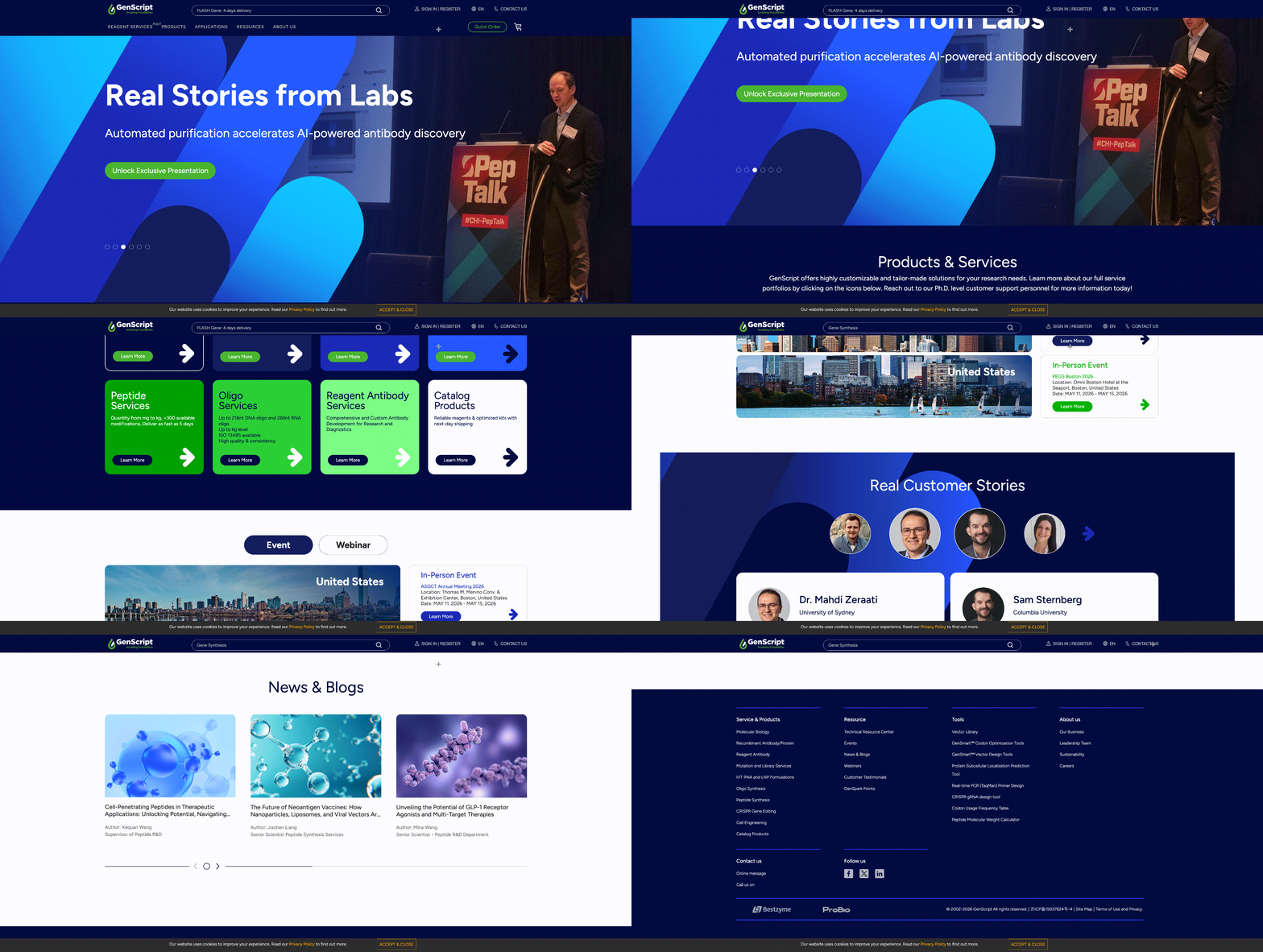
What to adapt: Speed promises with explicit compensation language are a powerful B2B trust signal. If you can credibly commit to a turnaround time and write the penalty clause directly into your site copy, you'll convert against slower competitors who only promise "fast service." For the research-peptide category, this is one of the rare peptide brand website patterns that scales from small to enterprise.
Category 2: Cosmetic Peptide Skincare (Topical, Cosmetic-Regulated)
3. The Ordinary — Multi-Peptide + Copper Peptides 1% (Mass-Market Cosmetic Peptide)
Compliance bucket: Cosmetic ingredient (MoCRA), not drug
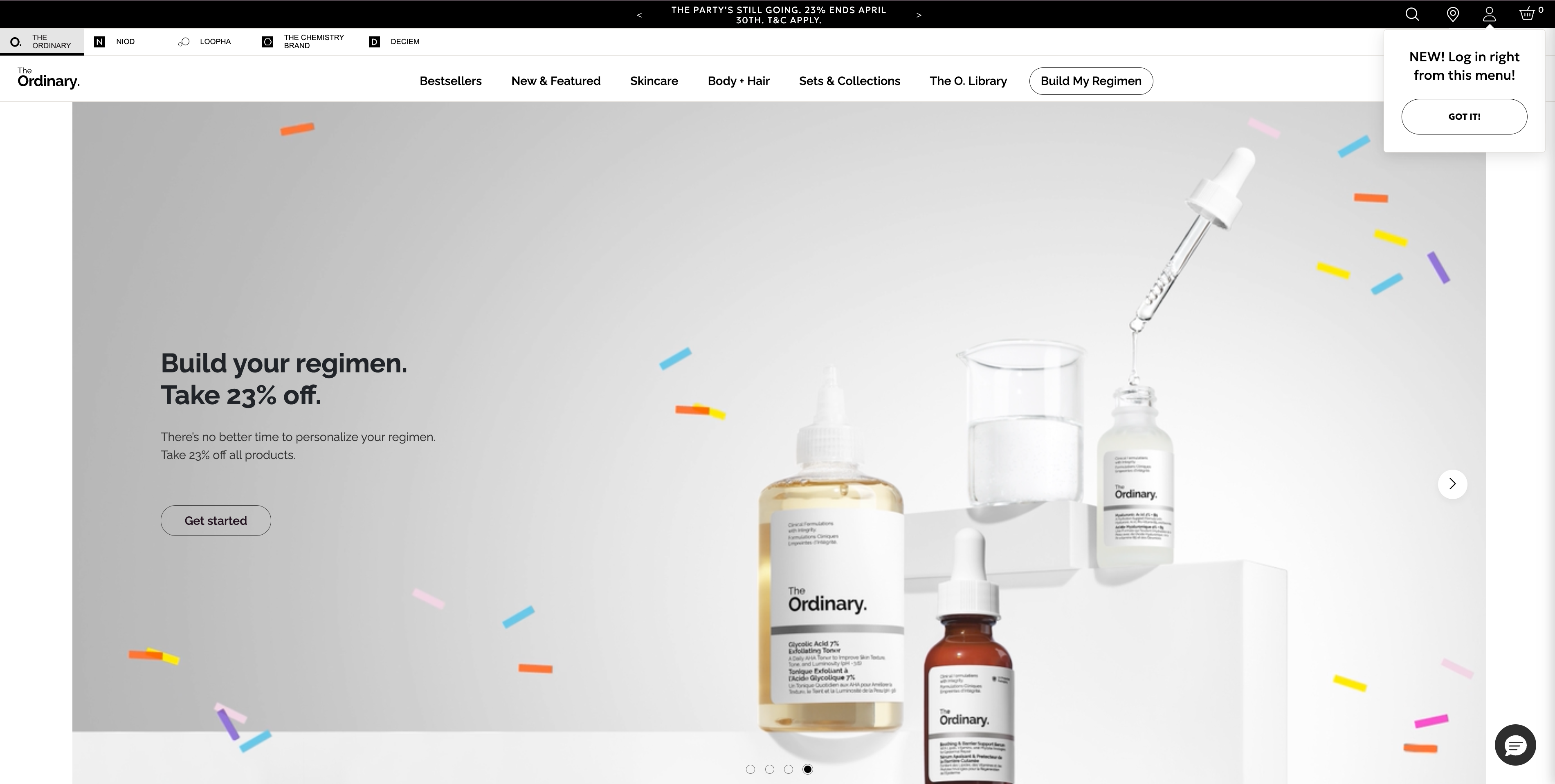
The Ordinary's cosmetic peptide website pattern has been imitated dozens of times for one reason: it sells a peptide serum at ~$32 with a 4.5/5 rating across 803+ Sephora reviews, while every other brand sells similar formulas at 3–5× the price. The site treats peptide buyers like adults who can read.
What works:
- Full INCI ingredient list visible directly on the product page, not buried in a tab. For cosmetic peptides, ingredient transparency is the conversion driver. Sophisticated buyers want to see "Copper Tripeptide-1, Acetyl Hexapeptide-8, Pentapeptide-18, Palmitoyl Tripeptide-1, Palmitoyl Tetrapeptide-7, Palmitoyl Tripeptide-38" listed before they'll add to cart.
- Concentration-claim transparency: "1%" copper peptides isn't a marketing line — it's the actual concentration named in the SKU. This signals lab-honesty in a category drowning in vague "powered by peptides" claims.
- Patch-test prompt in the directions ("Patch testing is recommended") — a small detail that signals the brand assumes the customer might react and wants them safe.
What to adapt: For any peptide ecommerce examples in cosmetics, the unifying lesson is *ingredient honesty over marketing language*. A site that names its peptides specifically (Copper Tripeptide-1, not "advanced copper peptide complex") and discloses concentrations earns trust that bigger brands routinely fail to. This is genuinely the cleanest peptide store design in the cosmetic-peptide segment.
4. Paula's Choice — Pro-Collagen Multi-Peptide Booster (Premium Cosmetic Peptide)
Compliance bucket: Cosmetic ingredient
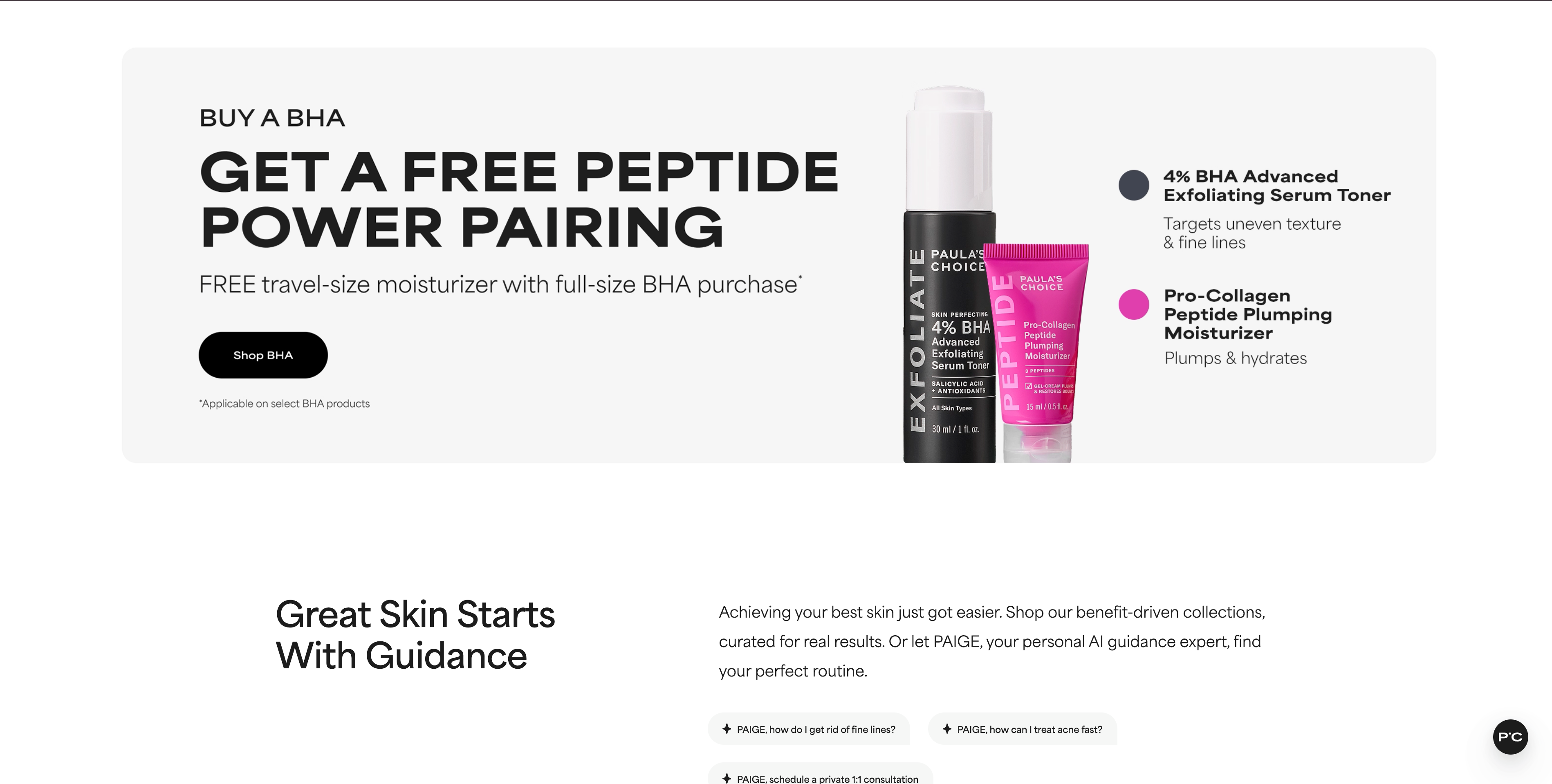
Paula's Choice positions on a different axis from The Ordinary — same ingredient family, three times the price, justified by a science-rich product page that explains *why each individual peptide does what it does*. Tripeptide-1 (firms skin), Palmitoyl Tripeptide-1 (Matrixyl-3000 component), Palmitoyl Hexapeptide-12 (manufacturer claims 33% firmness improvement in one month). The brand publishes the manufacturer-claim caveats explicitly.
What works:
- Per-ingredient educational content — every peptide on the formula gets a short paragraph explaining its mechanism. This is content marketing inside the product page, and it converts better than any blog post.
- Honest disclaimers like "according to the manufacturer" or "take with a pinch of salt" embedded in the marketing copy. Counterintuitive — and exactly why the brand has retained loyal buyers for 30 years.
- Application instruction precision: "After other serums but before moisturiser/sunscreen" / "never mix with sunscreen — it dilutes SPF." Small operational detail; massive trust signal.
What to adapt: For premium peptide cosmetics, justify your price premium with *content density*, not luxury imagery. Educate the buyer one peptide at a time. The peptide landing page that converts at premium prices is the one that reads more like a textbook than a fashion lookbook.
5. Rhode Skin (Hailey Bieber) — Peptide Lip Treatment & Peptide Glazing Fluid
Compliance bucket: Cosmetic ingredient / DTC creator brand
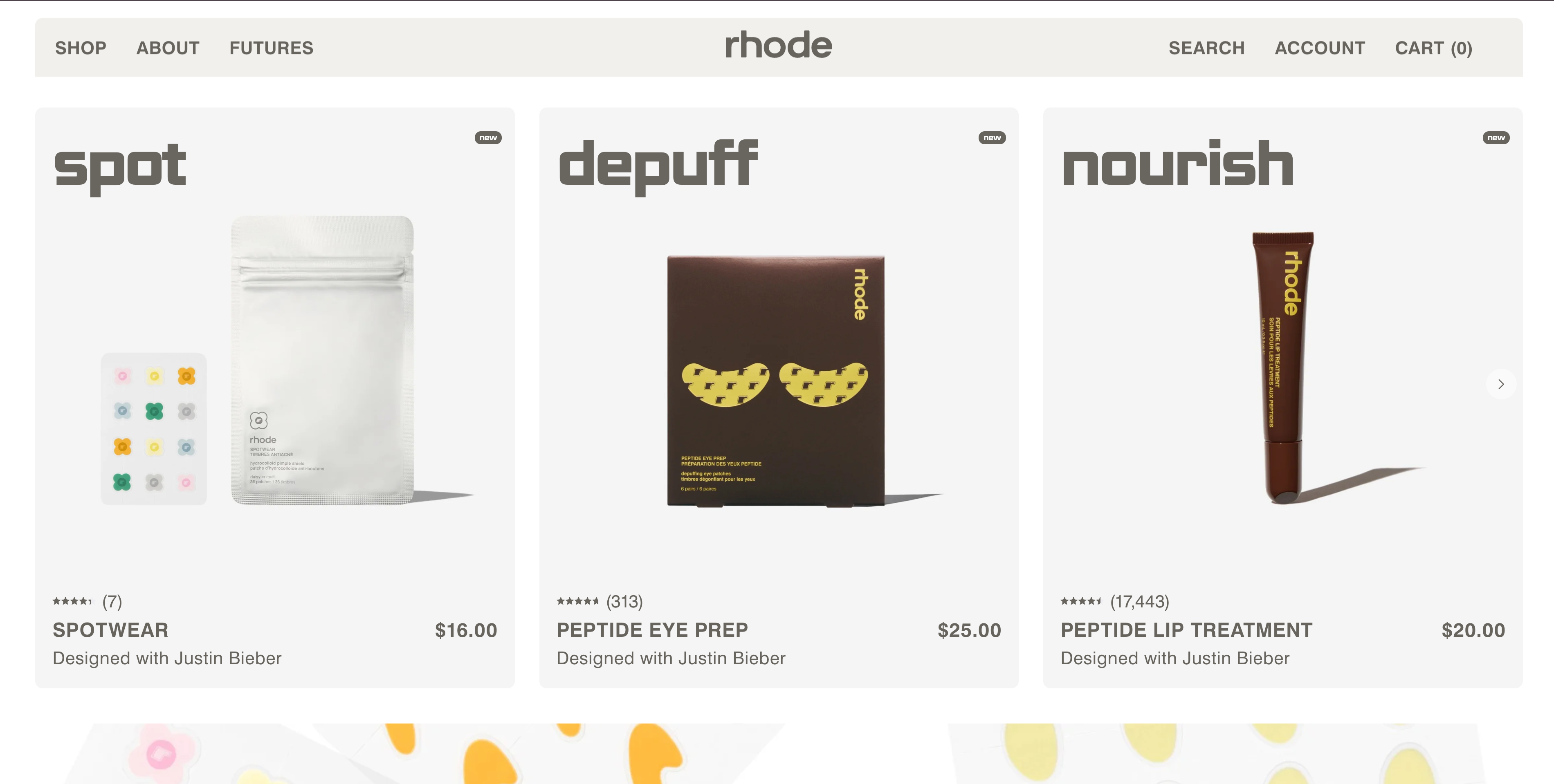
Rhode is the canonical example among GHK-Cu copper peptide brands that crossed over from clinical chemistry to celebrity-DTC — a brand built around peptides as lifestyle. The site sells the Peptide Lip Treatment and Peptide Glazing Fluid as hero SKUs, surrounded by minimal copy and maximum brand mood.
What works:
- Single hero SKU per category, not 40-product catalog overload. The whole site can be navigated in 30 seconds.
- Brand-led visual language that treats peptides as a lifestyle, not a chemistry lecture — opposite end of the spectrum from Paula's Choice but equally coherent.
- Built-in "kit" cross-sell: each individual product has a "Bundle and save" path to a 3-product set that often contains another peptide SKU. This is the move that makes Rhode's peptide line a multi-product purchase, not a single-SKU trial.
What to adapt: If you're a creator or wellness-DTC brand entering peptide skincare, you don't need to out-credential Paula's Choice — you need a stronger brand voice. Rhode shows that peptide ingredients can sustain a brand built on aesthetic and aspiration, if every other site element commits to the same voice.
Category 3: FDA-Approved Prescription Peptide Therapy
6. Hims/Hers Weight Loss (semaglutide/tirzepatide via compounded prescription)
URL: forhims.com / forhers.com Compliance bucket: Telehealth + 503A/503B compounding pharmacy
This is the most carefully-built peptide therapy clinic website category in 2026. Hims/Hers, Ro, Henry Meds, and similar telehealth operators sell access to FDA-approved GLP-1 peptide drugs (semaglutide, tirzepatide) through licensed physicians and 503A/503B compounding pharmacies. The compliance choreography embedded in the site flow is itself the design.
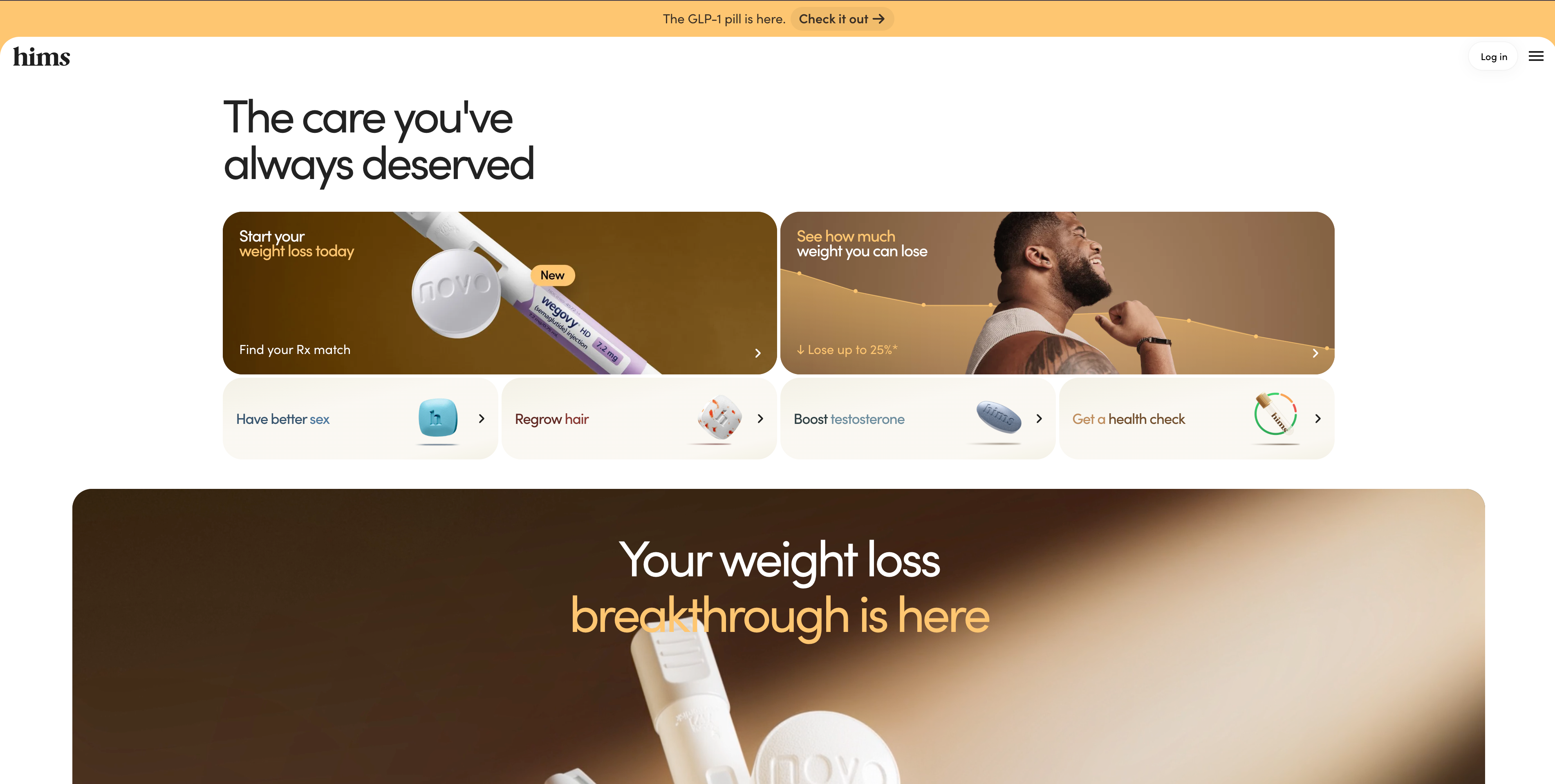
What works:
- Mandatory physician-consultation flow before purchase — the site funnels every prospect through a medical questionnaire before showing pricing for the actual prescription. This isn't a UX choice; it's a regulatory necessity.
- Explicit prescription disclaimers: "Compounded medication is not FDA-approved." The site says this on the product page, not buried in legal pages. Counterintuitively, this increases consumer trust because it positions the company as informed, not evasive.
- Pharmacy sourcing transparency: page sections explaining 503A versus 503B, why pharmacies are licensed by state, and what a Certificate of Analysis means.
- No "before/after" weight-loss imagery in the hero — most legacy diet brands lead with that. Compliant 2026 peptide-prescription sites don't, because the FDA has issued letters to operators using before/after imagery for compounded drugs.
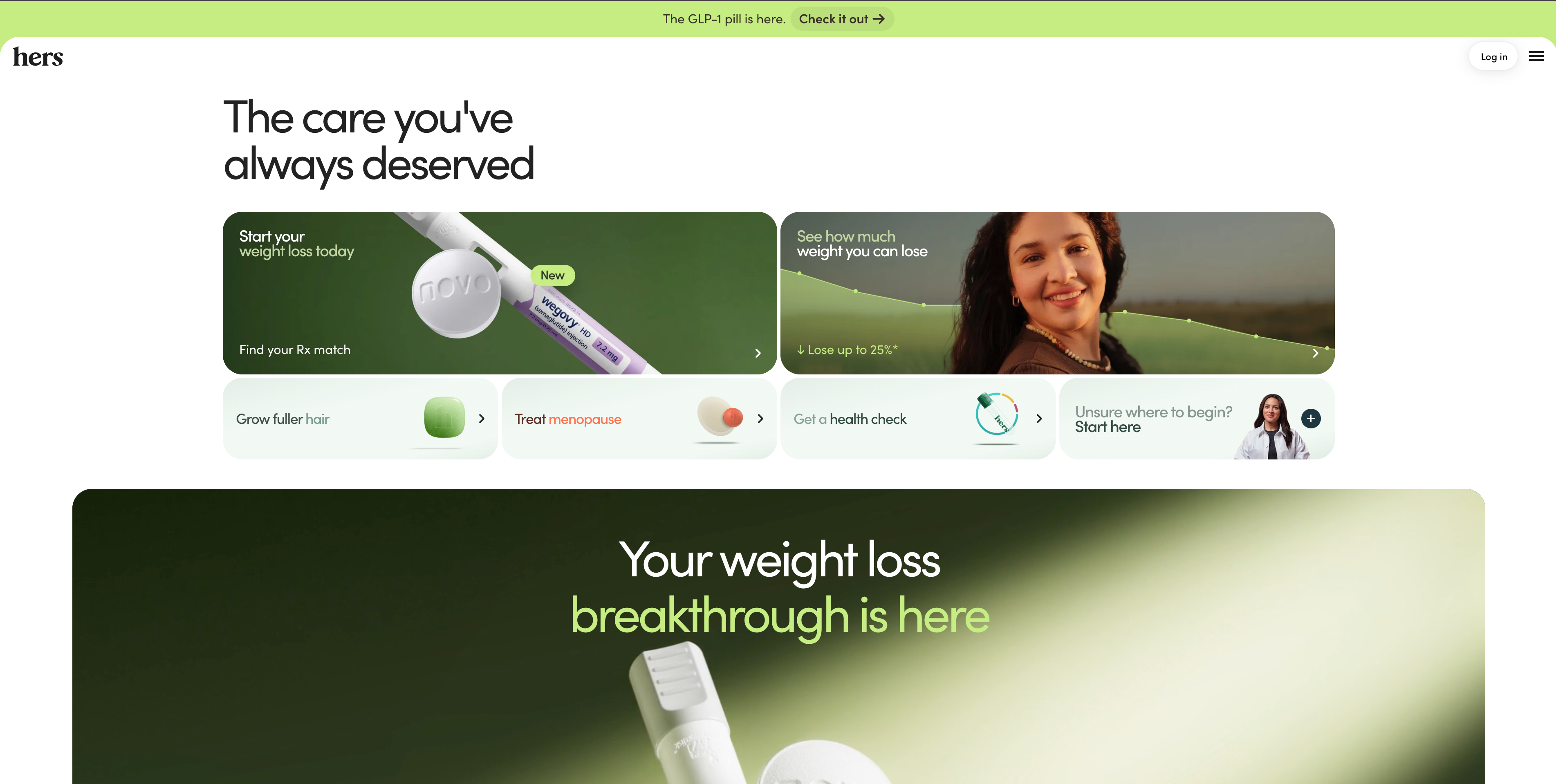
What to adapt: If you're building a peptide therapy clinic website in 2026, the new defaults are: physician-consult-first funnel, explicit not-FDA-approved compounded disclaimer, pharmacy-license transparency, and no before/after photography for compounded therapeutics. This is the design pattern that survives 2026 enforcement.
The Common Skeleton: 8 Building Blocks Every Legitimate Peptide Website Shares
After reviewing these six peptide website examples, eight structural elements appear in all the legitimate ones — and are conspicuously absent from the gray-market sites discussed below. The best peptide websites in any category check most or all of these boxes; sites missing more than three usually struggle either with conversion or with regulatory exposure.
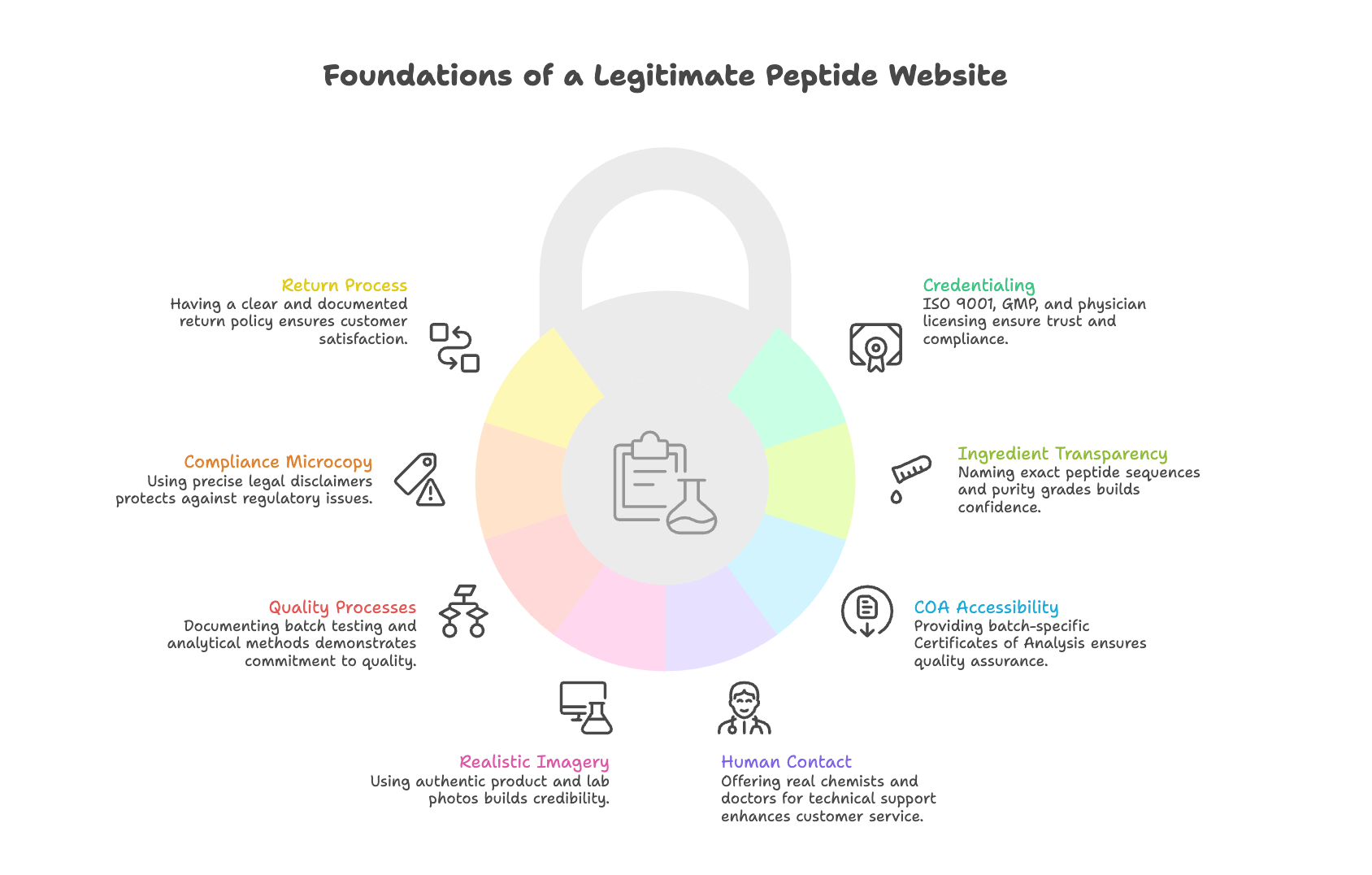
- Above-the-fold credentialing. ISO 9001 / GMP / CGMP for B2B; INCI ingredient list for cosmetic; physician licensing and 503A/503B sourcing for prescription. The credential is the headline.
- Transparent ingredient or sequence specification. Cosmetic sites name the exact peptide INCI strings; B2B sites name the exact sequence and purity grade.
- Certificate of Analysis (COA) accessibility. Either downloadable per-batch (B2B), referenced in product copy (cosmetic), or available on request (prescription).
- Named human contacts for technical or medical questions — not just a chatbot. Real chemists, real doctors, real customer-success names.
- Realistic imagery. No stock photos of glowing skin, no chrome-textured "futuristic" peptide-molecule renders. Real product, real lab, real people.
- Documented quality processes. A page describing batch testing, sterility, or analytical methods (HPLC, mass spec).
- Compliance-aware microcopy. "Not FDA-approved," "for research use," "patch test recommended" — used precisely, not as legal-shielding boilerplate.
- A real return / dispute / adverse-event process. Documented in plain English on its own page.
If you're building a peptide site, run this as your launch checklist. Every missing item below #4 puts you closer to looking like a gray-market operation, even if you aren't.
The Gray-Market Red Line: What Wegic Won't Help You Build
This guide intentionally excludes the largest single segment of "peptide websites" online: gray-market vendors selling peptides labeled "research use only" while marketing them for human use, often without a Certificate of Analysis, often at prices a fraction of compounding pharmacies, often through influencer-driven Instagram funnels.
That category is unlawful in the U.S. and similar markets. The FDA has issued continuous warning letters since October 2023 to operators using "research use only" labels while clearly selling for human use. Even the optimistic 2026 reclassification announcement explicitly does not legalize this segment — it only clarifies which peptides 503A/503B compounding pharmacies can legally prepare under physician supervision.
Wegic — and this guide — will not help build a website for this segment. Not because the design is harder, but because the pattern is straightforwardly incompatible with consumer safety. Patients have been hospitalized after receiving contaminated, mislabeled, or wrongly-dosed peptides from gray-market suppliers. If your business model requires "research use only" labels paired with dosing guidance for humans, this is the wrong tool, and frankly the wrong business.
Every legitimate peptide website builder decision in this article assumes you're operating in one of the four legal categories above.
Industry-Specific Design Patterns by Peptide Category
Cross-referencing the six peptide website examples above into a quick-reference matrix:
B2B Research | Cosmetic | Rx Compounding | DTC Wellness | |
Hero focus | QMS certification + custom-quote CTA | Single hero product + INCI list | Physician consult intake form | Brand mood + signature SKU |
Required documents | ISO 9001, COA per batch, HPLC reports | INCI list, MoCRA registration, allergen disclosure | Compounding pharmacy license, prescription requirement, AE reporting | Cosmetic registration if topical, SoP if supplement |
CTA pattern | "Request Quote" / "Download Spec Sheet" | "Add to Cart" / "Subscribe & Save" | "Start Medical Consultation" | "Shop the Routine" |
Legal disclaimers | Lab-only use, scientific use only | Patch-test, allergen, MoCRA | Not-FDA-approved compound, prescription required | Cosmetic-only or supplement disclaimer |
Sales cycle | 2–8 weeks (custom synthesis) | Same-day | 1–2 day intake → ongoing prescription | Same-day to recurring |
Choosing the right tool inside the legal boxes above matters too — see our comparison of 5 leading web design AI tools for context on Wegic vs. Wix, Webflow, Framer, and Uizard.
How to Build a Compliant Peptide Website in Minutes with Wegic
For a broader overview of how AI builders compare across categories, see the best AI website builder comparison. Rather than starting from generic peptide website templates and bolting on disclaimers, Wegic generates the site structure with the right legal architecture from the first prompt. Most public peptide website templates are designed for single-category use cases and quickly break when applied to multi-bucket businesses.
Wegic is a conversational AI website growth system with a dedicated peptide AI website builder flow — describe your business, and it generates the full site from scratch with category-appropriate structure.
Phase 1: Brief Your AI
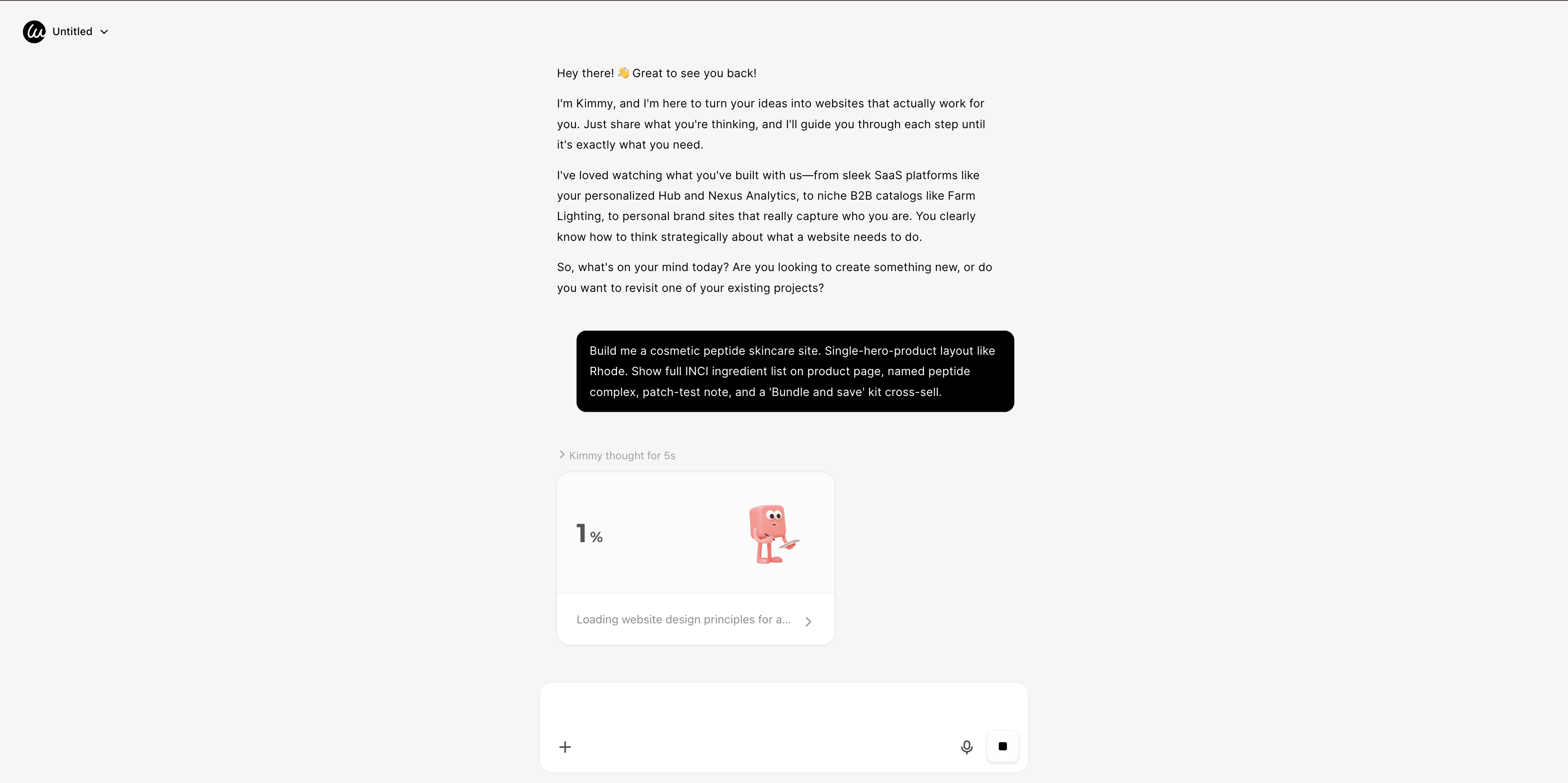
Open Wegic and chat with Kimmy, your AI project manager. Be explicit about your compliance category:
"Build me a B2B research peptide synthesis site like JPT. Hero with ISO 9001 badge above the fold, custom synthesis quote-request form, catalog organized by application (immunology, proteomics, vaccines), customer testimonials with named institutions. Add a Certificate of Analysis download button on every product page."
Or for cosmetic:
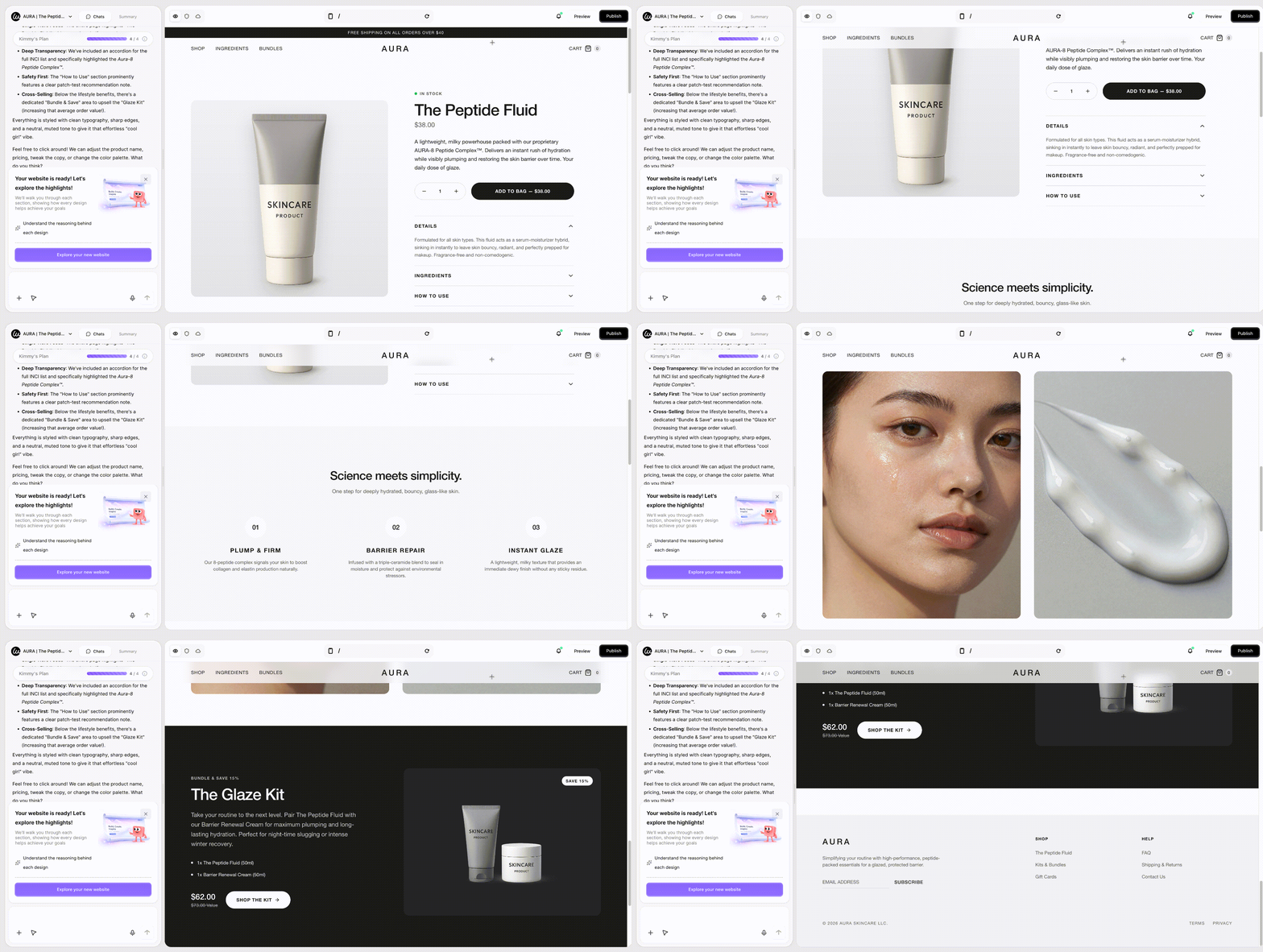
"Build me a cosmetic peptide skincare site. Single-hero-product layout like Rhode. Show full INCI ingredient list on product page, named peptide complex, patch-test note, and a 'Bundle and save' kit cross-sell."
Phase 2: AI Assembly in Under a Minute
Wegic generates a fully responsive multi-page site with category-appropriate structure — quote forms for B2B, ingredient-list product pages for cosmetic, consultation funnels for prescription. Core Web Vitals optimization, mobile responsiveness, and on-page SEO are bundled.
Phase 3: Edit by Conversation
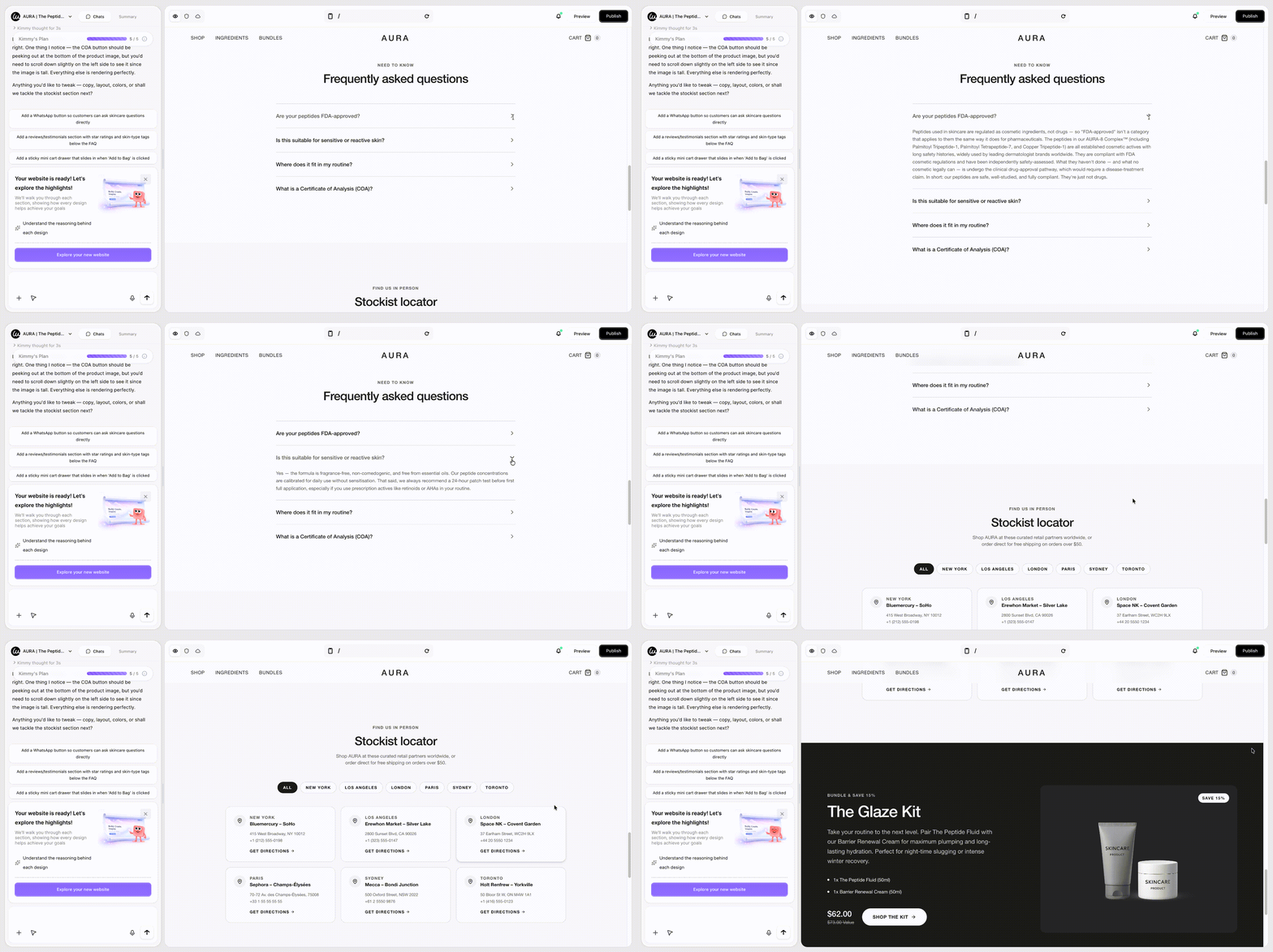
"Add a stockist locator section. Move the COA download button to be visible on the product image. Add an FAQ block addressing 'Are your peptides FDA-approved?' with a category-honest answer."
Wegic proposes 2–3 design options with reasoning before applying.
Phase 4: Publish with Hosting Included
Hit Publish. Hosting, custom domain, auto-generated
sitemap.xml, SEO metadata, and structured data are all bundled. Compliance-disclaimer pages can be generated as templates that your legal counsel reviews before launch — Wegic creates them; you sign off. Custom domain and SSL are included on all paid Wegic pricing tiers.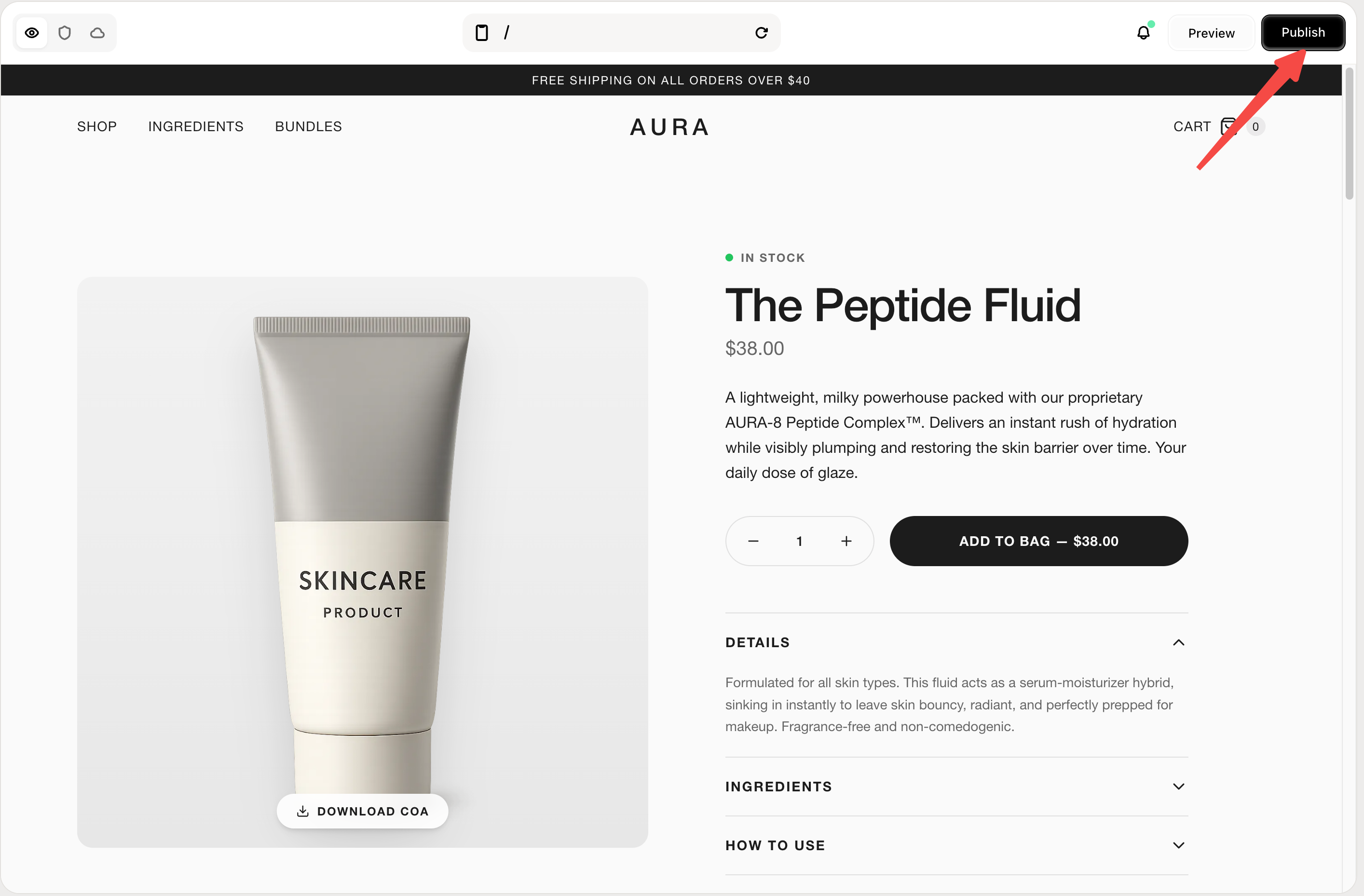
Conclusion: Pick Your Category Before You Pick Your Template
Most "peptide website examples" guides treat peptide as a single market. It isn't. The B2B research scientist buying a custom phosphopeptide library, the skincare consumer choosing between The Ordinary and Paula's Choice, the patient consulting a telehealth physician about semaglutide, and the gray-market customer ordering from an Instagram seller are four entirely different audiences with four entirely different regulatory contexts
The six peptide website examples above — arguably the best peptide websites publicly verifiable in April 2026 — succeed because each is unambiguous about which audience it's serving and which compliance regime it operates under. None of them used a generic peptide website template dropped onto a stock builder; each was structured around its category from day one. The single biggest unforced error new peptide entrepreneurs make is trying to build one site that serves multiple categories at once — the result reads as evasive to every audience, and increasingly invites regulatory scrutiny in 2026.
Pick your category first. Then build the site that audience expects.
👇Try Wegic free — build a category-clear peptide site in 60 seconds

FAQs
What types of peptide websites are legal in 2026?
The legitimate peptide website examples all fall into four categories: (1) B2B research peptides sold to academic and pharmaceutical labs for non-human research with appropriate documentation; (2) cosmetic peptide skincare regulated under MoCRA as cosmetic ingredients; (3) FDA-approved prescription peptides (semaglutide, tirzepatide, tesamorelin, etc.) prescribed by licensed physicians; (4) compounded peptides prepared by 503A/503B licensed pharmacies under valid prescriptions for Category 1 substances. The "research use only" gray market — selling peptides labeled for research while marketing them for human consumption — remains unlawful regardless of how the site is designed.
Are peptides legal again in 2026 after the RFK Jr. announcement?
As of April 2026, no formal change has taken effect. On February 27, 2026, HHS Secretary Robert F. Kennedy Jr. announced an intent to move ~14 of 19 Category 2 peptides back to Category 1 during a Joe Rogan Experience interview. The FDA has not yet published rulemaking implementing this change, and until that publication, peptides like BPC-157, TB-500, and CJC-1295 remain in their pre-announcement legal status. Build your peptide compliance posture for the current regulatory state, not the announced future one.
What does a B2B peptide synthesis website need to include?
Based on JPT and GenScript's verified live designs: ISO 9001 / GMP certification displayed above the fold, a granular product catalog with filtering (by sequence, modification, purity), a Quote Request flow for custom synthesis, named-customer testimonials with their institutions, a Quality Management System page with auditing partner identified (TÜV Rheinland, BSI, or equivalent), and per-batch Certificate of Analysis access for purchased products.
What's the difference between cosmetic peptide websites and prescription peptide therapy sites?
Cosmetic peptide sites (The Ordinary, Paula's Choice, Rhode) sell topical formulas regulated as cosmetics under MoCRA, with INCI ingredient lists, patch-test guidance, and standard e-commerce checkout. Prescription peptide therapy sites (Hims, Hers, Ro for compounded GLP-1 peptides) require physician-consultation-before-purchase flows, 503A/503B pharmacy sourcing transparency, explicit "not FDA-approved compound" disclaimers, and compliance with state-by-state telehealth rules. Conflating the two on one site is one of the most common 2026 compliance errors.
Can I sell peptides on Shopify or WooCommerce?
Yes for cosmetic peptides and FDA-approved retail peptides. For B2B research peptides, both platforms work but you'll customize heavily. For compounded prescription peptides, you generally can't use stock e-commerce platforms — the consultation-and-prescription flow needs telehealth-compliant infrastructure. AI-driven platforms like Wegic's peptide website builder generate category-appropriate structure from a chat brief, including the consultation-funnel pattern when needed.
What are the most important compliance disclaimers for a peptide website?
Category-specific. B2B research peptides: "for research use only — not for human consumption" used *truthfully*, with no human-use marketing. Cosmetic peptides: ingredient list, patch-test recommendation, allergen disclosure per MoCRA. Compounded prescription peptides: "Compounded medication is not FDA-approved," prescription requirement, pharmacy licensing identity, adverse-event reporting contact. Putting a research-only disclaimer on a site that markets the same peptide for human use is not a compliance shield — it's an FDA warning-letter trigger.
What kind of website builder works best for peptide businesses?
Whatever your category-specific compliance flow demands. For straightforward cosmetic peptide DTC, Shopify or Wegic both work. For B2B research peptides, you need granular product filtering and document-management — Wegic's AI generates this from a chat brief; alternatively a customized WooCommerce build works. For compounded prescription telehealth, you need a HIPAA-compliant consultation system on top of your front-end — Wegic generates the front-end and integrates with HIPAA-compliant intake providers. Pick the tool after you've picked the category.