Die meisten ansprechendsten Website-Beispiele in den Artikeln im Web haben das gleiche Problem: Sie listen Markennamen auf, ohne jemals zu prüfen, ob diese Marken noch bei Strikingly sind. Ich habe gesehen, wie die gleichen Zitierungen von Dharma Yoga Wheel / Seth Godin / Basecamp über Dutzende Blogs kopiert und eingefügt wurden — viele davon haben vor Jahren ihre Plattform gewechselt.
Daher habe ich einen anderen Ansatz gewählt. Ich habe das Live-Kunden-Galerie von Strikingly's eigener Showcase auf strikingly.com/s/discover abgerufen, jedes Kandidatensite im April 2026 abgerufen und jedes einzelne überprüft, indem ich den HTML-Quellcode nach Strikingly's Signatur-CDN geprüft habe (
custom-images.strikinglycdn.com, user-images.strikinglycdn.com, assets.strikingly.com). Nur die Sites, die den Fingerprint-Check bestanden, sind unten enthalten.Dies ist die ehrlichste Liste der besten Strikingly-Websites, die ich je gesehen habe, und sie dient gleichzeitig als praktische Antwort auf die Frage "Ist Strikingly noch 2026 gut und wofür?" Denken Sie daran, dass es weniger um eine Galerie von hübschen strikingly-Website-Beispielen geht und mehr um ein faktengeprüftes Leitfaden zu strikingly-Website-Design-Beispielen, die tatsächlich die Zeit überstanden haben.
Was Strikingly ist (und was es nicht ist)
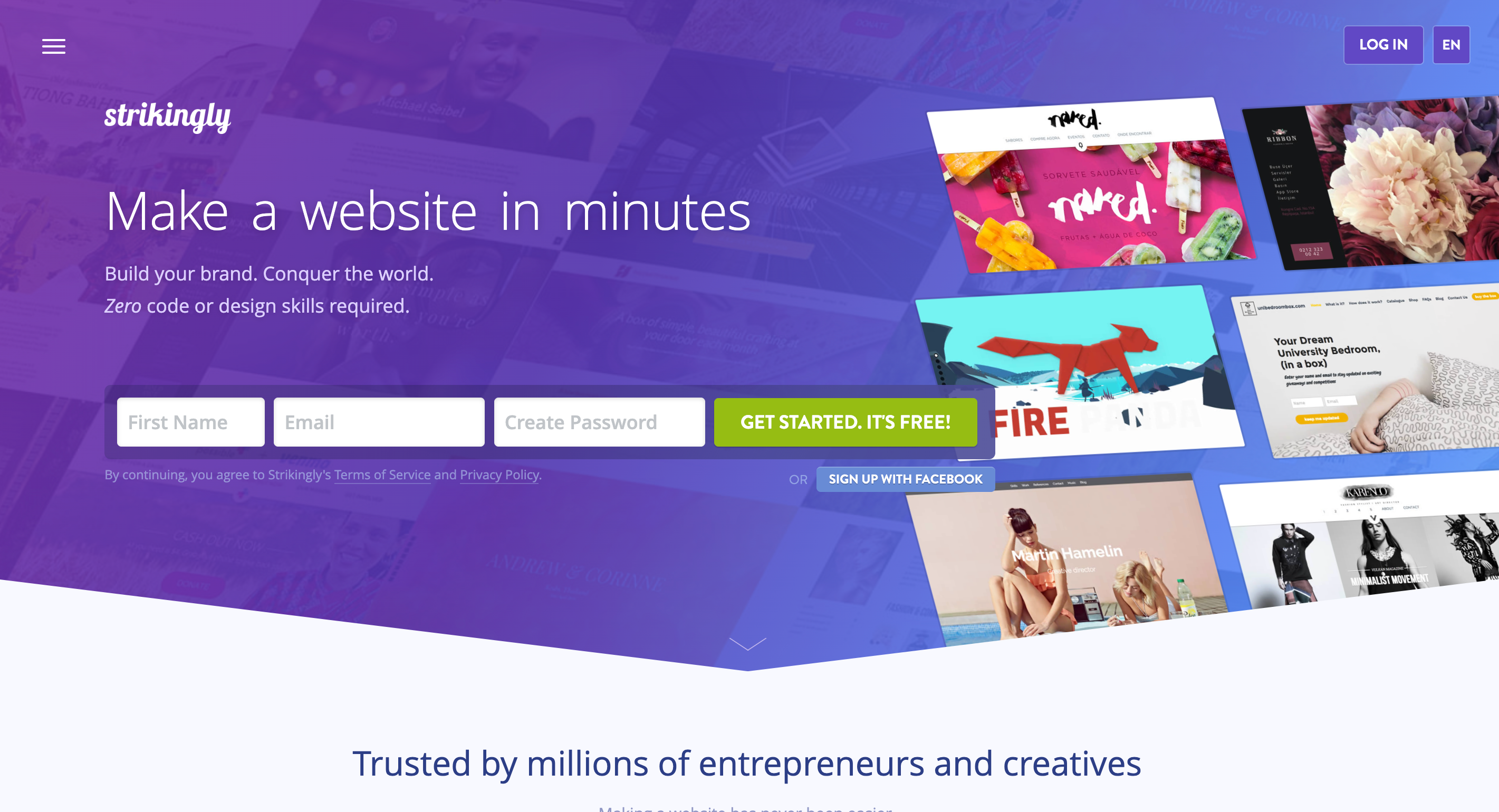
Strikingly ist ein mobile-first Website-Baukasten, der 2012 gegründet und aus dem Y Combinator-Programm ausgetreten ist. Es ist am besten bekannt für einseitige Websites – langscrollende Seiten mit anchor-verknüpfter Navigation – obwohl es jetzt auch Multi-Seiten-Builds unterstützt. Laut Wikipedia's Strikingly-Seite wurde die Plattform hauptsächlich für Portfolios, digitale Lebensläufe, Veranstaltungen, Startup-Projekte und persönliche Marken genutzt.
Bevor die Beispiele kommen, muss jedes StrikinglyWebsite-Design-Beispiel im Jahr 2026 folgende Barriere überwinden:
- Erste Eindrücke entstehen in 50 Millisekunden, so lautet das Ergebnis der Lindgaard's peer-reviewed Studie in Behaviour & Information Technology.
- 75 % der Nutzer beurteilen die Glaubwürdigkeit eines Unternehmens anhand der Webdesign, laut dem Stanford Web Credibility Project.
- 53 % der mobilen Besucher verlassen Seiten, die länger als 3 Sekunden laden (Google Mobile Benchmarks).
- Google's Core Web Vitals "gute" Schwellenwerte: LCP unter 2,5 Sekunden, INP unter 200 ms, CLS unter 0,1.
Strikingly's mobile-first Architektur hilft wirklich bei der Abwanderungsrate auf mobilen Geräten. Sein starres Vorlagen-System schadet, wenn man visuelle Unterscheidung möchte. Jedes Beispiel unten zeigt eine Seite dieses Kompromisses.
8 verifizierte Strikingly-Website-Beispiele im Jahr 2026
Die 8 strikingly-Website-Beispiele unten umfassen persönliche Marken, kreative Portfolios, gemeinnützige Organisationen und DTC-E-Commerce – die Kernanwendungsfälle, in denen die Plattform ihre Berechtigung hat. Jeder wurde im April 2026 HTML-verifiziert.
1. Michael Seibel (Emeritus-Partner bei Y Combinator)
Kategorie: Persönliche Marke / Executive
Dies ist die am meisten glaubwürdigkeitssignalisierende Site auf der gesamten Liste. Michael Seibel gründete Twitch (von Amazon für 970 Mio. $ erworben), war CEO des Y Combinator-Accelerators von 2016–2024 und sitzt im Board von Reddit, Dropbox und Kalshi. Seine persönliche Website ist auf Strikingly gebaut.
Warum es funktioniert: Eine Einseiten-Website mit Anchor-Navigation, die zu den exakten Abschnitten verlinkt, die jemand, der ihn recherchiert, benötigen würde – Twitch/Justin.tv-Geschichte, Podcasts, Essays, Buchempfehlungen, Investitionen, Restaurantinvestitionen und Bio für die Presse. Keine überflüssigen Elemente. Jeder Abschnitt verdient seinen Platz.
Was man kopieren kann: Wenn Sie Gründer, Executive oder Berater sind, hören Sie auf, einen 10-seitigen Site zu bauen. Eine einzelne Strikingly-Einseiten-Website mit klar beschrifteten Anchor-Links (Home / Podcasts / Essays / Investitionen / Bio / Kontakt) dient allen, die Sie recherchieren – Venture-Capitalists, Podcastern, Journalisten, potenziellen Mitgründern – in einem Scroll.
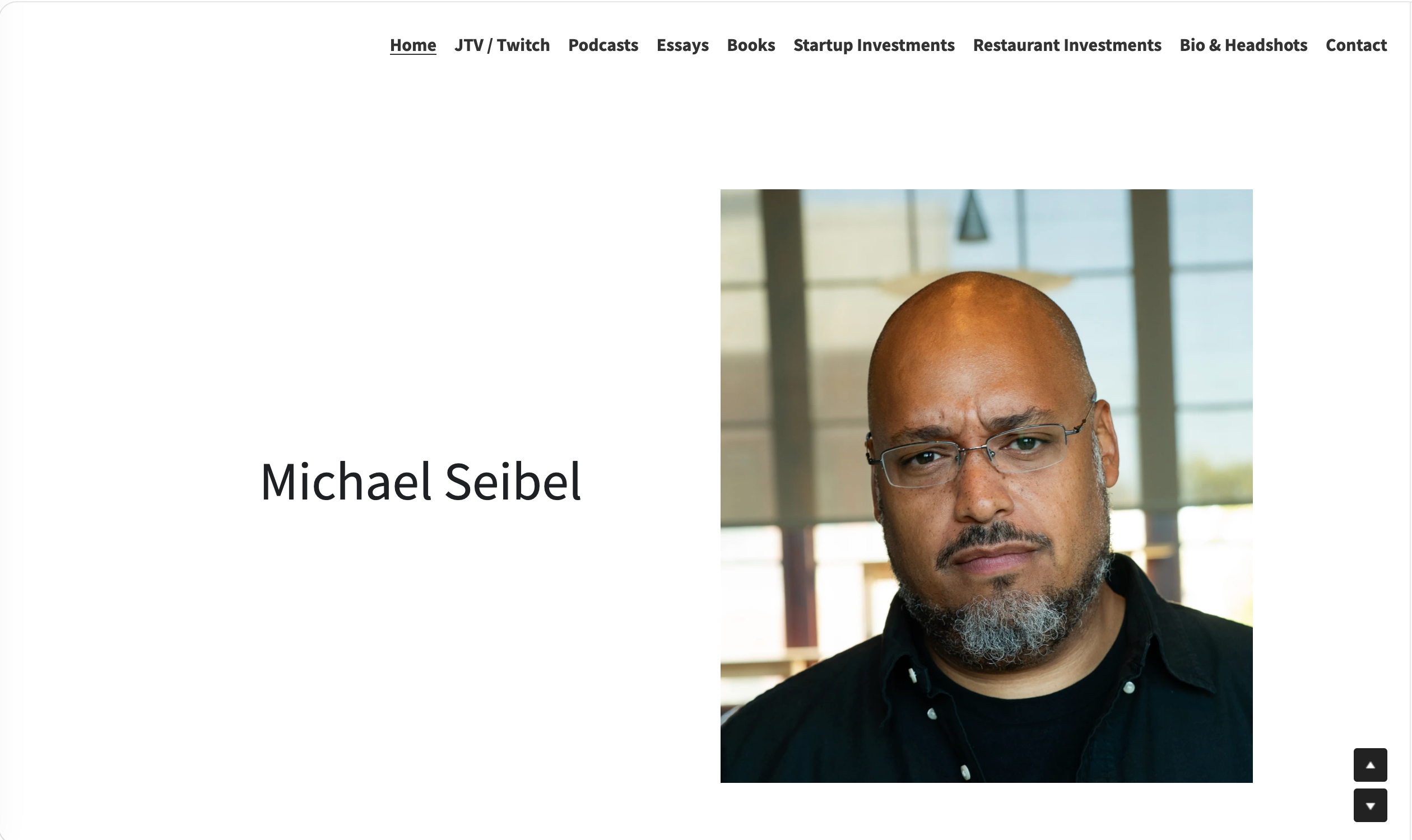
Verifizierte Strikingly-Website. Quelle: michaelseibel.com
2. Emily Penn (Ozean-Aktivistin & Skipperin)
Kategorie: Persönliche Marke / öffentlicher Redner / Aktivistin
Emily Penn ist eine britische Ozean-Plastik-Forscherin und öffentliche Rednerin, die in Discovery Channel, Sky News erwähnt wurde und Auszeichnungen von der Königin erhielt. Ihre Website organisiert mehrere gleichzeitige Initiativen (eXXpedition globale Umsegelung, SHiFT-Plattform-Partnerschaft mit SAP, Redner-Buchungen) in sauberen, markierten Abschnitten.
Warum es funktioniert: So bauen Sie eine persönliche Strikingly-Webseite für jemanden, der mehrere Projekte betreibt, ohne in mehrere Domains zu splitten. Die Navigation (News / eXXpedition / SHiFT / Projects / Talks / About / Contact) ermöglicht es Presse, Veranstaltungsvermittlern und Projektpartnern, ihre eigene Tür zu finden, ohne sich zu verlieren.
Was zu kopieren ist: Wenn Sie Redner, Aktivist oder Kreative mit 2–3 unterschiedlichen Projektströmen sind, machen Sie nicht 2–3 Websites. Eine Strikingly-Website mit klaren oberen Abschnitten gibt jeder Zielgruppe einen klaren Weg hinein, während sie gleichzeitig eine kohärente persönliche Marke bewahrt.
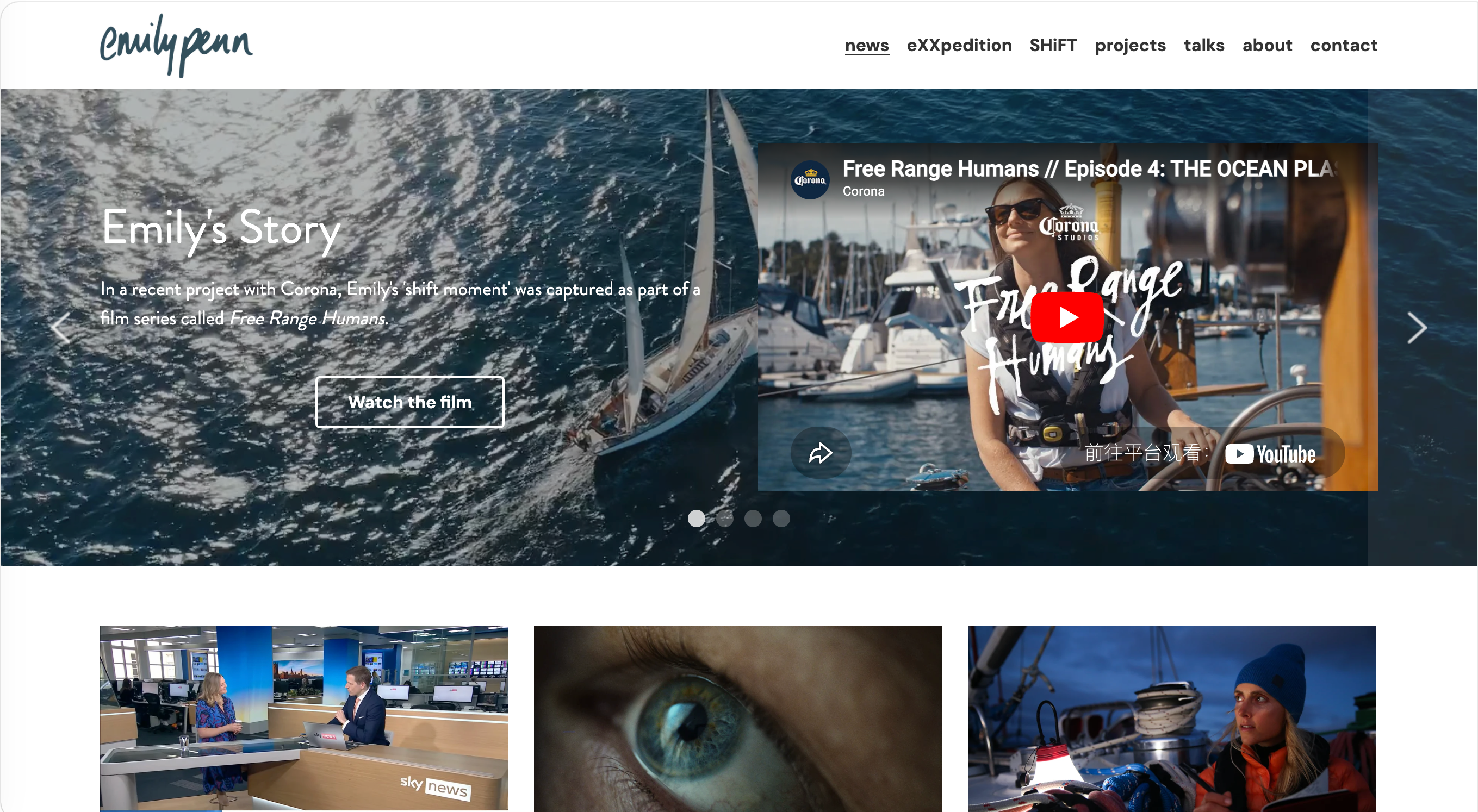
Verifizierte Strikingly-Website. Quelle: emilypenn.com
3. Momentary (Melbourne Video Production)
Kategorie: Kreative Dienstleistungen / Boutique-Agentur
Momentary ist eine in Melbourne ansässige, zielorientierte Video-Produktionsfirma. Ihre Startseite ist eine vertikale Rolle mit Vimeo-embeddeten Werkeinträgen, geordnet nach Kundenname und Dauer, ohne überflüssigen Text.
Warum es funktioniert: Für eine kreative Agentur ist die Arbeit die Präsentation. Momentary widersteht der Versuchung, den Raum mit allgemeinen "Wir sind leidenschaftlich für Storytelling"-Musterformulierungen zu füllen. Jedes Projekt erhält eine Zeile (Kunde, Dauer, Link), und das eingebettete Video macht den Verkauf.
Was zu kopieren ist: Wenn Sie eine kreative Studio betreiben, zielen Sie auf ein Strikingly-Portfolio-Beispiel wie dieses: Hauptstatement → vertikale Liste der kürzlichen Arbeiten mit minimalen Untertiteln → Kontakt. Das ist es. Die Arbeit, die Sie zeigen, ist der Text. Dies ist eines der saubersten Strikingly-Portfolio-Beispiele, die ich verifiziert habe.
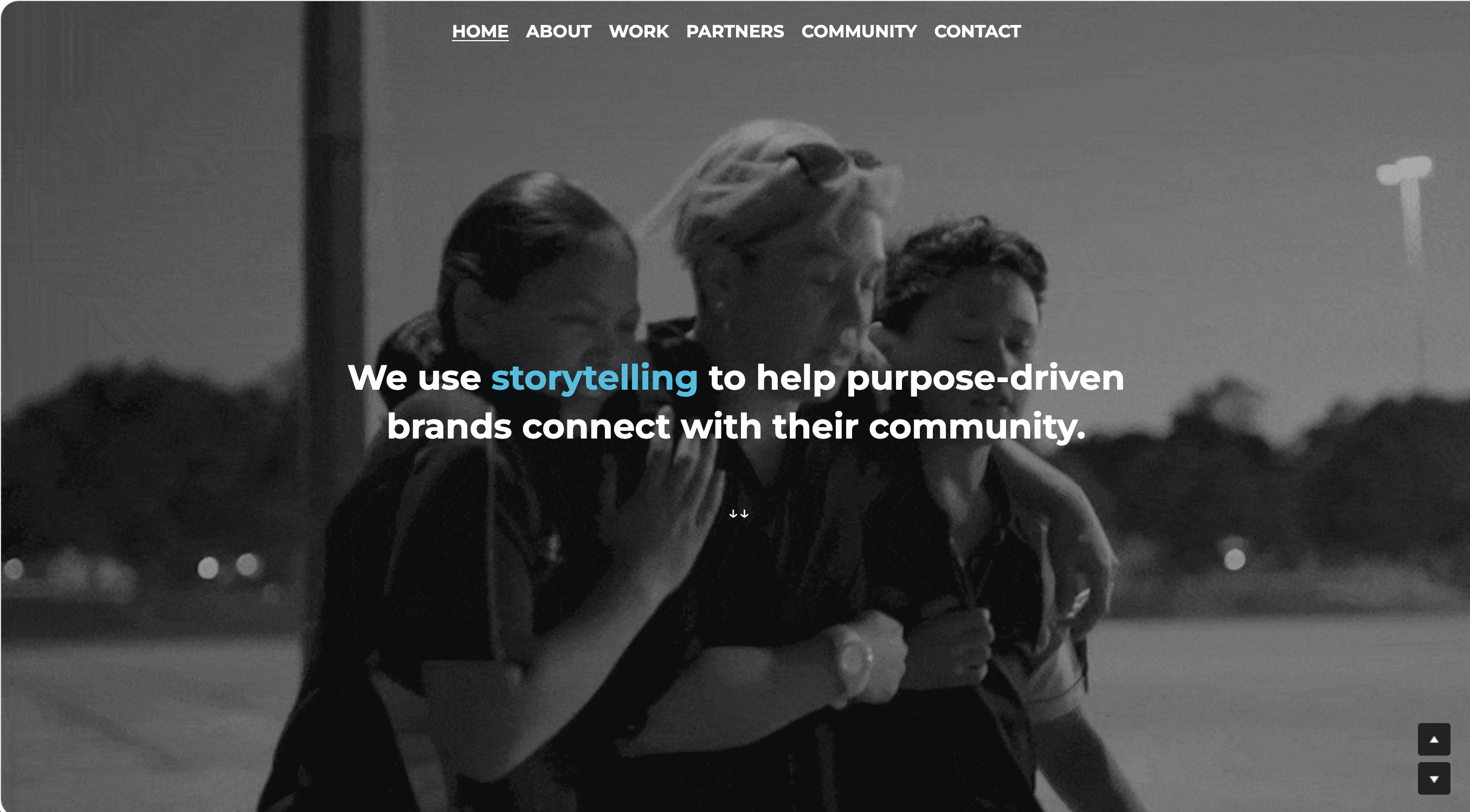
Verifizierte Strikingly-Website. Quelle: momentary.com.au
4. Playfight (Internationaler Körper-Arbeits-Community)
Playfight ist eine europäische somatische Arbeitsorganisation, die mehrstädtsche Intensivworkshops und eine Akademie veranstaltet. Die Website verwendet fette Schriftart, eine minimale Farbpalette (Schwarz, Weiß, ein Akzent) und ein Event-Grid, bei dem jeder Card auf die Anmeldung verweist.
Warum es funktioniert: Die Schriftart macht fast alles. In einer Kategorie (Körperarbeit, somatische Retreats), die oft zu New Age-Visuelle Unordnung neigt, schafft Playfight ein Premium-Gefühl durch Bescheidenheit. Das Event-Grid aktualisiert sich selbst aus den 2026-Workshops.
Was zu kopieren ist: Wenn Sie Workshops, Retreats oder wiederkehrende Veranstaltungen betreiben, verwenden Sie eines der minimalen dunklen Strikingly-Vorlagen, halten Sie sich an Bescheidenheit und lassen Sie die Schriftart die Marke tragen. Ein bescheidenes dunkles Strikingly-Vorlage schlägt ein überstyltes farbiges für ein Premium-Gefühl. Konkurrieren Sie nicht mit Ihren Kollegen durch visuelle Lärm – konkurrieren Sie durch Klarheit.
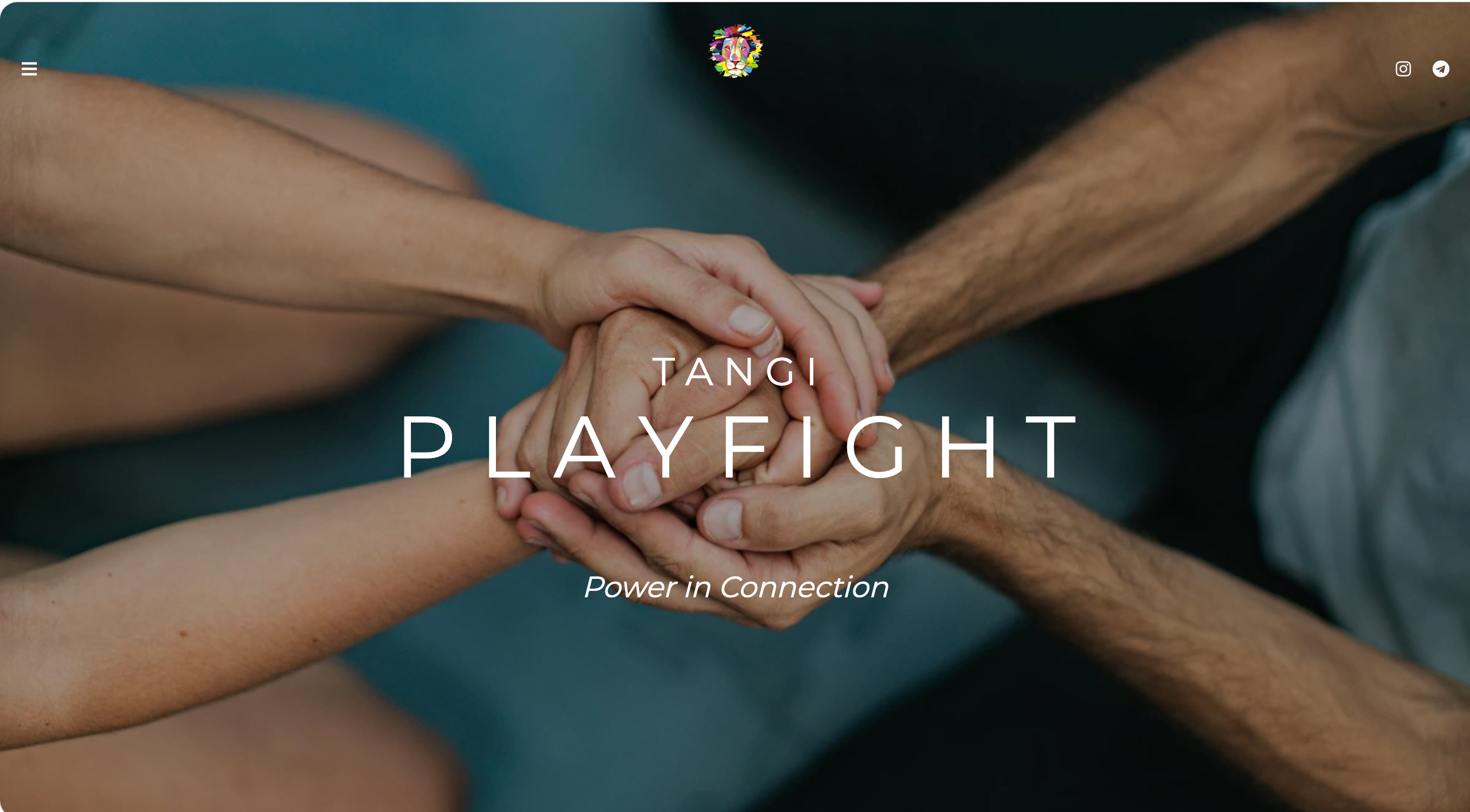
Verifizierte Strikingly-Website. Quelle: playfight.org
5. Mark & Trina Ramsey Foundation (501(c)(3) Nonprofit)
Kategorie: Nonprofit / Wohltätigkeitsstiftung
Eine Familienstiftung, die Bildung (Stipendien, Schulmaterialien) und Pflanzprogramme in Kambodscha, Indien und Ghana unterstützt. Die Website führt Spender durch Programme, Standorte, Impact-Fotos und einen Spendenfluss mit Informationen über wohltätige Matchings.
Warum es funktioniert: Kleine Nonprofits leben und sterben durch Spendervertrauen. Diese Website setzt auf Beweise – eine Galerie mit Dutzenden beschrifteter Projektbilder (Wasserbrunnen installiert, Schuluniformen verteilt, Bäume gepflanzt), eine 100%-transparente Spendenphilosophie, die direkt angezeigt wird, und ein vollständiges FAQ über Spendenmechanismen.
Was zu kopieren ist: Für Strikingly-Unternehmenswebsite Projekte im Nonprofit-Bereich, legen Sie stark auf Foto-Beweise und Spenden-Vertraulichkeit. Nutzen Sie die Galerie-Section von Strikingly mit Untertiteln, die tatsächliche Menschen, Ereignisse und Daten nennen. Spender brauchen zu sehen, was der Einfluss ist.
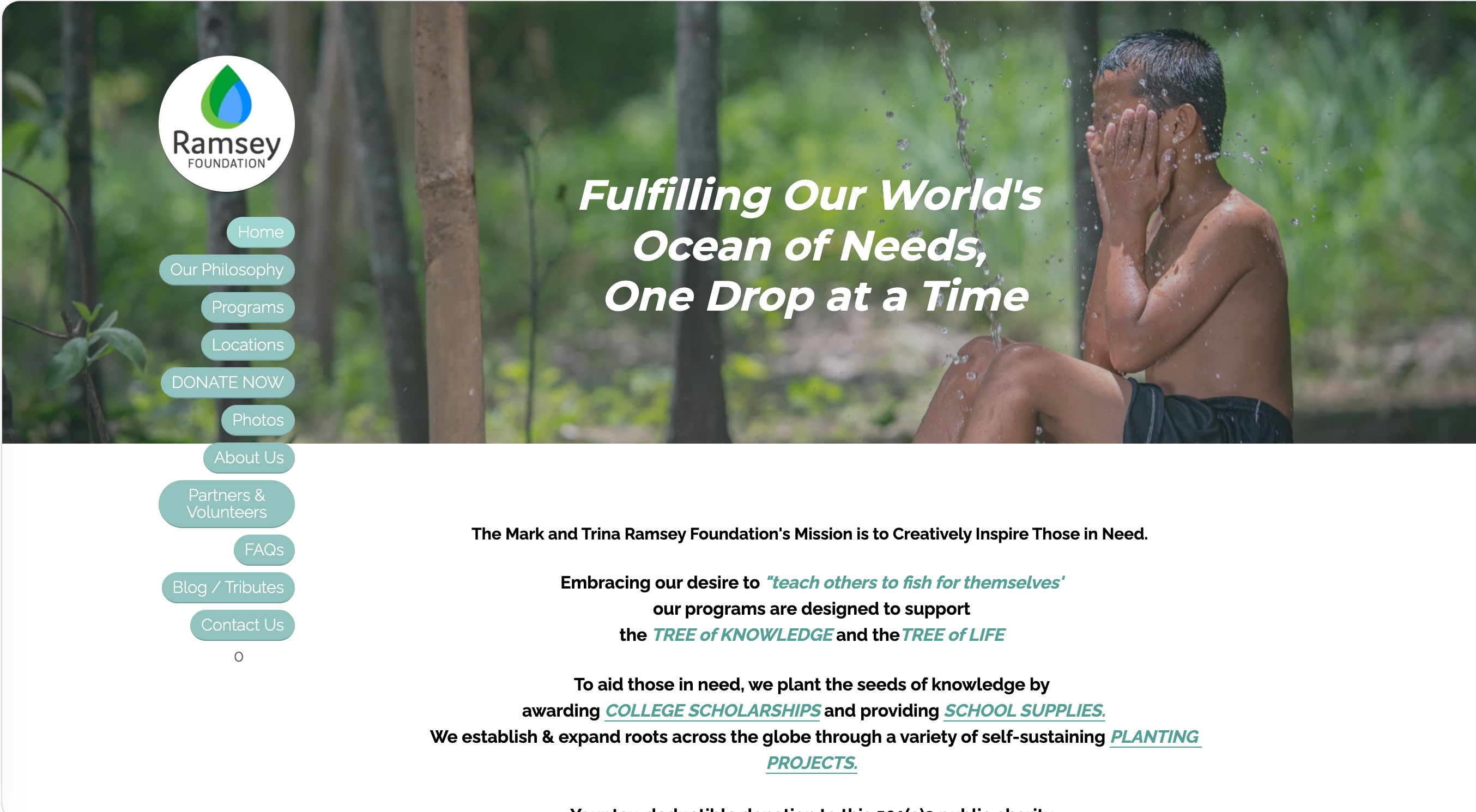
Verifizierte Strikingly-Website. Quelle: ramsey.foundation
6. Inspire Organics (Frauen-Holistic Wellness E-Commerce)
Kategorie: E-Commerce / DTC
Gegründet von einer Naturheilpraktikerin, verkauft Inspire Organics Kräuterpräparate, geordnet nach Gesundheitsthemen (Fertilität, Hormon, Darmgesundheit, Schwangerschaft). Dies ist eines der klarsten Strikingly-E-Commerce-Beispiele für ein kleines Katalog-DTC-Geschäft.
Warum es funktioniert: Die Navigation ist nach dem *Problem des Kunden* organisiert, nicht nach der Standard-SKU-Struktur von Strikingly. Jemand, der auf der Website landet und ein spezifisches Gesundheitsproblem hat, kann in einem Klick zu seiner Kategorie navigieren und relevante Produkte sowie die Möglichkeit zur Terminbuchung sehen – das Doppel-Einnahmemodell (Produkte + Beratungen) wird innerhalb der Grenzen von Strikingly sauber gehandhabt.
Was zu kopieren ist: Wenn Sie Produkte und Dienstleistungen zusammen verkaufen (Produkt + Beratung, Produkt + Kurs, Produkt + Coaching), organisieren Sie Ihre Hauptnavigation nach dem Kundenproblem, nicht nach Ihren internen Geschäftskategorien. Die einfache Navigation von Strikingly zwingt Sie zu dieser Klarheit, was oft ein Vorteil für kleine Kataloge ist.
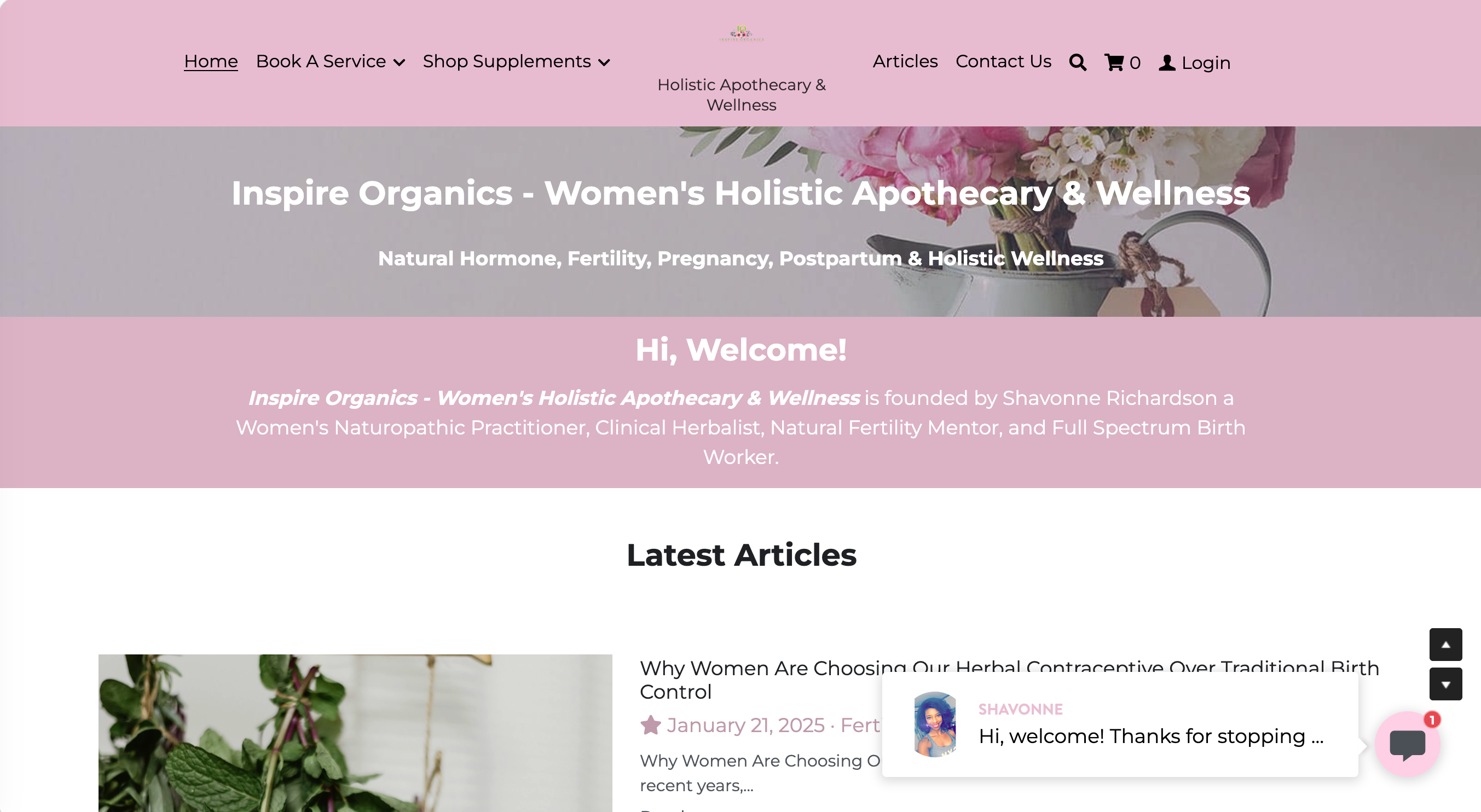
Verifizierter Strikingly-Website. Quelle: inspireorganics.co
7. Dr Chai Tea (Australischer DTC-Tee-Brand)
Kategorie: Single-Produkt-E-Commerce / DTC
Dr Chai Tea verkauft einen einzelnen handgefertigten Chai-Mix in Australien. Die Website widmet ihre gesamte Scroll-Funktion der Bildung der Besucher über die vier Zutaten (Zimt, Kardamom, Ingwer, Nelke), wobei jede Zutat einen Abschnitt hat, der ihre traditionellen gesundheitlichen Vorteile und ihre Rolle im Mix erklärt.
Warum es funktioniert: Einzelprodukt-Shops scheitern oft, weil die Betreiber versuchen, die Website mit falscher Vielfalt zu füllen. Dr Chai Tea macht das Gegenteil – es vertieft seine Geschichte zum einen Produkt. Wenn Sie alle vier Zutaten durchscrollen, haben Sie bereits ~400 Wörter über die Unterschiedlichkeit dieses Tees gelesen. Der Abschnitt "Stockists" unten verankert die Website geografisch.
Was zu kopieren ist: Für einen Hero-SKU-Shop sollte die Startseite eine Bildungsseite sein, nicht eine Katalogseite. Nutzen Sie die Strikingly-Einseiten-Website-Struktur, um zu lehren und dann umzuwandeln. Wenn Sie ein einzelnes Produkt haben, benötigen Sie Tiefe – nicht Breite.
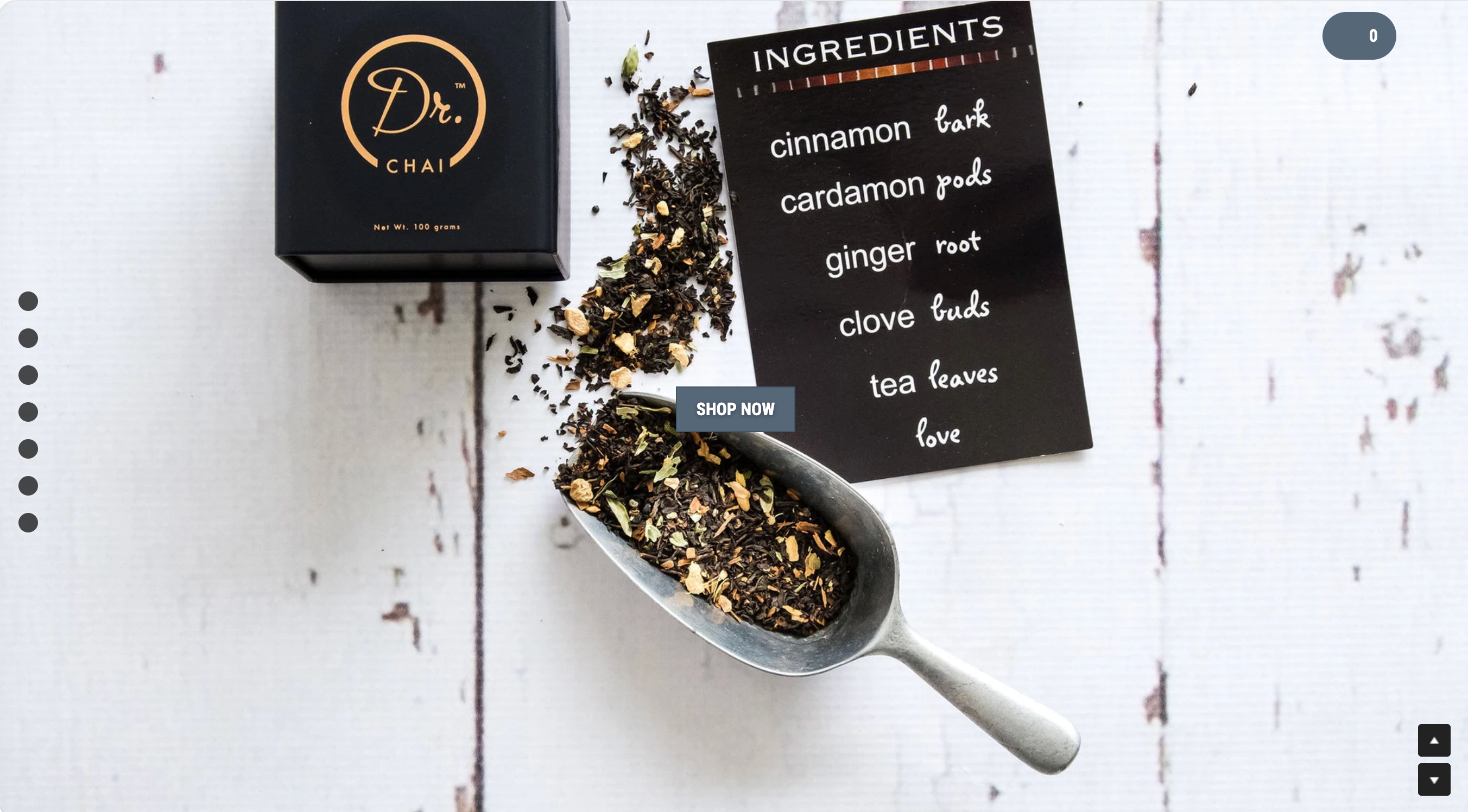
Verifizierter Strikingly-Website. Quelle: drchaitea.com
8. Ashmith Singh (Freiberuflicher Webdesigner, Fresno CA)
Kategorie: Freiberufler-Privatmarke / Dienstleistungsunternehmen
Ein freiberuflicher Webdesigner, der seine eigene Privatmarke auf Strikingly baut – ein sinnvoller Beweis des Vertrauens in die Plattform von jemandem, der in diesem Bereich professionell arbeitet. Die Website listet Dienstleistungen (Webdesign, Logo, SEO, PPC, SMM), zeigt einen dreistufigen Kunden-Onboarding-Prozess (Vertrag → Arbeit → Lieferung) und hält einen aktiven Blog.
Warum es funktioniert: Ashmiths Website ist ein fast perfektes Muster für jeden Einzelnen, der Dienstleistungen anbietet. Das Dienstleistungs-Grid, die Prozesserklärung, der Portfolio-Link und der Kontaktblock erfüllen jeweils eine Aufgabe. Nichts überschneidet sich. Nichts konkurriert. Es ist ein Strikingly Startseite-Beispiel, das man studieren sollte, auch wenn Ihr Nischenbereich nichts mit Webdesign zu tun hat.
Was zu kopieren ist: Wenn Sie ein Freelancer oder Solopreneur sind, spiegeln Sie die Struktur wider: Hero-Positionierung (wer Sie sind, was Sie tun, für wen) → Dienstleistungs-Grid mit 4–6 konkreten Dienstleistungen → 3-Schritt-Prozess-Block → Portfolio-CTA → Kontaktformular. Es ist eines der effizientesten Strikingly Startseite-Beispiele, die Sie nachbilden können. Die gesamte Website sollte in 30 Sekunden scannbar sein.
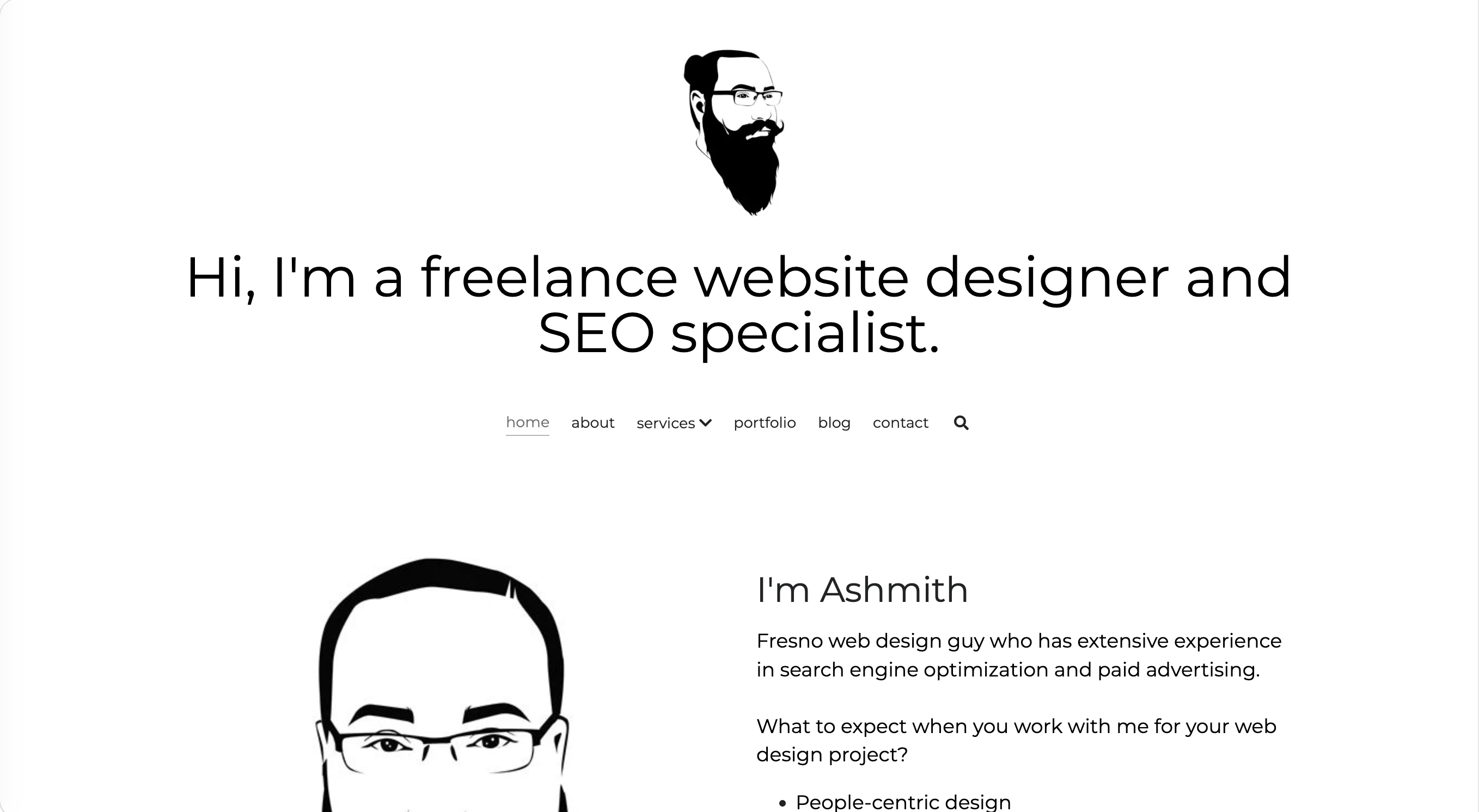
Verifizierter Strikingly-Website. Quelle: ashmith.com
Was diese 8 verifizierten Strikingly-Website-Beispiele gemeinsam haben
Wenn man sich alle 8 zusammen ansieht, wiederholen sich vier Muster. Wenn Sie die Plattform in Betracht ziehen, sind dies die Formen von Strikingly-Website-Beispielen, die in 2026 tatsächlich funktionieren:
- Einfache Websites mit engem Fokus. Jeder dieser Beispiele hat eine einzige primäre Zielgruppe und eine einzige primäre Aktion (Referent buchen, spenden, Produkt kaufen, Dienstleistung buchen). Strikingly bestraft multi-purpose-Websites; es belohnt Fokus.
- Eine einseitige Langscroll-Architektur oder ein sehr kurzer mehrseitiger Baum. Michael Seibel, Momentary, Playfight und Dr Chai Tea sind alle effektiv einseitig. Inspire Organics und Ramsey Foundation verwenden kurze Bäume (Hauptseite + 10–15 Unterseiten). Keine von ihnen versucht eine 50-seitige Content-Website.
- Starke Schriftart oder Fotografie, die die visuelle Arbeit leistet. Die Vorlagen-Anpassung von Strikingly ist begrenzt, sodass die Premium-lookenden Websites sich auf eine große Schriftart-Entscheidung oder eine große Fotobibliothek verlassen, nicht auf visuelle Tricks.
- Navigation, organisiert nach Besucherabsicht, nicht nach internem Aufbau. Die Navigation von Inspire Organics ist nach Gesundheitsthemen, Seibels nach Inhaltstyp, Playfights nach Zielgruppe. Keine ist nach dem internen Organigramm des Unternehmens organisiert.
Die ehrliche Realität: Strikingly Vor- und Nachteile 2026
Was Strikingly gut macht
- Echt mobile-first Rendering. Websites sehen gut auf Handys aus, ohne separate mobile Bearbeitung.
- Am schnellsten Onboarding aller großen Builder – Sie können eine funktionierende Einseiten-Website in weniger als 30 Minuten veröffentlichen.
- Es gibt eine kostenlose Plan mit einer Strikingly-Unterdomäne (
yourname.mystrikingly.com). - Stark für einseitige Websites — Persönliche Marken, Rednerseiten, einfache DTC, kleine Nonprofits, Veranstaltungen.
- Reinheit der Standard-Schriftarten — die verfügbaren Strikingly-Website-Vorlagen haben die typografische Hierarchie bereits vordefiniert, weshalb einige der Strikingly-Website-Beispiele oben sich premium anfühlen, obwohl der Editor eingeschränkt ist.
Wo Strikingly 2026 Schwierigkeiten hat
- Eingeschränkte Vorlagen, geringe Gestaltungsfreiheit — die gleiche Bewertung, die Sie auf Experte's detaillierte Strikingly-Bewertung lesen werden, nennt eingeschränkte Gestaltungstools und fehlenden HTML/CSS-Entwicklermodus auf den meisten Plänen.
- Keine Hierarchie für Seiten mit Unterseiten — Sie können keine echte Mehrstufige Informationsarchitektur erstellen.
- Grenzen Tiefe des E-Commerce — gut für <50 SKUs, angespannt darüber hinaus.
- Schwache SEO-Tiefe im Vergleich zu WordPress oder Squarespace — Meta-Basics funktionieren, fortgeschrittene Schema-Dateien nicht.
- Mehrsprachigkeit erfordert Pro-Plan — versteckt eine häufige Notwendigkeit hinter einer Bezahlwand.
- Eingeschränktes App-/Integrationssystem im Vergleich zu Wix oder Squarespace.
Strikingly vs Wix vs Squarespace vs Wegic
Strikingly | Wix | Squarespace | Wegic | |
Editor type | Structured sections | Freeform drag-and-drop | Structured sections | Conversational AI |
Templates | ~30 (limited) | 800+ | 100+ (curated) | None — AI generates bespoke code |
Best format | One-page long-scroll | Multi-page feature-rich | Design-led brand | Any, AI-determined |
Mobile-first | Yes, native | Separate editor | Auto-responsive | Auto-responsive |
Time to publish | ~30 minutes | 3–6 hours | 2–4 hours | Under 60 seconds |
Starting price | Free / $8+ | $17/mo | $16/mo | Free |
Best for | Single-purpose sites | Feature-heavy small biz | Design-led brands | AI-speed bespoke sites |
Wenn man Strikingly vs Wix oder Strikingly vs Squarespace vergleicht, gewinnt Strikingly bei Geschwindigkeit und mobile-first Einfachheit. Es verliert bei Designflexibilität, Vorlagenvielfalt und Skalierbarkeit. Die 8 Beispiele oben spielen auf die Stärken und akzeptieren die Schwächen.
Wenn Strikingly nicht die richtige Wahl ist — und die AI-Alternative
Obwohl die 8 verifizierten strikingly Website-Beispiele oben stark sind, hat die Plattform klare Grenzen. Es lohnt sich, strikinglyAlternativen zu betrachten, wenn eines dieser Kriterien zutrifft:
- Sie benötigen mehr als ~50 Produkte, echte Lagerverwaltung oder Mehrsprachigkeit.
- Sie möchten tiefes Content-SEO (Kategorie-Seiten, fortgeschrittene Schema-Strukturen, 100+ Blog-Beiträge).
- Sie benötigen eine mehrstufige Site-Struktur, die über die Top-Navigation hinausgeht.
- Sie wünschen sich visuelle Unterscheidung, die die Vorlagen von Strikingly nicht bieten können.
Für einfache Dienstleistungs-, Portfolio- oder kleine E-Commerce-Websites wie die oben genannten ist eine schnellere moderne Alternative Wegic — ein konversationelles AIWebsite-Wachstumsystem, das in unter 60 Sekunden eine maßgeschneiderte Website aus einem Chat-Brief generiert. Im Gegensatz zu Strikingly verwendet Wegic keine Vorlagen; das AI schreibt die Website von Grund auf für Ihren spezifischen Brief. Im Gegensatz zu Wix oder Squarespace benötigen Sie bei Wegic nicht, um zu ziehen, zu konfigurieren oder mit einem Raster-Editor zu kämpfen.
Phase 1: AI-Briefe
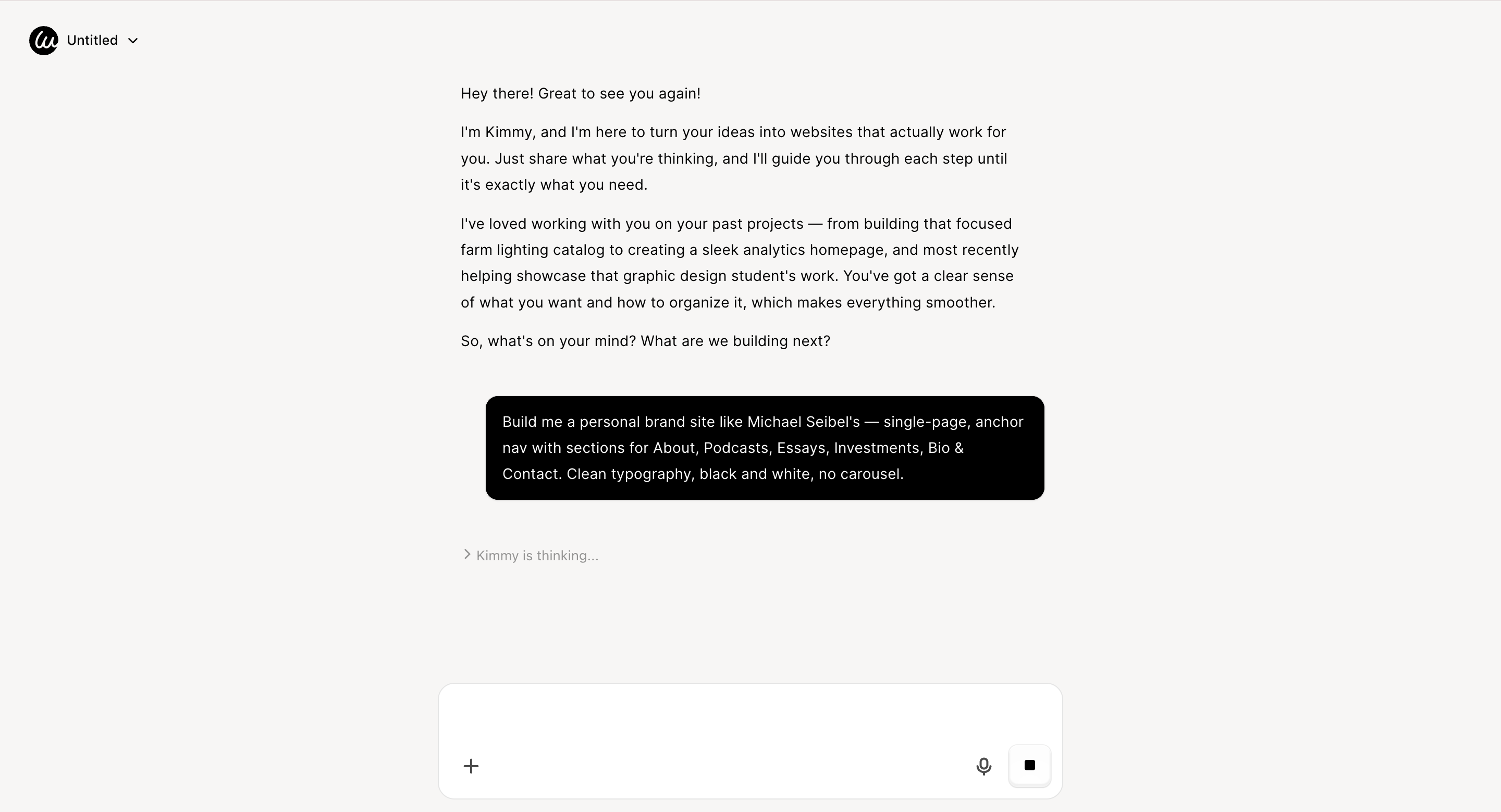
Öffnen Sie Wegic und chatten Sie mit Kimmy, Ihrem AI-Projektmanager. Nutzen Sie eines der 8 Beispiele oben als Referenz:
"Erstellen Sie mir eine Persönlichkeitswebsite wie die von Michael Seibel — einseitig, mit Anchor-Navigation und Abschnitten für About, Podcasts, Essays, Investments, Bio und Kontakt. Rein typografisch, schwarz und weiß, kein Carousel."
Phase 2: AI-Assembly in unter einer Minute
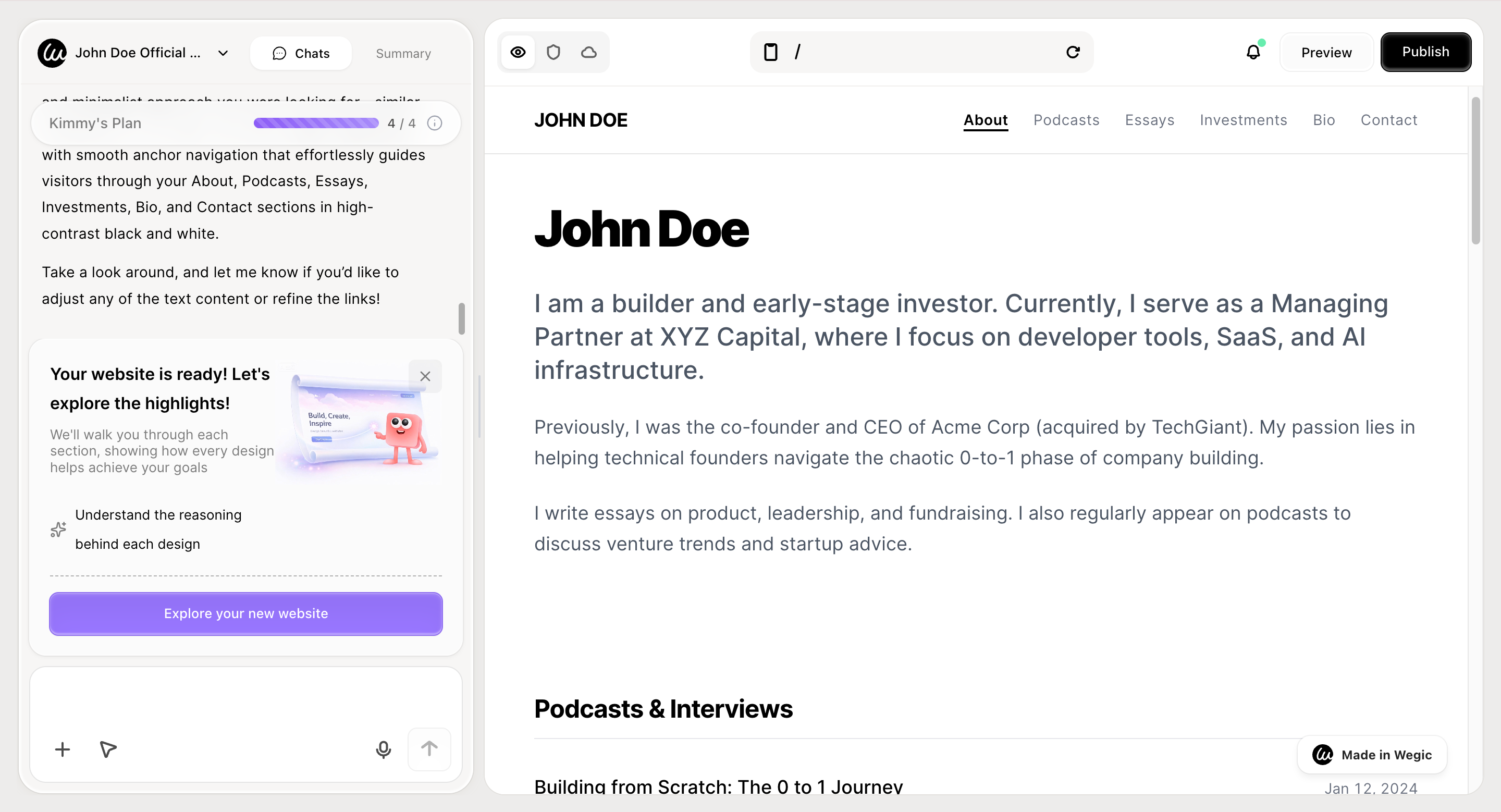
Wegics GPT-gestützter Engine schreibt den Code von Grund auf — keine Vorlage, die Sie einschränkt. In unter 60 Sekunden erhalten Sie eine vollständig responsiv Website mit Optimierung für Core Web Vitals und automatisch verarbeitete SEO-Metadaten.
👇 Klicken Sie unten, um mit Wegic zu beginnen
Phase 3: Bearbeiten per Konversation
"Verschieben Sie den Essays-Abschnitt über Investments. Ändern Sie die Akzentfarbe von Tiefblau in Tiefburgunder. Verkürzen Sie den Hero-Headline auf max. 8 Wörter."
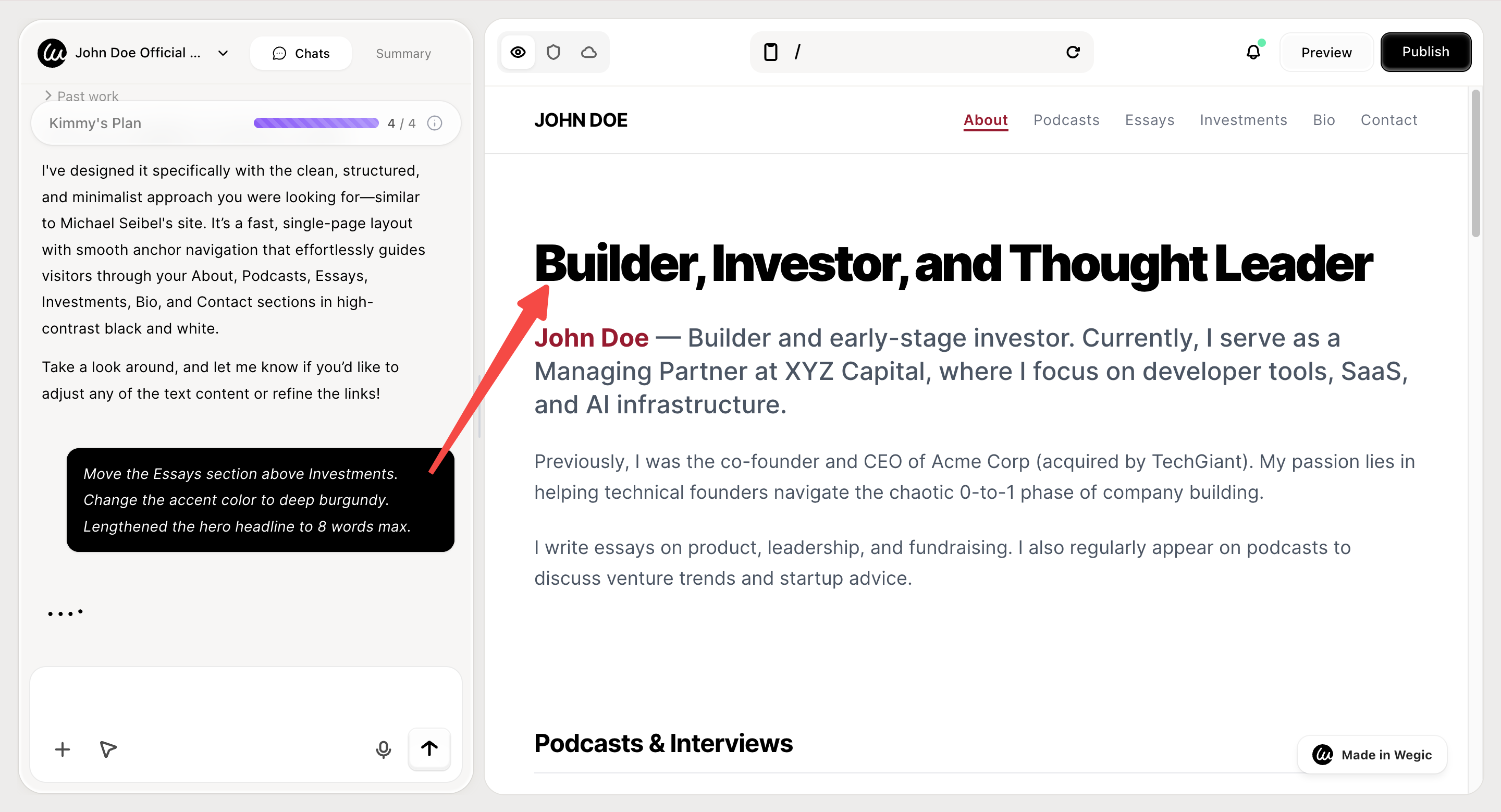
Wegic schlägt 2–3 Designoptionen mit Begründung vor, bevor es angewandt wird — damit Sie nicht Ihre mobile Ansicht zerstören (ein bekanntes Limit bei Vorlagen-basierten Buildern).
Phase 4: Veröffentlichen mit Hosting enthalten
Klicken Sie auf Veröffentlichen. Hosting, Option für eine benutzerdefinierte Domain, automatisch generierte
sitemap.xml und SEO-Metadaten sind alle enthalten.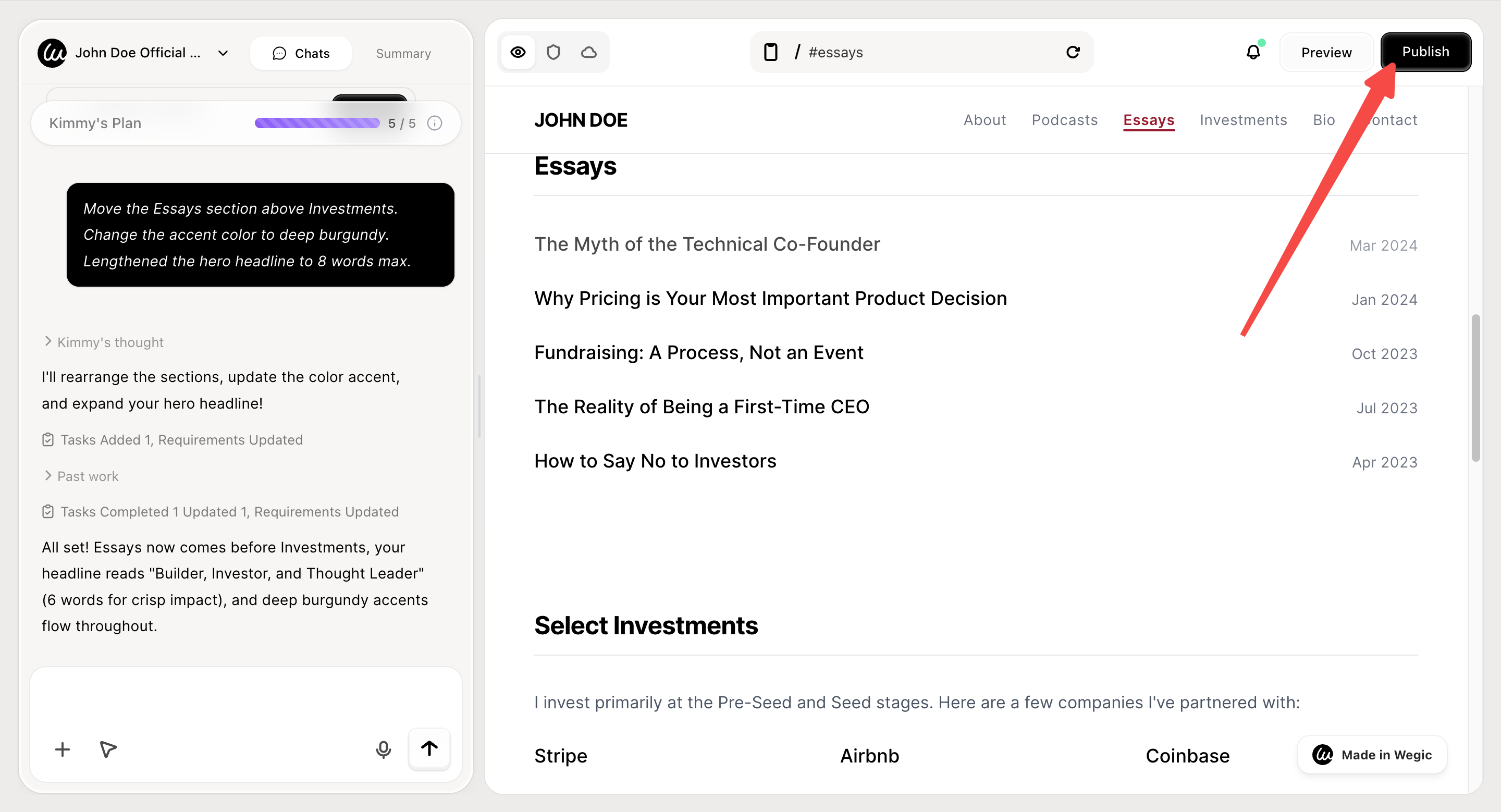
Zusammenfassung: Die besten Strikingly-Website-Beispiele setzen auf Fokus
Jedes der 8 verifizierten strikingly Website-Beispiele oben hat Erfolg, indem es etwas tut und nicht drei Dinge gleichzeitig. Die Website von Michael Seibel ist ein Gründer-Investor-CV; Momentary ist ein Reel; Dr Chai Tea ist eine Zutat-Ausbildung; Inspire Organics ist ein Frauen-Gesundheits-Apotheker. Das ist der gemeinsame Faden über jedes herausragende Beispiel in dieser Analyse der strikingly Website-Beispiele.
Strikingly ist immer noch eine gute Wahl im Jahr 2026 — aber nur innerhalb dieser Formen. Wenn Ihr Projekt einem der vier Muster entspricht, die ich identifiziert habe (enges Umfang, einseitig/kurze Baumstruktur, starkes Typografie oder Fotografie, intendorganisierte Navigation), können Sie mit echtem Vertrauen eine beste Strikingly-Website für Ihr Nischengebiet bauen. Wenn es nicht passt, ist die ehrliche Antwort, dass Strikingly-Alternativen — Wix, Squarespace, Shopify oder AI-first-Baustoffe wie Wegic — Ihnen mehr Raum zum Wachsen geben.
FAQs
Ist Strikingly im Jahr 2026 gut?
Ja, für die richtigen Anwendungsfälle. Strikingly bleibt einer der schnellsten und am mobilen-freundlichsten Baustoffe für einseitige Websites: Persönlichkeitsmarken, Redner/Advocat-Websites, kleine Freelancer-Portfolios, Einzelprodukt-DTC-Shop, kleine Nonprofits und einseitige Event/Landingpages. Die 8 verifizierten strikingly Website-Beispiele oben zeigen, was funktioniert. Außerhalb dieser Muster — inhaltsschweres SEO-Websites, große E-Commerce-Kataloge, mehrere Zielgruppenmarken — wachsen die meisten Teams über das Vorlagen-System von Strikingly innerhalb eines Jahres hinaus.
Was ist der Unterschied zwischen Strikingly und Wix?
Strikingly ist strukturierte Abschnitte, mobile-first und optimiert für die schnelle Lieferung einer einseitigen oder sehr kurzen mehrseitigen Website. Wix ist freiformes Ziehen und Ablegen mit Hunderten von Vorlagen und einem riesigen App-Ökosystem, aber es dauert länger, um zu veröffentlichen. Wenn man Strikingly vs Wix vergleicht, wählen Sie Strikingly für die Einfachheit der Geschwindigkeit bei einem engen Umfang; wählen Sie Wix, wenn Sie fortgeschrittene Funktionen, eine größere Vorlagenbibliothek oder Drittanbieter-App-Integrationen benötigen.
Wie unterscheidet sich Strikingly von Squarespace?
Beide sind Strukturabschnitt-Baukästen mit ausgewählten Vorlagen. Strikingly betont mobile-first Einseiten-Websites und ist schneller zu veröffentlichen mit einem einfacheren Editor. Squarespace bietet mehr Designflexibilität, eine größere Vorlagenbibliothek und tiefere Inhalts-/Blog-Tools. Bei einer Entscheidung zwischen Strikingly vs Squarespace gewinnt Strikingly oft aufgrund von Einfachheit und Geschwindigkeit; Squarespace gewinnt, wenn Sie Design-Politur wünschen und beabsichtigen, den Inhalt über Jahre zu pflegen.
Kann ich einen echten E-Commerce-Shop auf Strikingly bauen?
Sie können einen kleinen bauen. Strikingly verarbeitet bis zu ~50 SKUs ziemlich gut, insbesondere für Einzelprodukt- oder engmaschige DTC-Shops (siehe Dr Chai Tea und Inspire Organics oben). Darüber hinaus bieten Shopify, WooCommerce oder Squarespace Commerce tiefere Lagerverwaltung, Versand- und Steuerfunktionen. Strikingly ist nicht dafür konzipiert, Ihre E-Commerce-Plattform für die nächsten fünf Jahre zu sein, wenn Sie skalieren möchten.
Hat Strikingly gute SEO?
Grundlegende SEO ist in Ordnung – Meta-Titel, Beschreibungen, saubere URLs, mobilfreundliche Ausgabe, integrierter Titel/Meta-Editor. Fortgeschrittene SEO (Anpassung strukturierter Daten, detaillierte Sitemap-Steuerung, reiche SEO-Plugin-Ökosystem) ist nicht der Stärke von Strikingly. Wenn SEO Ihr primärer Wachstumskanal ist, bieten WordPress oder Squarespace Ihnen eine höhere Obergrenze.
Welche Arten von Websites funktionieren am besten auf Strikingly?
Basierend auf den Mustern, die ich in den 8 verifizierten strikingly-Website-Beispielen oben identifiziert habe: (1) Persönliche Marken / Executive / Redner-Websites; (2) Einzelprodukt- oder kleine Katalog-DTC-E-Commerce; (3) Kreative Portfolios (Fotografie, Video, Design); (4) Kleine Nonprofits und gemeinnützige Stiftungen; (5) Einzelveranstaltungs- oder Kampagnen-Landingpages; (6) Freelancer- und Solopreneur-Dienstseiten. Websites, die oft über Strikingly wachsen: Inhaltsreiche SEO-Blogs, wachsende Multi-SKU-E-Commerce-Unternehmen und Multi-Audience-Marken mit komplexer Segmentierung.