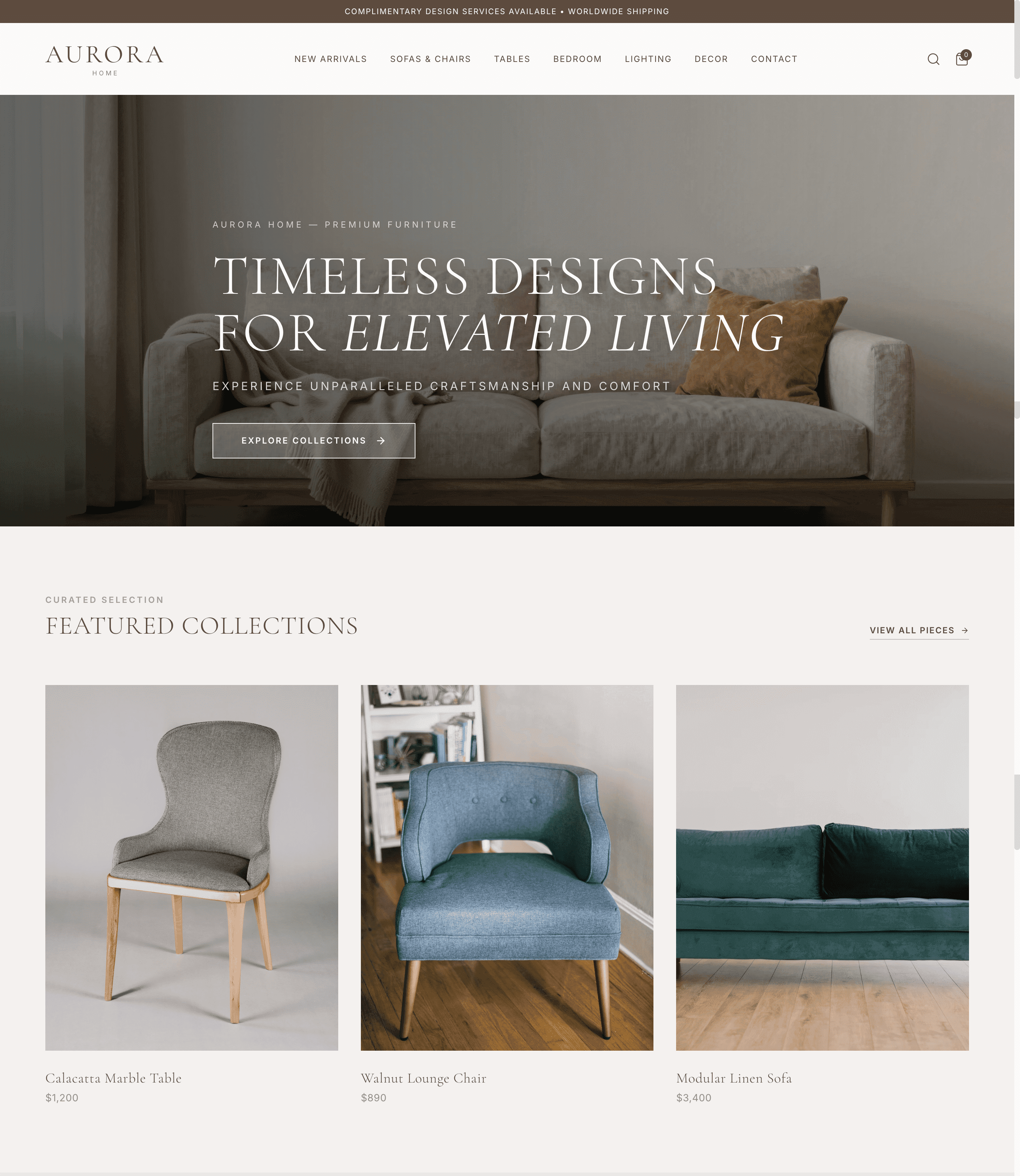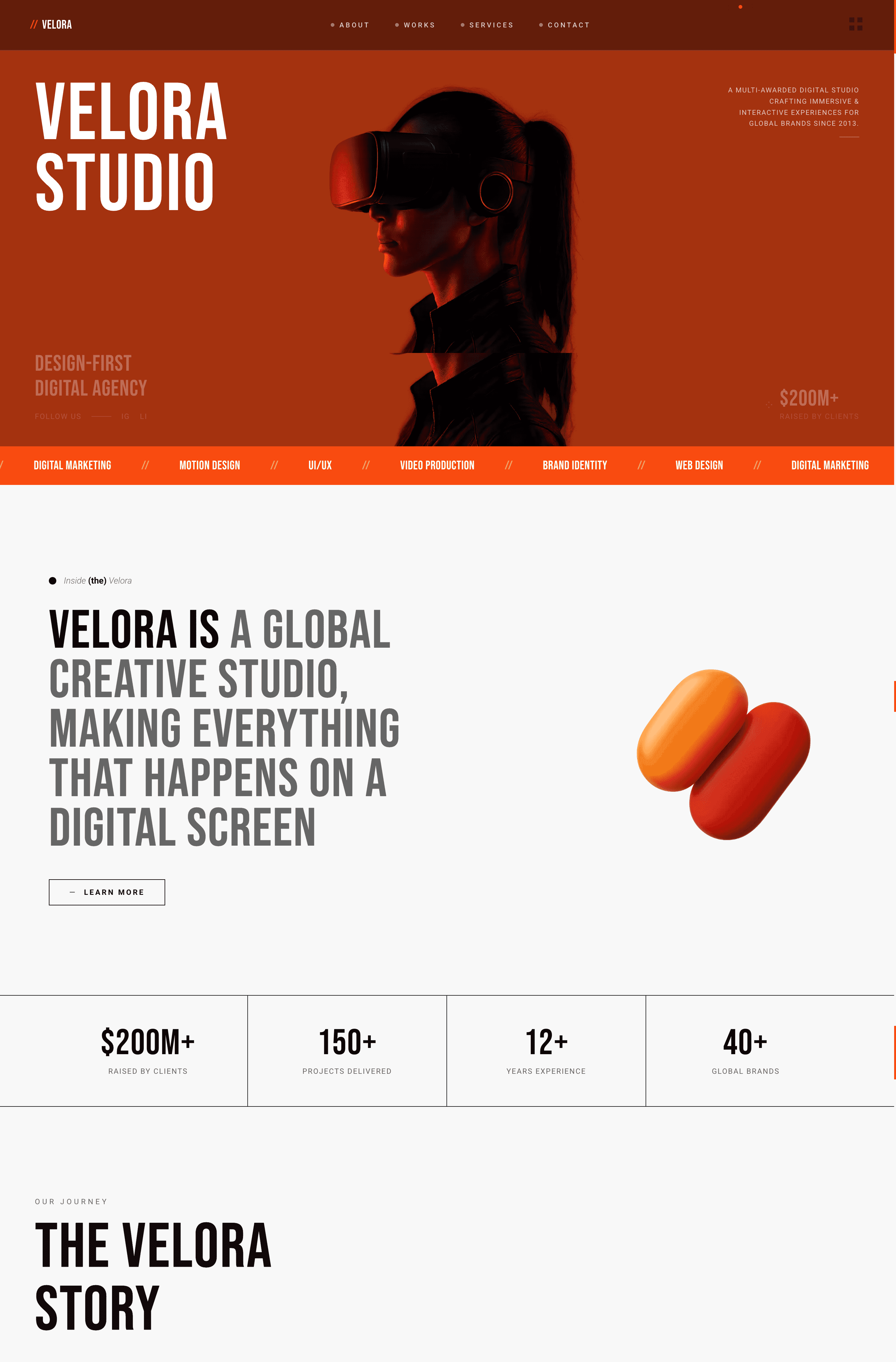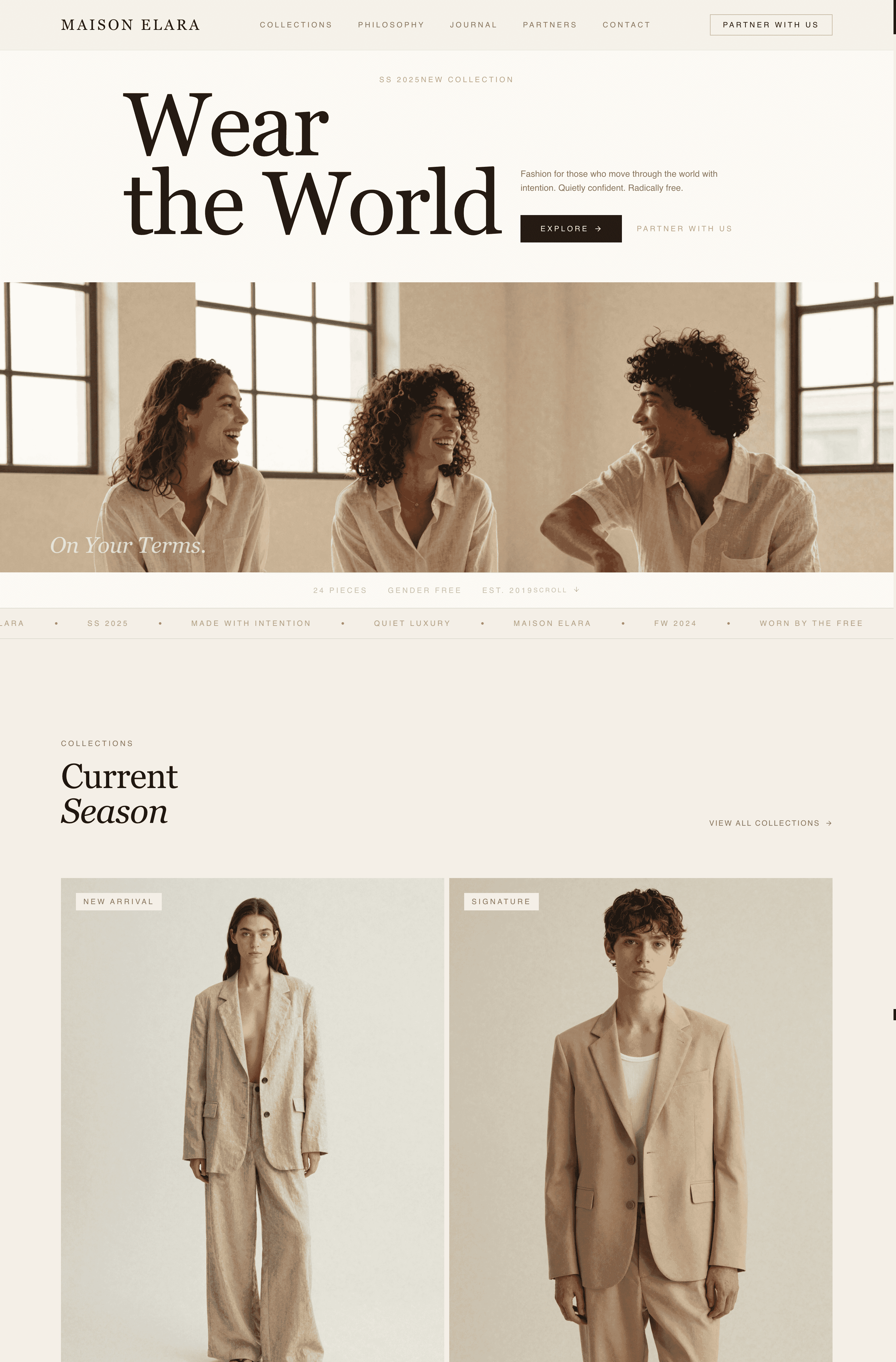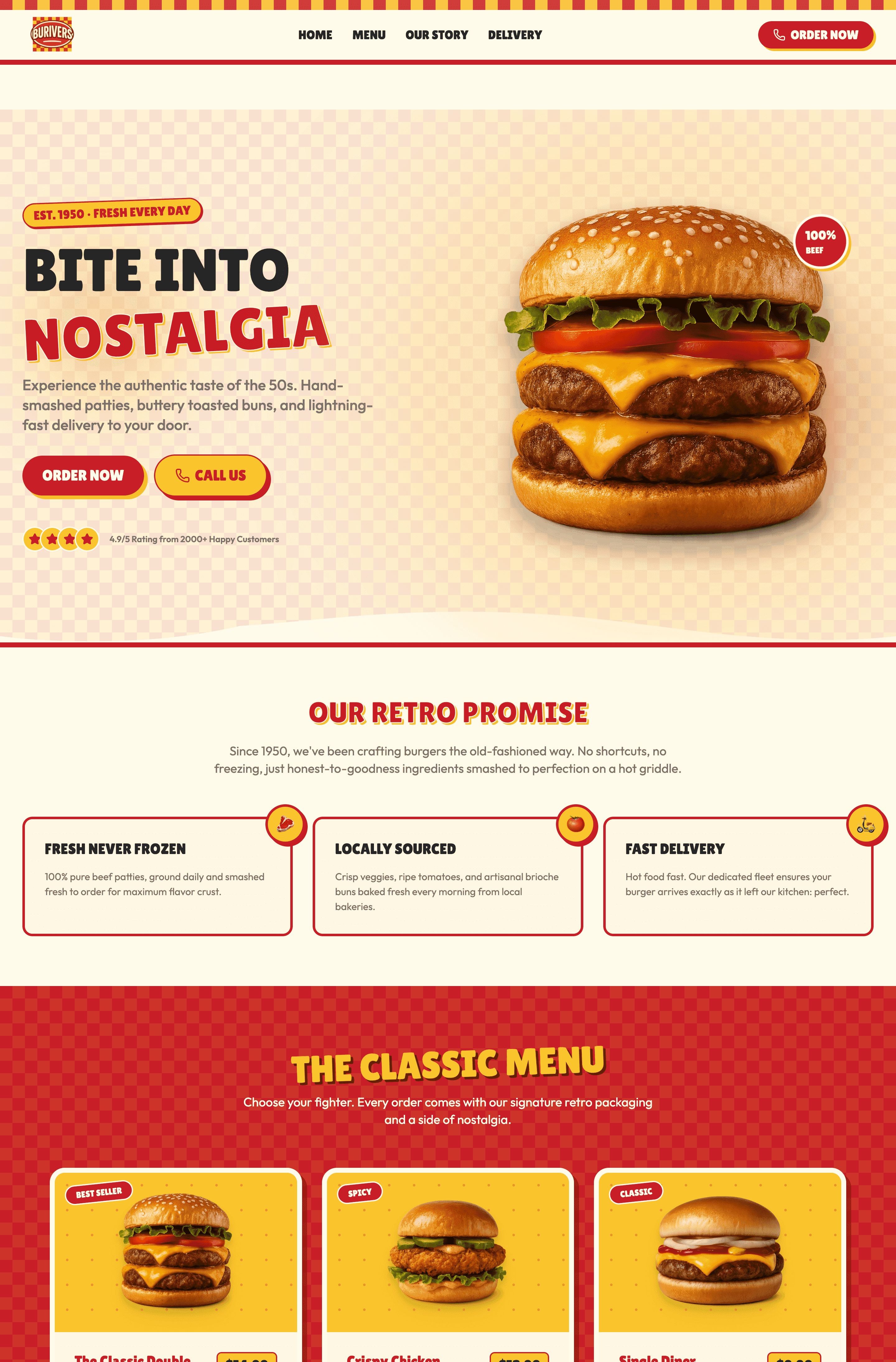
Ich habe 25 echte Beispiele für persönliche Portfolio-Websites ausgesucht, die beeindrucken. Diese umfassen Studenten, Kreative, Freiberufler und Fachleute aus verschiedenen Branchen. Das gemeinsame Merkmal sind klare Darstellung der Arbeit, einfache Navigation und persönliches Branding, das auffällt.
Um es einfacher zu machen, zeige ich dir genau, wie du in unter 10 Minuten eine Portfolio-Website mit Wegic erstellst. Die meisten von uns haben keine Erfahrung im Webseitenbau oder Design, also kommt hier KI: Durch einfach Sprechen oder Texten wird deine persönliche Portfolio-Website erstellt. Die besten persönlichen Portfolio-Websites im Jahr 2026 werden von normalen Menschen mit KI-Tools für Unternehmen gebaut. Sie sehen genauso professionell aus wie die Großen.
Zuerst werde ich dir 25 inspirierende Beispiele für persönliche Portfolio-Websites zeigen und genau erklären, was sie funktionieren lässt, damit du eine bessere Vorstellung von der Gestaltung von Portfolio-Websites bekommst.
25 Persönliche Portfolio-Website-Beispiele, die wirklich funktionieren
Mindy Nguyen
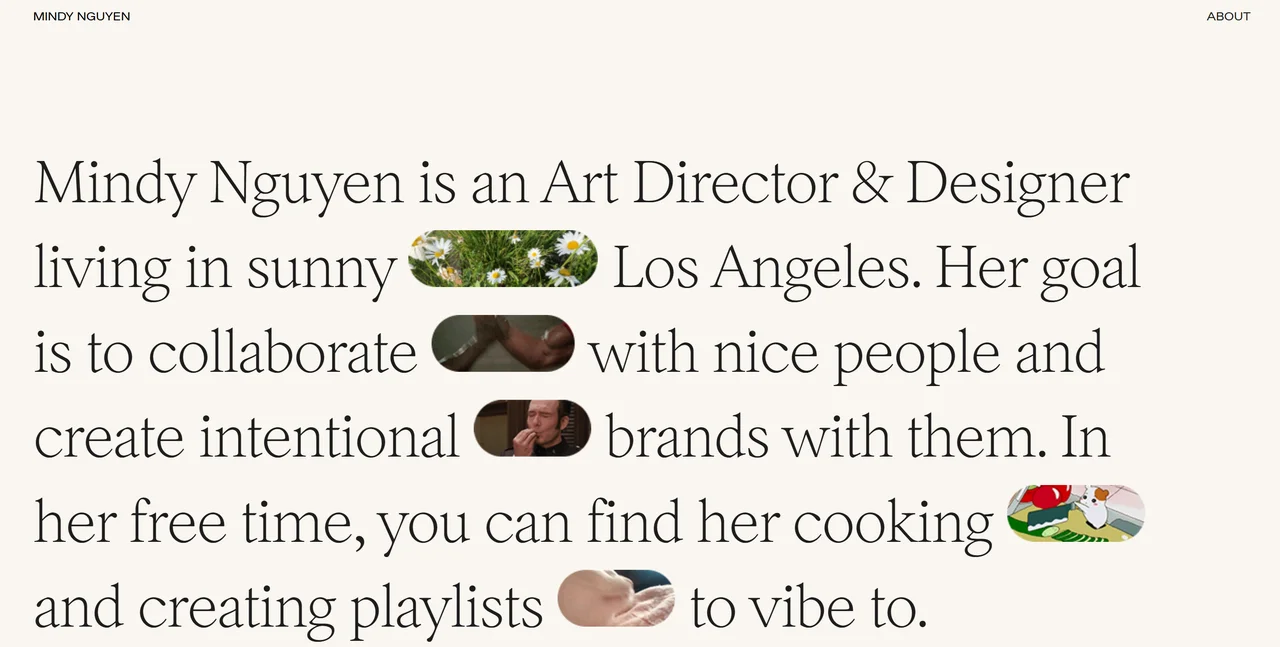
Dieses Portfolio fängt sofort mit Persönlichkeit an. Die Startseite enthält lustige GIFs und zeigt die Arbeit in den Vordergrund. Jedes Projektbild verweist auf detaillierte Fallstudien mit echten Kundennamen.
- Warum es auffällt: Mindy arbeitete bei ilovecreators Studio, und diese kreative Energie strahlt aus jedem Pixel. Der "Über mich"-Abschnitt fühlt sich an wie ein Treffen mit einem Freund, nicht wie das Lesen eines Lebenslaufs. Sie zeigt Persönlichkeit, ohne Professionalität zu verlieren.
- Wichtiger Lernpunkt: Zeige deine Persönlichkeit gleich zu Beginn. Arbeitgeber beschäftigen Menschen, mit denen sie arbeiten möchten.
Lauren Hom
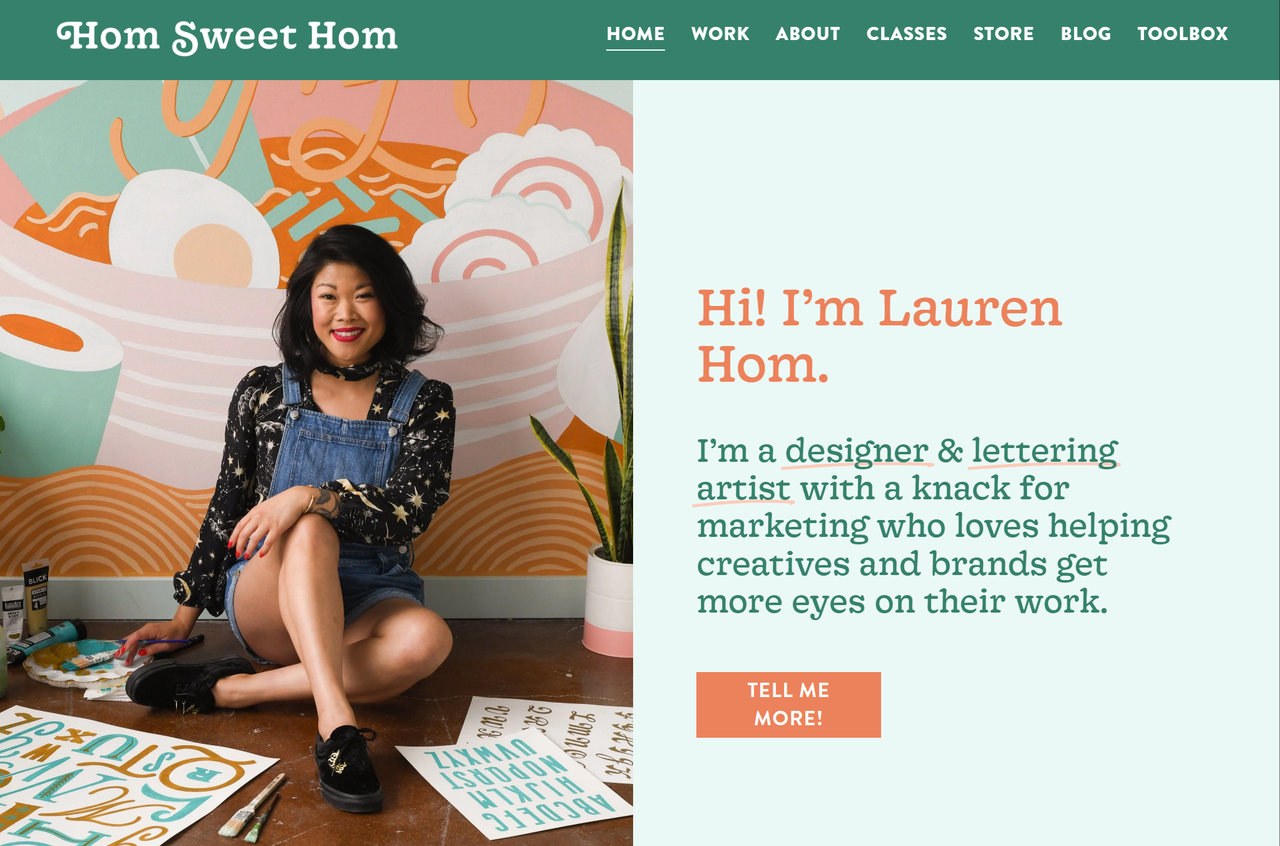
Laurens Portfolio ist ein Meisterkurs im Präsentieren einer spezifischen Fähigkeit. Ihre Schriftarbeiten werden in riesigen Hero-Bildern mit komplexen Mikro-Animationen präsentiert, die dazu führen, dass man ewig scrollt. Die Schriftgestaltung ist beeindruckend.
- Warum es auffällt: Sie meistert das "Zeigen, nicht erzählen". Ihre Arbeit spricht so laut, dass die Website keine Paragraphen der Erklärung benötigt. Das Portfolio beweist, dass sie liefern kann, noch bevor man das Bio liest.
- Wichtiger Lernpunkt: Lass dein bestes Werk die Arbeit machen. Wenn deine Arbeit stark ist, verkauft sie sich selbst.
Joe Coleman
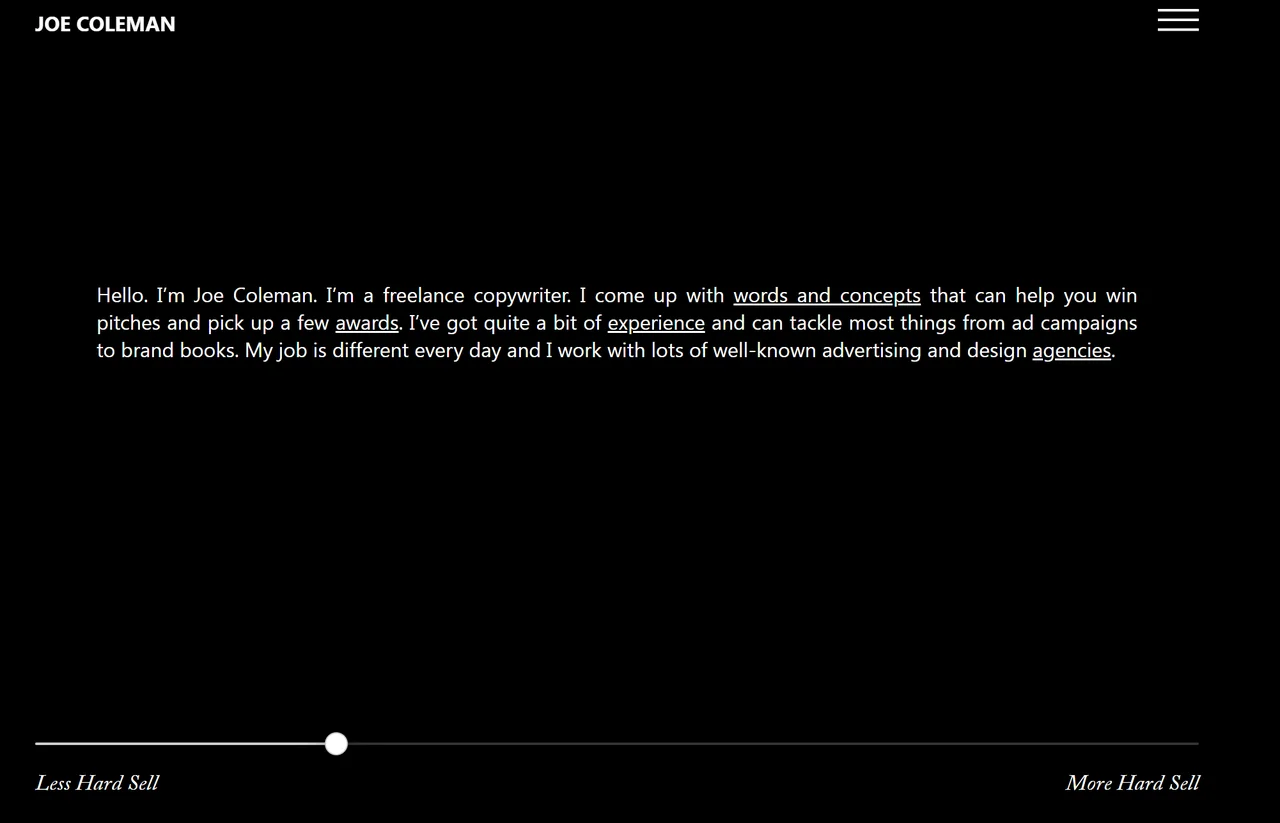
Jos Portfolio ist brillant einfach: Er bietet 50+ verschiedene Versionen seines Lebenslaufs, angeordnet von "Weniger harter Verkauf" bis "Mehr harter Verkauf". Du wählst deine eigene Reise, basierend darauf, welcher Art von Kunden du bist.
- Warum es auffällt: Er demonstriert seine Fähigkeit durch das, was er verkauft. Es ist clever, benutzerzentriert und beweist, dass er verschiedene Zielgruppen versteht.
- Wichtiger Lernpunkt: Nutze dein Portfolio, um deine Fähigkeiten zu demonstrieren. Joe schreibt Texte, und sein Portfolio-Text ist hervorragend.
Kantwon
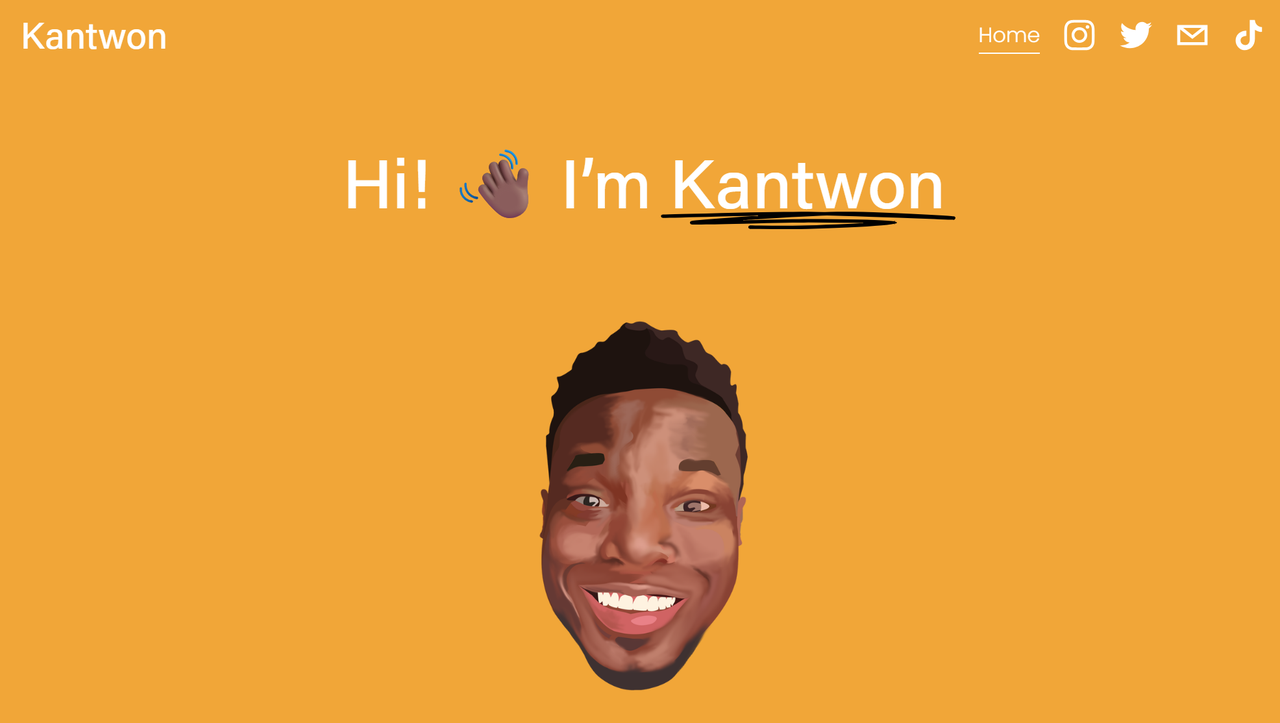
Das ist ein Studenten-Portfolio, das richtig gemacht ist. Kantwon ist ein Student für Robotik und Informatik an der Georgia Tech und unterrichtet dort auch. Die Website nutzt spielerische Gestaltung mit lebhaften Farben (Orange, Türkis, Magenta) und beinhaltet Unterrichtsmaterialien.
- Warum es auffällt: Es ist lustig. Einfach und klar. Die Gestaltung zeigt Persönlichkeit, während sie technische Fähigkeiten demonstriert. Er unterrichtet an der Georgia Tech, das ist Glaubwürdigkeit. Aber das Gefühl sagt "dieser Mensch ist zugänglich".
- Wichtiger Lernpunkt: Studenten: zeige deine Persönlichkeit und demonstriere, was du kannst. Du brauchst nicht Jahrzehnte Erfahrung, um ein großartiges Portfolio zu haben.
Gaby Melian
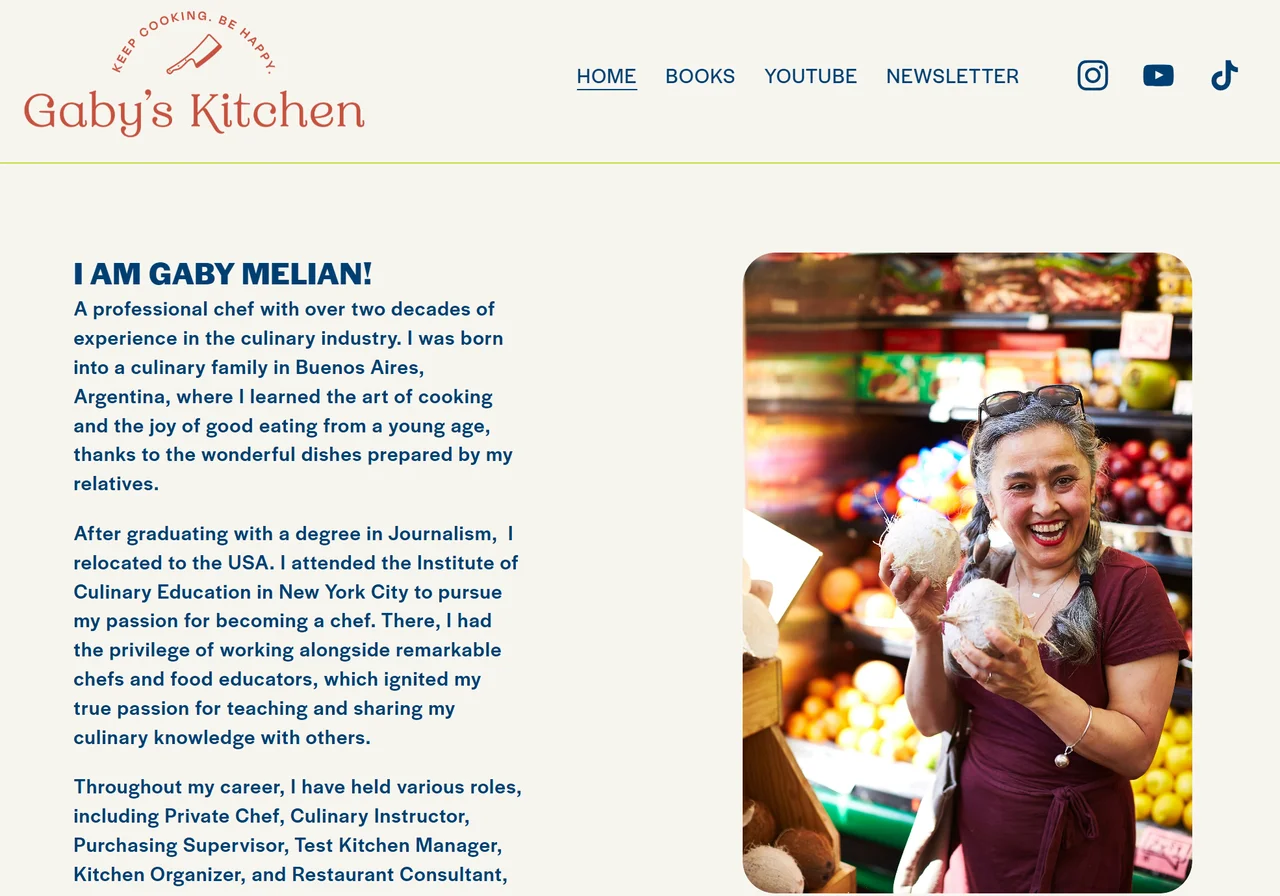
Gaby ist eine argentinische Köchin mit etwa 250.000 Instagram-Followern und einem YouTube-Kanal. Ihre Website dient als persönliches Branding und als Autorin-Website. Die Anordnung legt den Fokus auf ihre Inhalte (Rezepte, Videos, Kochbücher) mit klarer Navigation.
- Warum es auffällt: Sie hat ihre Fangemeinde zuerst auf sozialen Medien aufgebaut, dann auf eine eigene Plattform übersetzt. Die Website fühlt sich an wie ein Treffen mit einem Freund, der zufällig ein unglaublicher Koch ist. Wärme, Einladung, Authentizität.
- Wichtiger Lernpunkt: Soziale Medien können dein Portfolio befeuern. Aber eine eigene Website bedeutet, dass du die Beziehung besitzt, nicht die Plattform.
Jen Carrington
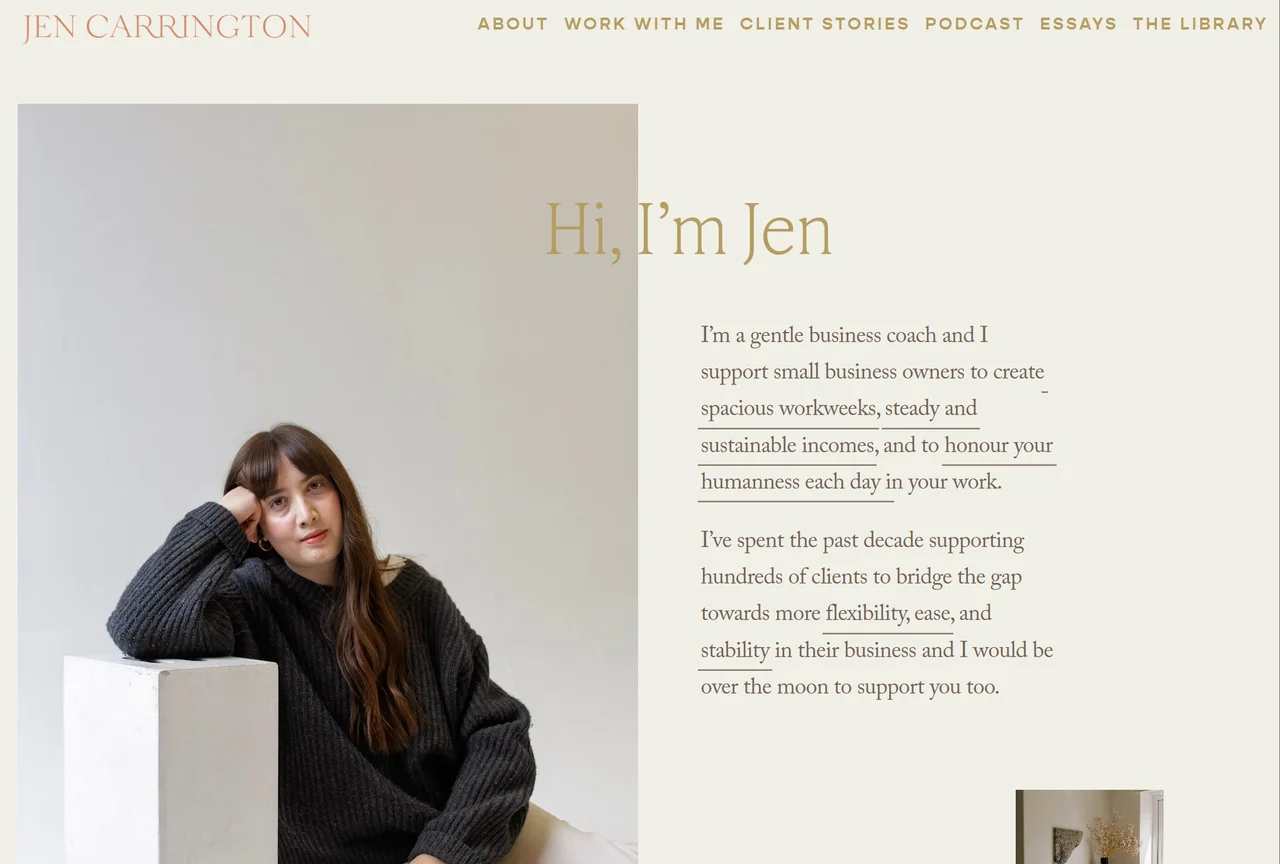
Jen hilft beschäftigten Kreativen dabei, erfolgreiche Unternehmen zu bauen. Ihre Website hat eine warme, ruhige Atmosphäre mit lächelnden Fotos und sauberer Futura-Schriftart. Die Botschaft ist klar: sie hilft Online-Geschäftsinhabern.
- Warum es auffällt: Die Gestaltung passt zu ihrem Coaching-Stil: unterstützend, nicht aggressiv. Keine harten Verkaufstaktiken. Nur hilfreiche Inhalte und klare nächste Schritte. Sie praktiziert, was sie über das Aufbau von authentischen Beziehungen predigt.
- Wichtiger Lernpunkt: Deine Gestaltung sollte zu deinem Service passen. Ein drängender Verkaufs-Modus würde mit einem Coaching-Geschäft im Fokus auf Authentizität in Konflikt stehen.
Peter McKinnon
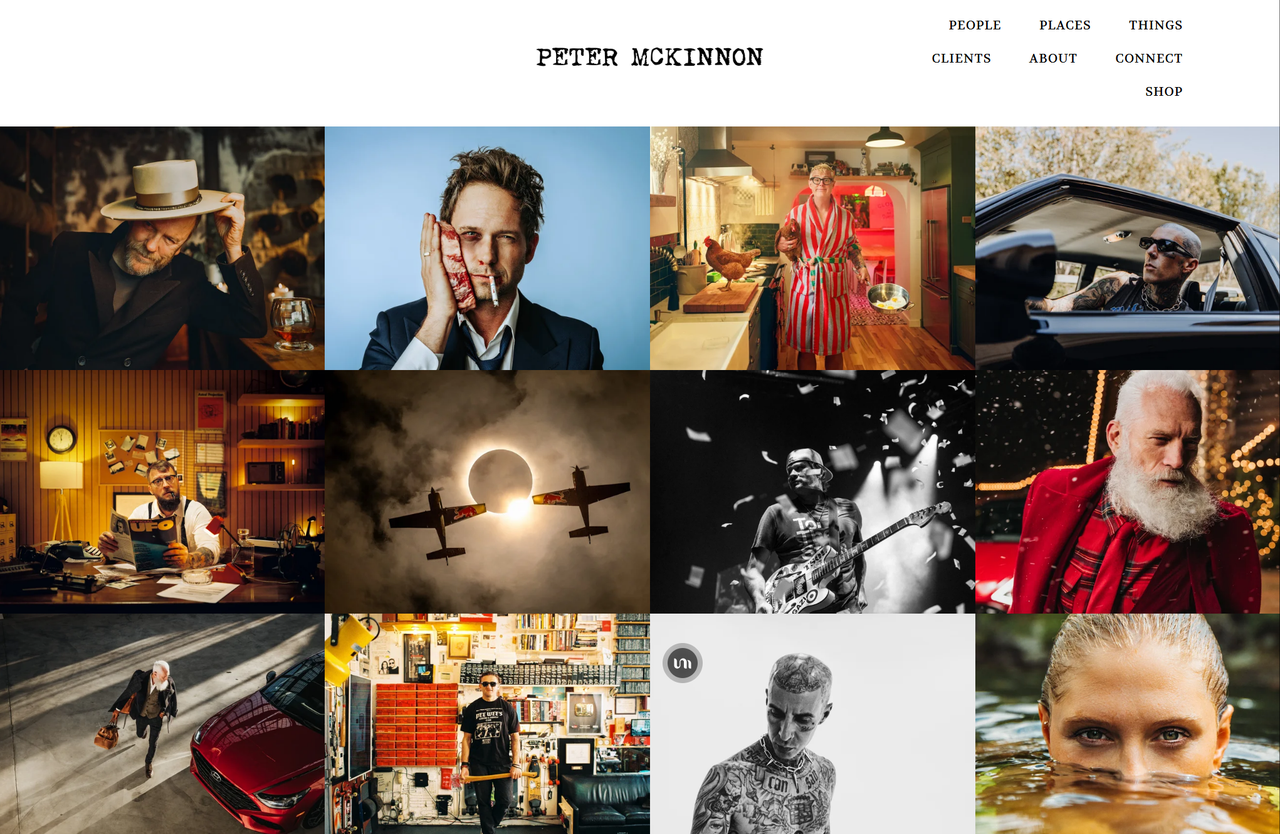
Peter hat über 5 Mio. YouTube-Abonnenten. Seine Website dient als persönliches Branding eines Influencers und als Merchandise-Shop. Die Anordnung ist sauber, bildreich und optimiert, um seine riesige Fangemeinde zu konvertieren.
- Warum ist es besonders: Er nutzt sein Portfolio, um Produkte (Kurse, Voreinstellungen, Merchandise) zu verkaufen, zusätzlich zu der Darstellung seiner Arbeit. Es ist ein Geschäftsmodell, nicht nur ein Visitenkarten-Portfolio. Jeder Aspekt zielt auf Umsatz ab.
- Haupterkenntnis: Ihr Portfolio kann Einnahmen generieren. Nutzen Sie es nicht nur als statische Darstellung – denken Sie daran, wie es für Sie arbeiten kann.
Gloria Lo
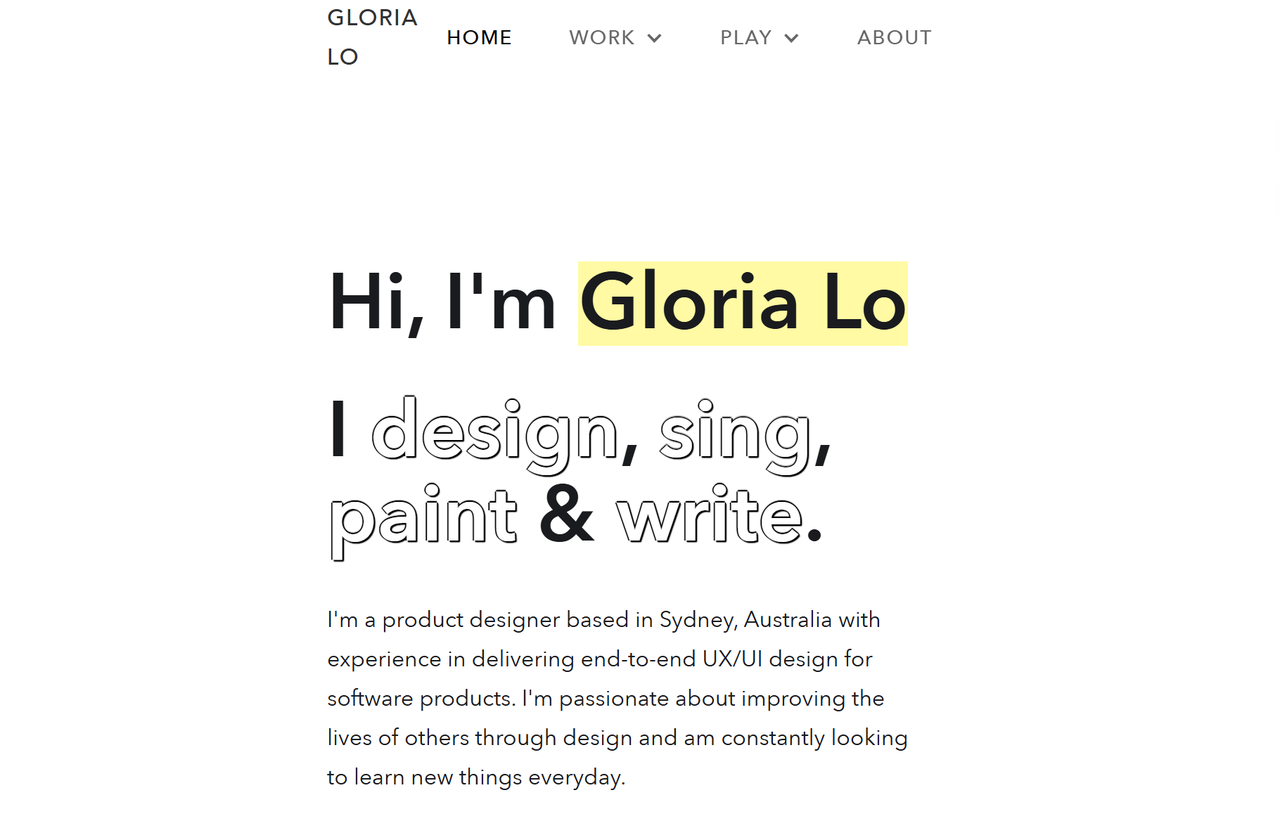
Glorias Portfolio enthält Fallstudien mit gut strukturierten Abschnitten. Das "Play"-Menü zeigt Musik, Kunst und Blogbeiträge, was zeigt, dass sie eine ganze Person ist, nicht nur eine Designerin.
- Warum ist es besonders: In ihrer Rolle als Senior Product Designer bei Canva zeigt ihr Portfolio professionelle Arbeit. Doch die persönlichen Abschnitte zeigen, dass sie vielseitig ist. Arbeitgeber suchen nach Menschen, nicht nach Portfolio-Maschinen.
- Haupterkenntnis: Zeigen Sie Ihre professionelle Arbeit UND Ihre persönlichen Interessen. Sie verkaufen sich selbst, nicht nur Ihre Ergebnisse.
Ali Abdaal
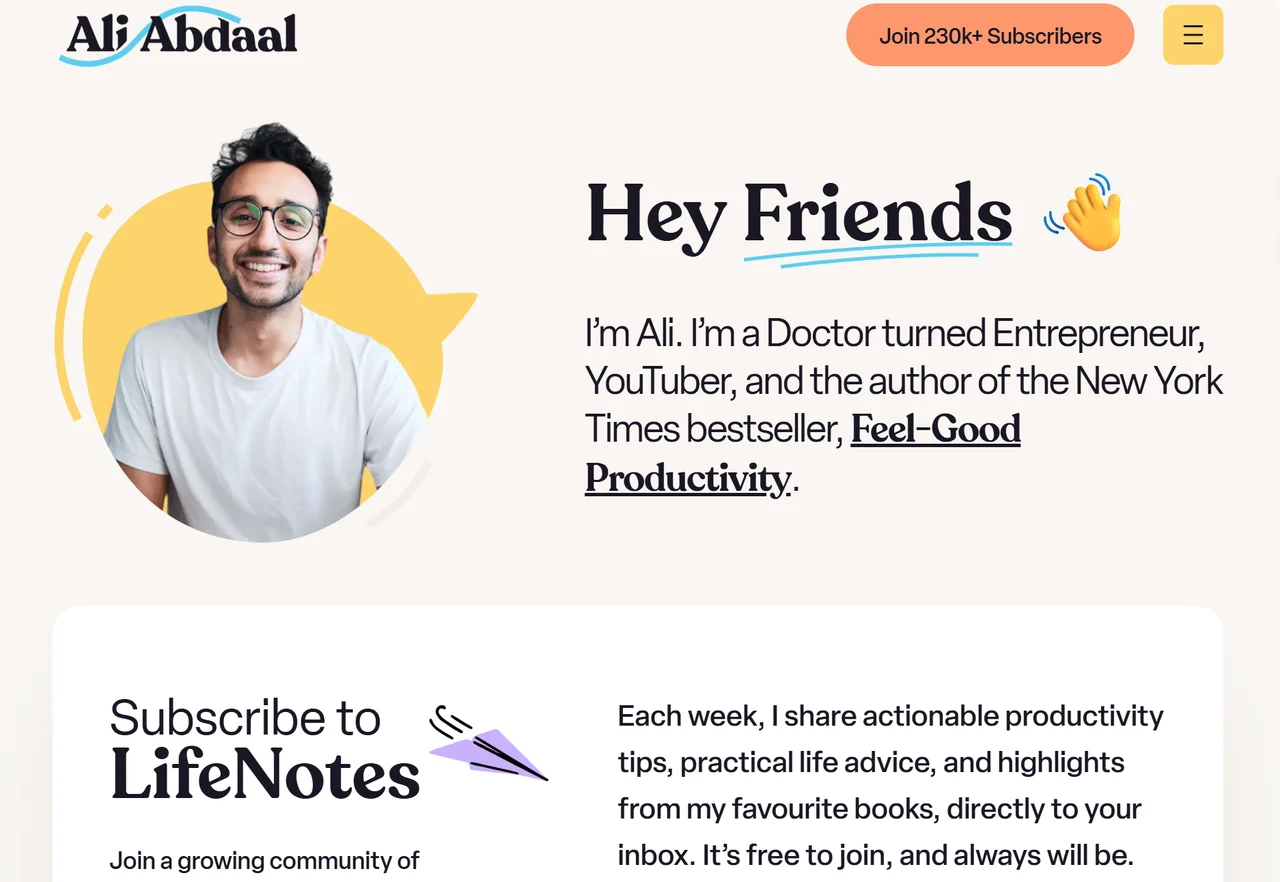
Ali wechselte von Arzt zu YouTuber zu Podcaster zu Unternehmer. Seine Website enthält Artikel, Podcasts, Kurse (Part-Time YouTuber Academy) und eine Newsletter mit über 400.000 Abonnenten.
- Warum ist es besonders: Er hat mehrere Einnahmequellen aus seiner persönlichen Marke aufgebaut. Die Website ist ein Geschäftszentrum, nicht nur eine Präsentation. Jede Seite hat einen klaren Aufruf zur Aktion, abonnieren, kaufen, ansehen.
- Haupterkenntnis: Ein Portfolio kann ein Geschäft sein. Denken Sie über "hier ist meine Arbeit" hinaus zu "hier, wie wir zusammenarbeiten können".
Justin Welsh – Solopreneur
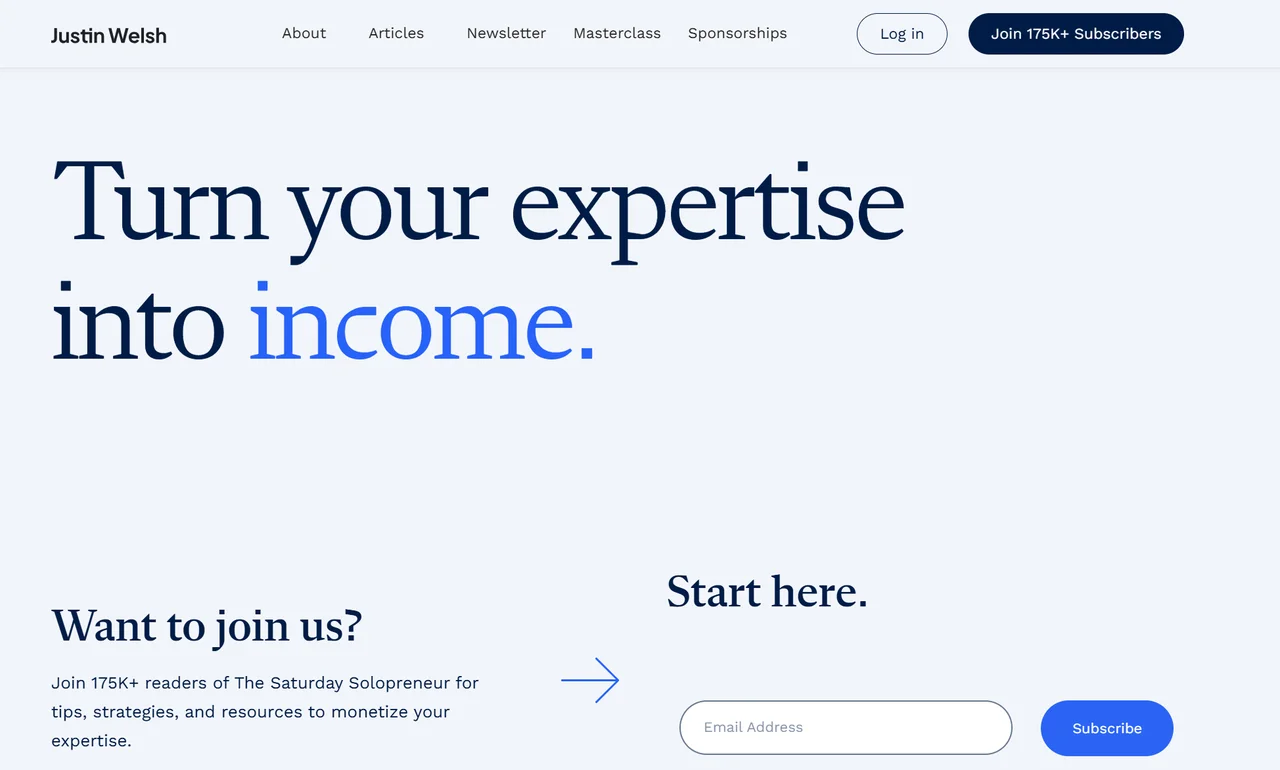
Justin hat bei zwei Unternehmen mit einer Bewertung über 1 Milliarde US-Dollar mitgeholfen. Jetzt hilft er Solopreneuren, ihre Fähigkeiten monetarisiert. Seine Website ist brutal einfach: Wert-orientierter Inhalt, klare Angebote, E-Mail-Registrierung.
- Warum ist es besonders: Minimalistisches Design, maximale Wirkung. Keine aufwendigen Animationen oder aufdringliche Grafiken. Nur ein klarer Wertvorteil und Wege, mit ihm zu arbeiten. Weniger ist mehr.
- Haupterkenntnis: Komplexität ist nicht Glaubwürdigkeit. Manchmal sind die einfachsten Portfolios die besten.
James Hoffmann – Kaffeeexperte
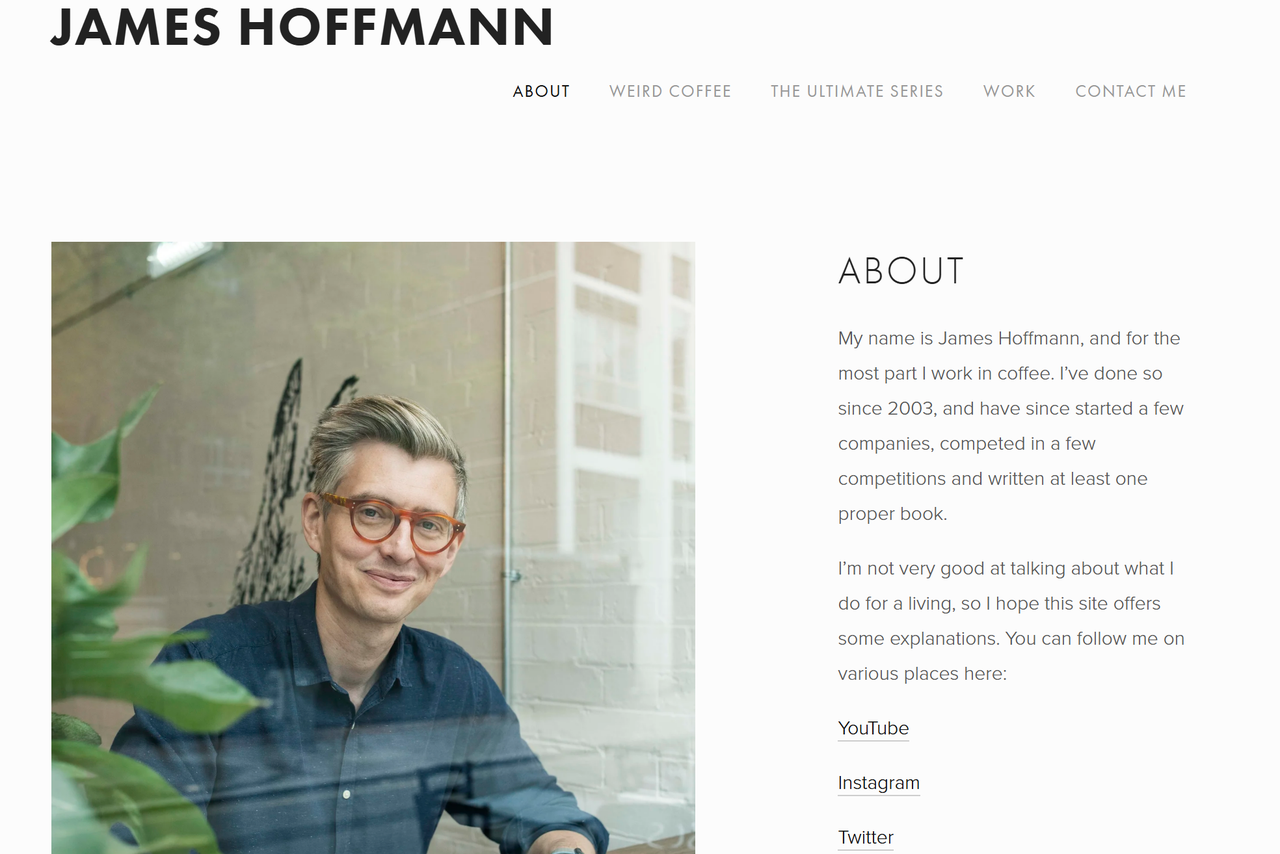
James ist seit 2003 Kaffeeexperte: Autor, YouTuber und allgemeiner Kaffee-Experte. Seine Website enthält "The Ultimate Series" Rezepte und "Weird Coffee Science" Serien.
- Warum ist es besonders: Er ist die definitive Kaffee-Expertin im Internet. Sein Portfolio beweist Expertise durch die Menge und Tiefe des Inhalts.
- Haupterkenntnis: Werden Sie zur Autorität. Ein Portfolio kann nicht nur zeigen, was Sie tun, sondern auch wie lange Sie es tun.
Austin Kleon
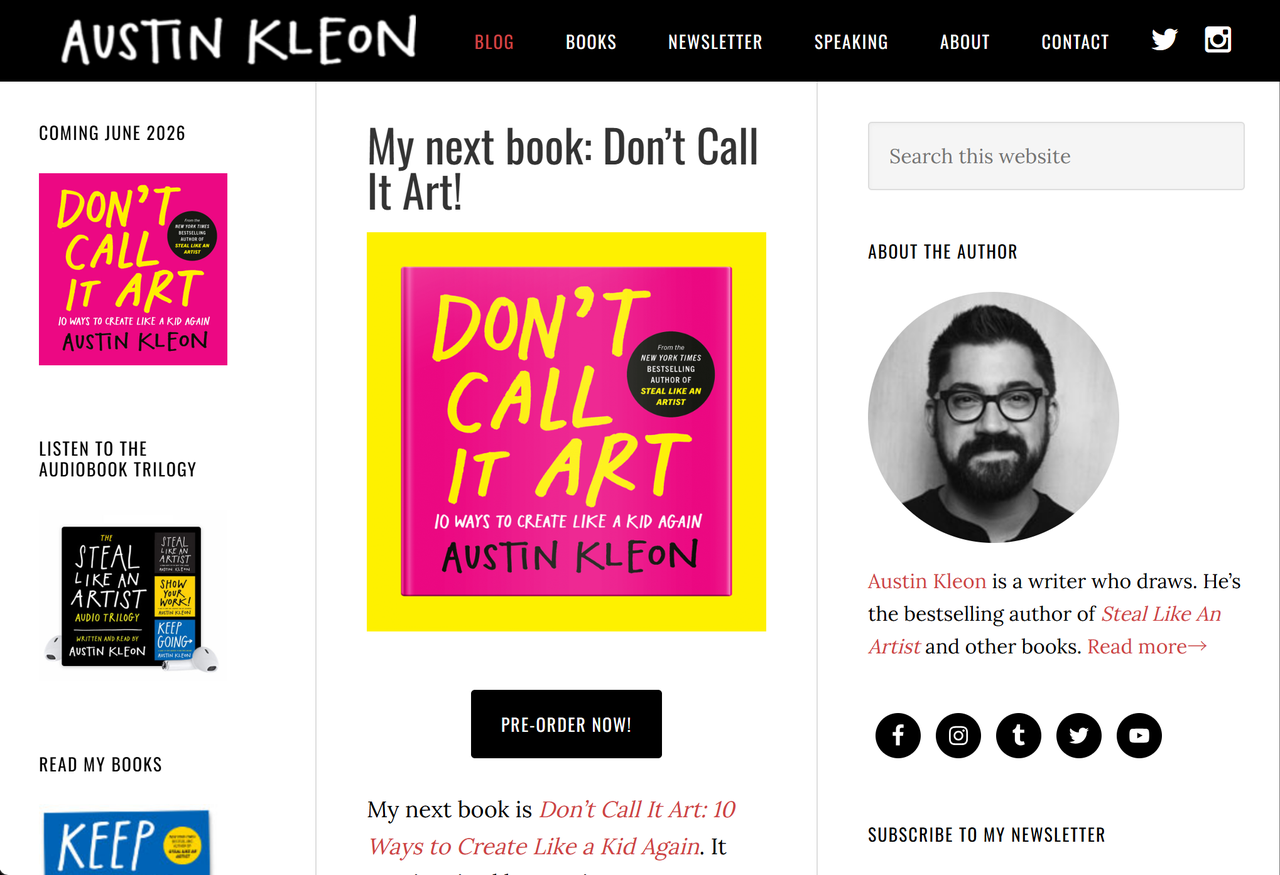
Austin schrieb "Steal Like An Artist," "Show Your Work," und "Keep Going." Diese Bücher prägen das moderne kreative Denken. Seine Website platziert den Blog an erster Stelle, da dort seine Zielgruppe aufgebaut wurde.
- Warum ist es besonders: Er gibt Wert frei. Der Blog ist das Portfolio. Die Bücher sind Produkte, die aus Jahren freien Inhalts entstanden sind.
- Haupterkenntnis: Inhalt ist ein Portfolio. Bloggen, schreiben, teilen. Es zeigt Ihre Expertise durch das, was Sie veröffentlichen.
Mees Verberne
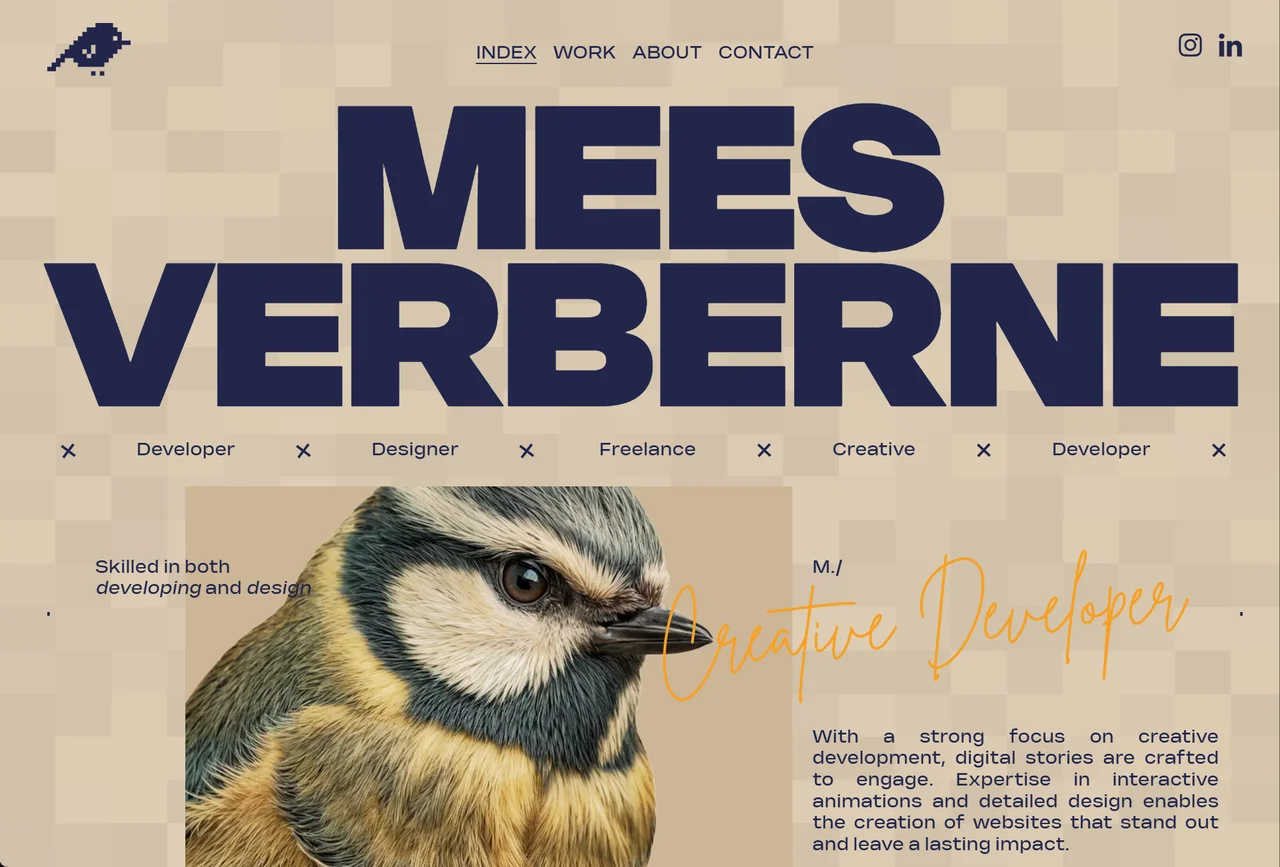
Mees' Portfolio hat einen interaktiven pixelierten Hintergrund mit glatten Scroll-Animationen und einem quirkigen animierten Vogellogo. Es ruft "Ich codiere kreativ."
- Warum ist es besonders: Das Portfolio beweist technische Fähigkeiten durch seine Existenz. Wenn Sie behaupten, ein kreativer Entwickler zu sein, sollte Ihre Website Kreativität zeigen. Nicht nur darüber sprechen – zeigen Sie es.
- Haupterkenntnis: Ihr Portfolio sollte Ihre Behauptungen beweisen. Wenn Sie ein kreativer Entwickler sind, machen Sie nicht einfach eine langweile Website.
Ine Agresta – Künstlerin & Macherin
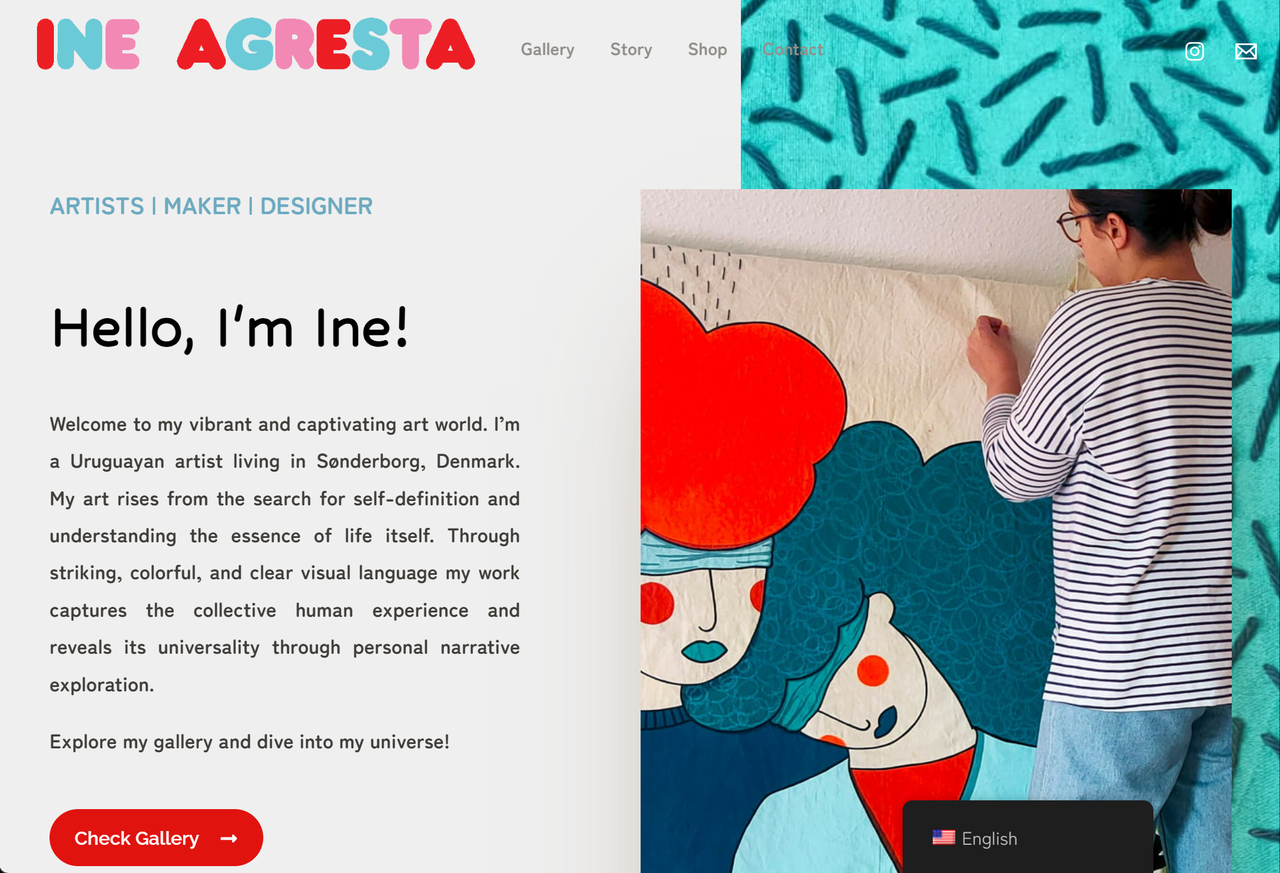
Ine verbindet archetypische Konzepte mit persönlichen Erfahrungen durch lebendige, fesselnde Design. Ihre Website enthält große Bilder, lebendige Farben und ausdrucksstarke Layouts, die ihre Kunst widerspiegeln.
- Warum ist es besonders: Die Website fühlt sich an wie ein Spaziergang durch ein Kunstgalerie – nicht wie ein Unternehmensraum. Sie präsentiert ihre einzigartige Perspektive durch Inhalt und Design. Mutig, unerschütterlich, einzigartig.
- Haupterkenntnis: Ihr Portfolio sollte sich wie Sie anfühlen. Wenn Ihre Arbeit einzigartig ist, sollte Ihre Website es auch sein.
Arlen McCluskey
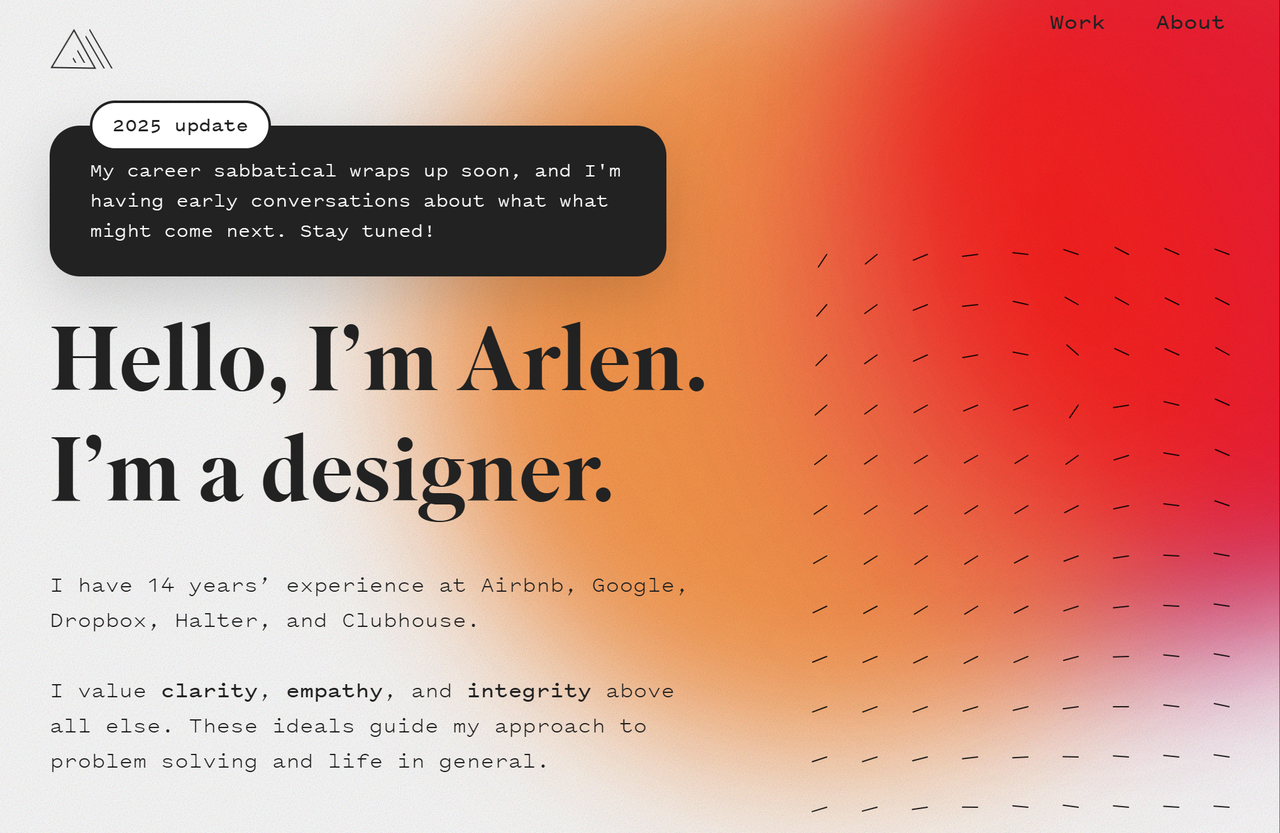
Arlen arbeitete bei Airbnb, Google und Dropbox. Sein Portfolio nutzt eine Farbverlaufsskala, saubere Linien und eine moderne Serifschriftart. Die Arbeitbeispiele zeigen Enterprise-Skalen-Problemlösung.
- Warum ist es besonders: Große Firmennamen signalisieren große Fähigkeiten. Seine Fallstudien zeigen nicht nur Bildschirme – sie zeigen Geschäftsimpact und Nutzerergebnisse. So sehen Senior-Portfolios aus.
- Haupterkenntnis: Zeigen Sie Impact, nicht nur Ergebnisse. Was ist geschehen, weil Ihrer Arbeit?
Olivia Truong
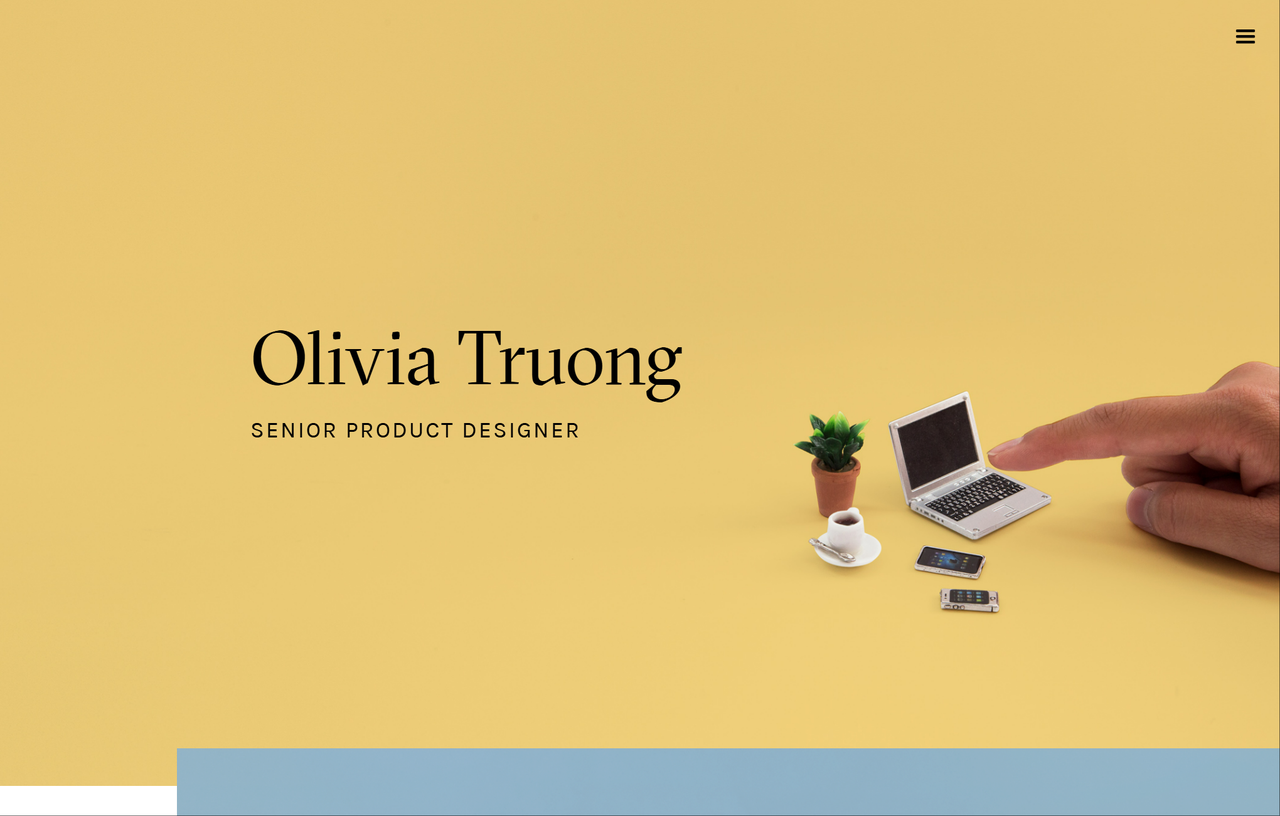
Olivias minimalistisches Portfolio konzentriert sich auf Fallstudien. Jeder Projekt hat klare Problemformulierungen, Prozessdokumentation und Ergebnisse. Sauber, fokussiert, professionell.
- Warum ist es besonders: Weniger ist mehr. Die minimalistische Gestaltung lässt die Arbeit atmen. Sie versucht nicht, mit aufwendigen Effekten zu beeindrucken. Sie lässt den Prozess für sich sprechen.
- Hauptpunkt: Erfahrene Designer haben oft die einfachsten Portfolios. Die Arbeit spricht für sich.
Alex Lakas – UX Designer
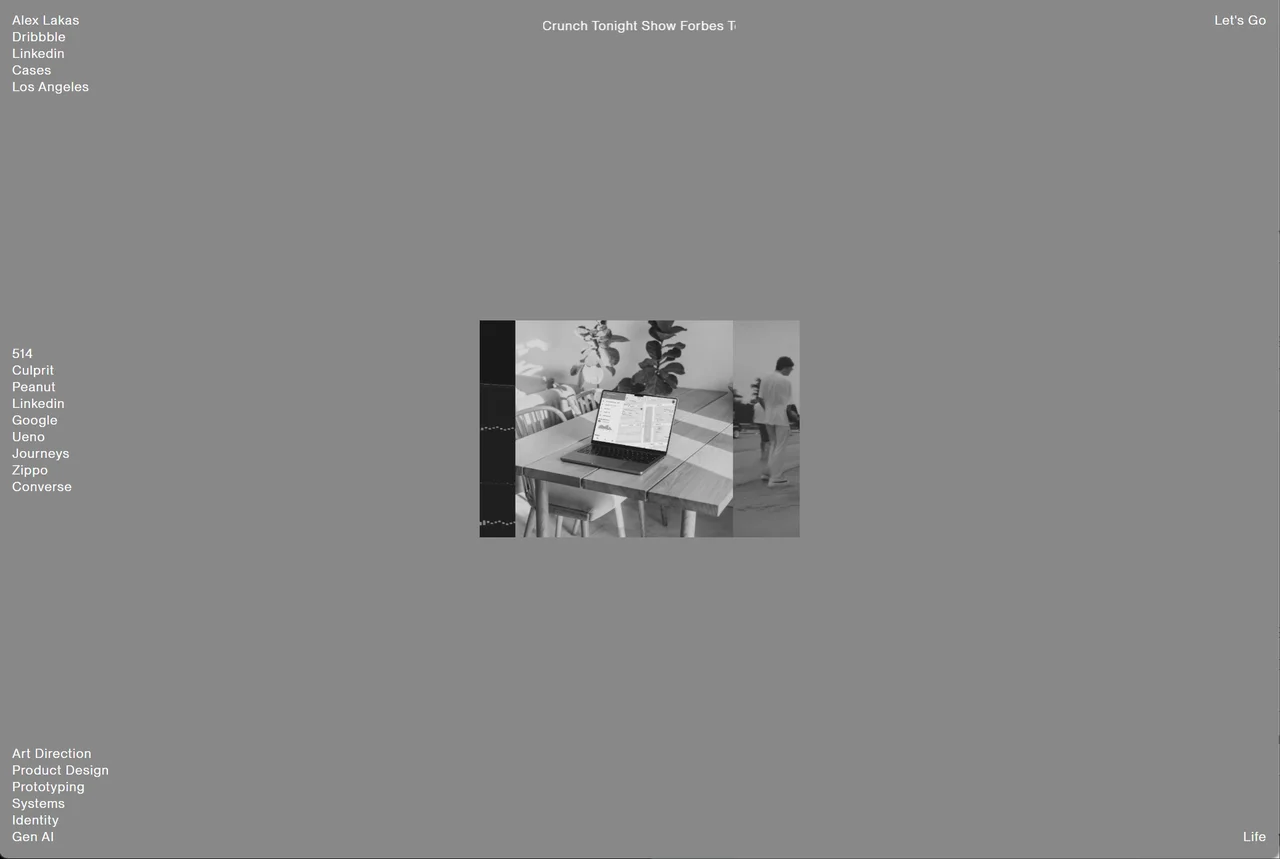
Alex hat mehr als 10 Jahre Erfahrung und arbeitete an LinkedIn-Feed und Google Maps. Sein Portfolio präsentiert seine Hintergründe klar mit ausgewählten Projekten und einer klaren Fallstudien-Struktur.
Warum ist es besonders: Erfahrung bei großen Technologieunternehmen. Das Portfolio ist sauber und direkt.
- Hauptpunkt: Glaubwürdigkeit durch Erfahrung. Wenn Sie bei großen Unternehmen gearbeitet haben, lassen Sie diese Namen etwas verkaufen.
Ed Chao – UX Designer
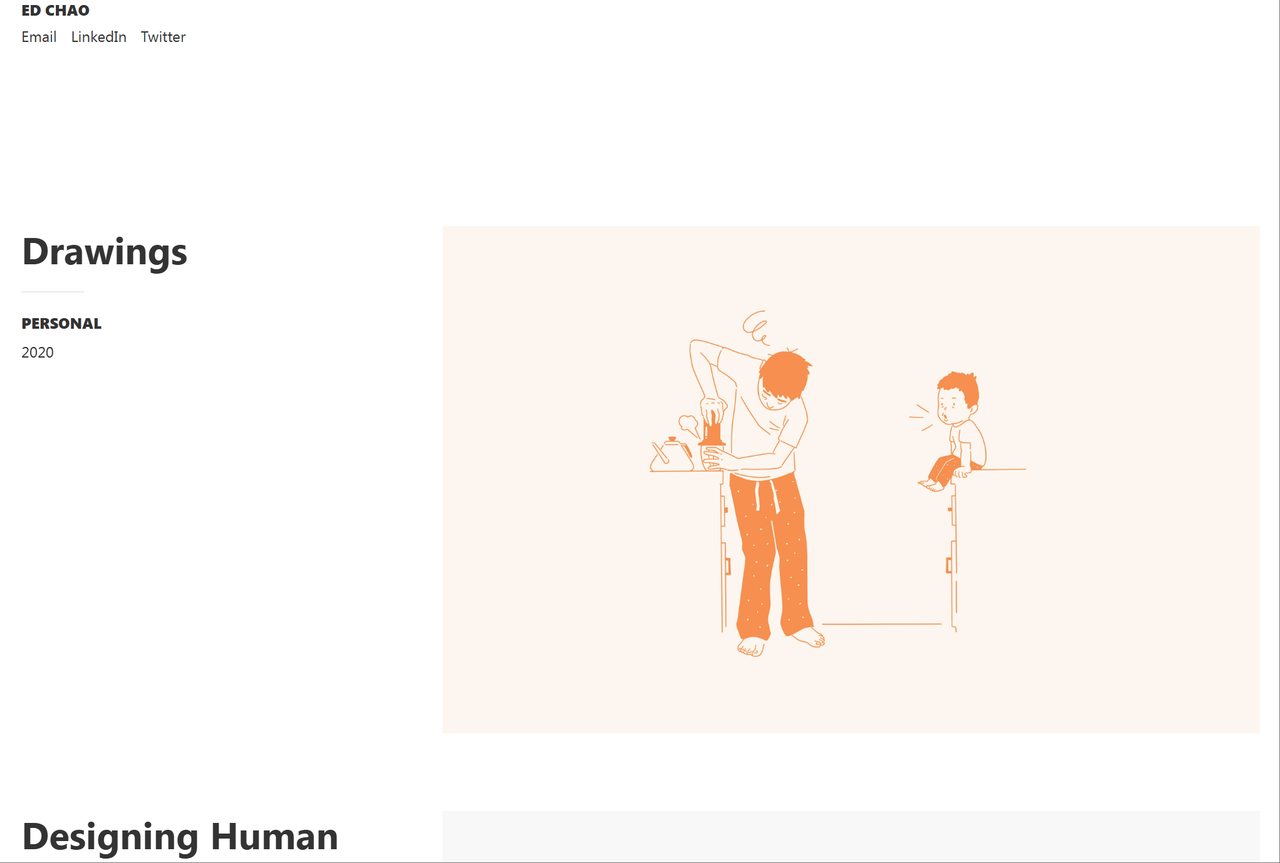
Ed arbeitete an der Web-, Mobile- und Desktop-Oberfläche von Dropbox. Sein Portfolio zeigt die Vielfalt seiner Erfahrung über verschiedene Plattformen mit detaillierten Fallstudien.
- Warum ist es besonders: Mehrplattform-Erfahrung ist wertvoll. Er zeigt, dass er überall designen kann. Vielseitigkeit ist ein Verkaufsargument.
- Hauptpunkt: Zeigen Sie Ihre Vielfalt, wenn Sie sie haben. Verschiedene Projekttypen zeigen Ihre Anpassungsfähigkeit.
Jeremy Stokes – Produkt Designer
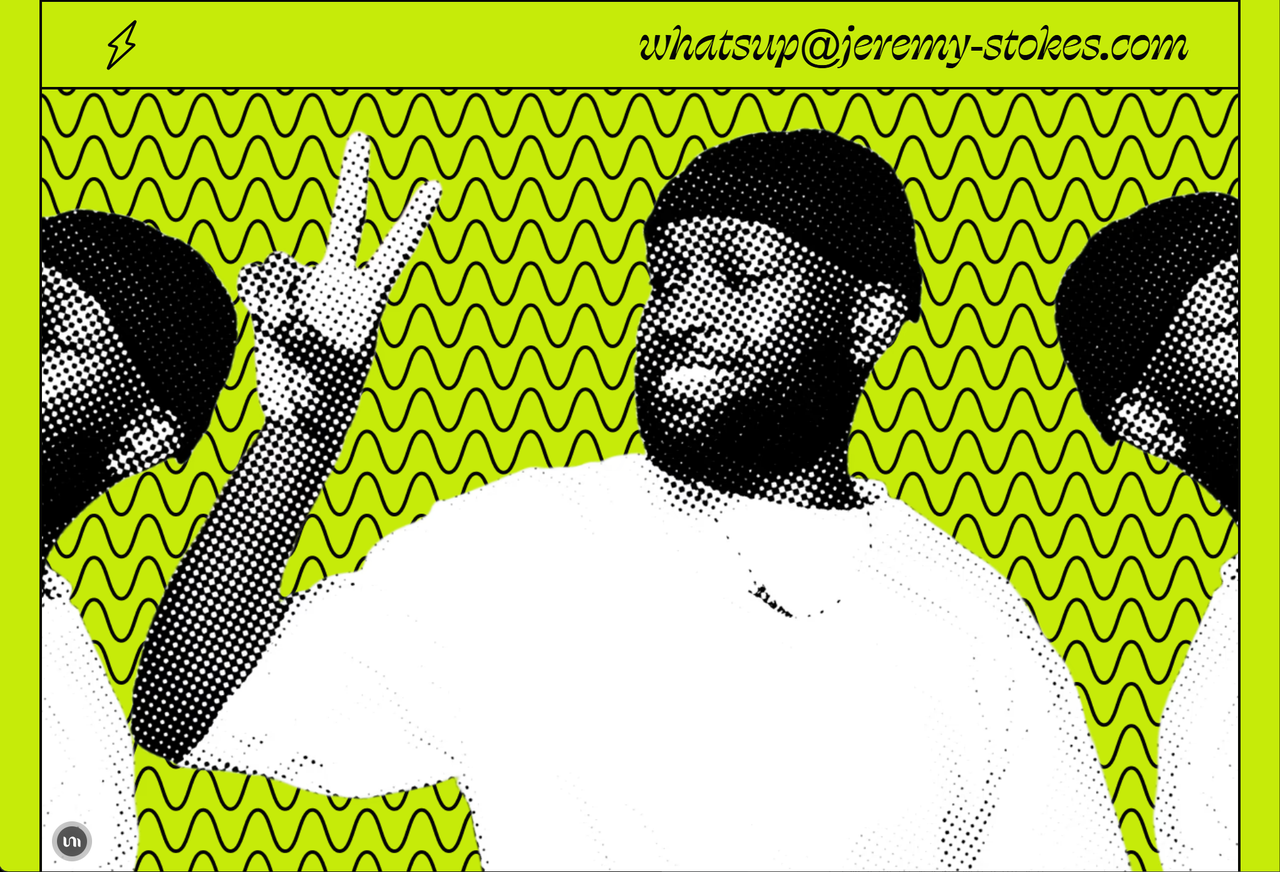
Jeremy ist Produkt Designer bei Duolingo und ehemaliger Google UX-Praktikant. Sein Portfolio zeigt seine Karriere von der Praktikumszeit bis zu großen Technologieunternehmen durch visuelle Fallstudien.
- Warum ist es besonders: Zeigt Karrierefortschritt. Er begann bei Google und ist jetzt bei Duolingo. Das Portfolio erzählt eine Karrieregeschichte durch seine Arbeit. Es ist inspirierend und demonstriert.
- Hauptpunkt: Ihr Portfolio kann eine Geschichte erzählen. Zeigen Sie, wo Sie waren UND wohin Sie gehen.
Kelsey O'Halloran
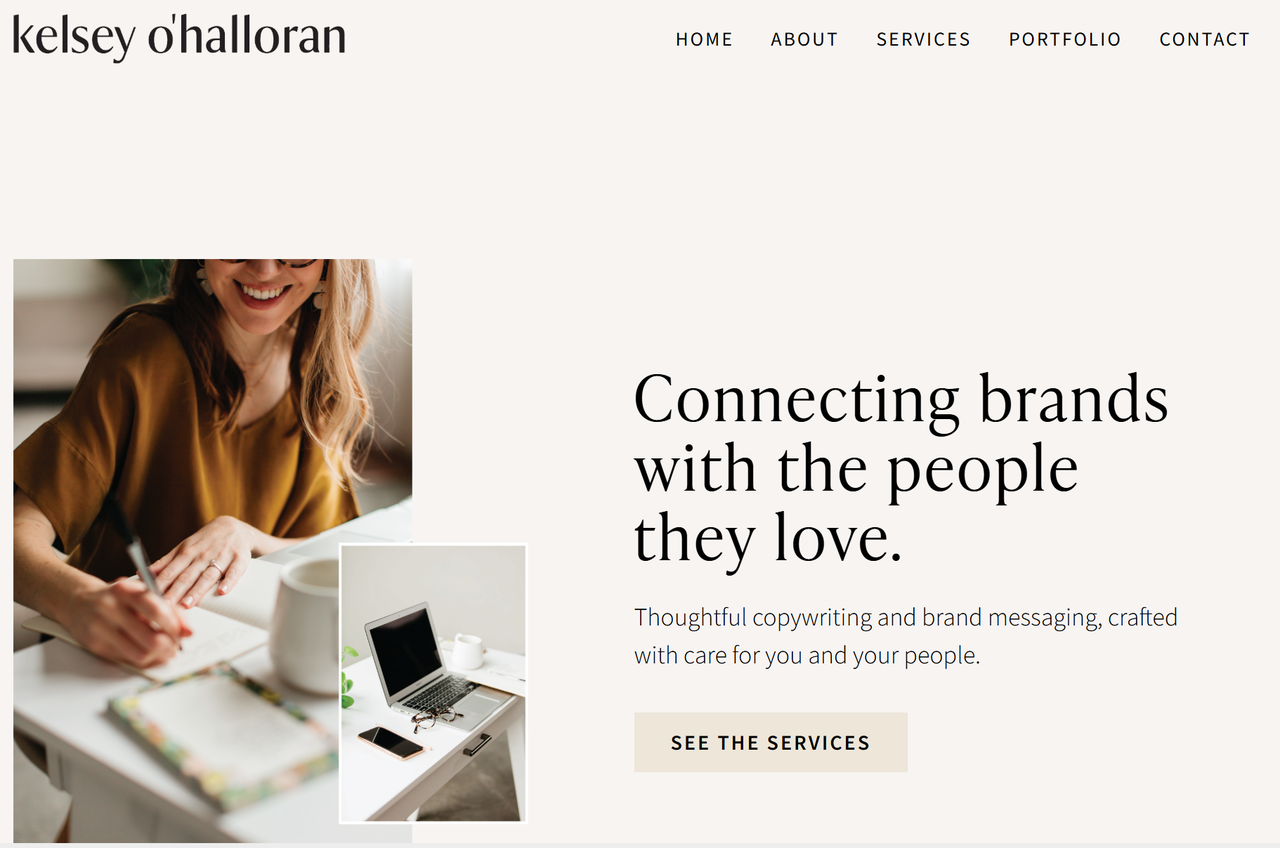
Kelsey begann als Zeitungsjournalistin, jetzt macht sie Markenkommunikation. Ihr Portfolio enthält professionell fotografierte Fotos, gut geschriebene Texte, Empfehlungen und eine dreispaltige Portfolio-Layout.
- Warum ist es besonders: Sie schreibt professionell. Ihr Portfolio-Text ist hervorragend. Und sie stellt Empfehlungen prominent dar. Soziale Beweise von Anfang an.
- Hauptpunkt: Wenn Ihre Stärke das Schreiben ist, schreiben Sie hervorragend. Ihr Portfolio-Text sollte Ihre Fähigkeit demonstrieren.
Shane Kinkennon
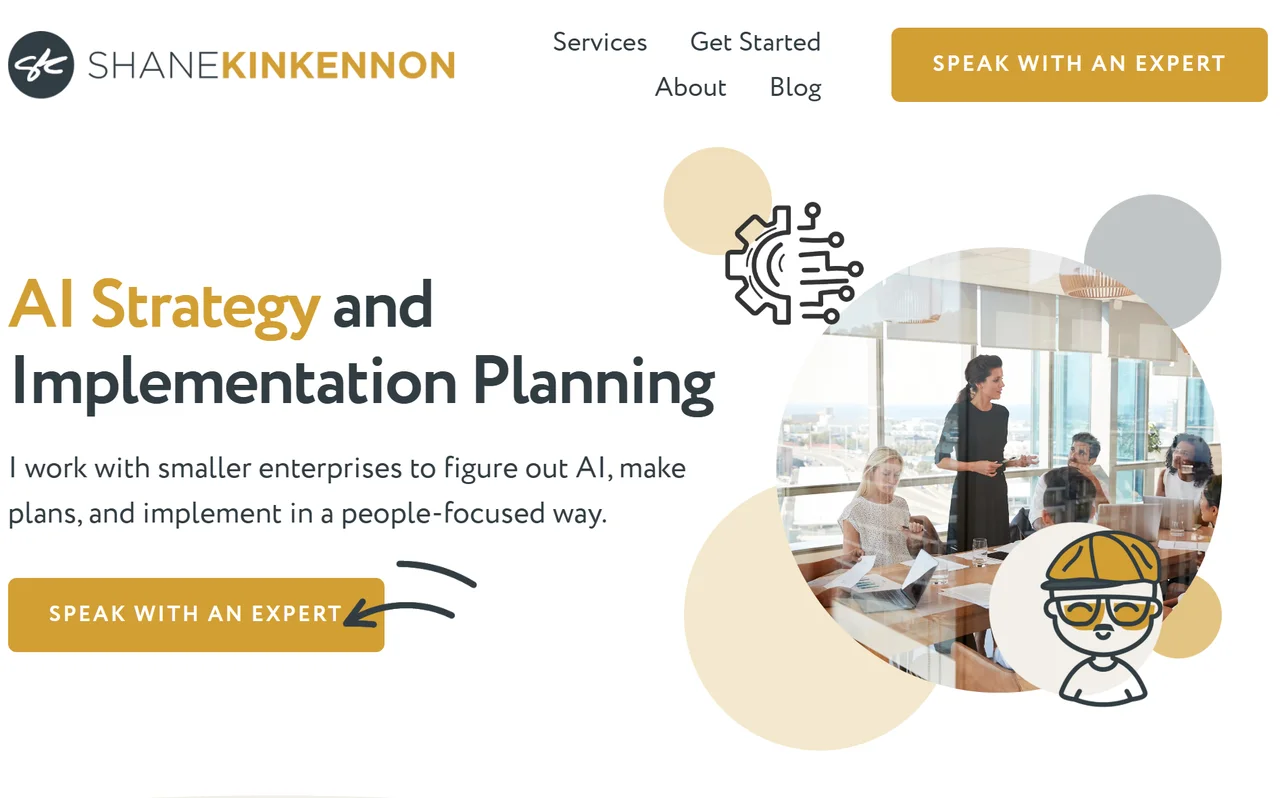
Shane hilft Führungskräften. Seine Website ist sauber und professionell mit starken Farben und einzigartigen Illustrationen. Empfehlungen von C-Level-Executives sind prominent platziert.
- Warum ist es besonders: Für Beratungsdienste ist Vertrauen alles. Kundenempfehlungen von beeindruckenden Positionen etablieren sofort Glaubwürdigkeit. Die Gestaltung ist professionell, aber nicht korporativ.
- Hauptpunkt: Für Dienstleistungsunternehmen sind Empfehlungen wertvoll. Zeigen Sie sie prominent.
Fabricio Teixeira – Design Partner (Work & Co)
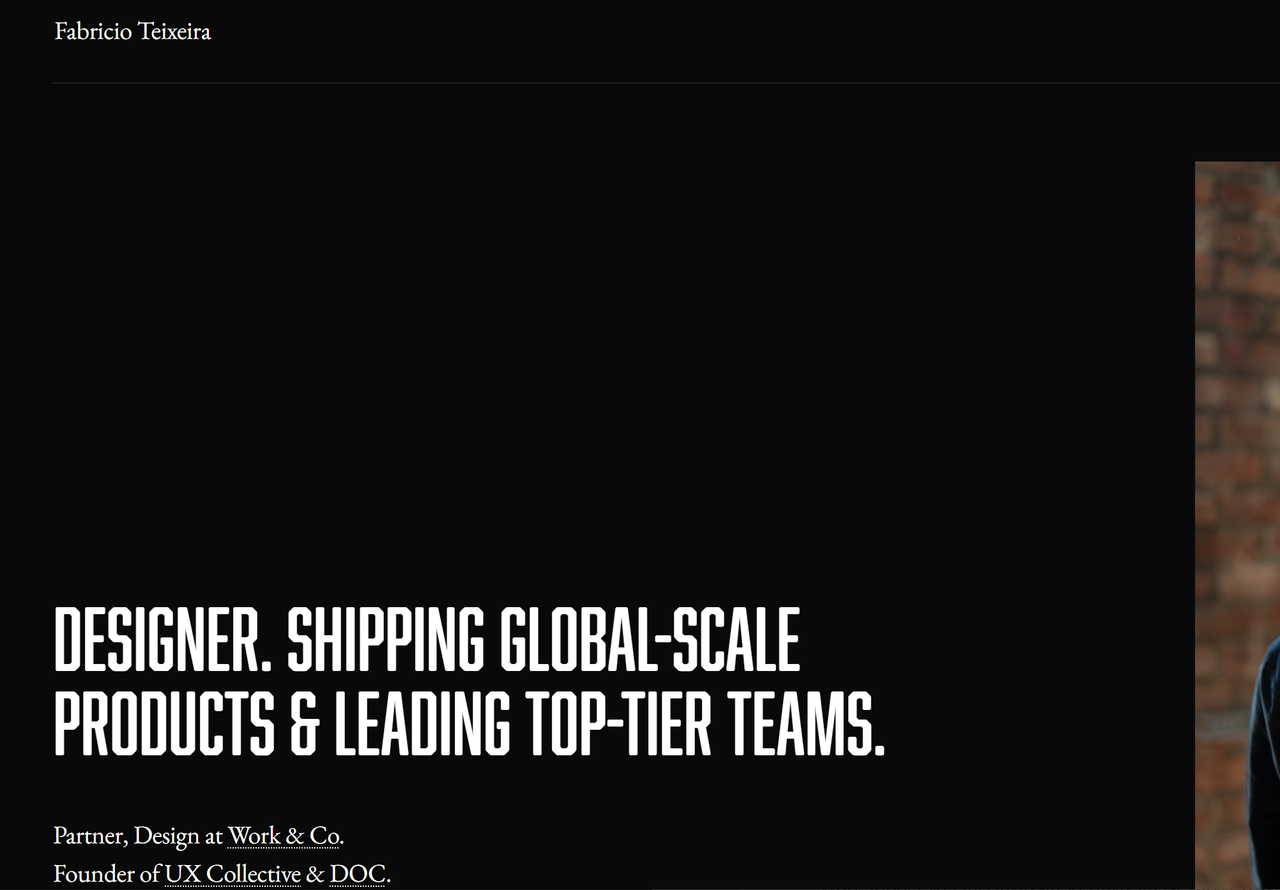
Fabricio ist Design Partner bei Work & Co und Gründer von UX Collective (eine der größten UX-Publikationen). Sein Portfolio zeigt hochwertige Arbeit mit klarem Einfluss.
- Warum ist es besonders: Denkleadership ist seine Unterscheidung. Er ist nicht nur ein Designer. Er ist eine industrielle Stimme. Sein Portfolio zeigt nicht nur Arbeit, sondern auch Einfluss.
- Hauptpunkt: Aufbau von Denkleadership. Inhaltscreation + Portfolio = unbesiegbarer Mix.
Jay Acunzo – Storyteller für Unternehmen
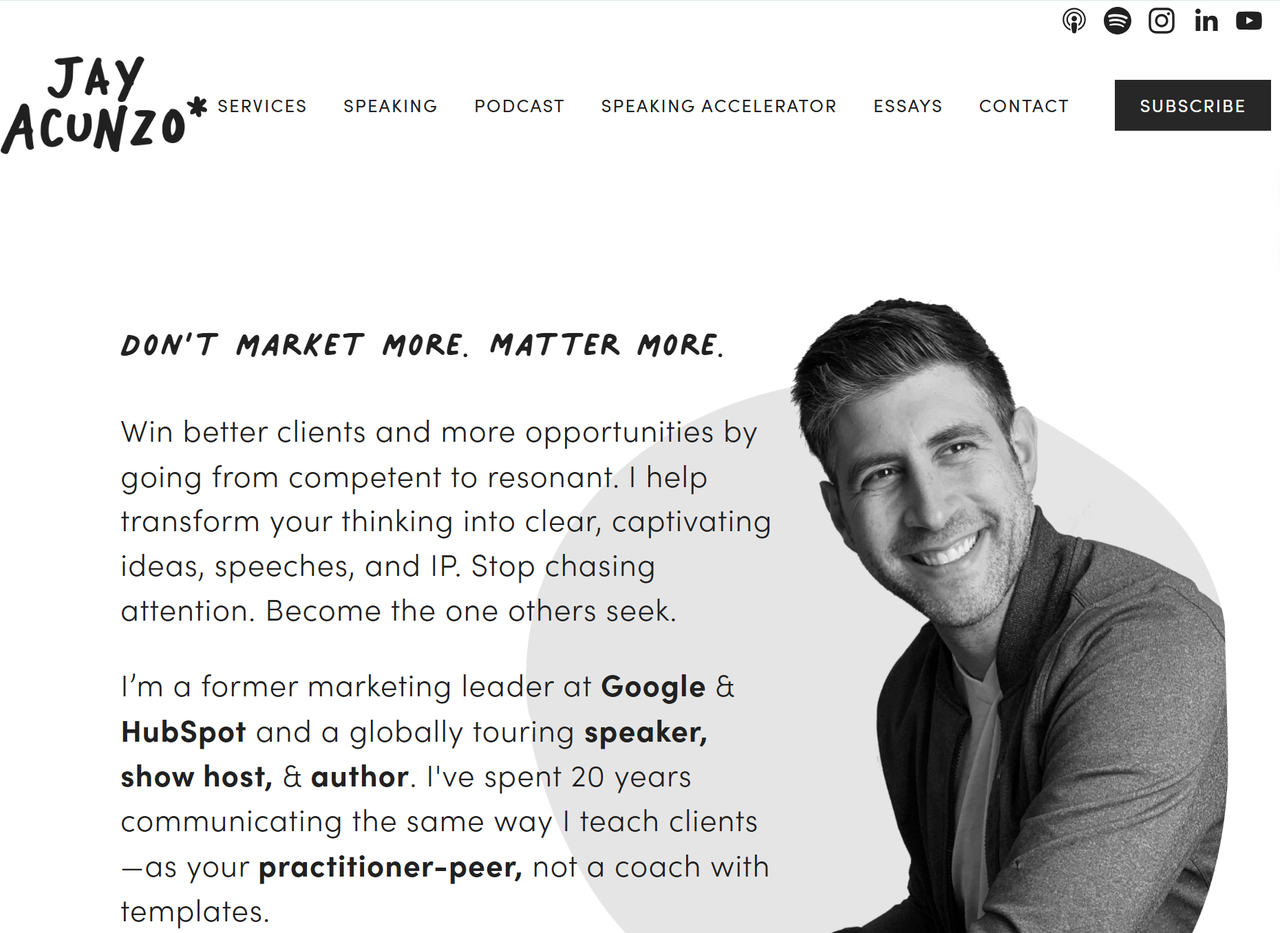
Jay ist Autor, Redner und Showrunner, der sich auf Geschichten für Unternehmen spezialisiert hat. Seine Startseite besteht aus solider Langformtext mit gut geschriebenen Abschnitten und Empfehlungen.
- Warum ist es besonders: Er schreibt. Viel. Und gut. Das Portfolio ist im Grunde ein Langform-Homepage, die durch Geschichten verkauft. Mutiger Ansatz für einen Storyteller.
- Hauptpunkt: Steigern Sie Ihre Stärke. Wenn Sie ein Schreiber sind, schreiben Sie. Verbergen Sie es nicht hinter hübschen Bildern.
Denise Chandler – Entwicklerportfolio
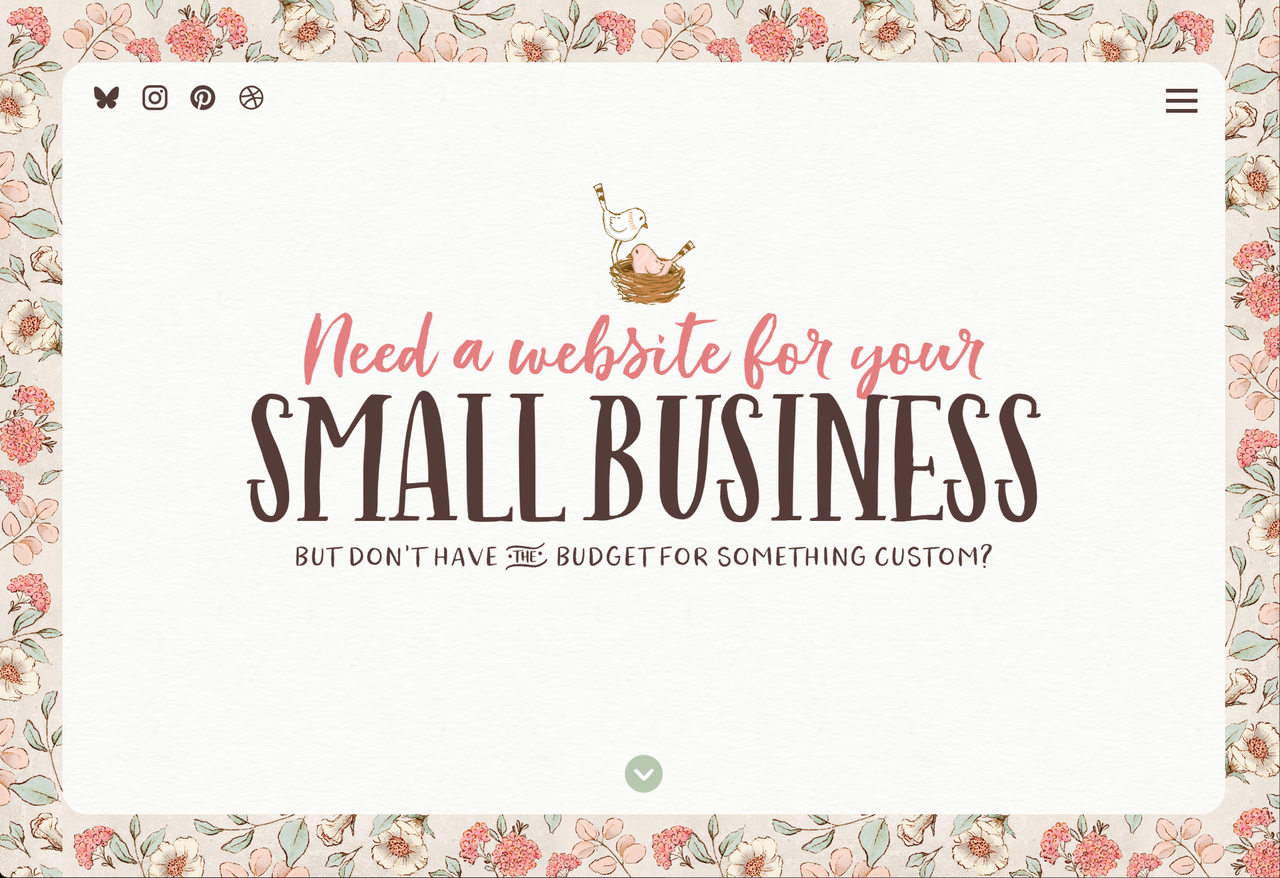
Denise hat ein weiches, einladendes Einseiten-Portfolio mit einer rosa- und braunen Farbpalette und einem blumigen Rahmen. Einfache Struktur, warmes Design, klare Abschnitte.
- Warum ist es besonders: Wärme. Das ist das Gefühl. Obwohl sie eine Entwicklerin ist, wirkt die Website zugänglich. Nicht code-first, sondern menschenorientiert.
- Hauptpunkt: Lassen Sie Ihre Werkzeuge nicht Ihren Stil definieren. Entwickler können auch warme, einladende Webseiten haben.
Jessica Hische – Schriftkünstlerin und Designerin
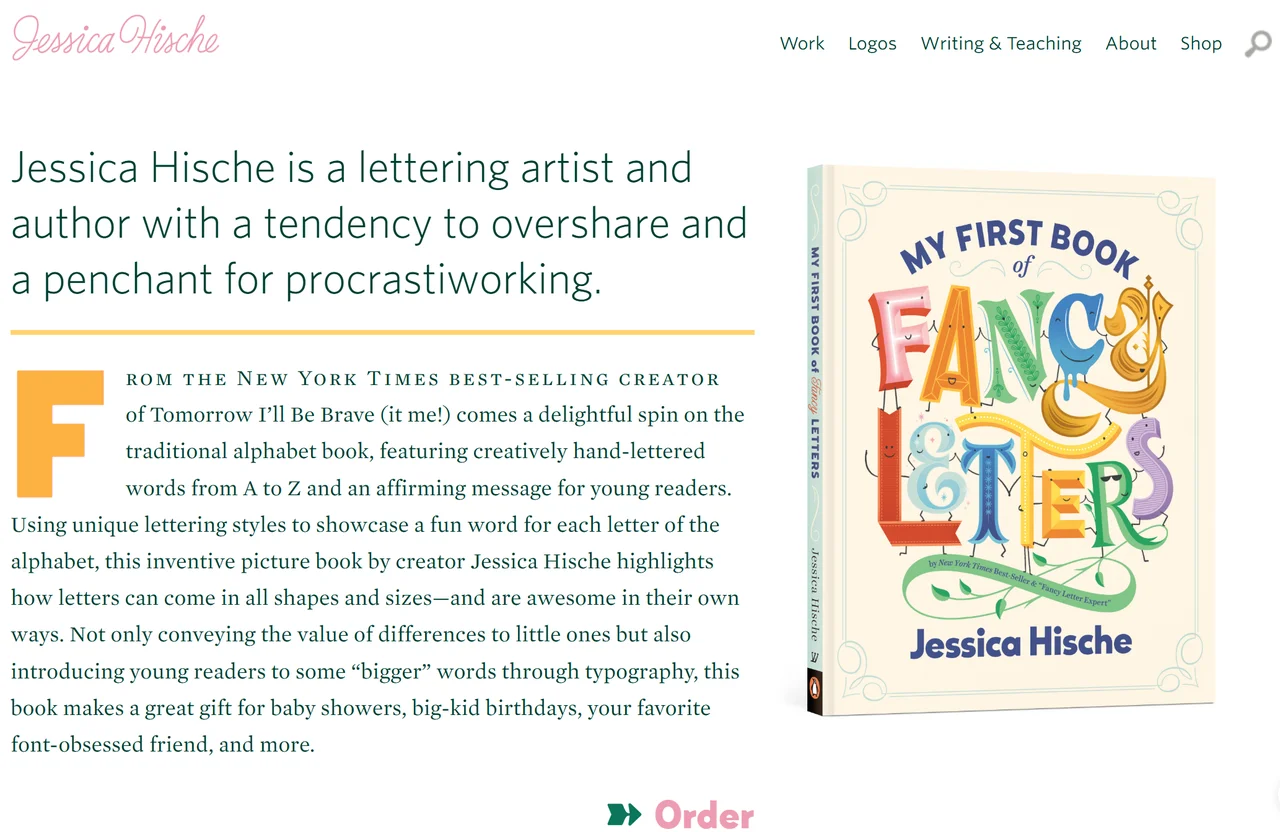
Jessicas Portfolio ist spielerisch und mutig mit einer Mischung aus Farben, Schriftarten und lustigem Design. Intuitives Layout mit heller Energie, die zu ihrem Arbeitsstil passt.
- Warum ist es besonders: Ihre Persönlichkeit ist die Marke. Sie ist bekannt für ihre einzigartige Schriftart und das Portfolio unterstreicht diese kreative, spielerische Energie. Erinnerungswürdig und markenkonform.
- Hauptpunkt: Ihr Portfolio sollte erinnerungswürdig sein. Wenn Leute Ihr Portal nicht merken, werden sie Sie nicht merken.
Was macht diese Beispiele für persönliche Portfolio-Websites wirklich funktionieren
Nachdem ich mich mit Hunderten dieser Beispiele für persönliche Portfolio-Websites befasst habe, hier ist, was die Guten von den Unvergesslichen unterscheidet:
Klare Wertversprechen (innerhalb von 3 Sekunden)
Besucher sollten sofort wissen, was Sie tun und für wen Sie es tun. Keine cleveren Slogans, die entschlüsselt werden müssen. Alles, was Sie brauchen, ist direkte Kommunikation.
Beste Arbeit vorne und in der Mitte
Machen Sie es den Leuten nicht schwer, Ihre stärksten Arbeiten zu finden. Zeigen Sie Ihre A-Game.
Kontext, nicht nur Inhalt
Erklären Sie die Aufgabenstellung, Ihre Rolle und das Ergebnis. Ergebnisse sind wichtiger als schöne Screenshots.
Einfache Navigation
Drei bis fünf Hauptabschnitte. Findbarkeit ist alles.
Mobile-optimierte Gestaltung
Mehr als 60 % der Besuche kommen von Handys. Ein gebrochener mobiler Erlebnis = verlorene Chancen.
Kontaktdaten sichtbar
Machen Sie es den Leuten nicht schwer, herauszufinden, wie sie Sie erreichen können. Stellen Sie es überall zur Verfügung.
Regelmäßige Updates
Ein veralteter Portfolio ruft "nicht ernsthaft" hervor. Fügen Sie frische Arbeit hinzu – sogar Kursprojekte zählen.
Wie man eine persönliche Portfolio-Website in Minuten erstellt
Sie haben gerade 25 persönliche Portfolio-Beispiele gesehen, die funktionieren. Aber jetzt denken Sie wahrscheinlich: "Groß, aber wie baue ich eine wirklich, mit einer Tasse Kaffee in der Hand?"
Wegic AI ist hier, um zu helfen. Sie sagen es, was Sie wollen, es baut es. Sie können in natürlicher Sprache bearbeiten, einfach sprechen, texten und kommentieren.
Schritt 1: Beschreiben Sie Ihre Vision
Ich habe Wegic geöffnet und eingegeben:
"Ich brauche eine Portfolio-Website für einen Grafikdesign-Studierenden. Rein, modern, fokussiert auf das Zeigen meiner Designprojekte und Praktikumserfahrung."
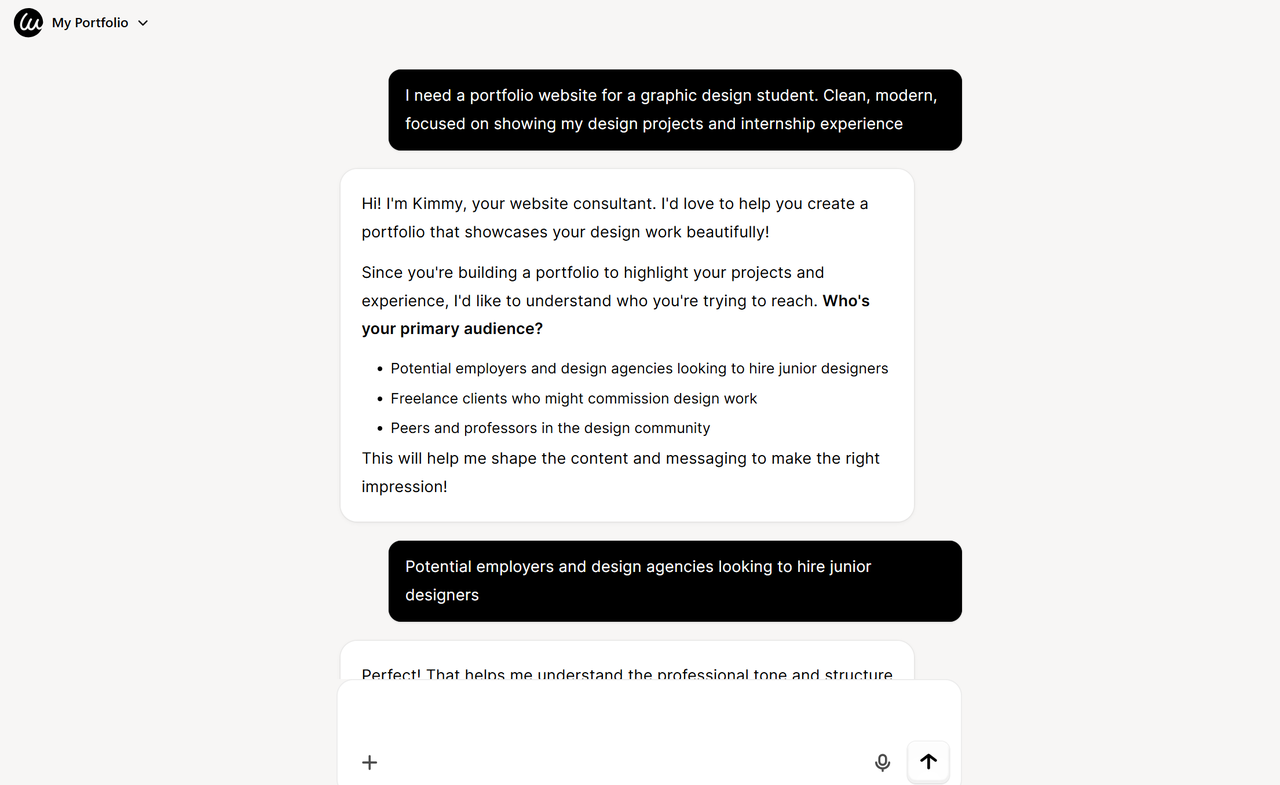
Kimmy begrüßte mich und stellte einige einfache Fragen.
Schritt 2: Beantworten Sie einfache Fragen
Wegic fragte nach meinem Designarbeiten, Assets, Markennamen, Kontaktdaten, Sprachnutzung und Stilpräferenzen.
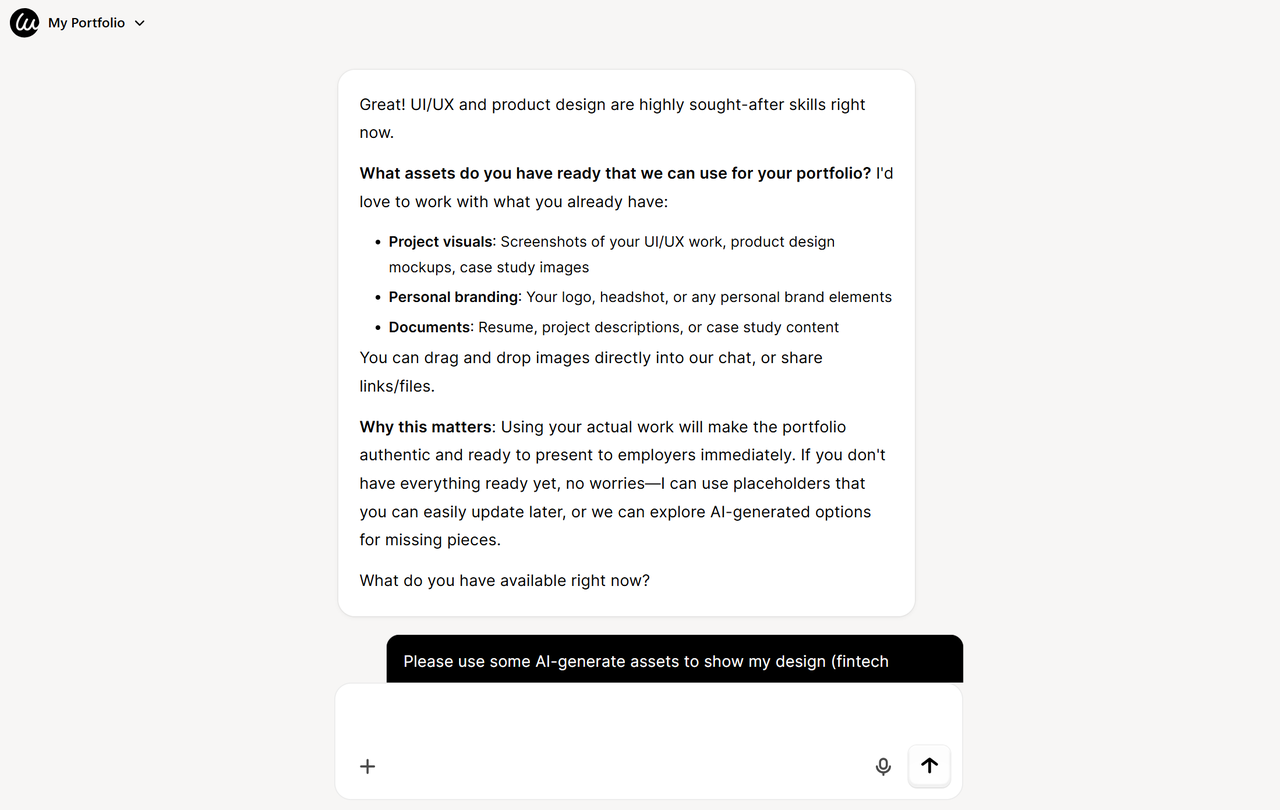
Schritt 3: Wählen Sie aus mehreren Optionen
Innerhalb von Minuten generierte Wegic 5 einzigartige Designoptionen. Jede hatte eine andere Persönlichkeit.
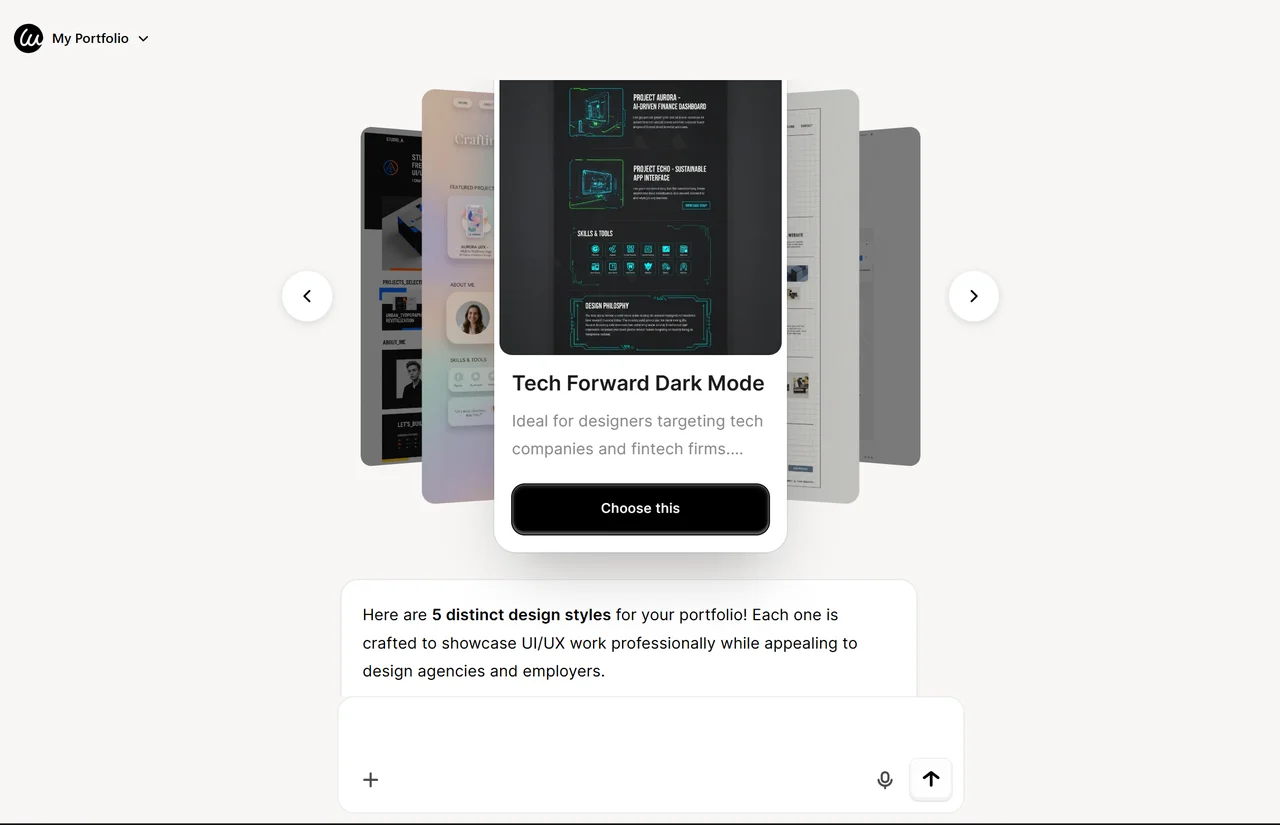
Als Vibe-Coding-Junge wählte ich "Tech Forward Dark Mode". Es hat das Gefühl, das Technologieunternehmen und Designagenturen lieben.
Schritt 4: Beobachten Sie, wie Ihre Website gebaut wird
Wegic erstellte eine vollständige Website-Baumkonfirmation mit:
- Ihr Name
- Portfolio-Fokus
- Zielgruppen
- Designstil
- Ausgewählte Projekte
- Kontaktdaten
- Website-Sprache
- Design-Einflüsse
- Gesammelte Assets
Nach Bestätigung klickte ich auf die Schaltfläche "Start Generation", um den Bau zu starten (geschätzte 8–10 Minuten).
Schritt 5: Ändern Sie alles, was Sie ändern möchten
Ich wollte den Hero-Headline ändern. Ich tippte einfach:
"Machen Sie den Headline einladender für potenzielle Arbeitgeber, fügen Sie 'Offen für Praktika' hinzu"
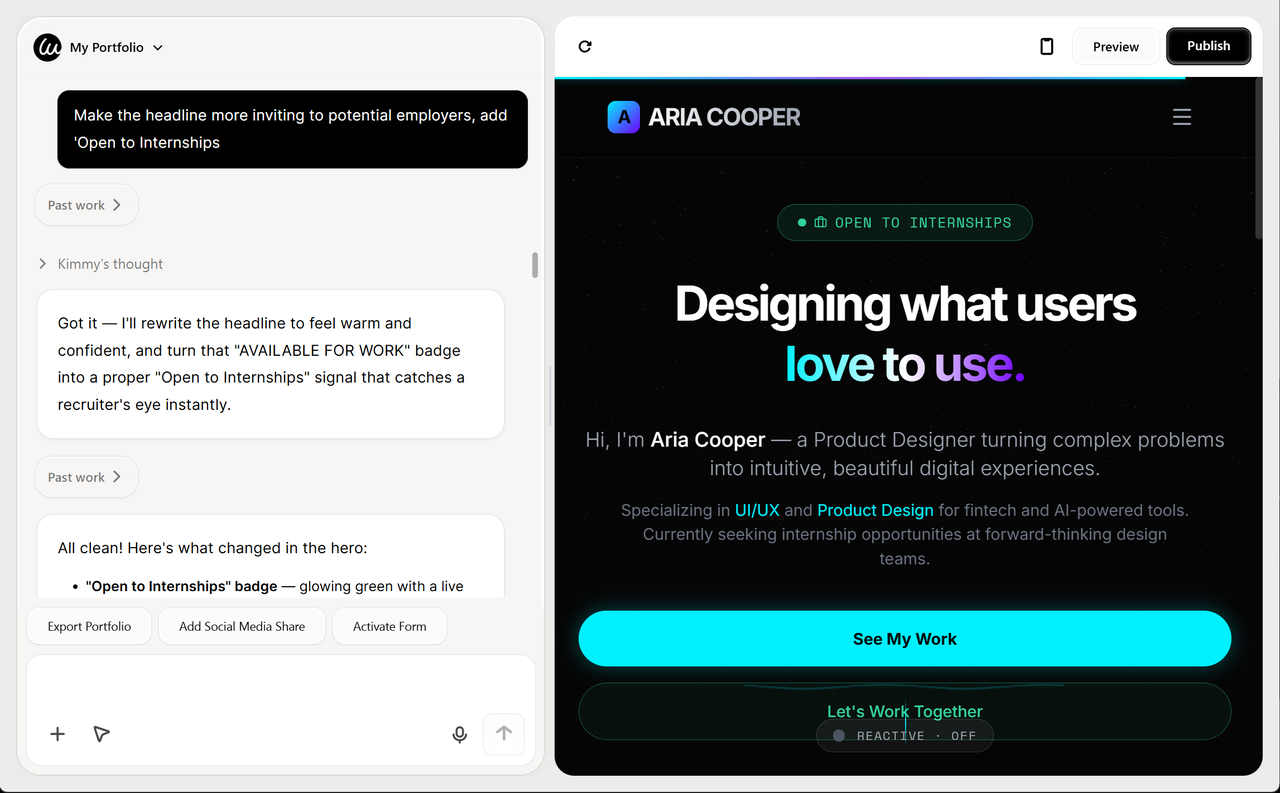
Erledigt. Schnell.
Die endgültige Website
Nach einem Rundgang der Bearbeitungen sah das endgültige Portfolio so aus:
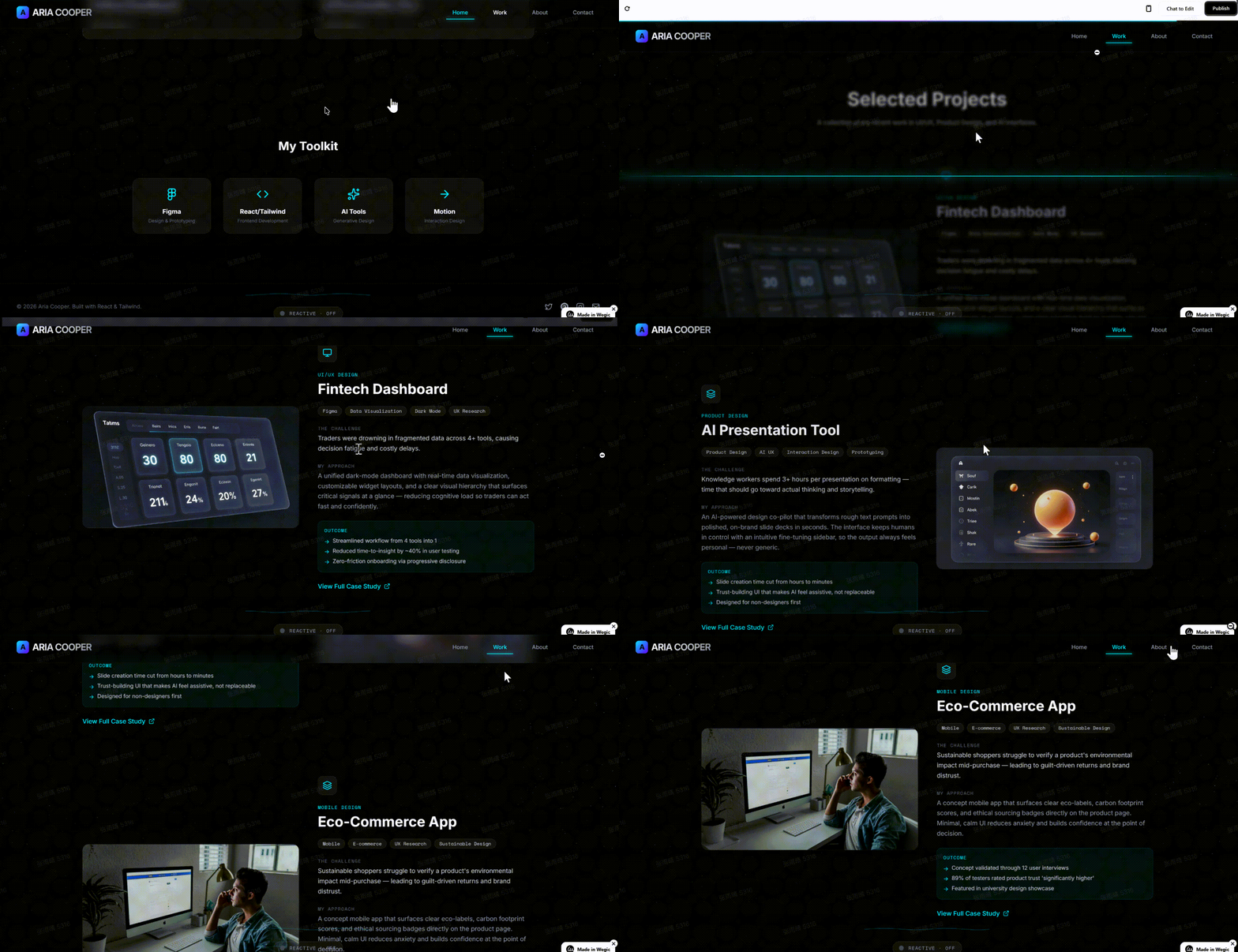
Meine Portfolio-Website hat alles, was ich will, und kann jederzeit aktualisiert werden. Was ich tun muss, ist, meine Ideen aufzuzeichnen und mit Wegic AI zu sprechen.
Ihre Chance
Sie haben jetzt 25 echte Beispiele für persönliche Portfolio-Websites, die wirklich funktionieren. Nachdem Sie gelernt haben, was sie erfolgreich macht, und einen klaren Weg zur Erstellung einer Portfolio-Website haben. Es ist Zeit, Ihre eigene zu bauen!
Sie müssen nicht mehr einen Designer einstellen, tausende ausgeben oder komplexe Editor lernen. Wegic AI lässt Sie von Idee bis Live-Portfolio in Minuten gehen.
Die besten Portfolios sind nicht die teuersten. Sie sind die, die klar kommunizieren, was Sie tun, echte Ergebnisse zeigen und es für die richtigen Leute einfach machen, Sie zu finden.
Beginnen Sie mit dem Bau. Ihre zukünftige Selbst wird es Ihnen danken.
Häufig gestellte Fragen
Wie erstelle ich eine persönliche Portfolio-Website ohne Erfahrung?
Sie benötigen keine Erfahrung mehr. Wegic lässt Sie ein vollständiges Portfolio erstellen, indem Sie beschreiben, was Sie wollen. Die meisten Wegic-Nutzer haben keine Website-Bau-Erfahrung. Sie beschreiben, AI baut. Das ist es.
Was sollte ein Student in seine Portfolio-Website aufnehmen?
Beginnen Sie mit: Ihren besten 3-5 Projekten, About-Seite mit Ihrer Hintergrund, Lebenslauf, Kontaktdaten und klarem Call-to-Action (z. B. Open to Internships). Fügen Sie Kontext zu jedem Projekt hinzu: die Aufgabenstellung, Ihre Rolle und Ergebnisse.
Wie viel kostet eine persönliche Portfolio-Website?
Es hängt davon ab. Mit Wegic? Kostenlos zu beginnen. Einen Designer einstellen? $500-5,000+. Traditionelle Builder? $10-30/Monat. Der Schlüssel ist, zu beginnen, kostenlose Tools existieren aus einem Grund.
Was ist die beste Plattform für ein Studenten-Portfolio?
Für Studenten ist Wegic herausragend, weil es kostenlos ist, keine technischen Fähigkeiten erfordert und professionelle Ergebnisse schnell produziert. Squarespace und Wix sind ebenfalls beliebt, erfordern aber mehr manuelle Einrichtung.
Wie kann ich mein Portfolio hervorstechen?
Drei Dinge: (1) Zeigen Sie den Prozess, nicht nur die Endprodukte. (2) Quantifizieren Sie Ihre Auswirkung mit echten Zahlen. (3) Seien Sie klar, was Sie wollen – Arbeitgeber schätzen Richtung.
Kann ich Wegic für ein Studenten-Portfolio verwenden?
Absolut! Wegic ist ideal für Studentenportfolios. Es ist kostenlos zu starten, schnell zu erstellen und erzeugt Ergebnisse, die teurer Agenturarbeiten in nichts nachstehen. Ideal für Praktikumsjagden und Hochschulbewerbungen.