What Makes a Great Real Estate Agent Website
It Puts the Agent, Not Just the Listings, Front and Center
Buyers and sellers aren't just picking a house. They're picking a person to guide them through one of the biggest financial decisions of their life. That's why the best agent websites lead with a real photo, a real name, and a clear sense of who you are, instead of burying you behind a generic listings feed. A headline like "Search Homes in Austin" tells a visitor what the site does. A headline like "Say Yes with Jess" tells them who they're working with, and that's what actually sticks.
It Makes Property Search Effortless
Even if you're not trying to out-Zillow Zillow, visitors still expect to search and filter listings without leaving your site. An IDX or MLS integration that pulls live listings into your own design keeps people browsing longer, and gets you their contact info before they go looking somewhere else.
It Builds Trust Fast (Testimonials, Track Record, Credentials)
People hire agents based on trust, not just taste. That's why the strongest sites put proof front and center: client reviews, sales numbers, years in the business, or a "top producer" badge. You don't need hundreds of millions in career sales to do this. A handful of specific, real testimonials from past clients does the job just as well.
It Has a Clear Next Step for Visitors
A beautiful website that doesn't tell visitors what to do next is just decoration. Every page should point somewhere: book a call, search homes, get a home valuation, or send a message. The goal isn't five different buttons. It's making the one next step obvious.
For a lot of visitors, that next step is easiest as a quick chat — adding WhatsApp next to your contact form gives them a lower-friction way to just ask a question before they're ready to book anything.
9 Real Estate Agent Website Examples We Love
Solo Agent Making the Most of a Template Site
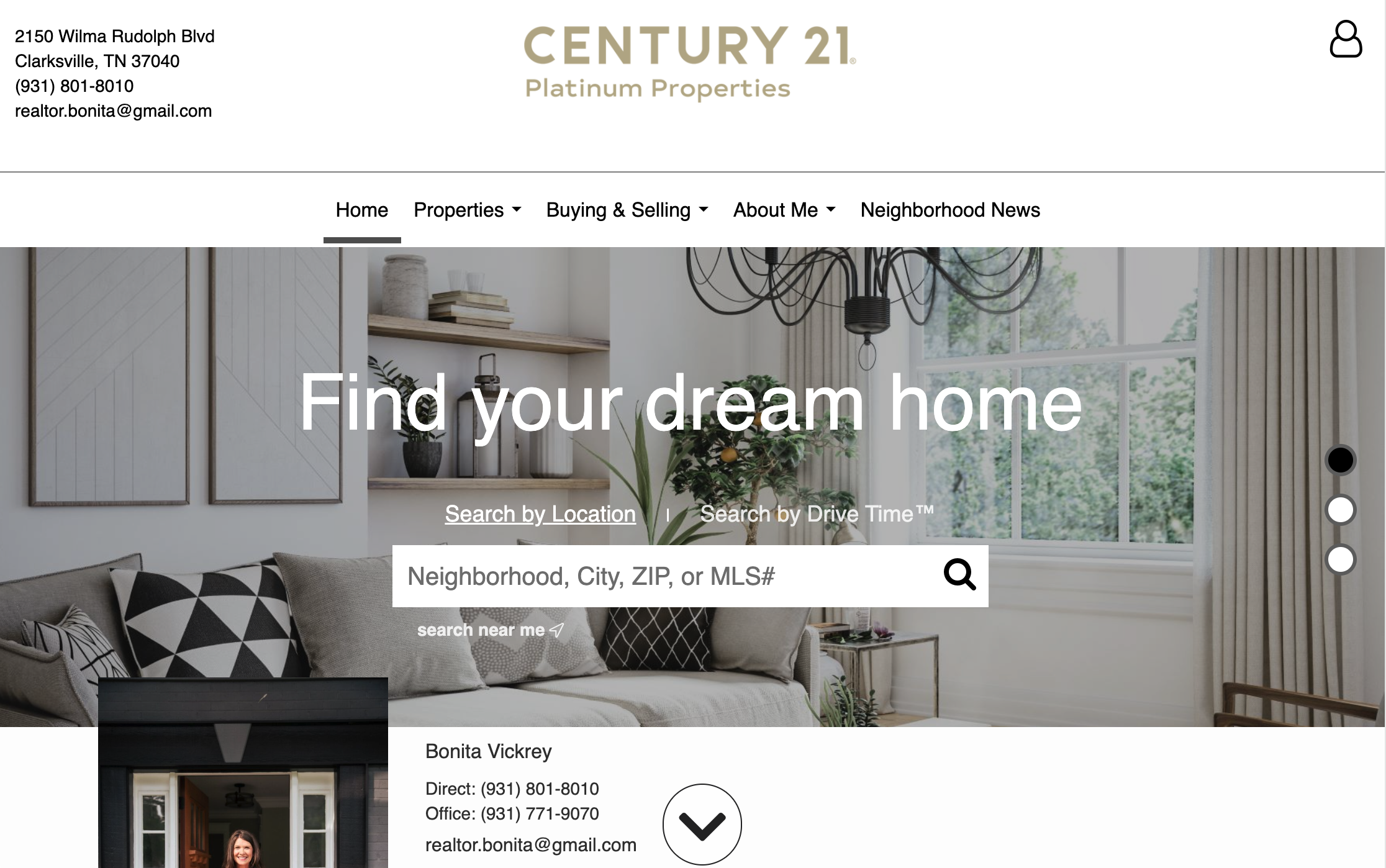
Bonita Vickrey is a Century 21 agent in Clarksville, Tennessee, and her site is built on the brokerage's standard agent template. It's not fancy, but it's genuinely functional: a property search with both location and drive-time filters, a loan calculator, buying and selling tips, and a contact form that's never more than a click away.
What works: The site nails the basics that actually generate leads: search, a useful calculator, and an easy way to get in touch. What it's missing is Bonita herself. The design leans on the Century 21 brand more than on her name or story, so it could belong to almost any agent at the company. If you're working with a template like this, spend your energy on the parts that make it yours: your photo, your bio, your voice, not just the listings feed.
Solo Agent With Personality-Driven Branding
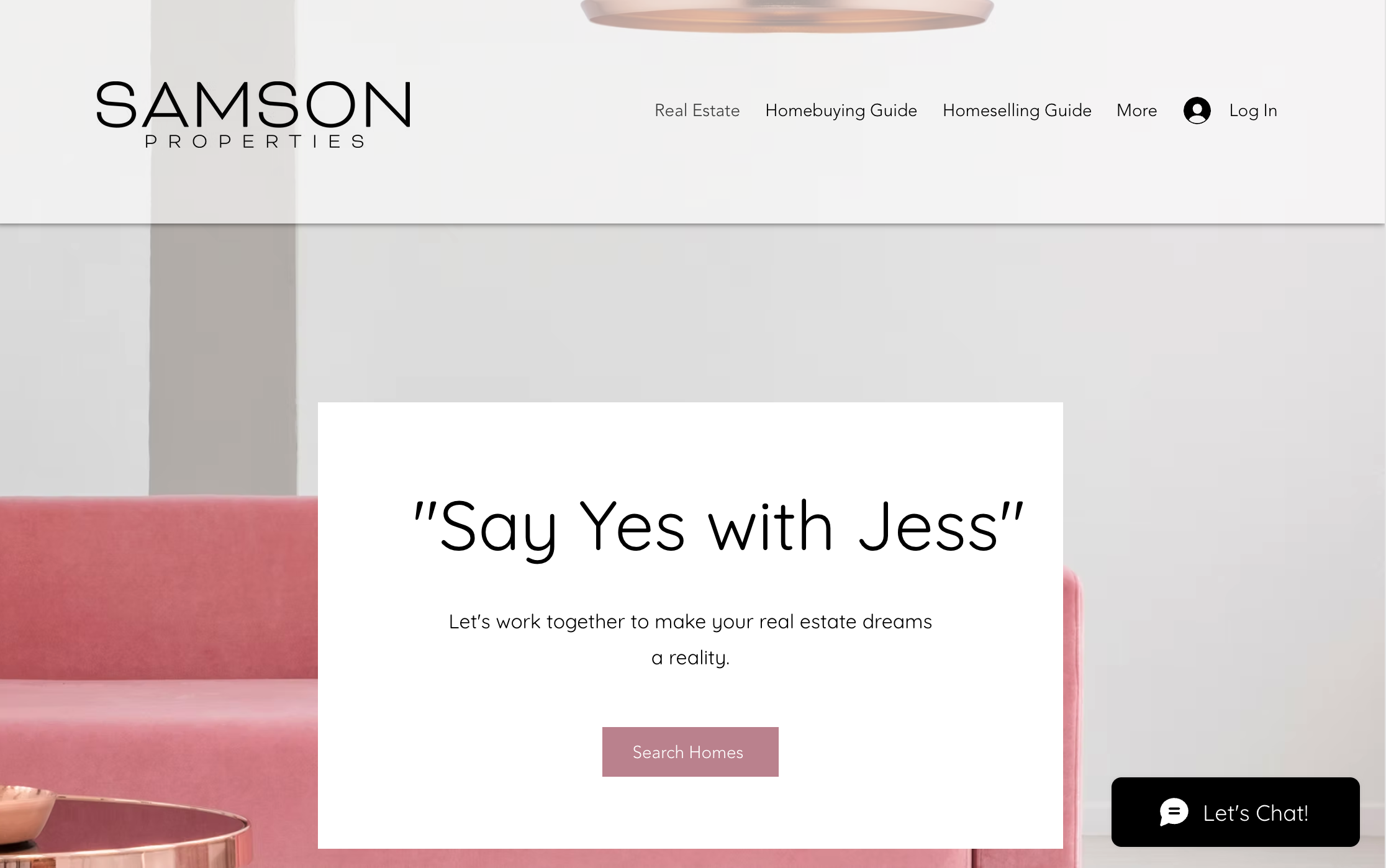
Website: https://www.corbettcollective.com/
Jessica Corbett runs a solo real estate business, and her whole site is built around one idea: she's easy to work with. The headline reads "Say Yes with Jess," paired with a simple promise to make your real estate goals happen together. The design is minimal, mostly black and white, and organized around buyer and seller guides instead of a wall of listings. She doesn't even try to build her own property search. A "Search Homes" button just sends visitors straight to her MLS feed, and that's fine.
What works: One clear, personal headline does more for you than a stock photo of a house ever will. If you're a solo agent without a design budget, a name-driven tagline and a simple two-color layout can carry the whole site. You don't need every feature on day one.
Small Team With Clear Roles

Website: https://www.kimandjaven.com/
Kim and Javen House is a mother-daughter team in Northern Virginia. Their site uses a clean white-and-navy layout with team cards introducing all three members by name and photo, plus a straightforward menu for Buy, Sell, Reviews, and Properties. One thing worth noting: the "Learn More" links on each team card all point to the same About page, so the individual bios don't get much room to breathe.
What works: Team cards with real photos and names are an easy way to help visitors put a face to who they'll actually be working with. The lesson from the gap here: if you're a team, give each person their own bio, not just a shared one. Visitors want to know who they're calling, not just the company name.
Luxury Agent Who Lets Restraint Do the Talking
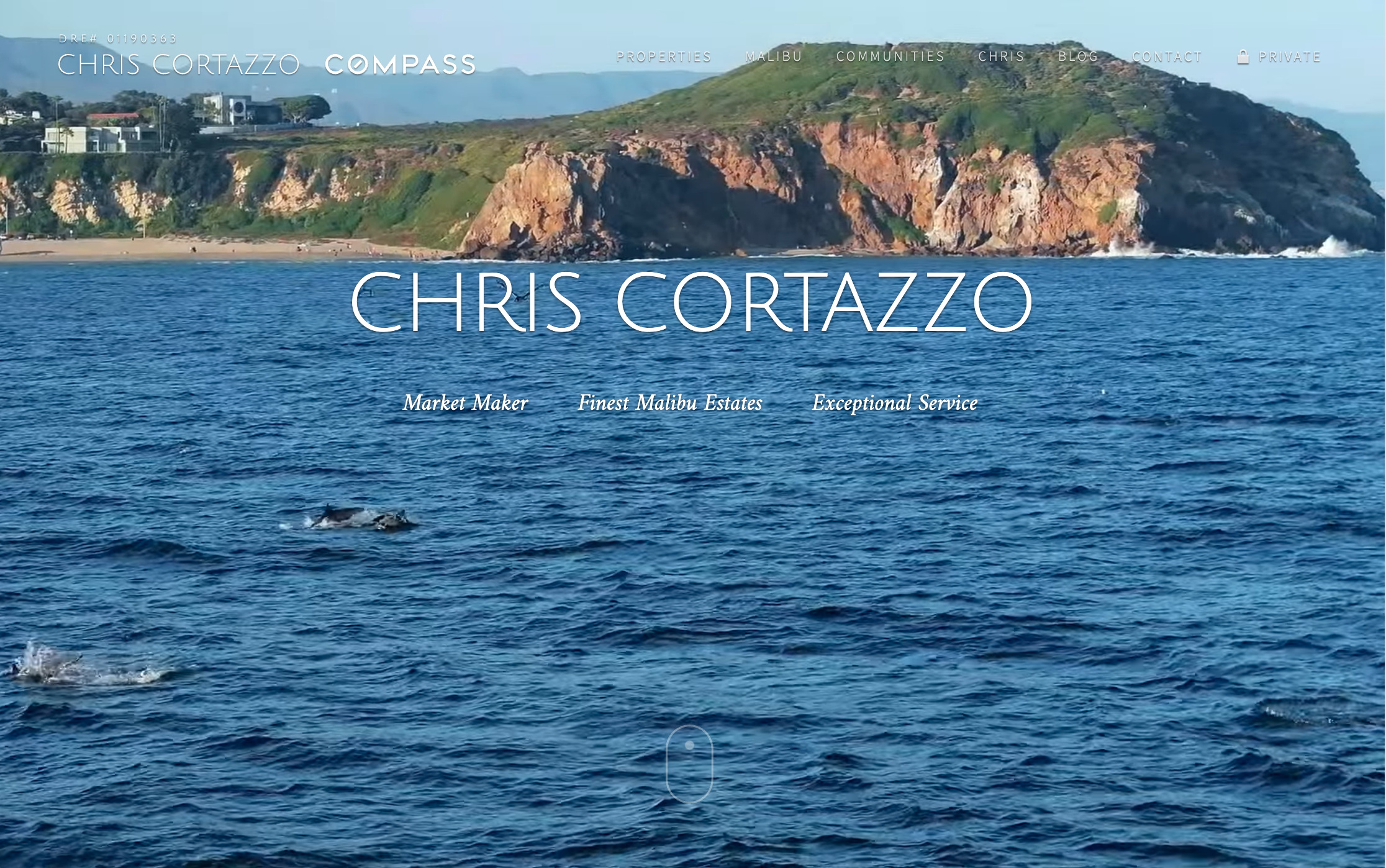
Website: https://chriscortazzo.com/
Chris Cortazzo sells some of the priciest real estate in Malibu, and his site matches that world without shouting about it. Neutral colors, editorial photography of coastline estates, and a positioning line — "Malibu's Premier Real Estate Icon" — that leans on decades of local reputation rather than exclamation points. Featured listings run from $14M to $35M, each with its own clean detail page.
What works: Luxury branding doesn't need loud design. Cortazzo's site proves that a few well-chosen words and a handful of excellent photos can carry more weight than a dozen flashy sections. If your buyers are sophisticated, a calm, confident site signals that you are too.
In a market like Malibu that draws international buyers, a multilingual version of the site can carry that same quiet confidence across languages instead of switching to a generic English-only fallback.
Niche Specialist Built on Trust, Not Trends
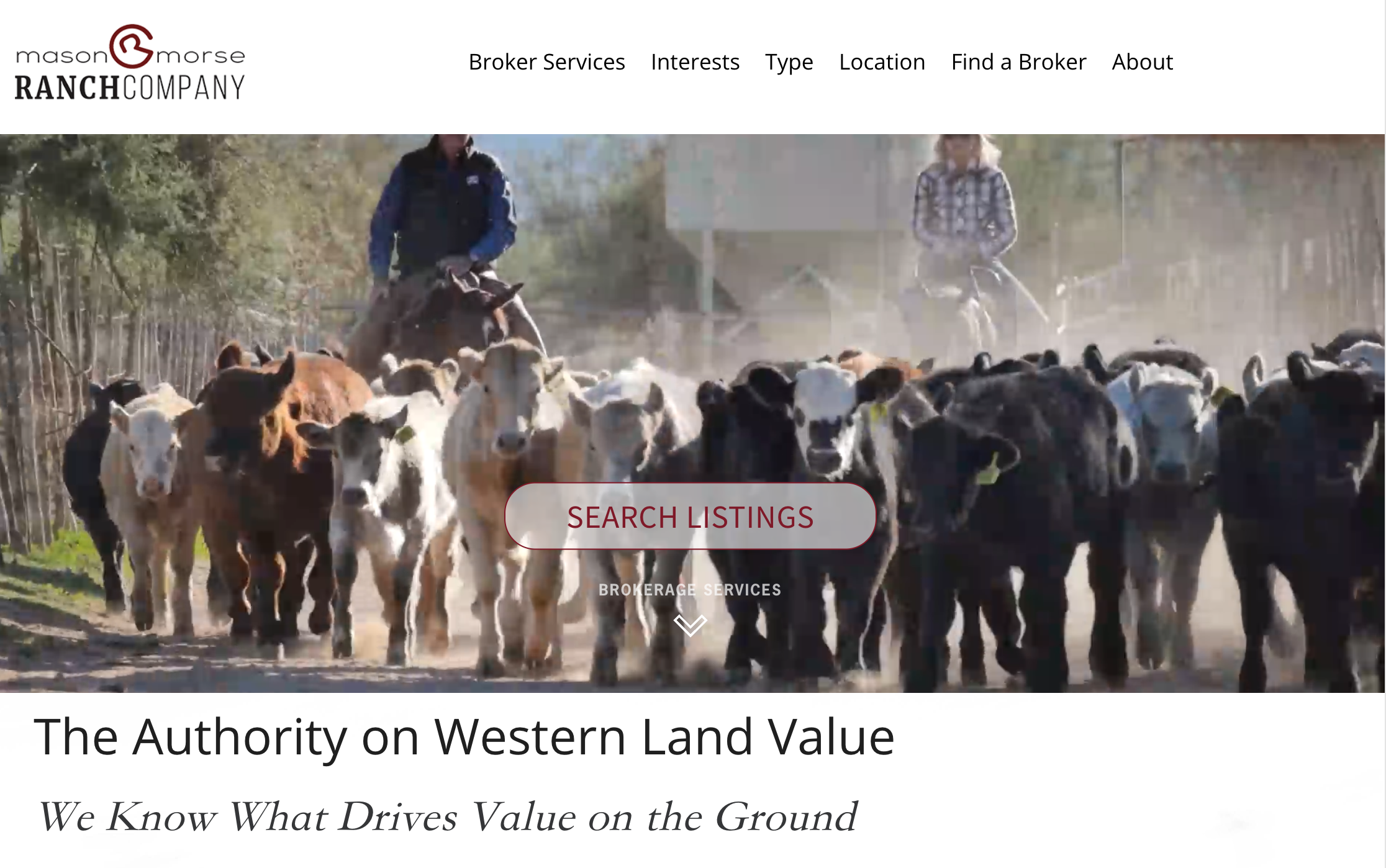
Website: https://www.ranchland.com/
Mason & Morse Ranch Company sells ranches, farms, and recreational land across the western U.S., a market where buyers care more about acreage and water rights than trendy design. Their site leans into that: dark tones with brand red, a directory of 20+ specialized brokers, coverage across more than a dozen states, and a homepage stat — "133 years of combined brokerage experience" — that's built to reassure, not impress.
What works: When you specialize in a niche market, credibility beats style. Leading with real numbers (years of experience, states covered, deals closed) tells a niche buyer you actually know their world. This works just as well for a single agent who specializes in something specific, like new construction or 55+ communities.
Team Site Built Around One Founder's Story
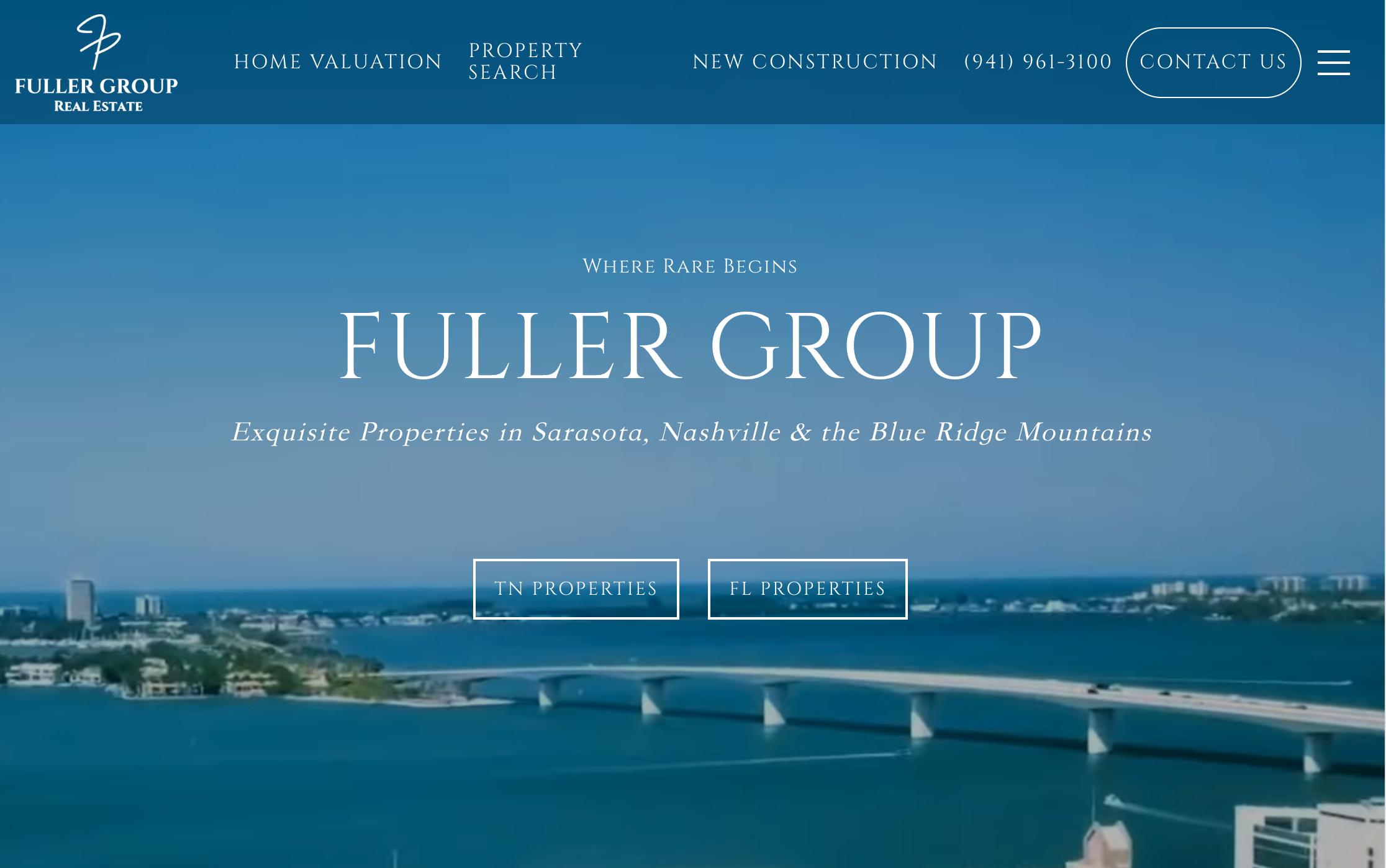
Website: https://thefullerproperties.com/
Fuller Group operates in two very different luxury markets, Nashville and Sarasota, but the site doesn't try to introduce a whole roster of agents. Instead, it centers on broker-owner Bo Fuller: his story, his philosophy, and a tagline ("Where Rare Begins") that sets the tone for everything else, including community guides for each market and a section on the team's local philanthropy.
What works: You don't need to list every team member with equal weight. Building the site around one clear voice, even if you technically run a bigger operation, makes the brand easier to remember and trust. Save the roster for a dedicated team page.
Content-Driven Market Authority

Website: https://carlinwright.com/
Carlin Wright specializes in New York City co-ops and condos, and her site backs up her numbers ($400M+ in career sales, a top 0.1% ranking, 25 years in the business) with an actual content strategy. Her "Real Estate Insights" section covers the specific, insider topics NYC buyers search for, like how co-op board interviews work or what happens when buildings merge.
The rest of the site is simple: white background, photo-forward listings, and neighborhood breakdowns.
What works: The blog isn't generic advice, it's built around the exact questions her specific buyers are asking. If you work a niche market with its own quirks, whether that's co-ops, new construction, or rural land, a few sharp, specific posts can do more for your credibility than a "market update" page nobody reads.
Turning those posts into an email newsletter means past clients and leads actually see them, instead of hoping people stumble back to the blog on their own.
Photography-Led Luxury Brand
Website: https://gingermartin.com/
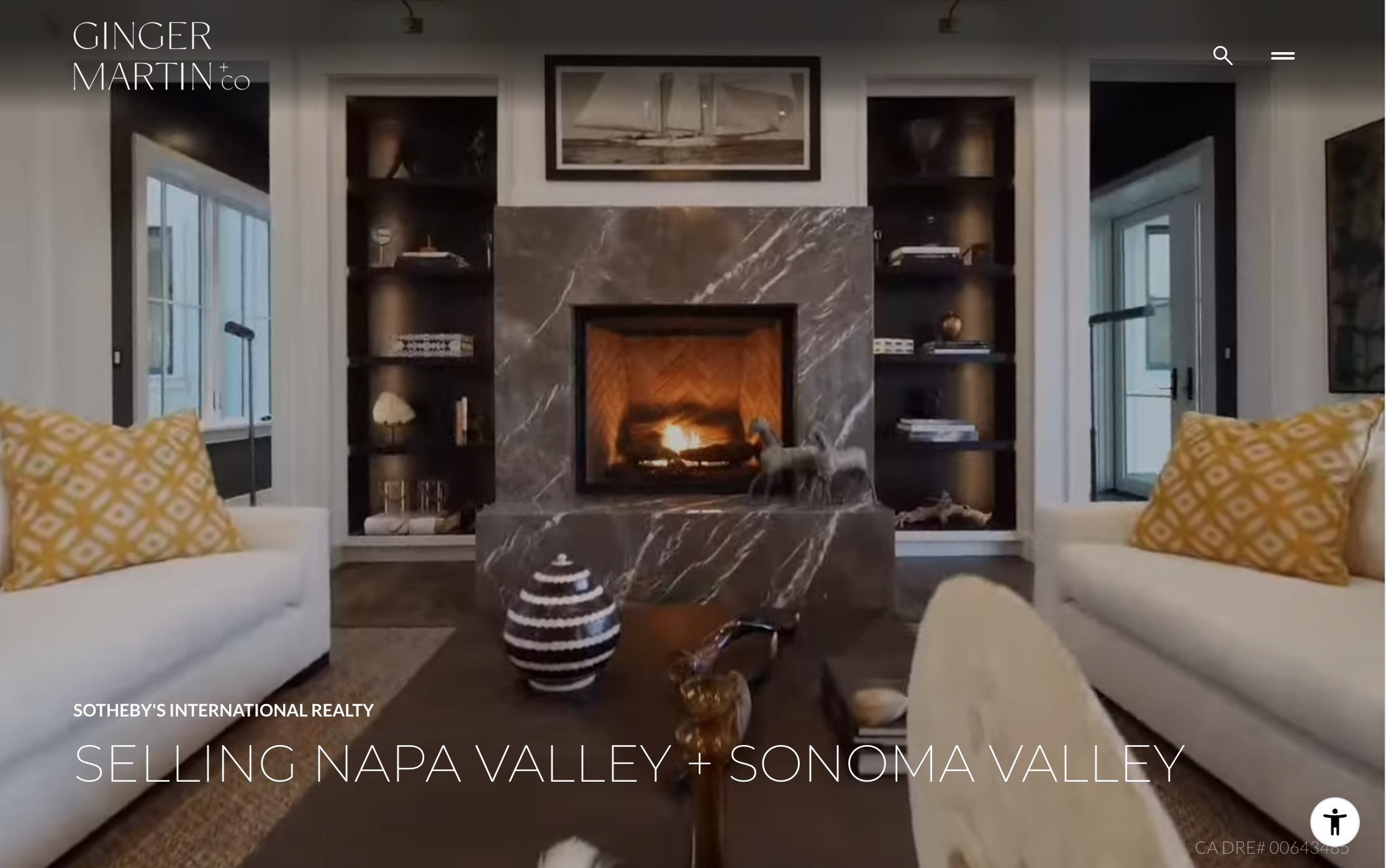
Ginger Martin sells wine country real estate in Napa and Sonoma, and her site leans entirely on photography to do the selling. Aerial shots of vineyards and hillside estates fill most of the homepage, next to a section exploring the surrounding towns instead of just listing addresses. Her numbers are right there too: $3B+ in career sales and a WSJ Top 250 ranking, so the trust-building happens fast, before you even scroll to a listing.
What works: The photos aren't just pretty, they're doing a job: showing the lifestyle and location you're buying into, not just square footage. If your market has a strong sense of place, whether that's wine country, the coast, or a specific neighborhood, leading with environment over interiors can set you apart.
Built With Wegic: A Demo Agent Site

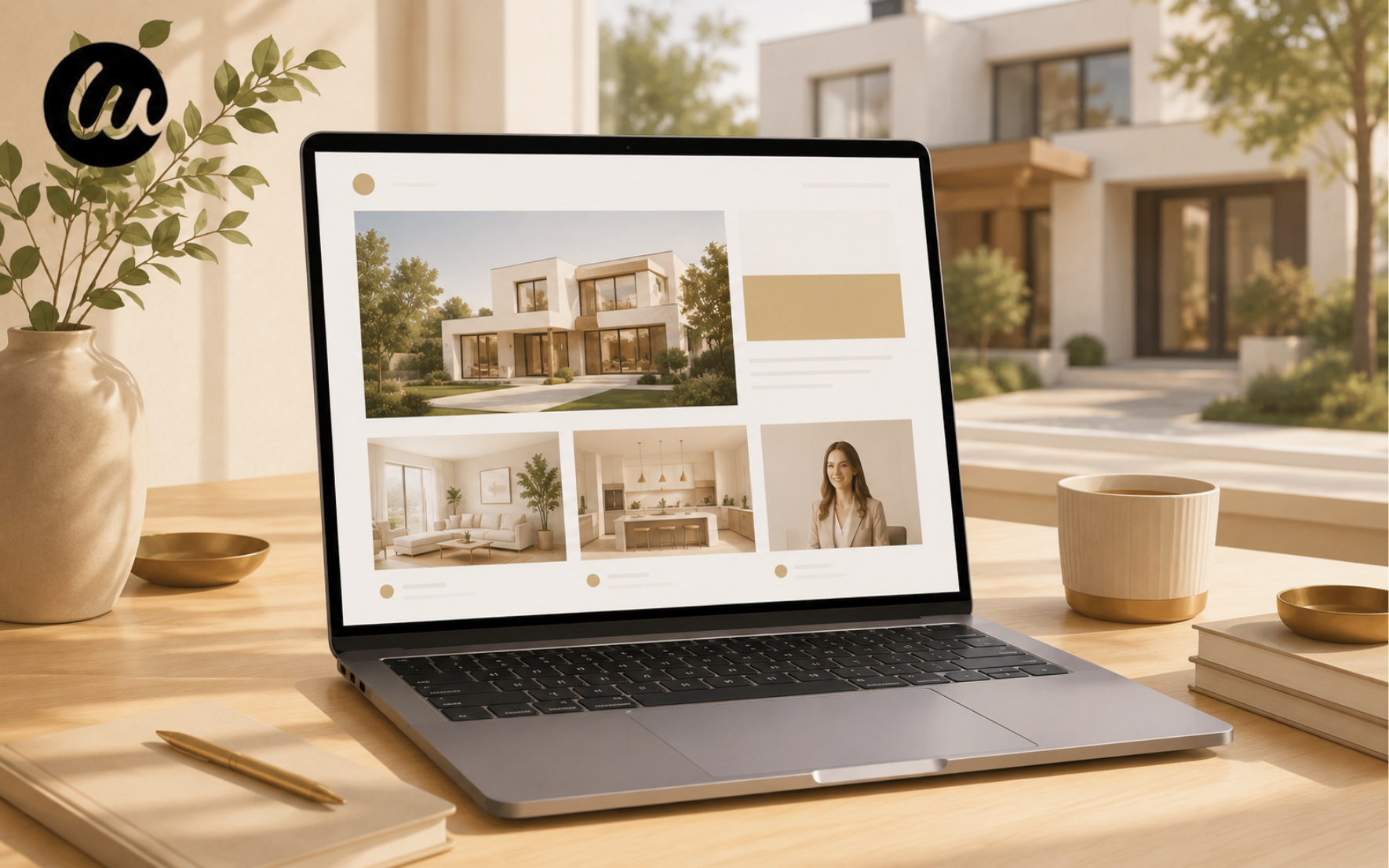
This one's a demo we built directly in Wegic, no manual design work involved. The homepage leads with a dusk photo of a home, a navy-and-gold color scheme, and a headline that does its job: "Discover Your Dream Home." Scroll past the hero and there's a property search and filter tool for browsing listings, plus more than one way to take action: "Explore Properties," "Contact Agent," and a "Schedule Viewing" button that stays visible in the top nav.
What works: Nearly everything covered in this article, a clear headline, working property search, visible next steps, showed up here without writing a line of code or hiring a designer. Describe your business to Wegic and you get a site with these fundamentals already in place, then spend your time customizing it instead of starting from a blank page.
How to Build Your Own Real Estate Agent Website (No Developer Needed)
Looking back at these examples, you've probably noticed something: most of what makes them work isn't expensive photography or custom code. It's personal branding, clear messaging, and a handful of well-placed features. That's the kind of thing you can actually pull off yourself.
That's exactly what Wegic is built for. Describe your business — your name, your market, your specialty, and Wegic's AI puts together a site with your bio, a listings section, and contact forms already in place. You swap in your own photos, adjust the copy, and connect your own domain, without touching a line of code.
Plans start at $2.99, so you're not stuck paying agency prices to get a site that looks like the examples above.
Frequently Asked Questions
Q: How much does it cost to build a real estate agent website?
A custom-designed site from an agency usually runs into the thousands, and that's before ongoing maintenance. Website builders are a lot cheaper. Wegic starts at $2.99 and uses AI to speed up setup, which matters if you're doing this yourself without a marketing budget.
Q: Do I need a developer to build a real estate agent website?
No. Modern AI website builders like Wegic let you describe your business in plain language and get a working site back, ready for you to customize. You don't need to know any code to launch or update it.
Q: What should every real estate agent website include?
At minimum: a clear photo and bio, a way to search or browse listings, client testimonials or proof of results, and a visible way to contact you (form, phone, or booking link). Everything else is a bonus once those basics are in place.
Q: How is a real estate agent website different from my brokerage's website?
Your brokerage site represents the whole company and every agent in it. Your own site is entirely about you: your specialty, your track record, and why a client should work with you specifically instead of anyone else at the firm.
Q: Can I add IDX/MLS listings to a website I build myself?
Yes, most AI and DIY website builders support IDX integrations that pull live listings from your local MLS into your own site design, so visitors can search without leaving your page.
Looking at all these sites, the pattern is pretty clear: the ones that work hardest for their agents aren't the flashiest, they're the clearest. A real photo, a real story, and an easy way to take the next step will beat a generic template every time. If you've got that much figured out, you're already most of the way to a site worth having.