Shopify vs. WooCommerce vs. BigCommerce: How to Choose?
Compare the best e-commerce platform options of 2025. Learn how e-commerce platform ranking affects your choice among the Best E-Commerce Websites for scalable growth.

As global retail continues to move rapidly online, e-commerce platforms have become essential infrastructure for modern businesses. From the mass migration of consumer behavior to digital channels during the pandemic to brands' growing desire for traffic ownership in the post-COVID era, building a self-hosted e-commerce site has emerged as a key growth strategy. According to Statista, global e-commerce sales are projected to surpass $6.3 trillion by 2024, with online sales accounting for nearly 20% of total retail sales. As competition intensifies, your ability to select the best e-commerce platform can define your speed, scale, and sustainability. This marks more than just a shift in consumer habits—it represents a structural transformation in how commerce operates.
In the early days, many sellers depended on platforms like Amazon, eBay, and Tmall to drive sales. However, these marketplaces often come with high fees, restrictive policies, and limited brand visibility. More importantly, merchants lack access to customer data, making it difficult to build long-term customer relationships and drive repeat purchases. Today, e-commerce platforms are no longer just tools—they're full-fledged business engines that encompass brand management, user experience, product sales, SEO performance, and data analytics. Choosing the wrong platform could result in years of technical debt, operational roadblocks, or even reputational damage. This article breaks down three of the Best E-Commerce Websites to help you navigate today's rapidly evolving e-commerce platform ranking landscape.
The Top 3 E-Commerce Platforms
When evaluating the best e-commerce platforms, Shopify, WooCommerce, and BigCommerce consistently lead the e-commerce platform ranking for different business types and use cases. Understanding the core purpose and strategic approach behind each platform is essential to making an informed decision.
1.Shopify
Shopify is one of the world's most popular SaaS e-commerce platforms, built around the idea of delivering a truly "out-of-the-box" experience. You don't need to set up servers or write a single line of code—just use the intuitive admin panel to launch your store, add products, set up payments, and manage orders with ease.

Why businesses love Shopify:
- Minimal setup hassle—ideal for beginners with no technical background
- Professionally designed themes with fully responsive layouts
- An expansive app store to quickly extend features like shipping, marketing, support, and inventory
- Native integrations with platforms like Meta and Google Ads
- Seamless support for multi-language and multi-currency, making global selling easy
Where Shopify falls short:
- URL structure is fixed, limiting deep SEO control
- Advanced features often require paid plugins or higher-tier plans like Shopify Plus
- Limited data ownership—some capabilities are gated by platform rules
Best for: small or early-stage brands, lean teams, marketing-focused businesses looking to move fast and scale quickly
2.WooCommerce
Built on top of WordPress, WooCommerce is an open-source e-commerce plugin designed for teams that value flexibility, brand expression, and content-led growth. It offers full control over your store's design and functionality, from the frontend to the backend.
Why WooCommerce stands out:
- Fully customizable architecture with complete design and backend control
- A massive library of plugins and themes powered by the WordPress ecosystem
- Excellent SEO capabilities—custom URLs, structured site layouts, and more
- No platform fees, with full freedom to choose your own hosting and domain services
- Ideal for combining e-commerce with strong content marketing and organic traffic strategies
Trade-offs to consider:
- Requires hands-on setup—server hosting, plugin compatibility, and site security are your responsibility
- Potential risks from plugin conflicts and system updates
- Less suitable for teams with limited technical resources or who prefer managed solutions
Best for: tech-savvy brands, content-first e-commerce, and mid-to-large companies building a fully independent digital stack
If you're targeting organic growth, WooCommerce consistently ranks among the Best E-Commerce Websites for SEO-focused teams in the e-commerce platform ranking charts.
3.BigCommerce
BigCommerce is a SaaS platform tailored for mid-to-large businesses, known for its API-first design and built-in B2B features. It's a go-to choice for enterprises managing multiple brands, stores, and sales channels.
What makes BigCommerce enterprise-ready?
- Robust API support (RESTful + GraphQL) for deep system integration
- Native B2B features like tiered pricing, bulk ordering, and approval workflows
- Full support for multiple languages, currencies, tax rates, and inventory systems
- Headless architecture provides flexibility to design fully custom storefronts
- Powerful multi-store management from a centralized backend
What to watch out for:
- Higher costs—Enterprise pricing is customized and requires sales engagement
- Feature-rich backend has a steeper learning curve
- Limited Chinese-language support—many users rely on third-party service providers
Best for: cross-border B2B sellers, manufacturers going digital, and enterprise teams needing ERP/PIM/OMS integration
BigCommerce is often considered the best e-commerce platform for B2B and enterprise users managing complex integrations and multi-store structures.
Comparisons: Shopify vs. WooCommerce vs. BigCommerce
| Category | Shopify | WooCommerce | BigCommerce |
| Deployment Model | Fully hosted SaaS | Self-hosted (open-source) | Fully hosted SaaS |
| Technical Complexity | Very low | Medium to high | Medium |
| Scalability & Extensions | Moderate | Extremely flexible and customizable | High, with strong enterprise capabilities |
| Content & SEO Control | Moderate | Excellent—ideal for content-driven sites | Good, with structured flexibility |
| B2B Features | Via apps and third-party solutions | Plugin-based implementations | Built-in B2B tools |
| Internationalization | Strong (on advanced plans) | Supported via plugins | Native support for multiple languages and currencies |
| Plugin Ecosystem | Robust App Store | Vast WordPress plugin marketplace | Limited but focused |
| Pricing Model | Subscription + transaction fees | Flexible setup, scalable based on needs | High—custom enterprise pricing |
| Data Ownership | Partial control | Full ownership | Partial control |
| Ease of Use | Beginner-friendly | Requires moderate technical skill | Learning curve for advanced features |
| Reliability | Extremely stable (cloud infrastructure) | Depends on hosting setup | Enterprise-grade cloud reliability |
| Multi-site / Branding | Add-ons or Shopify Plus | Possible with additional plugins | Native support for multi-site operations |
| API Capabilities | Moderate | High (requires developer involvement) | Excellent—built with API-first architecture |
In summary, the three e-commerce platforms—Shopify, WooCommerce, and BigCommerce—each have their focus: Shopify is suitable for startups or small and medium-sized teams that seek fast launch and low maintenance costs; WooCommerce is more suitable for brands with technical resources, focusing on content marketing and flexible customization; while BigCommerce is suitable for medium and large enterprises, especially in complex scenarios involving cross-border, multi-channel, and B2B business processes. Choosing the real best e-commerce platform depends on matching your business model, understanding the e-commerce platform ranking, and leveraging platform features aligned to your growth plan.
How to Choose the Right Platform
With hundreds of platforms in the market, knowing which qualifies as the best e-commerce platform is critical, especially if you're scaling beyond marketplaces. Now that you understand the unique strengths of Shopify, WooCommerce, and BigCommerce, the next step is aligning platform choice with your actual business needs. Remember—the best platform isn't the one with the most features, but the one that best fits your goals, resources, and growth strategy. Here are five key factors to guide your decision:
1.Architecture & Deployment
This comes down to the core difference in how platforms are built.
- SaaS solutions like Shopify and BigCommerce are fully hosted and maintenance-free—ideal for businesses that value speed, security, and reliability.
- Open-source platforms like WooCommerce offer full control and unlimited customization, but require hands-on technical management and upkeep.
2.Technical Capabilities & Team Resources
Do you have in-house developers? Are you prepared to manage ongoing updates, plugins, and infrastructure?
- Shopify is perfect for non-technical teams who want a simple, managed solution.
- WooCommerce is best for engineering-driven teams who value customization and full control.
- BigCommerce sits in the middle—it's powerful, but benefits from some technical or project management knowledge.
3.SEO & Content Strategy
If content is central to your growth—think blogs, structured product pages, and long-tail SEO—WooCommerce+WordPress offers unmatched flexibility. For conversion-focused DTC brands relying on paid ads, Shopify+Meta/Google integration is a fast and effective combo.
4.Cost Structure & Investment Outlook
Don't just compare setup fees—think in terms of TCO (Total Cost of Ownership).
- Shopify is transparent and easy to budget for, but advanced features can drive up costs.
- WooCommerce has a low barrier to entry, but ongoing technical maintenance adds up over time.
- BigCommerce offers clear enterprise pricing, though the initial investment may be higher.
Compare lifetime costs across the best e-commerce platform using both subscription tiers and technical resource investments.
5.Scalability & Future Readiness
Is your business planning to expand internationally? Add new product lines or customer segments? Integrate B2B workflows? Your platform needs to be ready to scale with you.

Recommended Platform Logic for Different Business Scenarios
Based on recent e-commerce platform ranking reports, each platform aligns best with specific business scenarios. There's no one-size-fits-all solution when it comes to e-commerce platforms. The right choice depends on your business model, growth stage, and available resources. In practice, most teams face one of three core priorities: fast launch, marketing optimization, or scaling complex/global operations. Here's how six common business scenarios align with specific platform choices:
1.Startups & Solo Sellers
You need to launch fast, test the waters, and don't have a development team.Best Fit: Shopify
- Easy to use, no coding required
- Sleek templates, quick setup for product pages and payments
- Built-in integrations with social platforms like Instagram and Facebook
2.Content-Driven Brands
You're building trust through storytelling—think blogs, landing pages, and educational resources. Best Fit: WooCommerce + WordPress
- Powerful content management
- Flexible site structure for SEO and internal linking
- Great for knowledge-based industries like education, health, or consulting
3.Complex Product Logic or Multilingual Needs
Your store handles custom SKUs, detailed product configurations, or international layouts. Best Fit: WooCommerce or BigCommerce (Headless)
- WooCommerce gives full control over customization
- BigCommerce offers robust API support and native multi-site management
4.Omnichannel Selling
You want to manage inventory across your website, retail stores, and platforms like Amazon and Google Shopping. Best Fit: Shopify
- Strong built-in multichannel capabilities
- POS system and real-time inventory sync
- Ideal for DTC brands with hybrid sales strategies
5.Global Expansion
You're targeting international markets or managing multiple brand sites. Best Fit: BigCommerce
- Native support for global currencies, tax settings, and languages
- Centralized control of multiple storefronts
- Ideal for exporters and large-scale DTC brands
In global retail studies, BigCommerce is frequently listed as the best e-commerce platform for internationalized DTC or cross-border commerce setups.
6.B2B E-Commerce
You sell to businesses that require account management, volume pricing, and payment terms. Best Fit: BigCommerce (B2B Edition)
- Built-in support for company accounts, approval flows, and invoicing
- No need for extra plugins—ready to deploy at scale
No platform does it all, but every scenario has a best match. Start by clarifying your business model, team resources, and strategic goals. Don't assume more features mean a better fit—focus on reliability, scalability, and operational efficiency.
Wegic
Even the best e-commerce platform can underperform without the right content workflows and launch support, which is where Wegic steps in. Choosing a platform is just the beginning. The real challenge lies in how quickly you can build, how efficiently you generate content, how well you maintain operations, and how successfully you execute SEO. That's where Wegic truly shines.
What is Wegic?
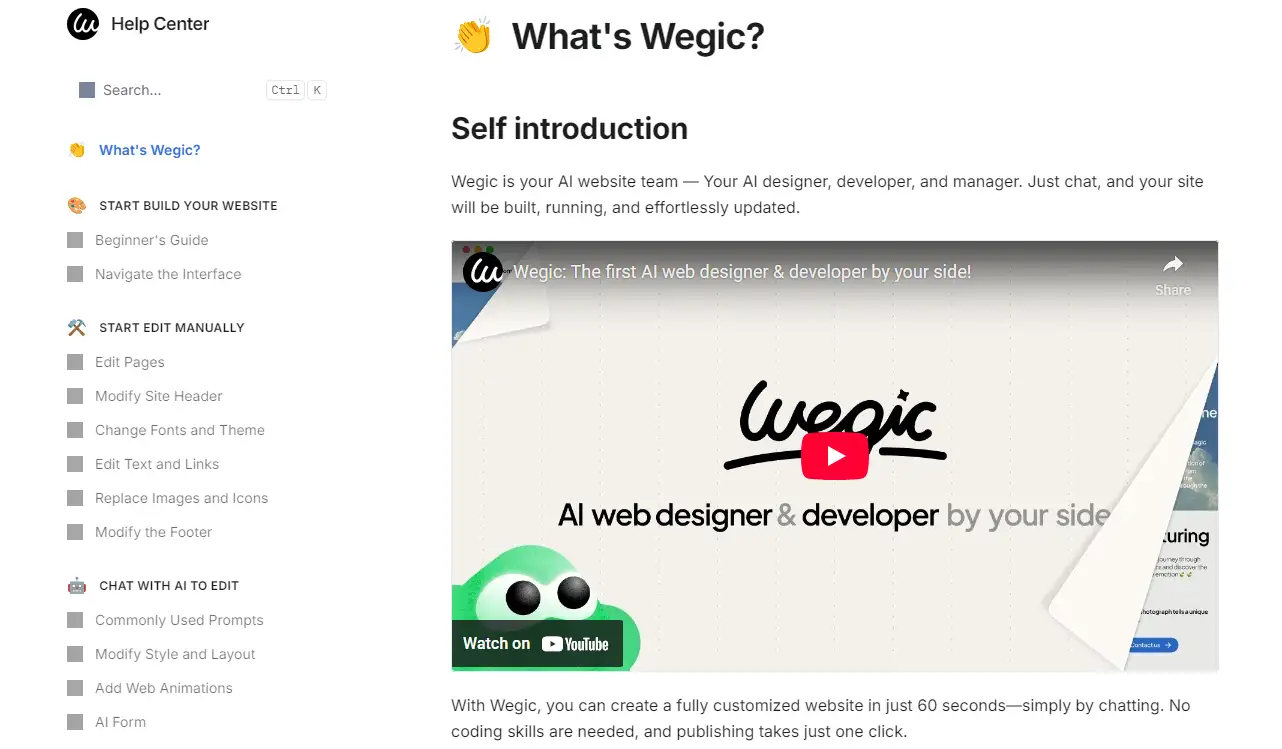
Wegic is an AI-powered platform for e-commerce site building and content management, built to help brands launch fast, scale smart, and grow sustainably. From automated product pages to cross-platform deployment, Wegic empowers teams to focus on what matters: performance.
Click here to build your site👇
1.AI-Powered Platform Matching
Choosing the wrong platform often comes down to unclear business needs. Wegic's AI engine evaluates your business type, product complexity, target market, budget, and more, then recommends the ideal setup, whether Shopify, WooCommerce, or BigCommerce. Through a simple Q&A or smart model, you'll quickly zero in on the best-fit solution.
2.Automated Page & Content Generation
- Instantly generate product descriptions, tech specs, FAQs, and usage guides
- Structure content around high-impact SEO keywords, anchor links, and intent-driven headings
- Dramatically reduce time spent on copywriting, SEO, and page layout
3.Cross-Platform Site Sync & Content Replication
Wegic natively supports Shopify and WooCommerce, with BigCommerce on the roadmap. Easily deploy themes, layouts, and content across platforms—automating multi-channel builds. Example use cases:
- Convert WooCommerce product pages into Shopify versions with one click
- Auto-generate multilingual content and upload it in bulk
- Apply SEO structure changes across multiple stores instantly
4.Real-Time Optimization, No SEO Team Needed
Wegic includes an AI-driven Content Health Score that analyzes user behavior, bounce rates, and keyword rankings, then offers improvement tips. It's like having an SEO expert on standby, 24/7.
5.Tailored for Science & Research-Based Commerce
Serving many life sciences and research brands, Wegic excels at technical documentation, PDF parsing, and product literature management. Scientific e-commerce teams use it to streamline product pages, certification uploads, and reagent usage guides.
Conclusion
There's no one-size-fits-all answer to choosing the best e-commerce platform—Shopify, WooCommerce, and BigCommerce each excel based on use case, as seen in every major e-commerce platform ranking. The right platform is the one that fits your business model, team capabilities, and long-term vision, not the one with the longest feature list. When overwhelmed by options, plugins, or conflicting advice, remember: Your platform is just the infrastructure. Content and operational efficiency are your true growth drivers. With Wegic, you reduce guesswork, accelerate deployment, and build for scale, with AI at your side every step of the way. Need help with platform selection, content creation, or launch speed? Visit Wegic.com to see how AI can help you build smarter, grow faster, and sell better.
Written by
Kimmy
Published on
Mar 17, 2026
Share article
Read more
Our latest blog
Webpages in a minute, powered by Wegic!
With Wegic, transform your needs into stunning, functional websites with advanced AI
Free trial with Wegic, build your site in a click!
What kind of website do you want to build?