登入
打造你的網站
Framer vs Lovable: Which Tool is Better for Startups in 2026?
Deciding between Framer vs Lovable? Discover which tool is best for startups in 2026. Compare design freedom against AI coding power to build your site.
Framer vs Lovable is the defining debate for founders in 2026 who need to launch digital products without burning months of runway. Just a few years ago, the path to launching a startup was linear and expensive. You hired a professional designer for the look and a dedicated engineering team for the code. Today, the landscape has split into two radical alternatives. Do you want a visual canvas that offers pixel-perfect control, or do you want a conversational AI that acts as your lead software engineer?
For online startups operating in a hyper-competitive market, this choice is not just about selecting software. It is about defining your company's DNA. You might be a creative agency needing a portfolio that stuns clients. Or you might be a SaaS founder needing a working application to validate a business model instantly.
This comprehensive guide compares the two industry titans: Framer, the standard for visual web design, and Lovable, the leader in AI-generated software. We will help you identify the best tool for startups based on your specific roadmap, budget, and technical comfort for the year 2026.
What Do 2026 Statistics Reveal About Web Development?
Before choosing a tool, it is crucial to understand the data driving the industry shifts this year.
- Mobile Dominance: Mobile devices now account for 68.5% of global web traffic, making responsive design non-negotiable for any new business trying to capture attention (GlobalStats 2026).
- AI Efficiency: Startups using AI-powered development tools like Lovable report launching MVPs 3x faster than traditional methods, drastically reducing the "time-to-market" metric that investors watch closely (TechCrunch 2026).
- Visual Impact: Users form an opinion about a business website in less than 0.05 seconds. Platforms that prioritize visual fidelity, like Framer, see a 40% higher retention rate on landing pages compared to generic templates (Nielsen Norman Group 2025).
- Cost Savings: The average cost to launch an MVP has dropped from $50,000 to under $1,500 for founders leveraging AI generators and no-code tools (SaaS metrics 2026).
- Search Behavior: Over 55% of younger users now utilize voice search or AI assistants to find products, requiring sites to be structurally optimized for "answer engine" discovery (SearchEngineLand 2026).
Choosing the right platform often depends on researching the best website building sites to see which interface matches your team's skill level.
Why Are Startups Switching Tools in 2026?
Why are we comparing these two specifically? The market has bifurcated into two distinct philosophies that every founder must understand before spending a dollar.
Framer: The Visual Control Method
- This approach serves online startups that view design as their primary moat. It uses a "canvas" model where you manipulate elements directly.
- The code is generated invisibly in the background. It is about "what you see is what you get." This trend is dominant in fashion, media, marketing, and luxury goods.
Lovable: The Conversational Build Method
- This approach serves founders who need functionality over form. It uses a "chat" model where you tell the AI how to build a website.
- It generates real, exportable code (React, Supabase, etc.). It is about "what you ask is what you get." This trend is dominating the SaaS and utility app sectors.
In 2026, the trend is moving toward "agentic" web experiences—websites that act on behalf of the user. This requires more than just a pretty interface. However, for a pure business website that sells a service, the visual impact remains the most powerful conversion driver.
Is Framer the Ultimate Design Tool for You?
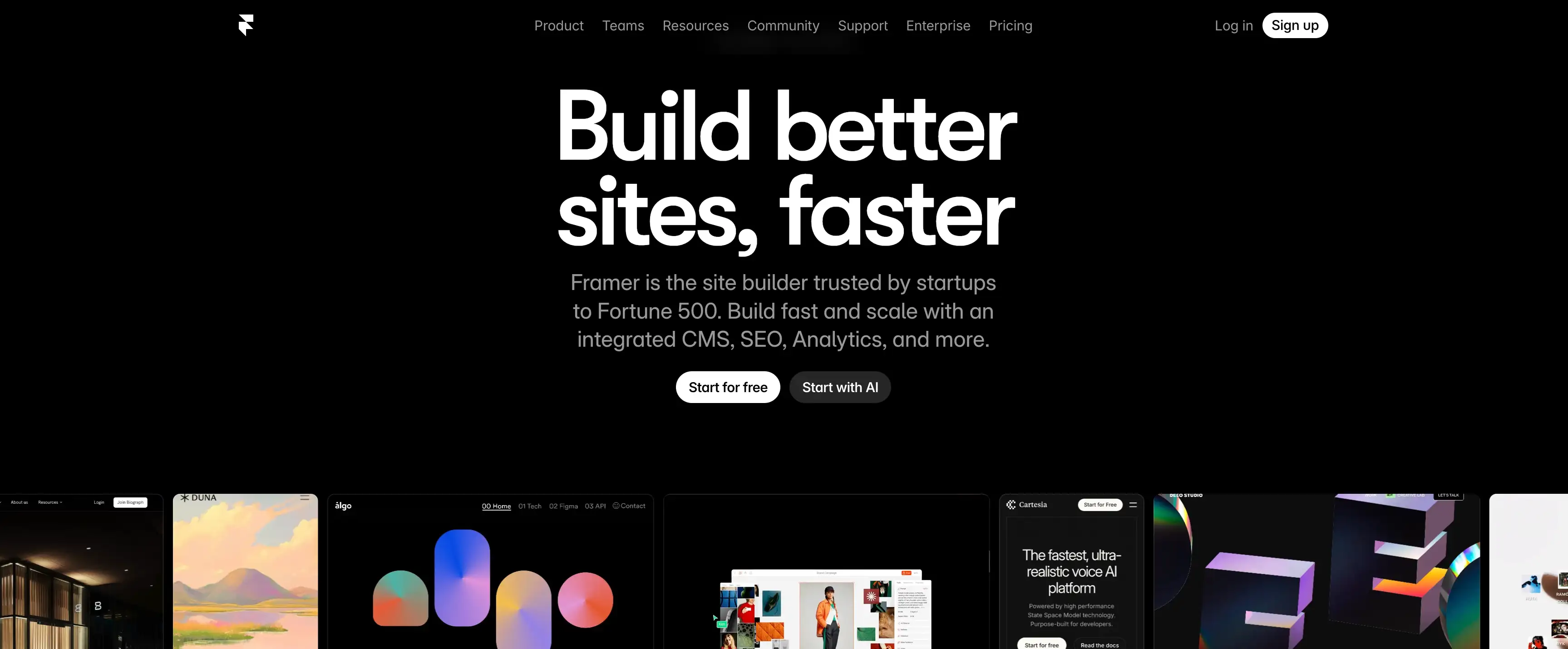
Positioning: The Standard for Visual Perfection Framer began as a prototyping tool and has evolved into a powerful website builder. It allows designers to ship production-ready sites without writing a single line of code. It effectively killed the "handover" process between designers and developers.
Core Strengths of Framer
- Freeform Canvas: Unlike block-based editors (like Squarespace), you can place text, images, and videos anywhere. It feels exactly like using a design tool like Figma or Sketch. You are not locked into a grid unless you want to be.
- Advanced Animations: It offers built-in scroll effects, 3D transforms, and transitions that usually require custom JavaScript libraries. You can create "scrollytelling" experiences effortlessly.
- CMS and Localization: Framer has a robust Content Management System (CMS) that handles blogs and portfolios well. In 2026, its localization features will allow you to translate your site into multiple languages with a few clicks. This is essential for global reach.
Weaknesses of Framer
- No Backend Logic: You cannot build a user login system or a database-driven app directly inside Framer. It is a frontend-only tool. If you need users to "sign up" and see a dashboard, Framer cannot do it alone.
- Learning Curve: If you do not understand design concepts like "flexbox," "stacks," or "breakpoints," you may struggle. Making the site responsive across different screen sizes requires some technical layout knowledge.
User Experience: Design-led teams find Framer intuitive because it mimics their existing workflow. It is the best tool for startups that need to impress investors or customers with high-fidelity visuals immediately. If you are focused on organic growth, checking a guide on seo business strategies will show why Framer's clean code is an asset.
How Does Lovable Automate App Building?
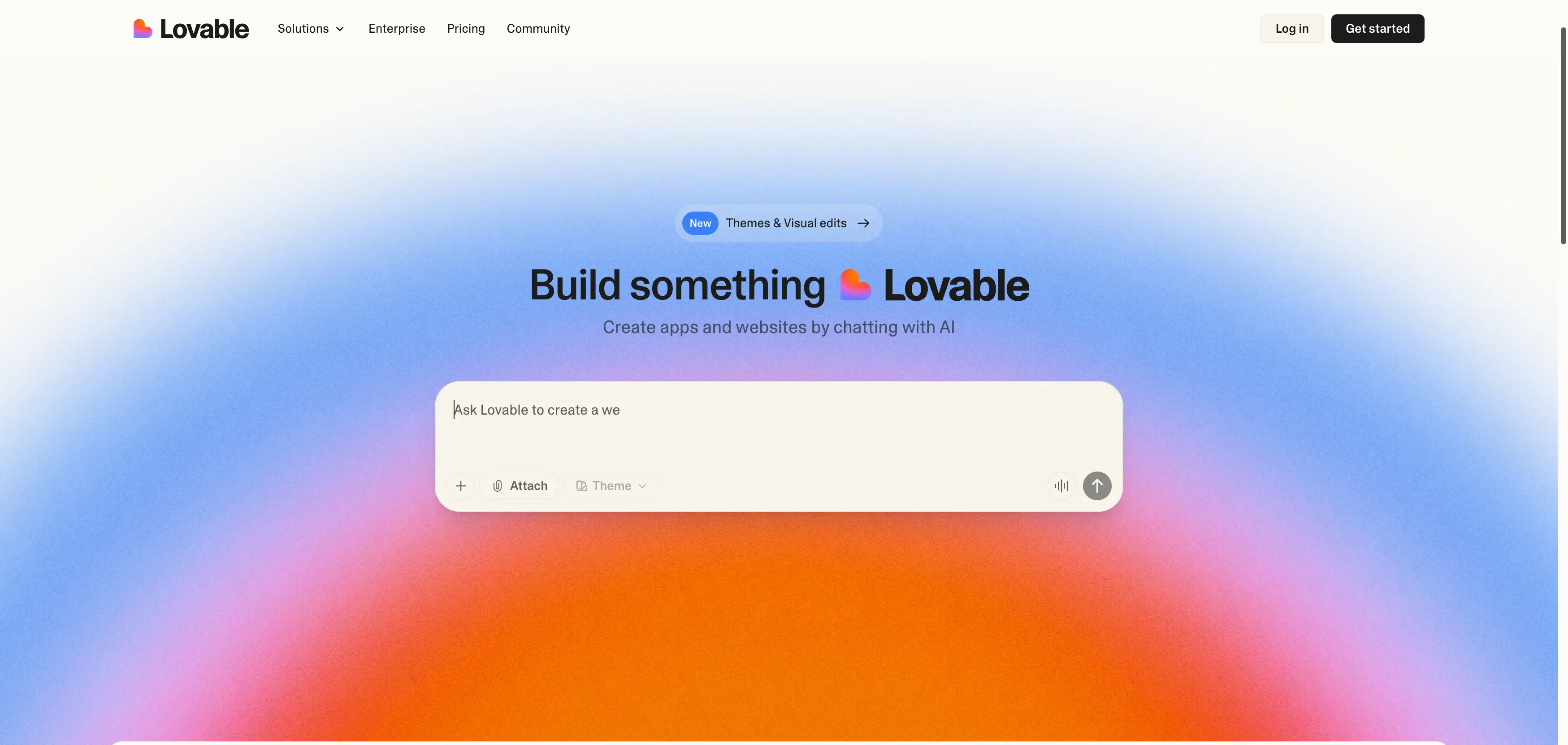
Positioning: The "Text-to-App" Revolution Lovable is not just a website builder; it is a full-stack code generator. It allows you to build complex web applications by simply describing them in plain English to an AI agent.
Core Strengths of Lovable
- Conversational Interface: You type "Create a CRM for my real estate business with a dashboard for agents." Lovable generates the frontend, backend, and database connections instantly.
- Real Code Export: Unlike Framer, Lovable gives you the actual React and Supabase code. You can export this to GitHub and have a human developer customize it later. This prevents vendor lock-in.
- Rapid Iteration: You can change the entire functionality of an app with a single text prompt. This dramatically speeds up the MVP process for non-technical founders.
Weaknesses of Lovable
- Visual Limitations: You have less granular control over pixel placement compared to Framer. The AI decides the layout based on standard UI libraries. This can sometimes look generic.
- Technical Knowledge: While you don't need to code, understanding basic logic helps. Knowing terms like "database schema" helps you prompt the AI better to avoid errors.
User Experience: Founders and product managers love Lovable because it solves the problem of how to build a website with actual utility. It functions similarly to some of the advanced free AI apps that automate complex backend tasks, creating a working tool rather than just static information.
Which Platform Builds Websites Faster?
Which tool gets you to market faster? In the framer vs lovable debate, speed depends entirely on what you are building. If you need a marketing landing page to collect emails, Framer offers templates that let you launch in hours.However, if you are building a functional product, Lovable is vastly superior.
Framer - Speed for Static Content
- If your goal is purely information dissemination, Framer is fast.
- You can drag and drop elements, write your copy, and hit publish. The hosting is instant.
Lovable - Speed for Functional Apps
- For online startups testing a business idea, Lovable allows you to deploy a working app in minutes.
- You skip the wireframing and mockup phase entirely. Conversely, Framer requires you to design the visual structure first. If your goal is user interaction and data processing, Lovable wins.
Speed is vital, but so is strategy. Many founders wonder whether you should have multiple websites for business launches—perhaps one Framer site for marketing speed and one Lovable site for product functionality.
Which Tool Offers More Design Freedom?
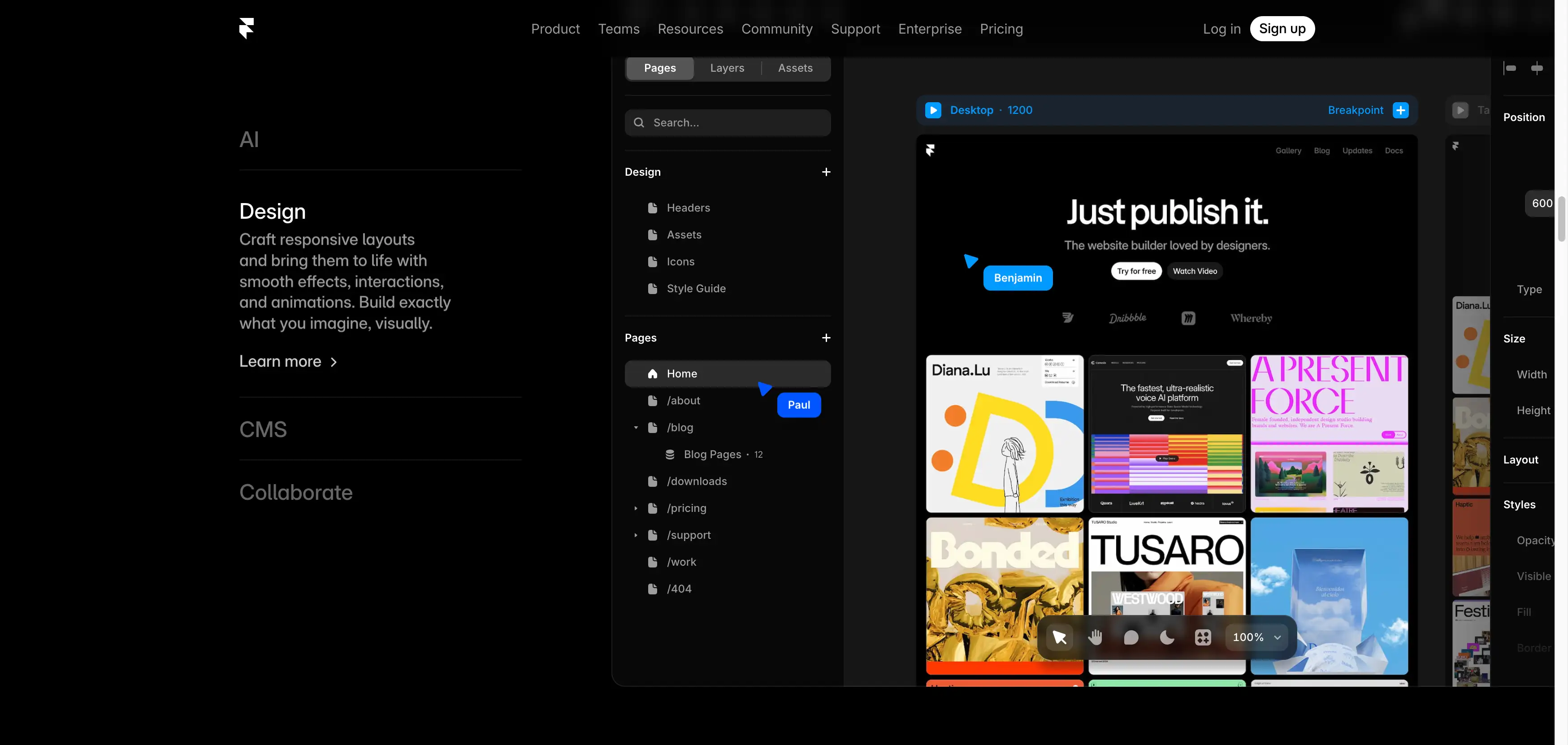
Framer: The Unique Website Design
- Can you make it look unique? Framer is the undisputed king of design. You have total control over typography, hover states, and responsive breakpoints.
- It is the best tool for startups in fashion, art, or creative services where the brand image is the product itself. You can import designs directly from Figma, ensuring pixel-perfect translation.
Lovable: The AI Design Constraint
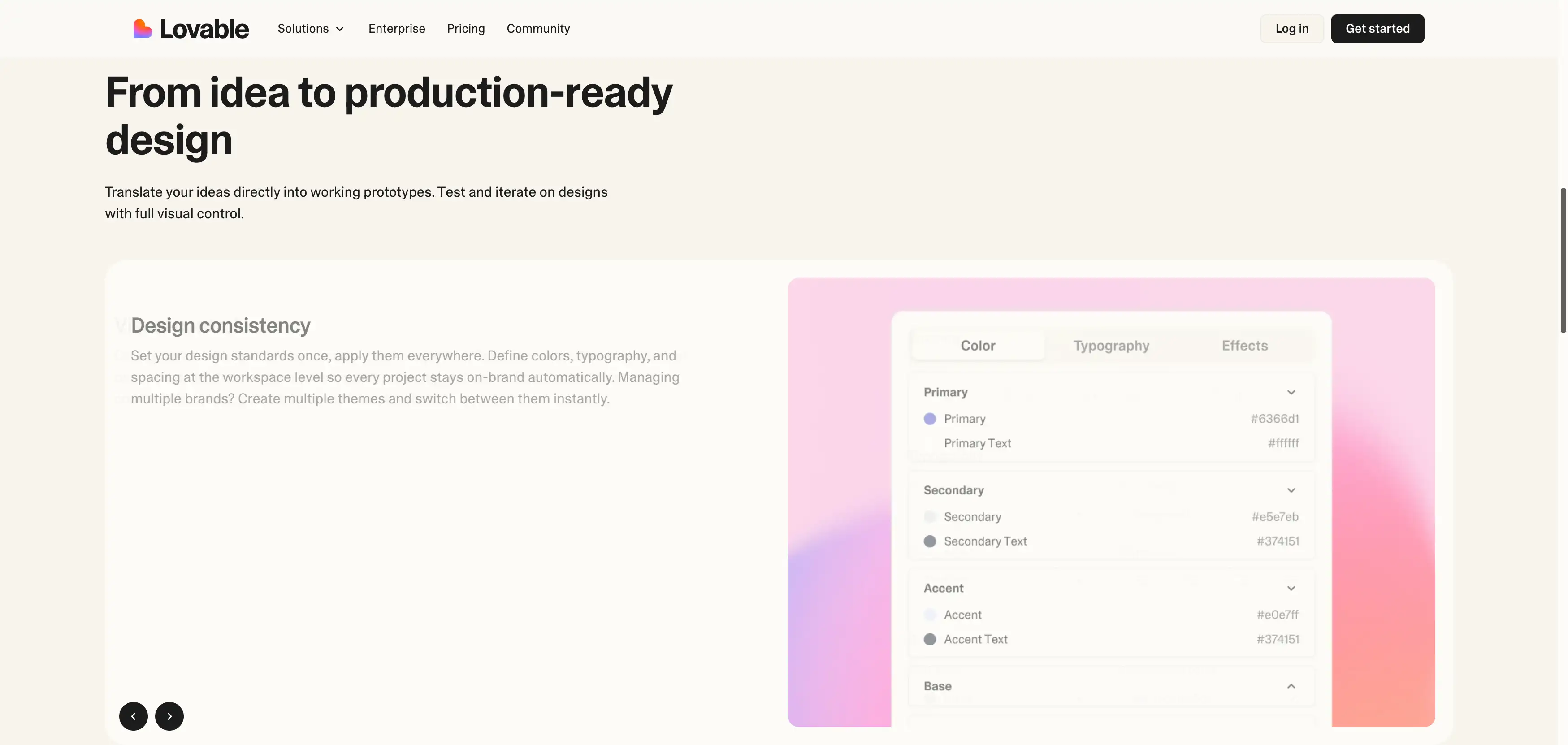
- Lovable relies on AI to make design choices. While you can instruct it to "make it modern," "use dark mode," or "follow this color palette," you are directing a robot. You are not painting on a canvas.
- For a business website that requires specific branding guidelines (e.g., exact padding or custom fonts), Lovable might feel restrictive compared to Framer's open canvas.
Once your design is finalized, the next challenge is visibility. Learning how to advertise your website effectively is easier when your design (Framer) or product (Lovable) is solid enough to convert that paid traffic.
Which Platform Handles Complex Functions Better?
This is the most critical differentiator in the comparison.
The Stable Platform of Framer
- Frmaer is strictly for presentation—portfolios, landing pages, and blogs. It cannot easily store user data, manage accounts, or process complex payments beyond simple Stripe links.
The Logic Advantage of Lovable
- Lovable excels here. It is designed for startups that need logic. You can build a ticket booking system, an internal dashboard, or a directory. If your answer to how to build a website involves "users need to log in and save their preferences," then Lovable is your only real choice.
- This functional capability aligns with modern expectations. Users now expect sites to be efficient and light, which touches on sustainable web design trends, why they matter—using code that only does what is necessary, which Lovable's specific generation excels at.
How Do the Pricing Models Compare?
How much will it really cost? The pricing models for Framer vs Lovable are fundamentally different, reflecting their different value propositions. Framer charges for hosting and features, while Lovable charges for "intelligence" and generation credits.
Framer Pricing Plans (2026 Model)
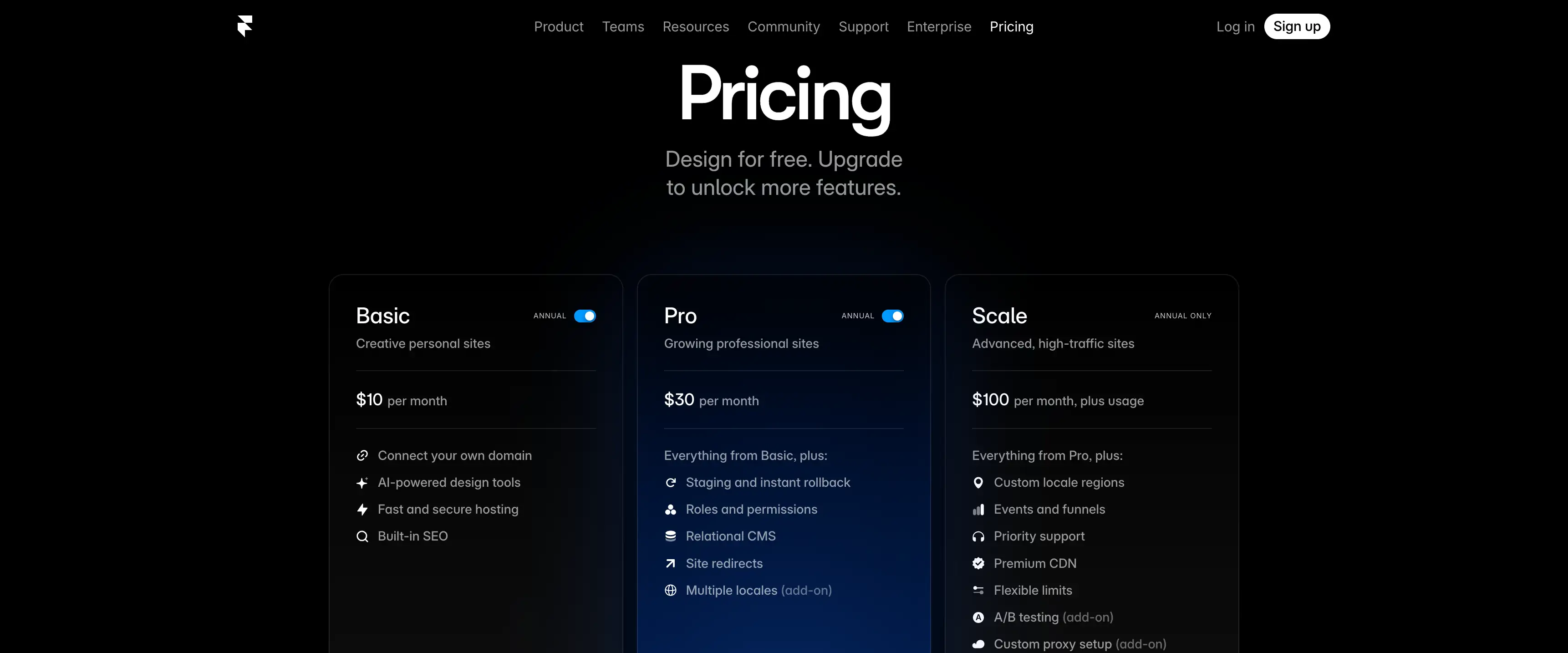
- Bsic Plan (~ $10/month): This creates a simple landing page with built-in SEO.
- Pro Plan (~$30/month): This is for bussiness sites. It is perfect for freelancers but lacks advanced analytics.
- Scale Plan (~$100/month): This is the standard for larger size bussiness. It includes staging environments, redirects, and 300GB of bandwidth. It also unlocks full CMS capabilities and localization for multi-language sites.
Lovable Pricing Plans (2026 Model)
- Starter / Free Tier ($0): Includes limited daily message credits. Your projects are public by default. This is great for testing the AI's capabilities, but risky for stealth startups.
- Pro Plan (~$25/month): This is the sweet spot. It offers private projects, custom domain deployment, and significantly more generation credits. Crucially, it allows you to export your code to GitHub.
- Business Plan (~$50+/month): Designed for power users. It offers faster generation speeds, higher message limits, and priority support. It often includes integrations with enterprise databases.
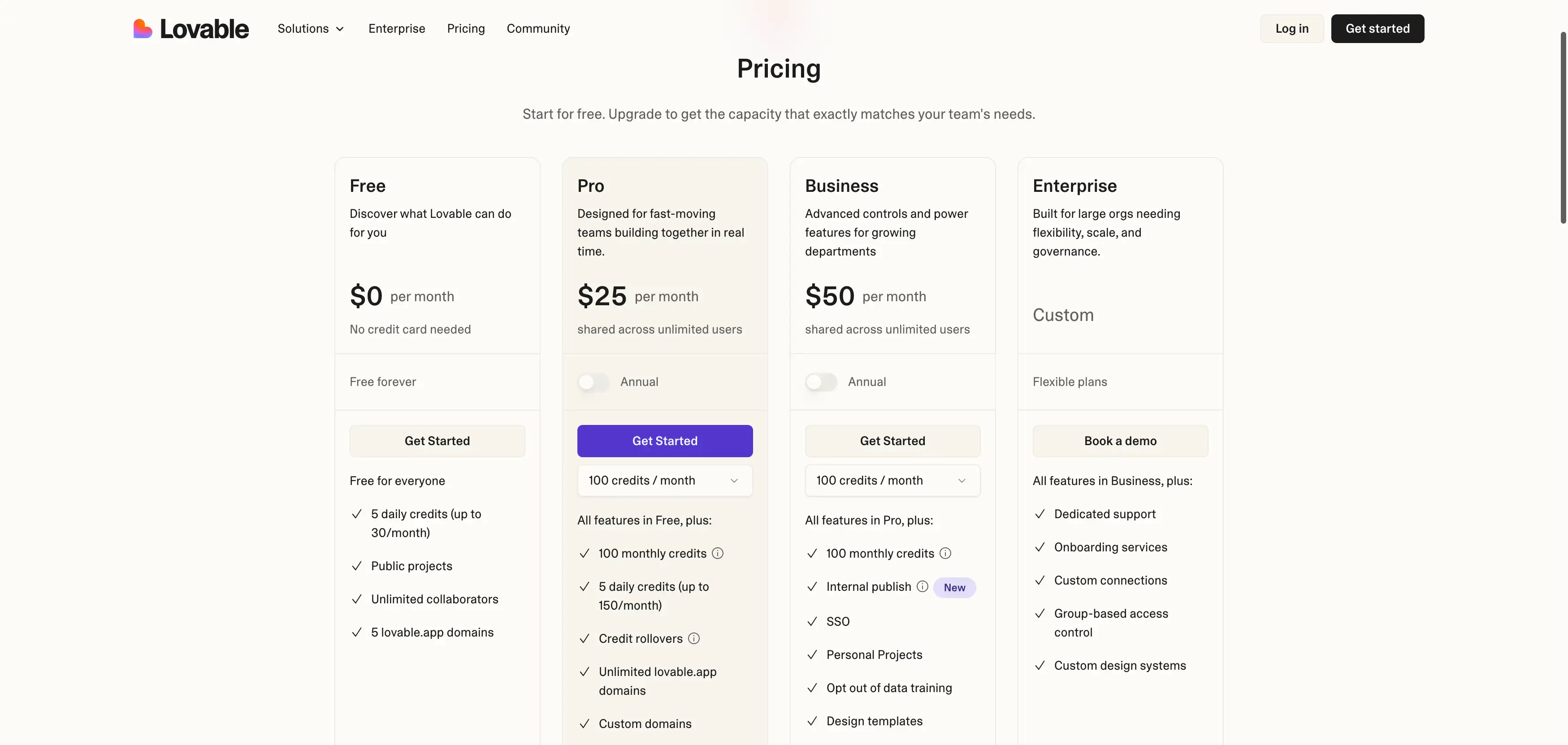
Tips on Pricing: For a static marketing site, Framer's $30/mo is predictable. For building a software product, Lovable's $25-$50/mo is incredibly cheap compared to hiring a developer. If you need sales capabilities, compare these costs against the best e-commerce website builders selling online, which might offer all-in-one bundle pricing.
Is It Difficult to Learn Framer or Lovable?
The most important question for startup business owners wanting to know is how hard it is to build a site? What is the first hour like?
The Framer Learning Curve
- Framer has a "medium" learning curve. When you first open it, you see a blank canvas with many tools on the sidebar.
- If you have never used Photoshop or Figma, it can be intimidating. You need to learn concepts like "Frames," "Stacks," and "Components" to build a responsive site. However, once learned, it is powerful.
The Lovable Learning Curve
- Lovable has a "near-zero" learning curve for the initial setup. You simply chat. "I want an app that tracks my daily water intake." The AI builds it. The difficulty comes later, when you need to refine specific logic.
- You need to learn "prompt engineering"—how to ask the right questions to get the right code. It requires logical thinking rather than visual thinking.
Which Tool Matches Your Startup's Needs?
Scenario A: The SaaS Marketing Site. You have a finished software product hosted elsewhere. You need a beautiful page to sell it to the world. You need high SEO rankings and flashy animations.
- Winner: Framer. You need a high-converting design and visual storytelling. Lovable is overkill for this and won't look as good.
Scenario B: The "Airbnb for X" Idea. You need to test if people will actually sign up and list their apartments. You need a database, user profiles, and a search function.
- Winner: Lovable. You need a functional app to validate the business model. Framer cannot do this. Lovable is the best tool for startups in the validation phase.
Scenario C: The Internal Company Tool. Your sales team needs a simple dashboard to track leads that connects to your database. Design doesn't matter much; it just needs to work.
- Winner: Lovable. You can build this in 20 minutes. Doing this in a traditional way would take days.
Is Framer or Lovable Better for SEO?
- Framer is built with technical SEO in mind. It automatically generates sitemaps, optimizes images, and uses server-side rendering (SSR). This means Google can read your site easily. You can edit meta tags and social preview images for every single page.
- Lovable builds "Single Page Applications" (SPAs). While modern search engines can crawl these, they are historically harder to rank for content-heavy keywords compared to static sites. If your primary growth strategy is writing blog posts, Framer is the safer bet.
Framer vs Lovable Comparison Table
Criteria Framer Lovable Primary Goal Marketing & Brand Presentation App Functionality & Logic Input Method Drag & Drop Visual Canvas Conversational AI Prompts Output Hosted Static Website React/Supabase Code (Exportable) Design Freedom Unlimited (Pixel Perfect) AI-Constrained (Standard UI) Backend Logic None (Frontend Only) Full (Database, Auth, API) Pricing Model Flat Monthly Subscription Credit-Based Usage Ideal User Designer / Marketer Founder / Product Manager
Conclusion
The battle of Framer vs lovable is not about which tool is superior in a vacuum. It is about which problem you are solving right now. In 2026, the smartest online startups often use both. They use Lovable to build the actual product prototype to save on engineering costs. Then, they use Framer to build the stunning marketing site that sells the vision to investors.
If you need to know how to build a website that wins design awards and ranks on Google, pick Framer. If you need to build a functional tool that serves customers and processes data, pick Lovable. Your choice defines your speed and your ceiling.
FAQ: Common Questions for Startups
Q1: Is Framer better for SEO than Lovable?
Yes, generally. Framer provides deep control over semantic tags, meta descriptions, and load speeds. This makes it ideal for a business website that relies on organic traffic. Lovable can rank, but its primary focus is application utility, not content marketing structure.
Q2: Can I move my site from Lovable to Framer?
No, the platforms are incompatible. Framer vs Lovable rely on different architectures. Lovable generates React code for apps, while Framer uses a proprietary visual DOM. You would need to rebuild the visual front end entirely if you switched.
Q3: Are there simpler AI alternatives if Lovable is too technical?
Yes. If Lovable feels too complex because it deals with databases, and Framer is too hard because it requires design skills, you should check out Wegic. Wegic is an AI-native web builder that creates standard websites via chat. It bridges the gap between ease of use and professional results. It is perfect for users who want a site up in minutes without managing a database or learning design tools.
Smart tools, simple setup. Explore Wegic’s official site.
Q4: Does Lovable support e-commerce functions?
It can build custom payment flows using Stripe APIs, but it is not a dedicated store builder. For full retail features, you might want to look at dedicated e-commerce platforms rather than building a custom store from scratch with AI.
Q5: Which is the best tool for startups on a tight budget?
For static sites, Framer has a generous free tier for testing. For functional apps, Lovable allows you to build a significant amount of functionality before requiring a paid upgrade. This makes it very cost-effective for validating ideas before hiring developers.
Q6: Do I need to know how to code to use Lovable?
Technically, no, but it helps. Since Lovable builds real software, understanding concepts like "database," "variables," or "user flow" helps you prompt AI more effectively. If you want zero technical exposure, a standard website builder or Wegic might be safer.
Q7: Why is the framer vs lovable comparison trending in 2026?
Because 2026 is the year AI code generation became reliable enough to challenge visual editors. This comparison represents the future of creation: direct manipulation (Framer) versus intent-based generation (Lovable).
Q8: Can Lovable build a business website with a blog?
It can, but it is overkill. Lovable is an app builder. Using it for a simple blog is like using a Ferrari to pick up groceries. For a content-heavy business website, Framer or a dedicated CMS is the better choice.
Q9: Does Framer support collaboration?
Yes, Framer has excellent real-time collaboration. It works just like Google Docs or Figma. Multiple designers can work on the same page at the same time. This is a huge advantage for distributed teams.
Q10: Can I use my own domain with the free plans?
Generally, no. Both Framer and Lovable require a paid subscription to connect a custom .com domain. The free plans usually force you to use a subdomain (e.g., mysite.framer.website). This is fine for testing, but not professional for a live business.
撰寫者
Kimmy
發布於
Dec 17, 2025
分享文章
閱讀更多
我們的最新博客
Wegic 助你瞬間打造網頁!
透過 Wegic,利用先進的 AI 將你的需求轉化為驚艷且實用的網站
使用Wegic免費試用,一鍵建立你的網站!