Framer vs Lovable: Which Tool is Better for Startups in 2026?
Deciding between Framer vs Lovable? Discover which tool is best for startups in 2026. Compare design freedom against AI coding power to build your site.
What Do 2026 Statistics Reveal About Web Development?
- Mobile Dominance: Mobile devices now account for 68.5% of global web traffic, making responsive design non-negotiable for any new business trying to capture attention (GlobalStats 2026).
- AI Efficiency: Startups using AI-powered development tools like Lovable report launching MVPs 3x faster than traditional methods, drastically reducing the "time-to-market" metric that investors watch closely (TechCrunch 2026).
- Visual Impact: Users form an opinion about a business website in less than 0.05 seconds. Platforms that prioritize visual fidelity, like Framer, see a 40% higher retention rate on landing pages compared to generic templates (Nielsen Norman Group 2025).
- Cost Savings: The average cost to launch an MVP has dropped from $50,000 to under $1,500 for founders leveraging AI generators and no-code tools (SaaS metrics 2026).
- Search Behavior: Over 55% of younger users now utilize voice search or AI assistants to find products, requiring sites to be structurally optimized for "answer engine" discovery (SearchEngineLand 2026).
Why Are Startups Switching Tools in 2026?
Framer: The Visual Control Method
- This approach serves online startups that view design as their primary moat. It uses a "canvas" model where you manipulate elements directly.
- The code is generated invisibly in the background. It is about "what you see is what you get." This trend is dominant in fashion, media, marketing, and luxury goods.
Lovable: The Conversational Build Method
- This approach serves founders who need functionality over form. It uses a "chat" model where you tell the AI how to build a website.
- It generates real, exportable code (React, Supabase, etc.). It is about "what you ask is what you get." This trend is dominating the SaaS and utility app sectors.
Is Framer the Ultimate Design Tool for You?
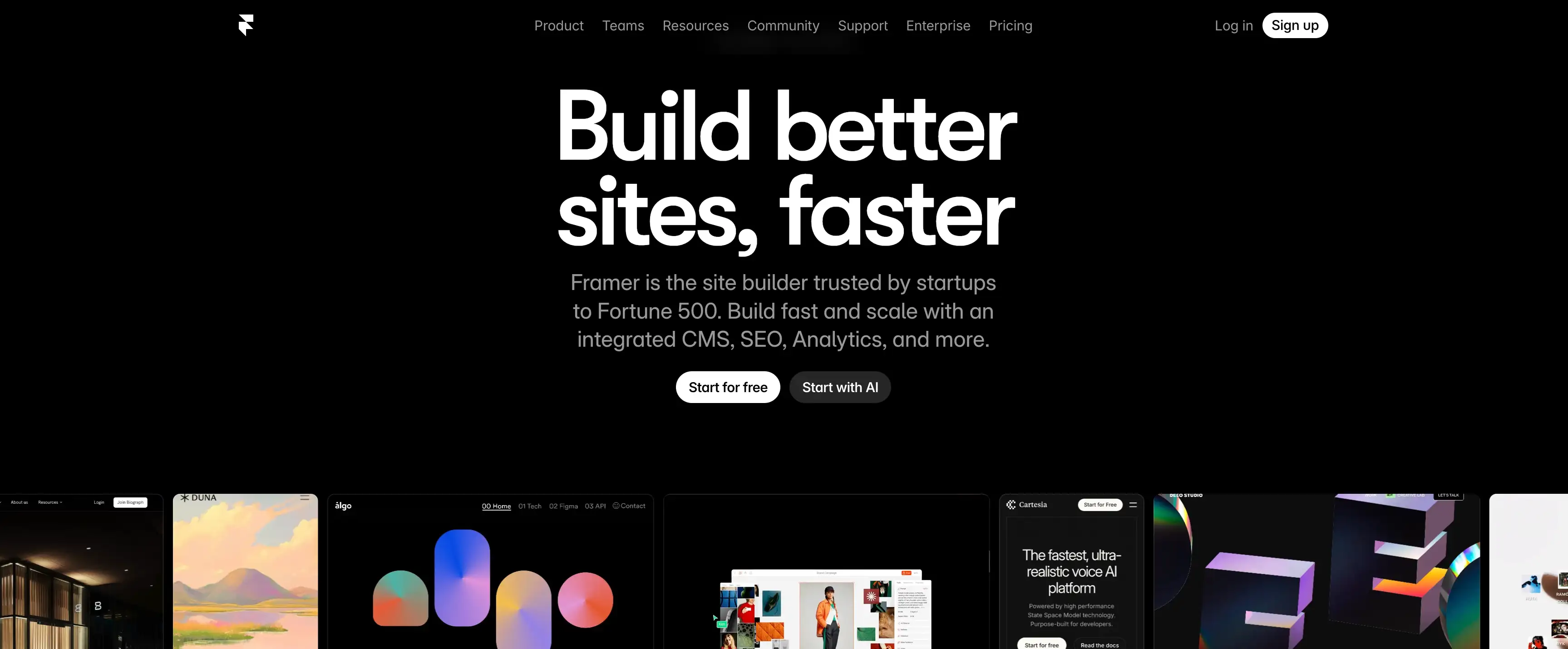
Core Strengths of Framer
- Freeform Canvas: Unlike block-based editors (like Squarespace), you can place text, images, and videos anywhere. It feels exactly like using a design tool like Figma or Sketch. You are not locked into a grid unless you want to be.
- Advanced Animations: It offers built-in scroll effects, 3D transforms, and transitions that usually require custom JavaScript libraries. You can create "scrollytelling" experiences effortlessly.
- CMS and Localization: Framer has a robust Content Management System (CMS) that handles blogs and portfolios well. In 2026, its localization features will allow you to translate your site into multiple languages with a few clicks. This is essential for global reach.
Weaknesses of Framer
- No Backend Logic: You cannot build a user login system or a database-driven app directly inside Framer. It is a frontend-only tool. If you need users to "sign up" and see a dashboard, Framer cannot do it alone.
- Learning Curve: If you do not understand design concepts like "flexbox," "stacks," or "breakpoints," you may struggle. Making the site responsive across different screen sizes requires some technical layout knowledge.
How Does Lovable Automate App Building?
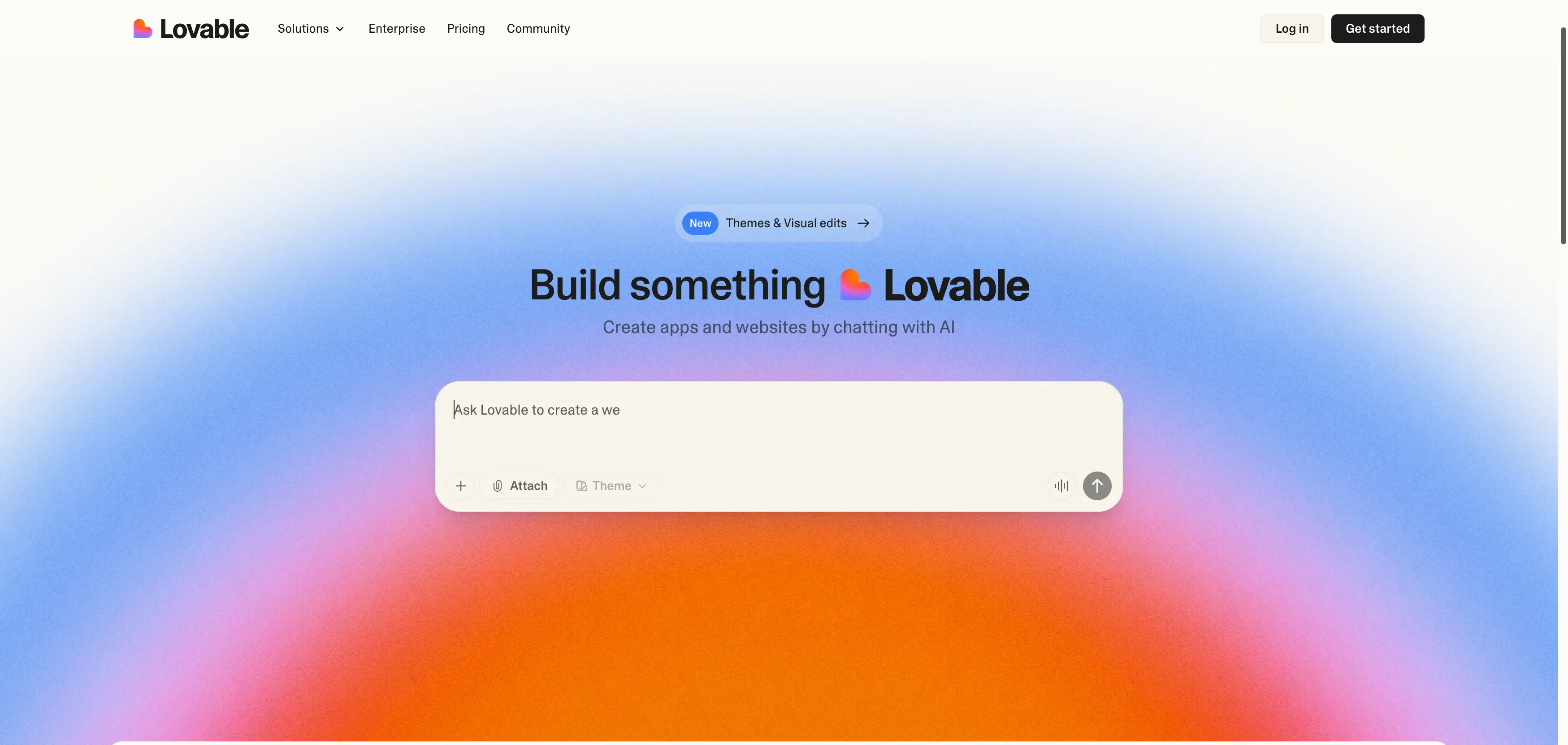
Core Strengths of Lovable
- Conversational Interface: You type "Create a CRM for my real estate business with a dashboard for agents." Lovable generates the frontend, backend, and database connections instantly.
- Real Code Export: Unlike Framer, Lovable gives you the actual React and Supabase code. You can export this to GitHub and have a human developer customize it later. This prevents vendor lock-in.
- Rapid Iteration: You can change the entire functionality of an app with a single text prompt. This dramatically speeds up the MVP process for non-technical founders.
Weaknesses of Lovable
- Visual Limitations: You have less granular control over pixel placement compared to Framer. The AI decides the layout based on standard UI libraries. This can sometimes look generic.
- Technical Knowledge: While you don't need to code, understanding basic logic helps. Knowing terms like "database schema" helps you prompt the AI better to avoid errors.
Which Platform Builds Websites Faster?
Framer - Speed for Static Content
- If your goal is purely information dissemination, Framer is fast.
- You can drag and drop elements, write your copy, and hit publish. The hosting is instant.
Lovable - Speed for Functional Apps
- For online startups testing a business idea, Lovable allows you to deploy a working app in minutes.
- You skip the wireframing and mockup phase entirely. Conversely, Framer requires you to design the visual structure first. If your goal is user interaction and data processing, Lovable wins.
Which Tool Offers More Design Freedom?
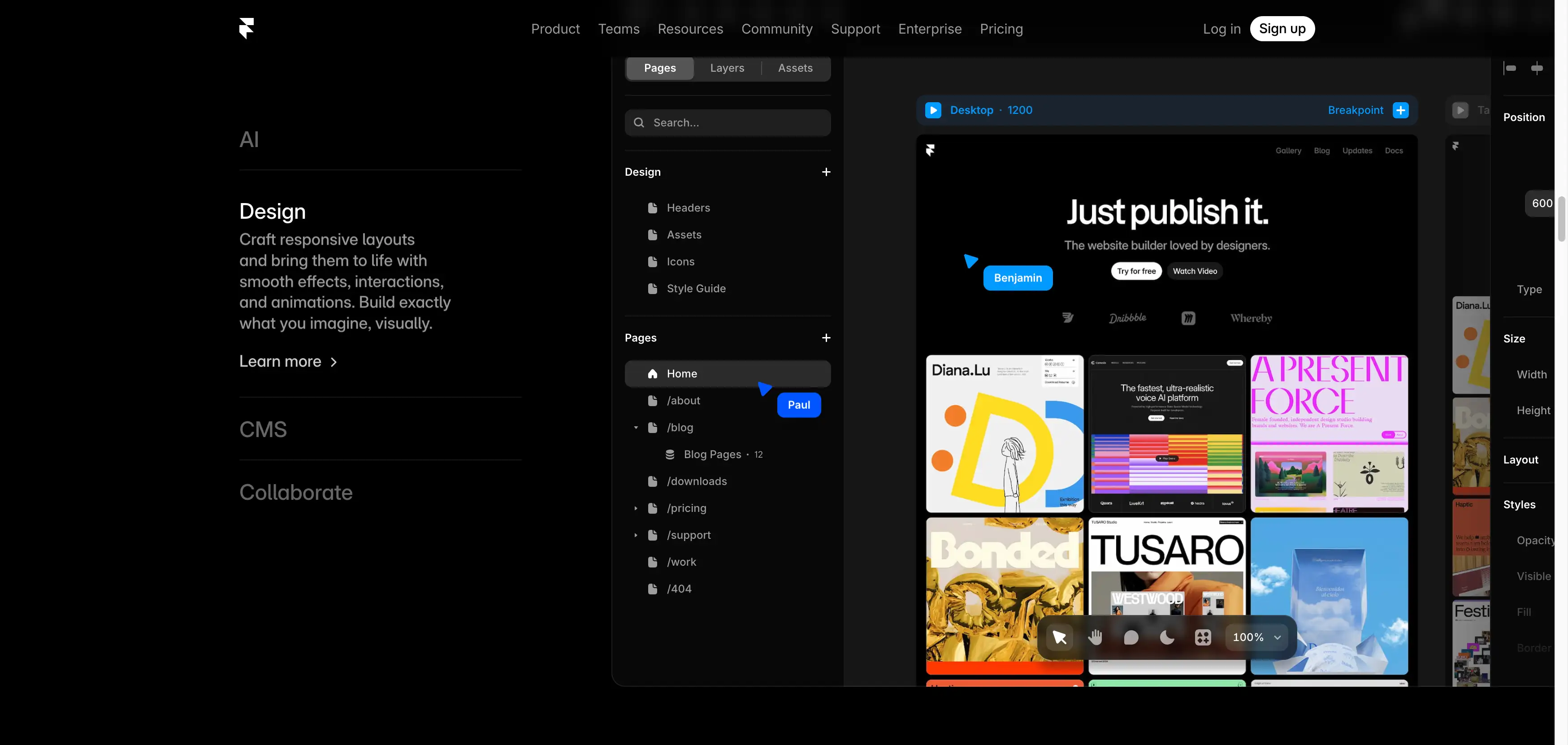
Framer: The Unique Website Design
- Can you make it look unique? Framer is the undisputed king of design. You have total control over typography, hover states, and responsive breakpoints.
- It is the best tool for startups in fashion, art, or creative services where the brand image is the product itself. You can import designs directly from Figma, ensuring pixel-perfect translation.
Lovable: The AI Design Constraint
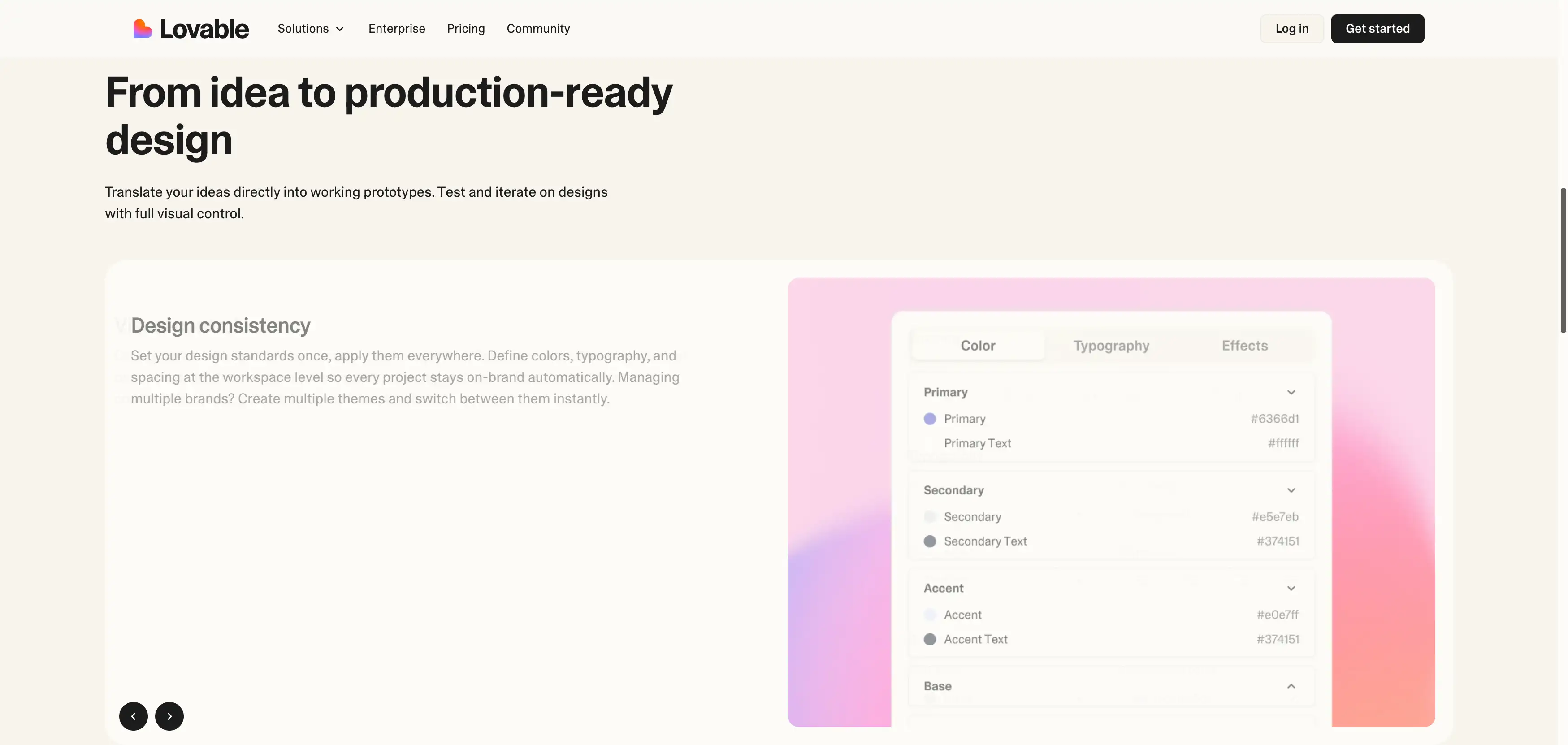
- Lovable relies on AI to make design choices. While you can instruct it to "make it modern," "use dark mode," or "follow this color palette," you are directing a robot. You are not painting on a canvas.
- For a business website that requires specific branding guidelines (e.g., exact padding or custom fonts), Lovable might feel restrictive compared to Framer's open canvas.
Which Platform Handles Complex Functions Better?
The Stable Platform of Framer
- Frmaer is strictly for presentation—portfolios, landing pages, and blogs. It cannot easily store user data, manage accounts, or process complex payments beyond simple Stripe links.
The Logic Advantage of Lovable
- Lovable excels here. It is designed for startups that need logic. You can build a ticket booking system, an internal dashboard, or a directory. If your answer to how to build a website involves "users need to log in and save their preferences," then Lovable is your only real choice.
- This functional capability aligns with modern expectations. Users now expect sites to be efficient and light, which touches on sustainable web design trends, why they matter—using code that only does what is necessary, which Lovable's specific generation excels at.
How Do the Pricing Models Compare?
Framer Pricing Plans (2026 Model)
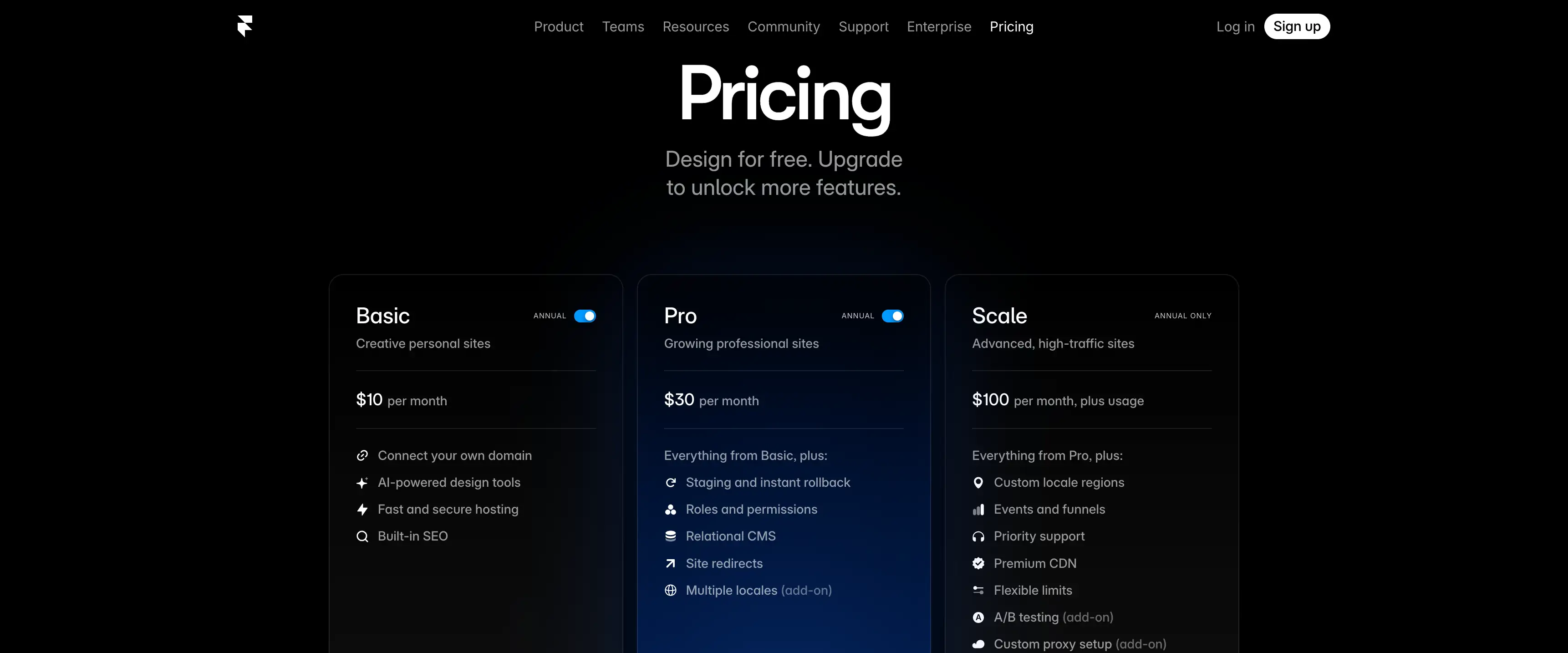
- Bsic Plan (~ $10/month): This creates a simple landing page with built-in SEO.
- Pro Plan (~$30/month): This is for bussiness sites. It is perfect for freelancers but lacks advanced analytics.
- Scale Plan (~$100/month): This is the standard for larger size bussiness. It includes staging environments, redirects, and 300GB of bandwidth. It also unlocks full CMS capabilities and localization for multi-language sites.
Lovable Pricing Plans (2026 Model)
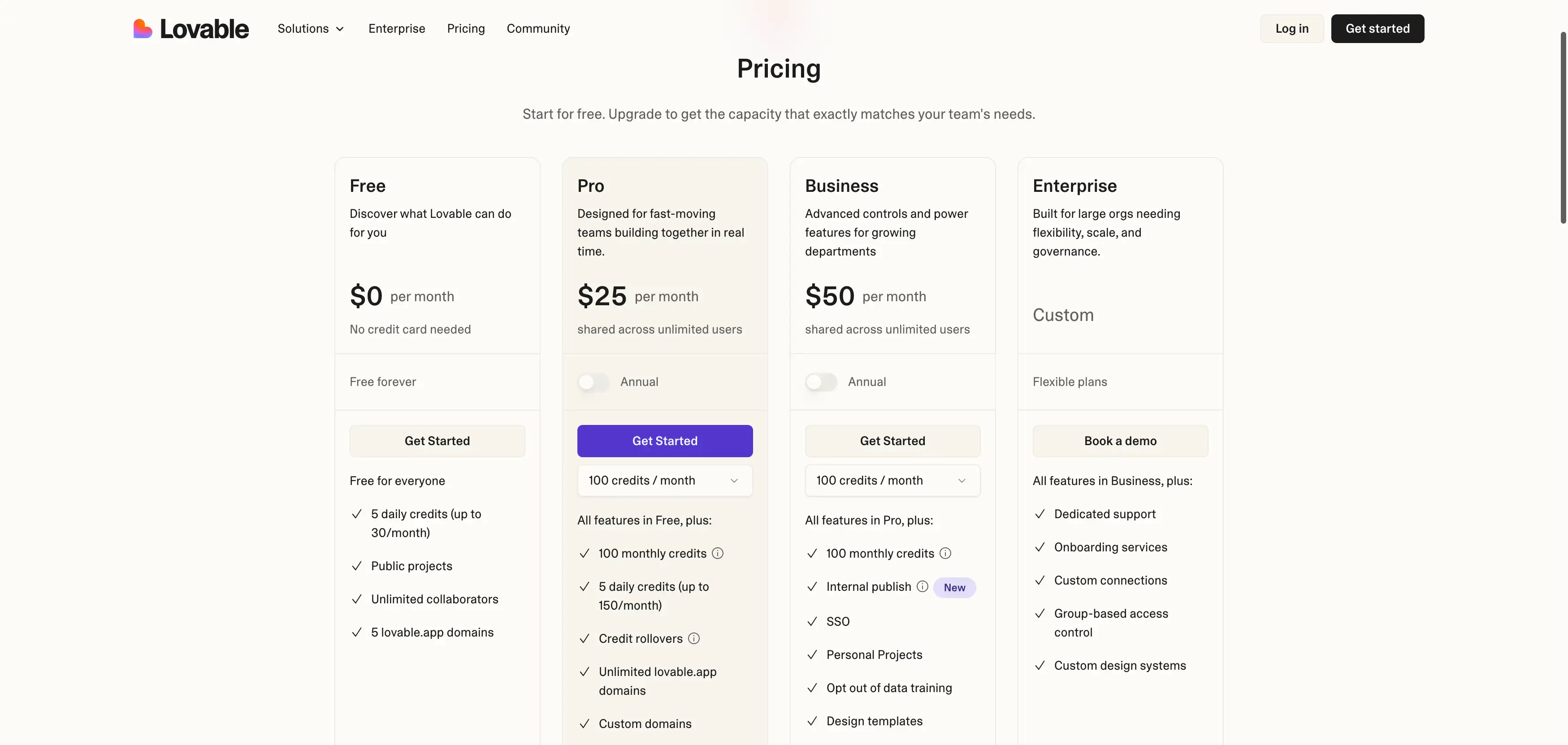
- Starter / Free Tier ($0): Includes limited daily message credits. Your projects are public by default. This is great for testing the AI's capabilities, but risky for stealth startups.
- Pro Plan (~$25/month): This is the sweet spot. It offers private projects, custom domain deployment, and significantly more generation credits. Crucially, it allows you to export your code to GitHub.
- Business Plan (~$50+/month): Designed for power users. It offers faster generation speeds, higher message limits, and priority support. It often includes integrations with enterprise databases.
Is It Difficult to Learn Framer or Lovable?
The Framer Learning Curve
- Framer has a "medium" learning curve. When you first open it, you see a blank canvas with many tools on the sidebar.
- If you have never used Photoshop or Figma, it can be intimidating. You need to learn concepts like "Frames," "Stacks," and "Components" to build a responsive site. However, once learned, it is powerful.
The Lovable Learning Curve
- Lovable has a "near-zero" learning curve for the initial setup. You simply chat. "I want an app that tracks my daily water intake." The AI builds it. The difficulty comes later, when you need to refine specific logic.
- You need to learn "prompt engineering"—how to ask the right questions to get the right code. It requires logical thinking rather than visual thinking.
Which Tool Matches Your Startup's Needs?
- Winner: Framer. You need a high-converting design and visual storytelling. Lovable is overkill for this and won't look as good.
- Winner: Lovable. You need a functional app to validate the business model. Framer cannot do this. Lovable is the best tool for startups in the validation phase.
- Winner: Lovable. You can build this in 20 minutes. Doing this in a traditional way would take days.
Is Framer or Lovable Better for SEO?
- Framer is built with technical SEO in mind. It automatically generates sitemaps, optimizes images, and uses server-side rendering (SSR). This means Google can read your site easily. You can edit meta tags and social preview images for every single page.
- Lovable builds "Single Page Applications" (SPAs). While modern search engines can crawl these, they are historically harder to rank for content-heavy keywords compared to static sites. If your primary growth strategy is writing blog posts, Framer is the safer bet.
Framer vs Lovable Comparison Table
Criteria Framer Lovable Primary Goal Marketing & Brand Presentation App Functionality & Logic Input Method Drag & Drop Visual Canvas Conversational AI Prompts Output Hosted Static Website React/Supabase Code (Exportable) Design Freedom Unlimited (Pixel Perfect) AI-Constrained (Standard UI) Backend Logic None (Frontend Only) Full (Database, Auth, API) Pricing Model Flat Monthly Subscription Credit-Based Usage Ideal User Designer / Marketer Founder / Product Manager
Conclusion
FAQ: Common Questions for Startups
Escrito por
Kimmy
Publicado el
Dec 17, 2025
Compartir artículo
Leer más
Nuestro último blog
¡Páginas web en un minuto, impulsadas por Wegic!
Con Wegic, transforma tus necesidades en sitios web impresionantes y funcionales con AI avanzada