Many independent professionals train for years to become a Food Scientist. They take a food scientist course, learn about safety rules, labeling laws, and product testing. Some even leave full-time jobs to become a freelance food scientist. But after going independent, many notice something surprising. Clients do not come automatically. They may compare your price to the average food scientist salary and wonder why they should hire you instead of a full-time employee.
The problem is not skill. The problem is visibility and trust. Today, emerging food brands search online before they hire anyone. If they cannot find your expertise on Google, they may never contact you.
In this article, we will explore why many food scientists struggle to attract clients outside traditional jobs, how emerging brands search for experts, and how compliance blogs can help independent food scientists stand out and win new projects.
#01 Why Many Food Scientists Struggle to Attract Clients Outside Traditional Food Scientist Jobs
You are an independent Food Scientist. You have a full food scientist degree. You completed every serious food scientist course and understand FDA labelling rules, nutrition claims, and GRAS approval steps. Your food scientist skills are strong. On paper, you look fully qualified to work as a food science consultant or a freelance food scientist.
But here is the reality. Almost no one contacts you.
You update your LinkedIn profile. You list everything from the official food scientist job description. You explain your compliance knowledge clearly. Still, startup food brands do not message you. They are not searching LinkedIn for a consultant. They are typing questions into Google like, “Can I say high protein on my snack label?” or “Do I need FDA approval for this ingredient?”
These founders are scared of regulatory risk. They don’t want lawsuits or product recalls. But while they search online, many scientists stay active only in academic circles or industry networks. There is no clear online window showing your expertise.
The problem isn’t your expertise. It’s your visibility.
Next, let’s look at data that shows how emerging brands actually search before they hire.
#02 Emerging Food Brands Search Google Before They Hire a Food Scientist
Today, most new food brands do not hire a Food Scientist right away. Before they spend money, they search on Google. They type questions like, “FDA nutrition label rules 2026” or “How to avoid FDA warning letter.” They want simple answers before they talk to any food science consultant.
Data also supports this. According to HubSpot’s 2025 B2B Report, professional service firms that publish helpful educational blogs reduce customer acquisition cost by 37%. BrightEdge 2025 data shows that 68% of professional service clients find consultants through search engines. This means many founders will discover information online before they ever compare a food scientist salary or contact a freelance food scientist.
Even if you have a strong food scientist degree, completed every advanced food scientist course, and developed excellent food scientist skills, clients will not know you exist if you do not appear in search results.
The expert who answers their compliance questions first becomes the trusted authority.
So how do you turn your compliance knowledge into inbound clients?
#03 Step-by-Step Guide to Building a High-Ticket Data Portfolio-Wegic AI
Many startup founders are not looking for a Food Scientist because they love science. They are looking because they are afraid of making a mistake. They worry about FDA warning letters, wrong nutrition labels, and costly product recalls. Before they even think about your food scientist salary, they open Google and start searching. If you are a freelance food scientist or a food science consultant, this is your chance. Compliance blogs can turn your food scientist skills into inbound clients—if you do it the right way.
Step 1: Identify High-Risk Questions Startups Are Searching
Start simple. Open Google. Type “FDA snack labeling requirements” or “Can I say keto friendly on label?” Look at the “People Also Ask” section. These are real fears from real founders.
Choose questions that are specific and medium competition—not broad textbook topics from a food scientist course. For example, “Can I claim high protein on a cereal bar?” is better than “What is food labeling?”
Remember, you are not writing for students earning a food scientist degree. You are writing for business owners scared of doing something wrong.
Step 2: Write Authority-Driven Blog Posts (Not Academic Papers)
Your blog title should match their question. For example:
“Can You Claim ‘High Protein’ on a Snack Label? FDA Rules Explained.”
Structure it clearly:
Explain the risk first. What happens if they get it wrong?
Reference the regulation in simple language.
Show common mistakes brands make.
Give practical compliance advice.
Add a strong CTA button like: “Request Label Review.”
Use short sections. Add a red box highlighting “Violation Risk.” Insert a simple process chart if needed.
You are not teaching a class. You are protecting businesses.
Step 3: Optimize for SEO So Brands Can Find You
Each article should naturally include terms like Food Scientist, food scientist skills, and even phrases like “where do food scientists work.” This helps search engines understand your expertise.
Use FAQ sections at the bottom for extra long-tail traffic. Keep URLs clean, like:
/fda-labeling-guide
Make your CTA button dark green. Green feels safe and professional. The wording should focus on action and protection.
Step 4: Build a Knowledge Hub, Not Random Posts
Organize your content into categories:
Labeling Compliance
Ingredient Approval
Import & Export
Update twice a month. At the end of every article, offer a free download like “Label Compliance Checklist.”
Over time, your site will look like an authority center—not just a profile page for a freelance food scientist.
When founders repeatedly see your helpful content, they stop comparing your rate to an average food scientist salary. They see you as a trusted expert.
Next, let’s look at how to build this system easily using Wegic’s SEO Blogging & Knowledge System.
#04 Use Wegic’s SEO Blogging & Knowledge System
All the steps we discussed—finding questions, writing authority blogs, organizing a knowledge hub—are powerful. But building and optimizing a blog manually is not easy. Many independent Food Scientists don’t know SEO. They don’t know website structure, keyword placement, or how to make content convert visitors into clients. Even if you have a food scientist degree and excellent food scientist skills, manual blogging takes hours, sometimes days.
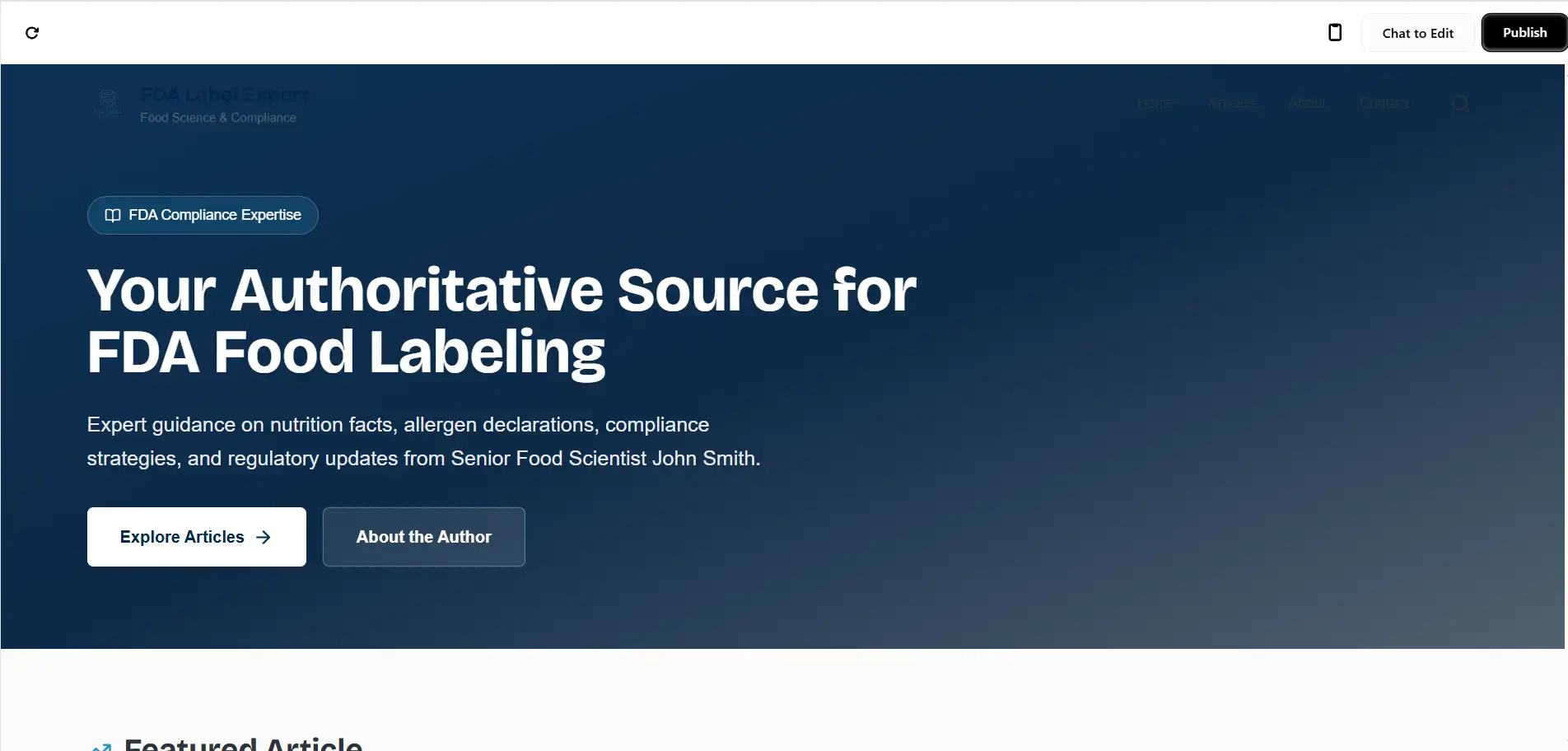
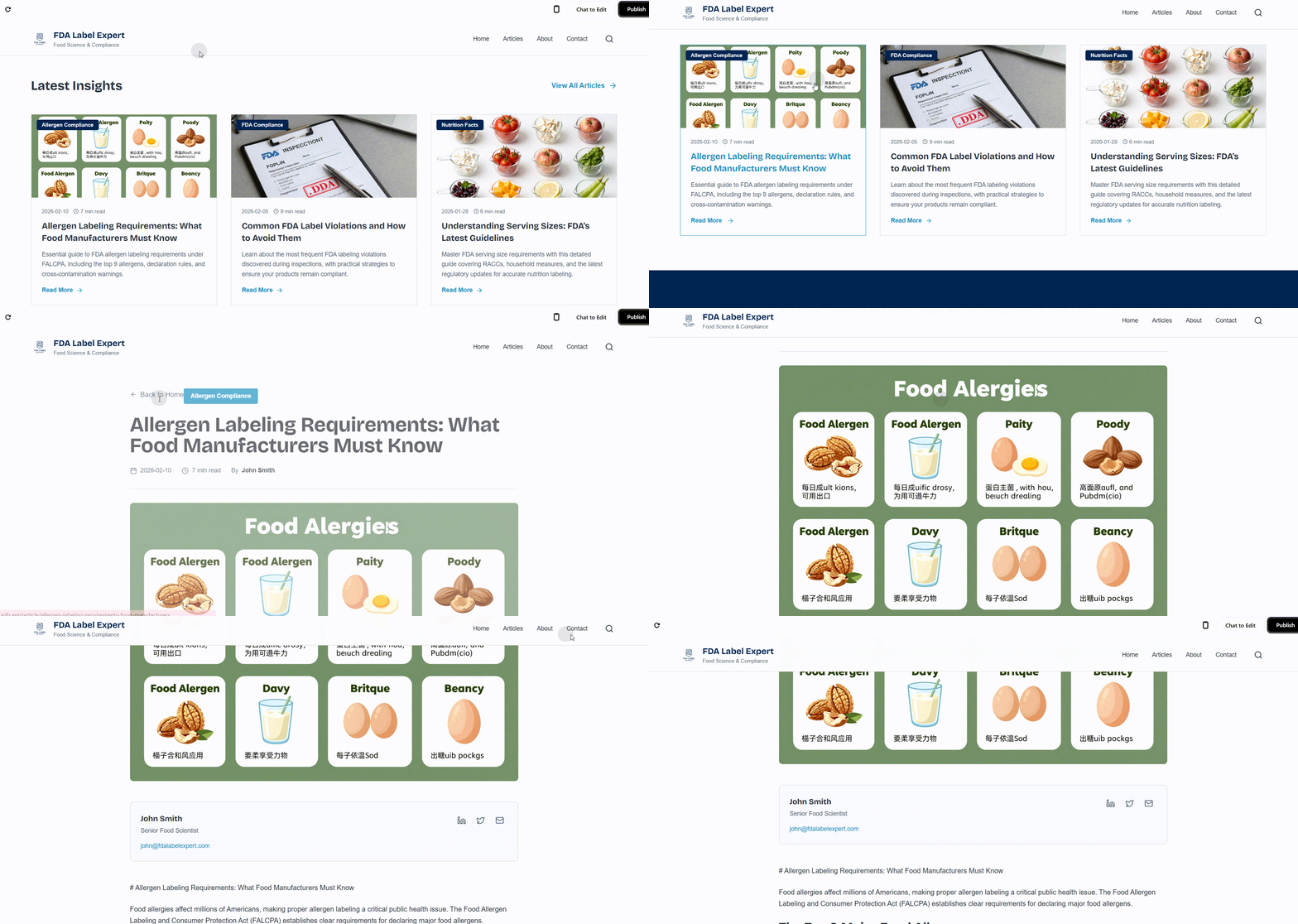
This is where Wegic’s SEO Blogging & Knowledge System helps. Instead of struggling, you can create a professional blog in minutes. The system automatically optimizes SEO structure, organizes a knowledge base, generates FAQ modules, and designs professional CTA buttons. With just a few clicks, you can produce a high-trust, expert-style page.
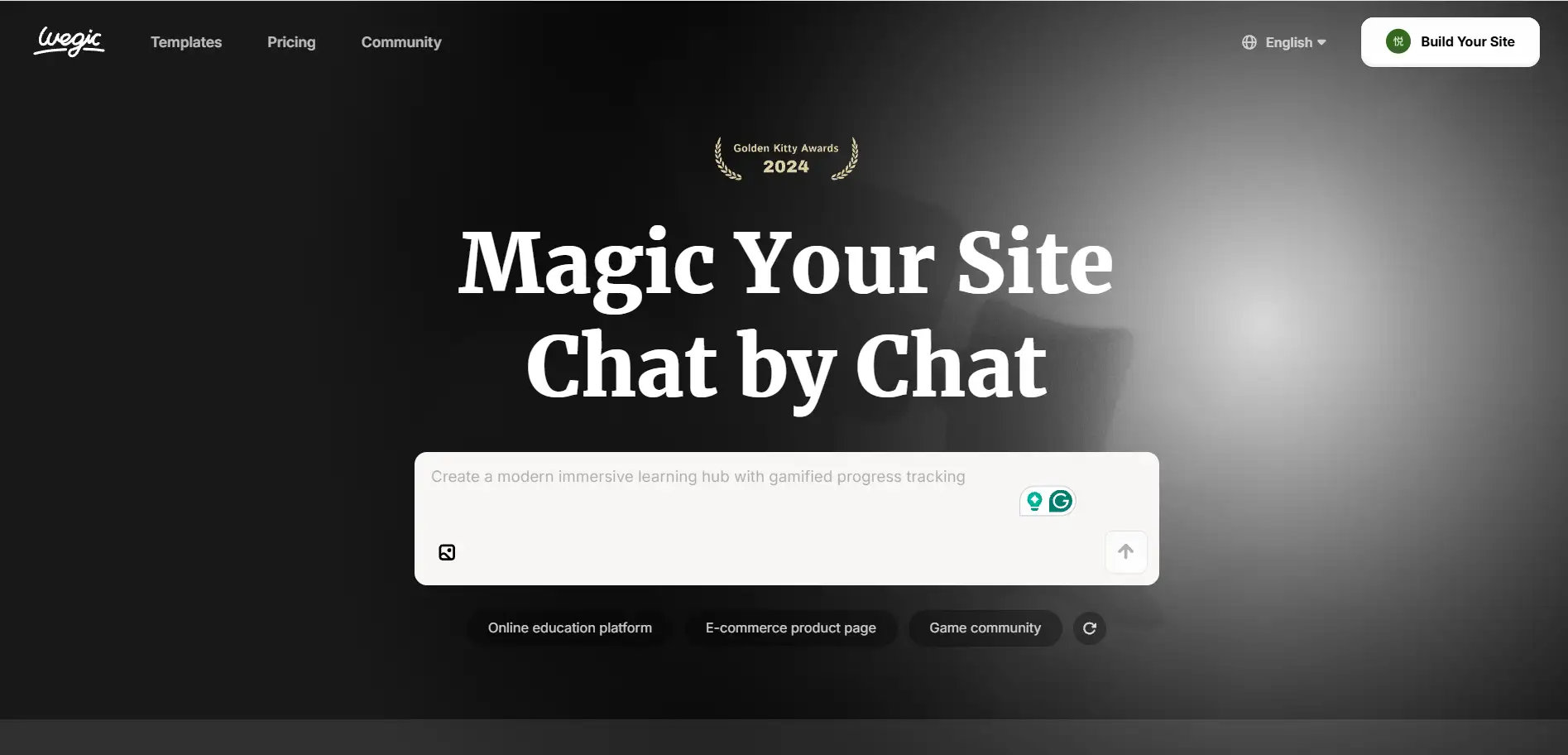
Here’s how it works. Tell the system: “I am a Food Scientist specializing in FDA labeling.” Choose the “Professional Authority Blog Template.” Enter your topic, for example, “High Protein Label Compliance Guide.” Wegic automatically builds a structured, SEO-friendly article ready for publishing. One click and it’s live.
Try Wegic AI to create Food Scientist blogs
Using this system, you no longer chase clients. Compliant brands can find you first, trust your expertise, and hire you. This is especially valuable for freelance food scientists or food science consultants who want to grow without wasting time.
Consider the budget: traditional web design and SEO outsourcing can cost $3,000–$8,000. With Wegic, you pay less than one-tenth of that. Even a Food Scientist who just finished a food scientist course can look like a top professional online without extra design or coding skills.
By making your compliance knowledge visible and searchable, you increase inbound inquiries, improve authority, and justify a higher food scientist salary. Wegic helps independent Food Scientists turn their expertise into a strong, professional online presence.
#05 Authority Builds High-Value Clients
Being a top Food Scientist isn’t just about technical skills. Your food scientist degree, food scientist course, and hands-on food scientist skills make you qualified. But to earn a higher food scientist salary or attract better clients, you need authority. Publishing clear, helpful compliance content builds trust. When startup food brands see your expertise, they feel confident hiring you instead of comparing rates.
SEO makes it even better. When your blogs rank on Google, clients find you first. You don’t chase them—they come to you. The highest-paid Food Scientist isn’t always the smartest. It’s the one who is most visible and trusted. Ready to attract emerging food brands? Build your SEO compliance blog today.
Conclusion
Becoming a successful Food Scientist is not just about knowing your stuff. Even if you are a freelance food scientist with a strong food scientist degree and excellent food scientist skills, clients will not find you automatically. The key is showing your expertise in a way that builds trust.
Writing compliance blogs, answering real questions from emerging food brands, and using SEO helps you become visible. When your content ranks in Google, founders come to you first. You don’t have to chase clients—they seek you out because they trust your advice and experience.
Use tools like Wegic to make your expertise shine online and make compliance content work for you.
FAQ
1.Why don’t clients contact me even if I’m a qualified Food Scientist?
Even with a food scientist degree and strong food scientist skills, clients may not find you. Many startup food brands search online first. Without visibility, your expertise as a freelance food scientist or food science consultant stays hidden.
2. Can compliance blogs really help me attract clients?
Yes. Blogs answering real questions—like “Can I claim high protein on a snack label?”—show authority and build trust. Brands see your knowledge, feel safe, and are more likely to hire you.
3. How do I choose topics for my compliance blog?
Start with questions founders search on Google. Look at “People Also Ask” or specific FDA labeling queries. Focus on medium-competition but professional questions your food scientist skills can answer.
4. Do I need to know SEO or website design to get clients?
Not anymore. Tools like Wegic let freelance food scientists automatically create SEO-optimized blogs, knowledge hubs, and FAQ modules. You just input your topic and expertise, and the system generates professional pages.
5. Will building authority really improve my freelance business?
Absolutely. Technical skills make you qualified, but authority makes you trusted. High-value clients find you through SEO blogs, and your visible expertise helps you earn more than relying on referrals alone.