Most authors build websites that nobody visits. This article breaks down 21 author website examples that actually work, showing you exactly what makes them successful and how you can replicate their winning strategies in minutes using modern AI tools like Wegic.
Authors, you need to face the harsh truth that your words are beautiful, but your personal website is barren. While 87.5% of writers have a website, less than 30% actually sell books through it, and the average author site gets just 849 visits per month. The difference between a website that collects digital dust and one that converts casual browsers into devoted fans comes down to strategic design choices you can steal and implement today.
21 Author Website Examples That Actually Work
Fiction Author Websites
Seth Ring

Seth Ring's website feels less like a traditional author page and more like stepping into a video game. The bestselling LitRPG author uses animated elements, illustrated character portraits, and detailed world maps that make visitors feel like they've entered his fictional universe. Each book series gets its own landing page complete with character cards and lore sections. This immersive approach keeps readers exploring longer, which directly increases the chances they'll subscribe or buy.
- The takeaway here is simple: match your website design to your genre.
Ali Hazelwood
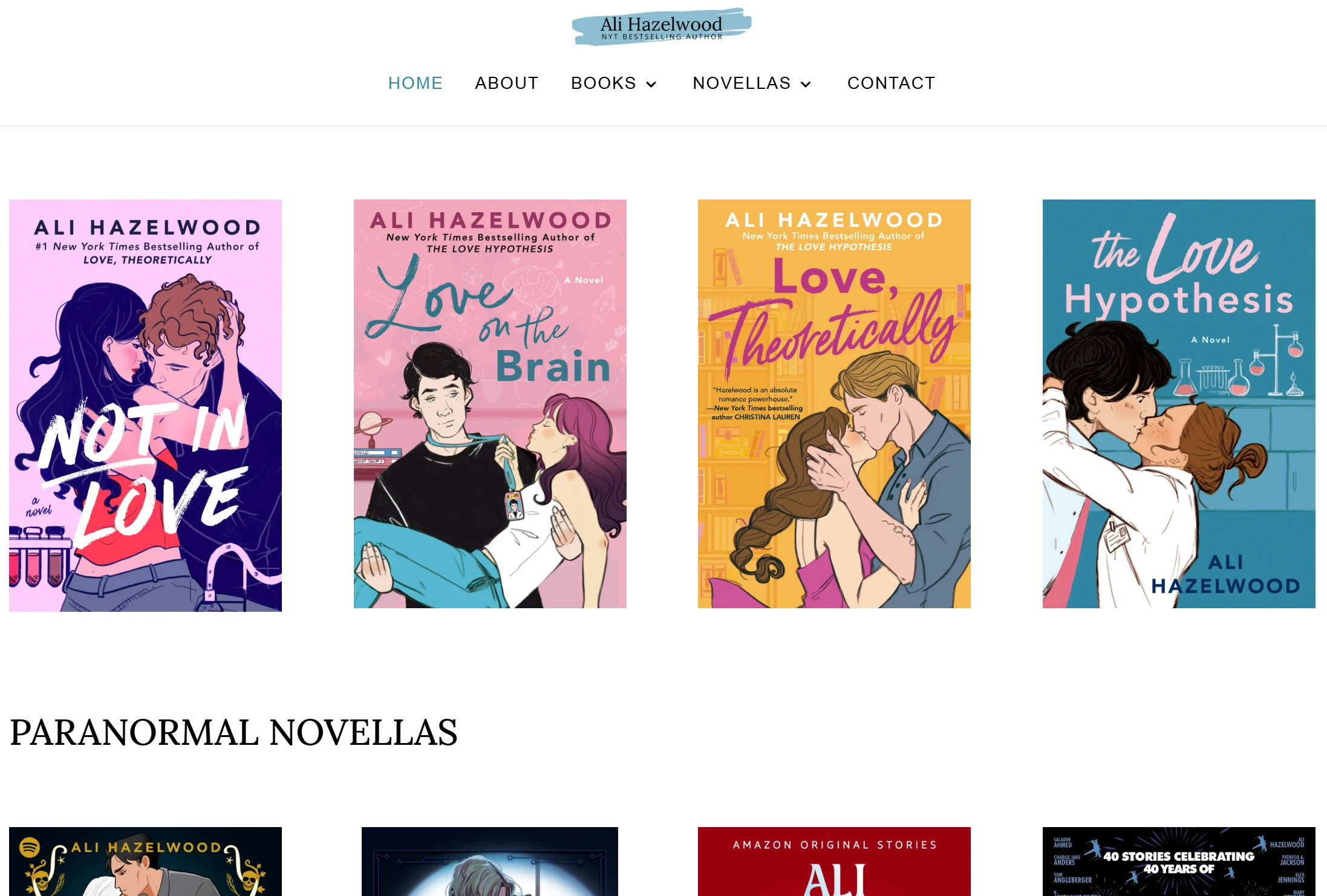
Ali Hazelwood's site for her STEM-romance novels takes a completely different approach. Her homepage is essentially a digital bookstore display. You land on the site and immediately see her full catalog, organized by series and format. No lengthy introduction, no scrolling to find books. Everything is front and center with direct purchase links.
- The lesson here is: Put your newest release or bestseller at the top of your homepage with clear retailer buttons so readers can buy from their preferred store with one click.
Victoria Aveyard
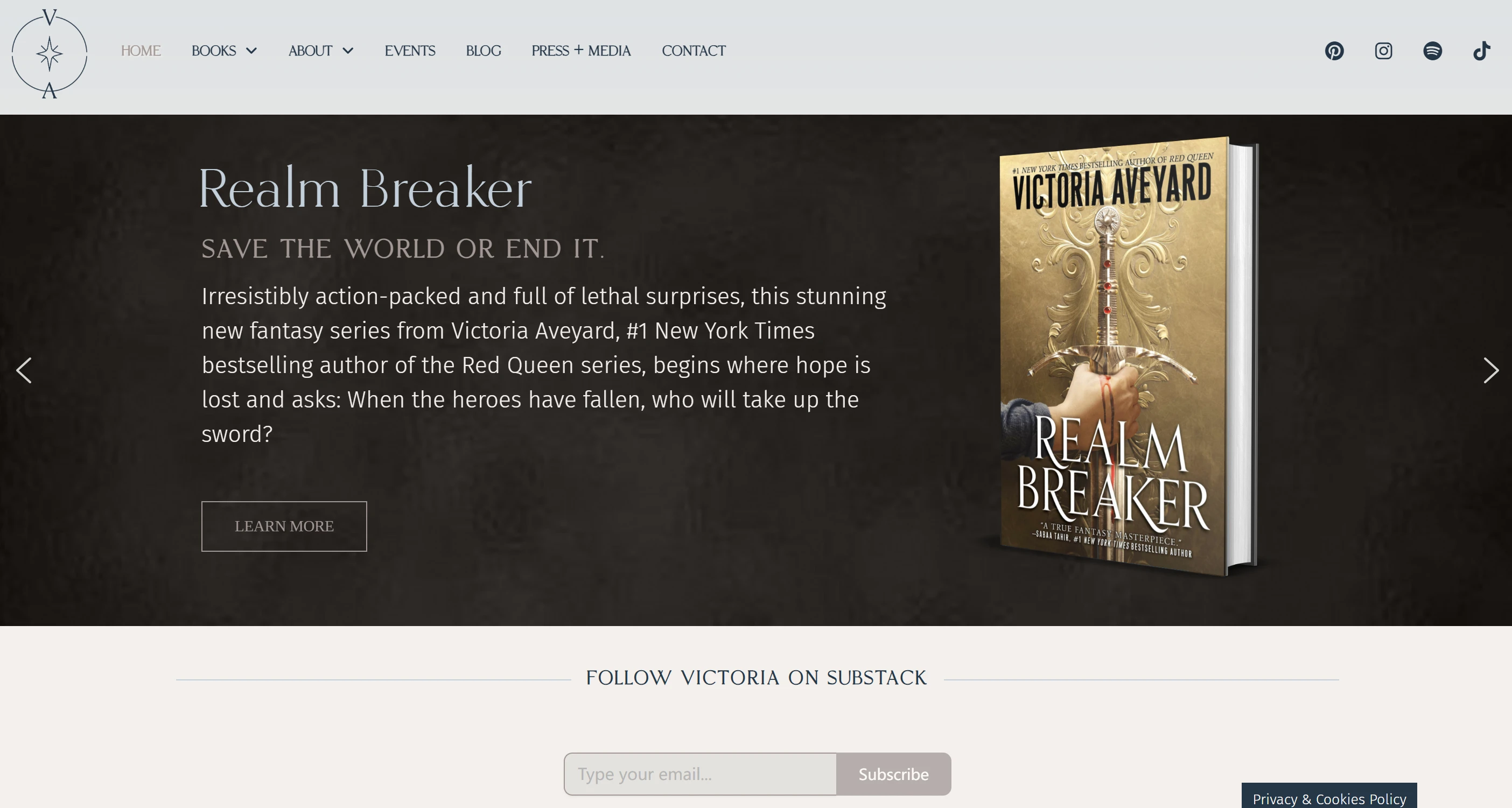
Victoria Aveyard, author of the Red Queen series, demonstrates the power of newsletter-first design. Her site welcomes visitors with her portrait and accolades, but the primary call-to-action is subscribing to her Substack newsletter. She's intentionally prioritizing her mailing list over immediate book sales because she understands that email subscribers become long-term fans who buy every new release.
- What's your primary goal: it's building a loyal readership for future launches, make newsletter signup your hero element.
Rupi Kaur
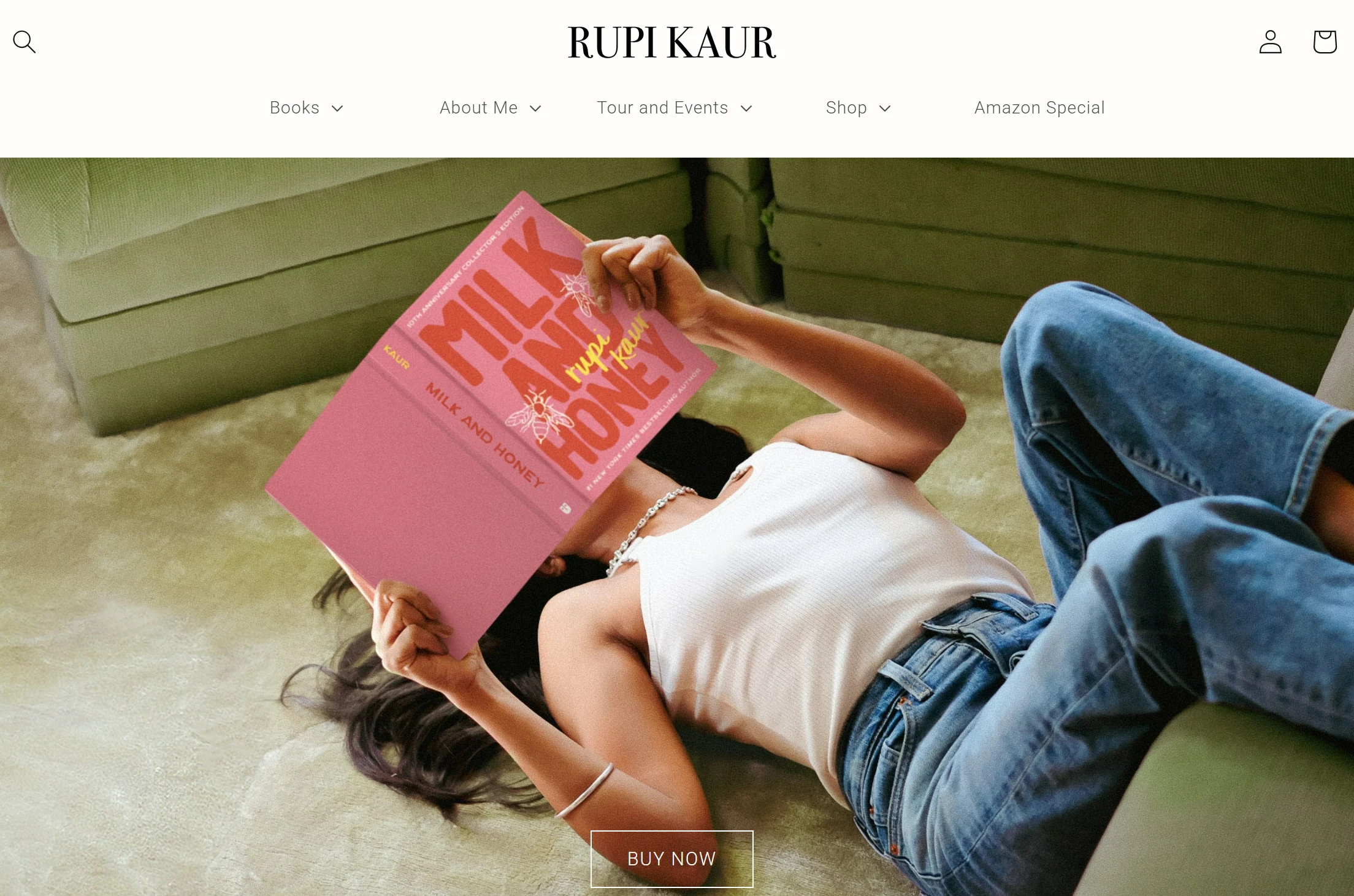
Rupi Kaur's website is a masterclass in brand consistency. The internationally bestselling poet uses minimal design, elegant typography, and emotionally intentional imagery that mirrors the aesthetic of her poetry collections. Every element reinforces her artistic identity. Beyond the visual appeal, the site includes her books, merchandise shop, links to her Amazon Prime special, and tour information. She even calls her newsletter a "love note" instead of using generic language.
- The principle here extends beyond poetry: use fonts, colors, and imagery that match your book covers and genre expectations.
Neon Yang
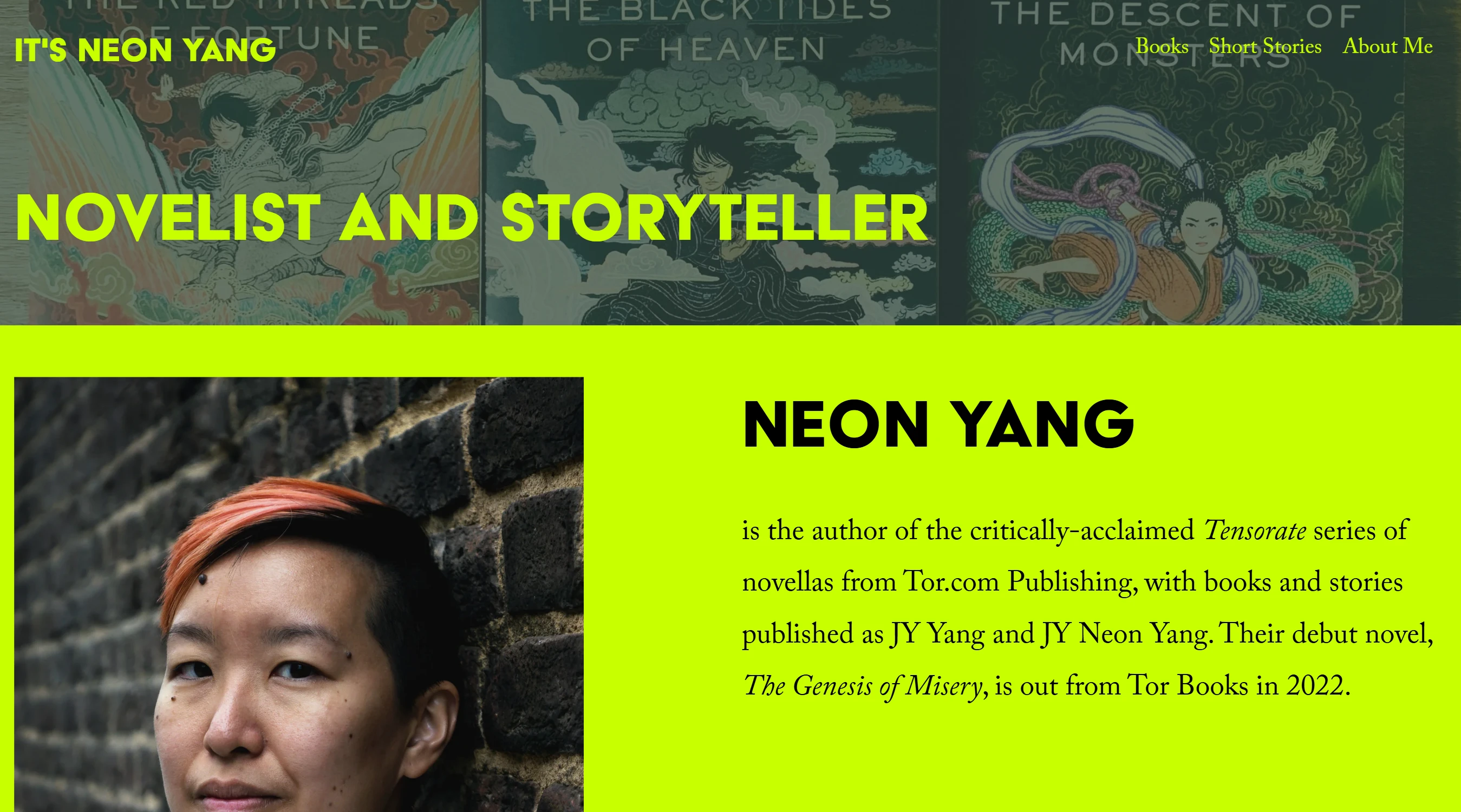
Neon Yang uses bold, high-contrast color to make their website unforgettable. The neon lime background instantly signals personality, energy, and genre. Instead of blending in with muted or generic palettes, their site leans into a distinctive identity that says: this author has a unique voice, and the books do too.
- You need to make your website hard to forget: color is one of the strongest visual tools you can use to guide attention and create emotional impact.
Neil Gaiman
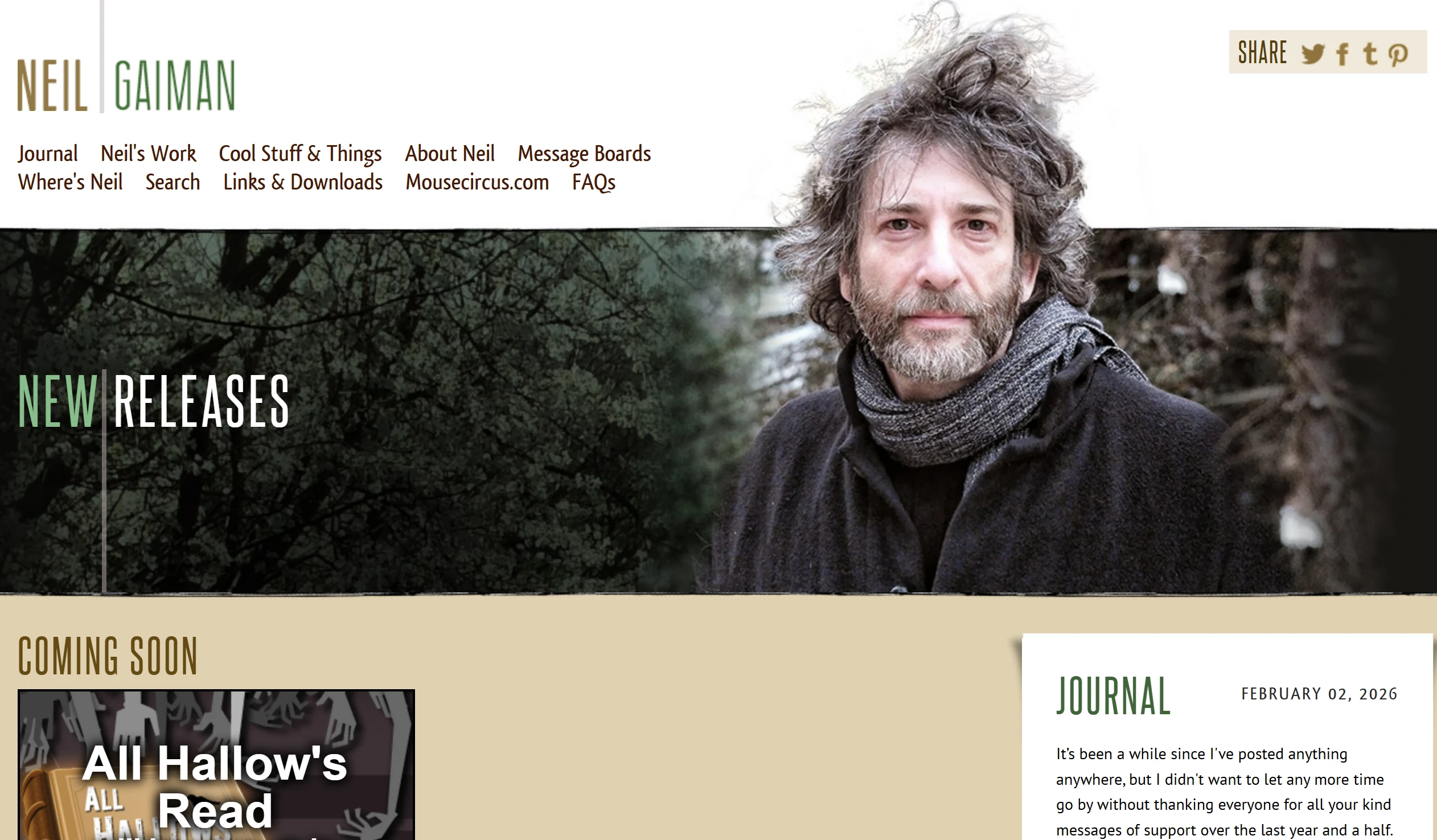
Neil Gaiman's author website balances whimsy with professionalism, perfectly reflecting his fantasy and literary fiction brand. The site features his extensive bibliography, blog updates, and upcoming events with a design that feels both accessible and magical.
- Maintain fan engagement in this way: Regular content updates on your site.
Maggie Stiefvater
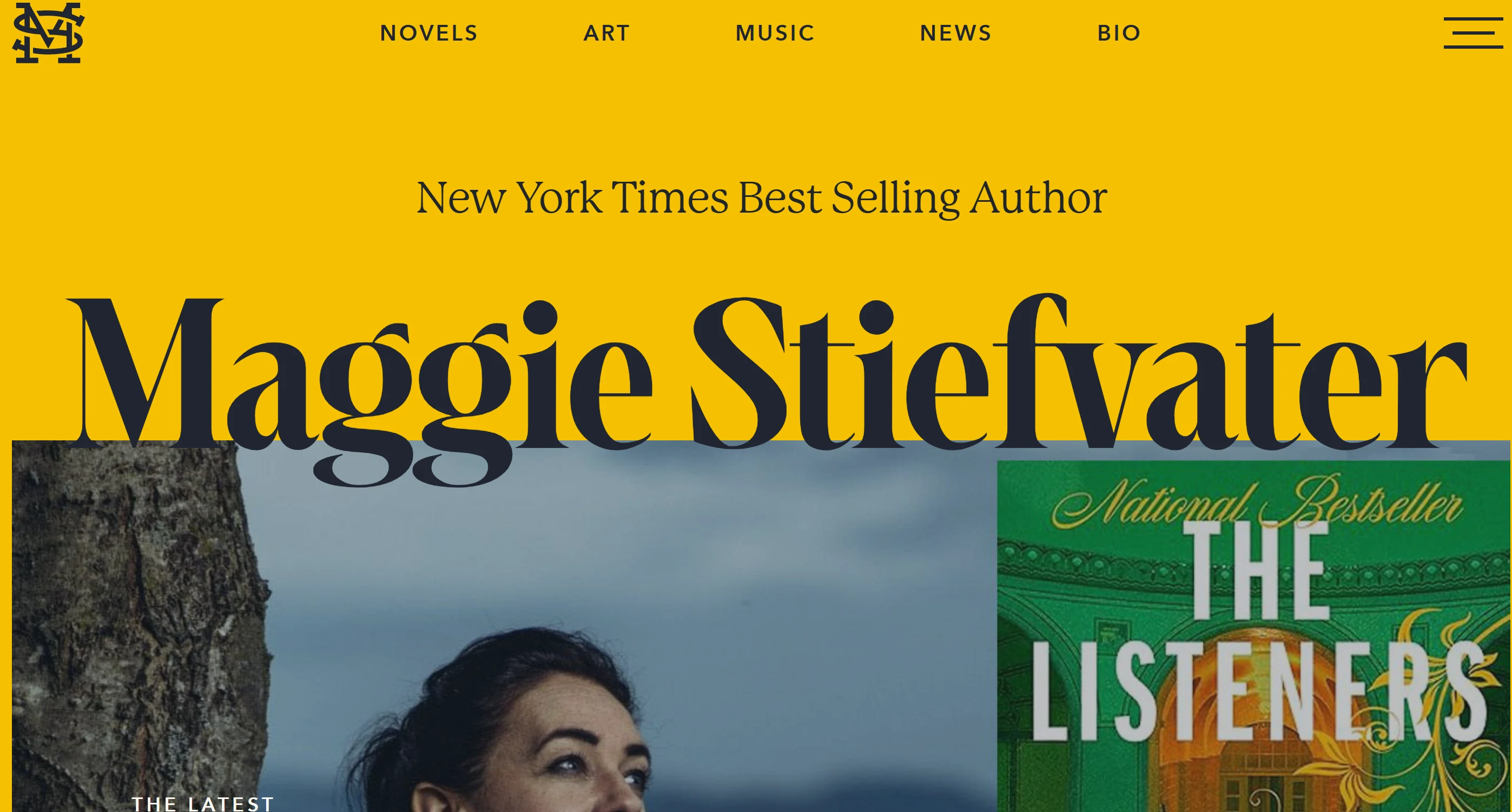
Maggie Stiefvater's website places her popular series front and center with visually appealing book covers and direct purchase links. The fantasy author's site demonstrates how to effectively showcase multiple series while maintaining clean navigation. Her homepage immediately captures attention with striking imagery that reflects her genre.
- Let new readers know where to start: Clear categorization by series.
Non-Fiction Author Websites
James Clear
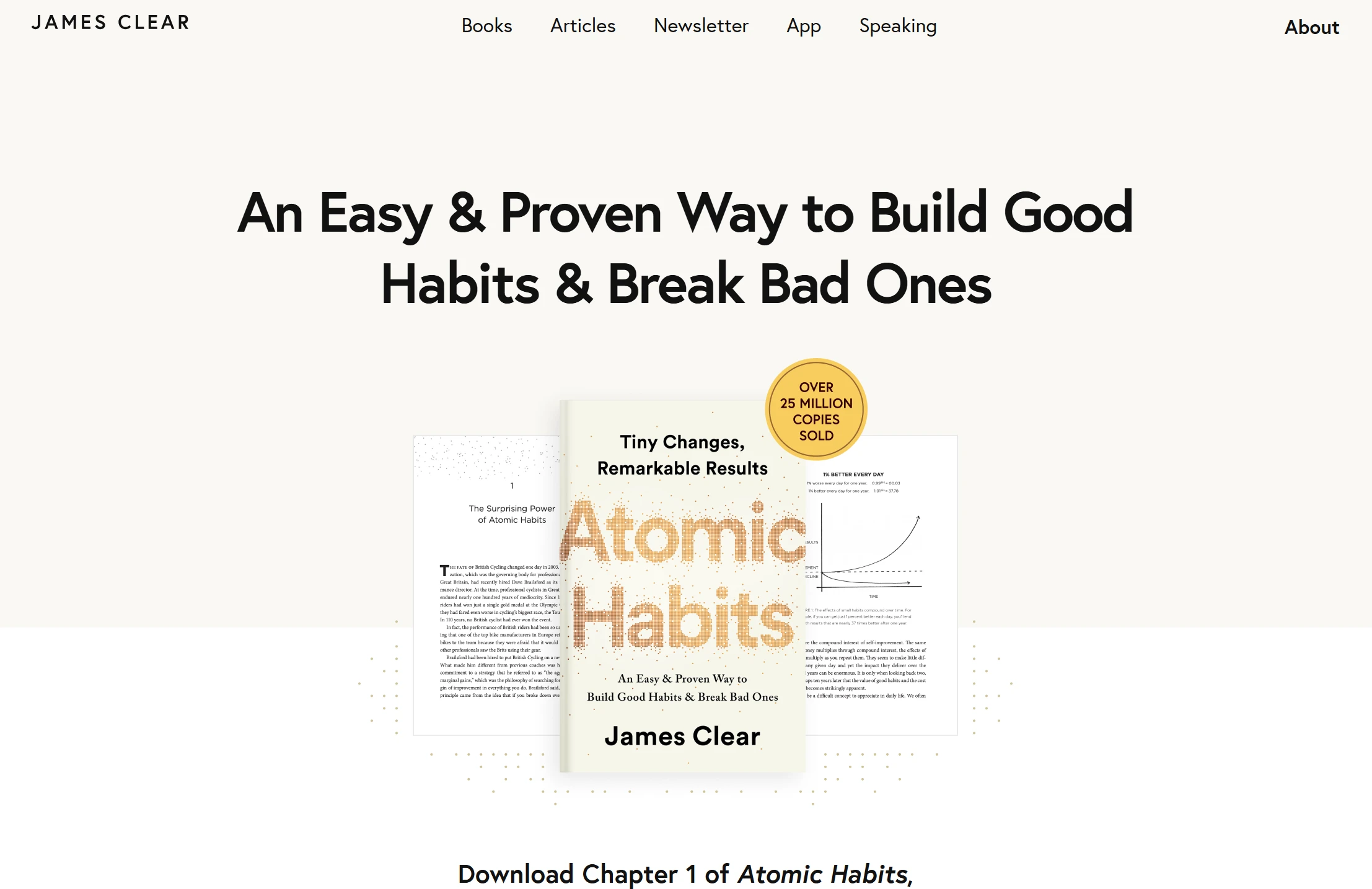
James Clear, author of the global phenomenon Atomic Habits, offers a textbook example of a lead magnet strategy. Before you even scroll on his homepage, you're presented with a free downloadable chapter of his bestselling book. This is conversion optimization at its finest: offering something valuable in exchange for an email address.
- The lesson is straightforward: give away something meaningful.
Brené Brown

Brené Brown transforms her website into a content ecosystem rather than a static portfolio. Readers can explore her books, listen to podcast episodes, watch video interviews, or dive into resource hubs tied to her latest release. Each section feels like a self-contained experience that encourages deeper exploration.
- This approach works because it gives visitors multiple ways to engage with her work beyond just buying books.
Austin Kleon
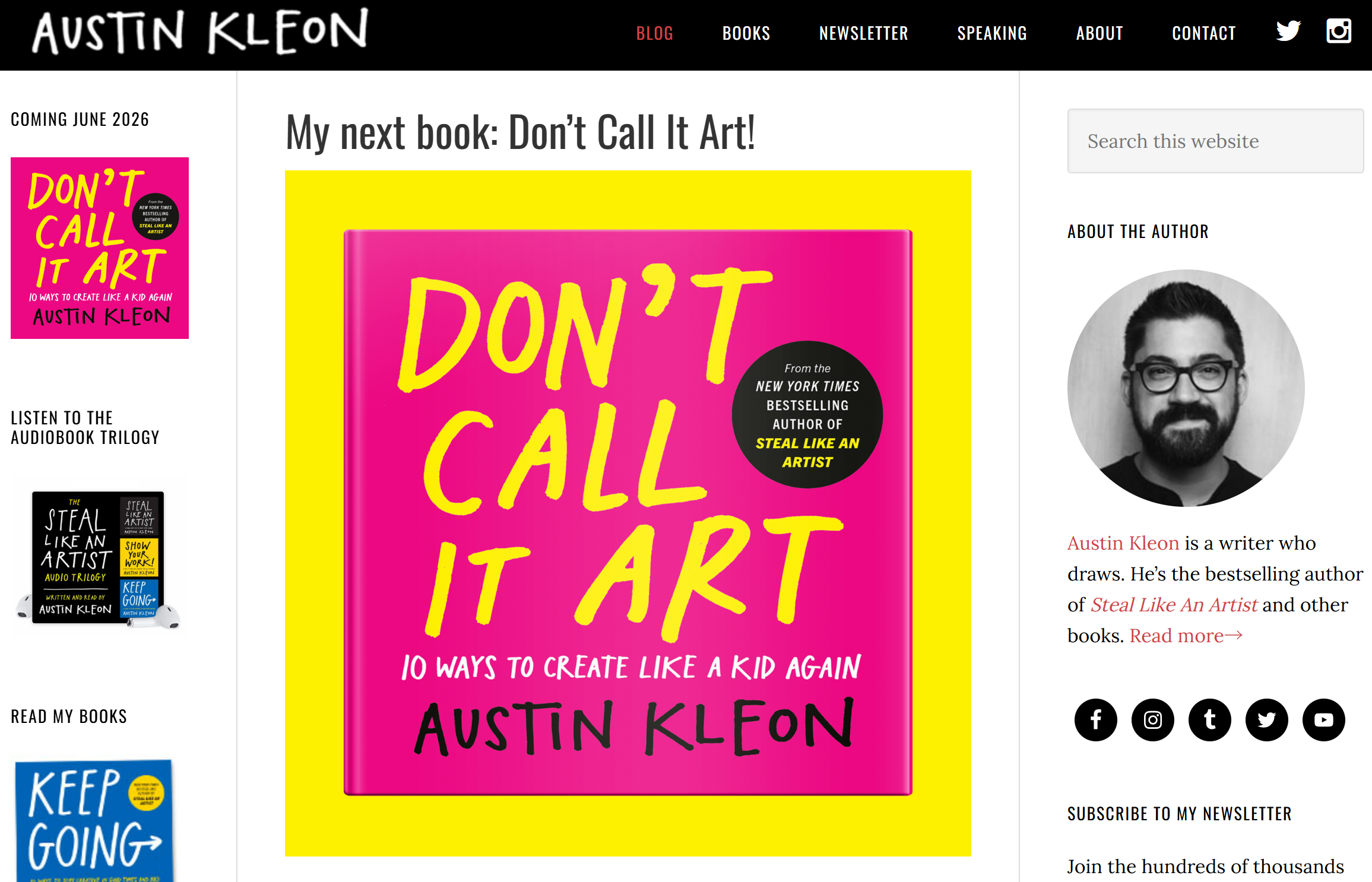
Austin Kleon, author and artist who draws, uses his website to showcase both his books and his creative process. He shares regular posts on art and writing, making the site feel like an ongoing conversation rather than a static portfolio. New blog posts are front and center, showing that Kleon is active and engaged.
- Keep your website fresh: clean, easy to navigate, and highlights everything readers look for: blog posts, books, newsletter signup, bio, and contact info.
Angie Thomas
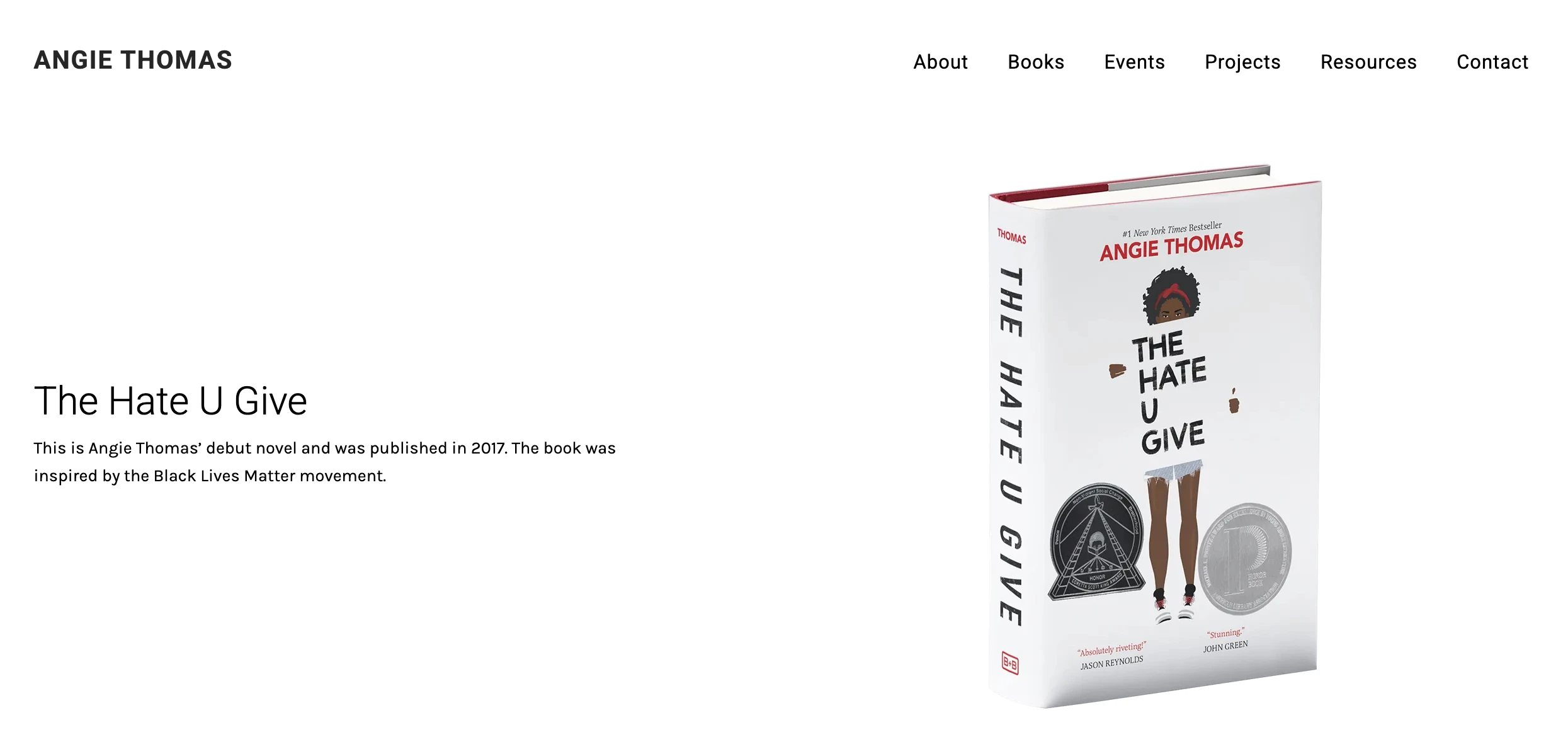
Angie Thomas, bestselling author of The Hate U Give, welcomes visitors with a confident portrait and four powerful words: Author. Producer. Speaker. Activist. With one glance, visitors understand who she is and what she stands for.
- Values and personality of you matter. a warm, welcoming headshot and a focused identity statement.
Brit Bennett
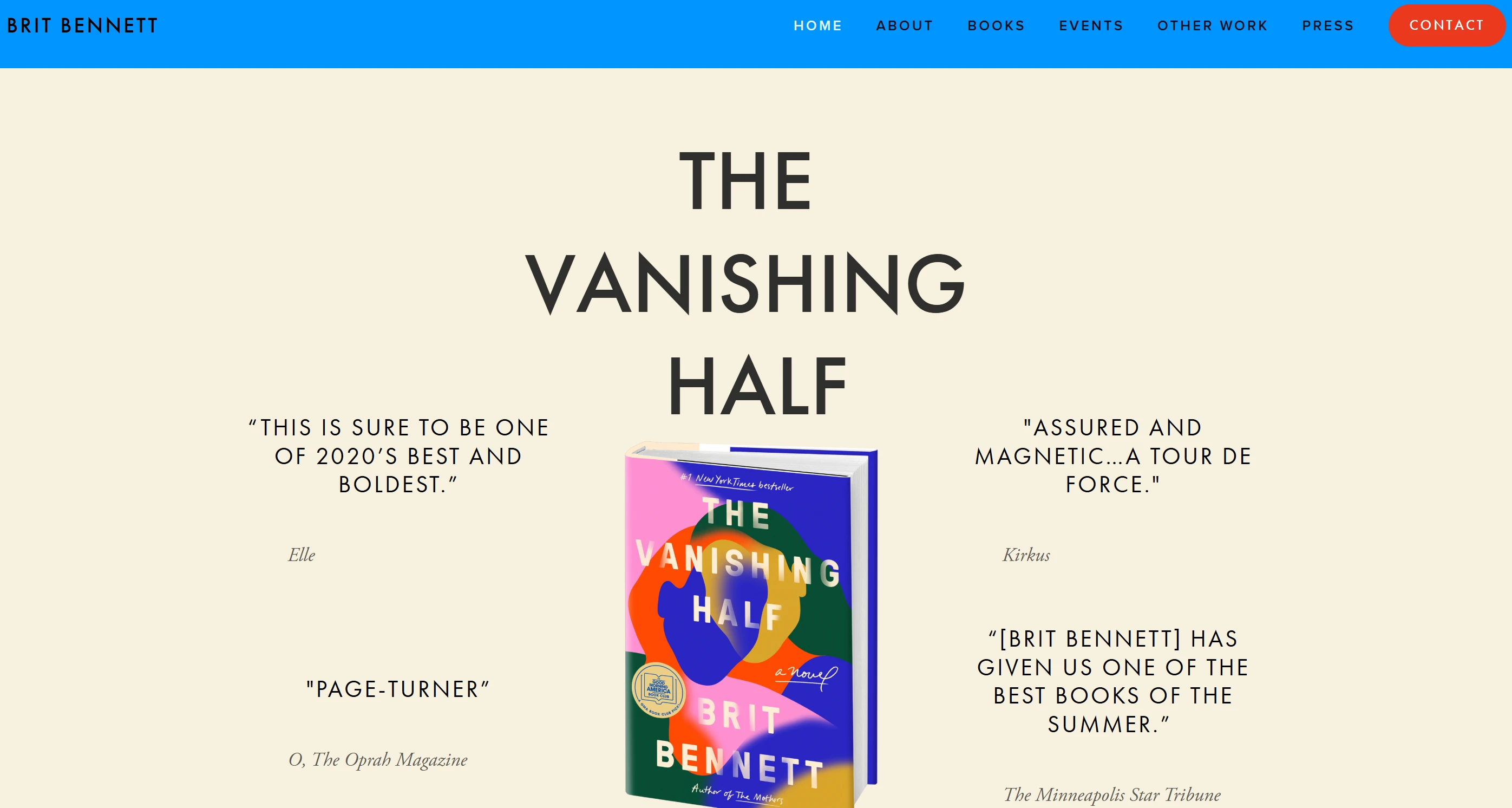
Brit Bennett, author of The Vanishing Half, lets social proof do the talking. Her website places the book front and center, surrounded by glowing endorsements from major publications like Oprah Magazine, Elle, and Kirkus. There's no confusion, no clutter, just a powerful case for why you should buy the book.
- Readers trust other readers: Amazon reviews, Goodreads ratings, or praise from book bloggers can leverage social proof to boost sales.
Yuval Noah Harari
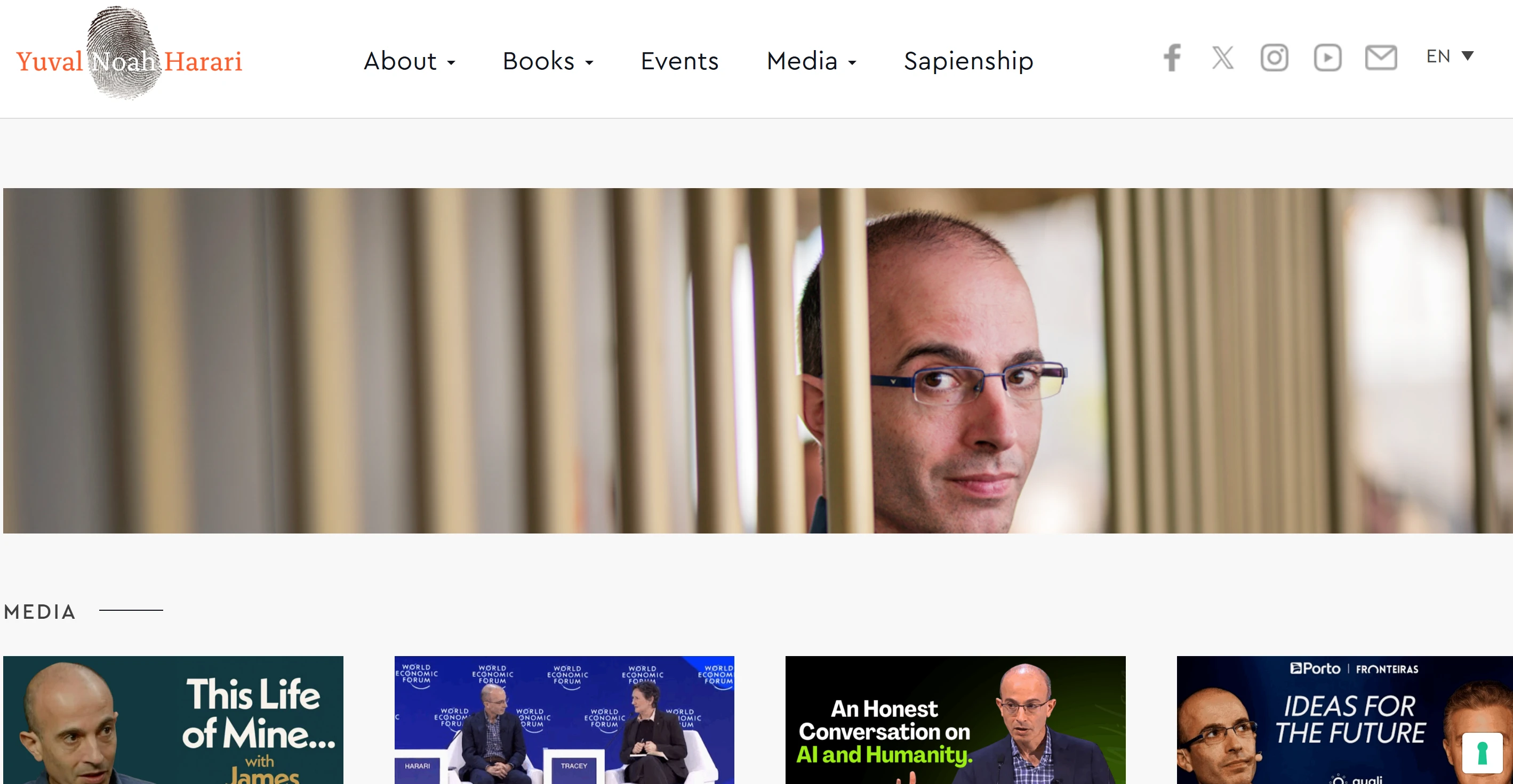
Yuval Noah Harari's website serves as a hub for exploring the works and ideas of the renowned historian and author of Sapiens and Homo Deus. The site delves into complex topics like human history, the future, and ethics with a sophisticated design that matches his intellectual brand.
- Positioning yourself as a thought leader: a platform for ideas, which builds authority and attracts media attention.
Self-Published Author Websites
Hugh Howey
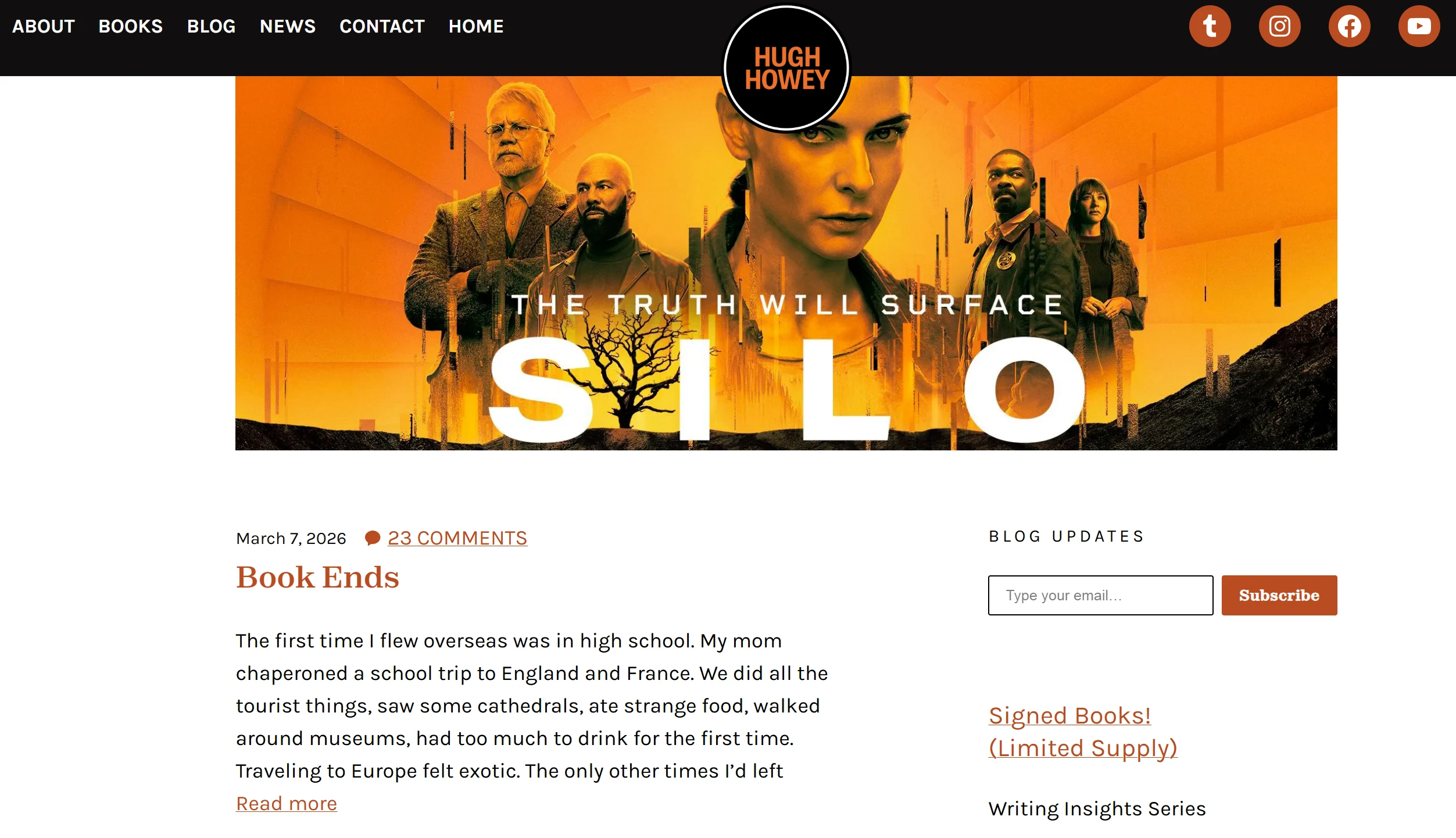
Hugh Howey represents one of the biggest self-publishing success stories, turning his Kindle novella Wool into a full-blown bestselling series. His website reflects his indie author roots while showcasing his professional success. The site balances personal blog content with clear book promotion, demonstrating that self-published authors can maintain authenticity while building a serious author platform.
- Authenticity is under your rein: control over your branded narrative and direct access to readers.
Jasinda Wilder

Jasinda Wilder's romance author website demonstrates how self-published writers can build profitable direct-to-reader sales channels. Her site naturally integrates keywords like best romance author websites into metadata and headlines without keyword stuffing, showing strong SEO awareness.
- Master SEO and direct sales: driving traffic directly to your website and capturing email addresses.
Jenna Moreci
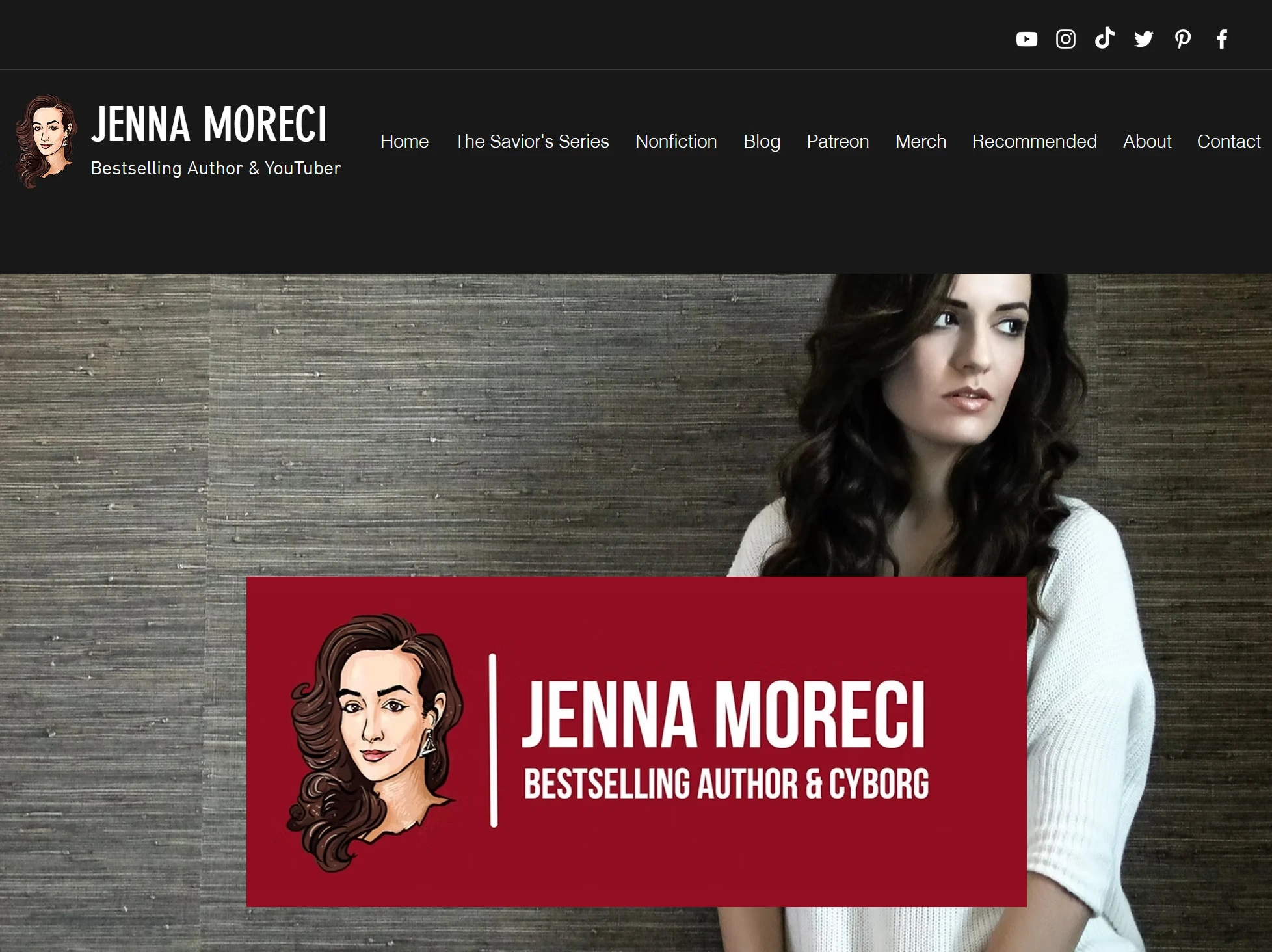
Jenna Moreci, a self-published fantasy author and YouTube personality, has built a robust cross-platform presence. Her website smartly connects to her active YouTube channel and social platforms, increasing visibility and backlinks. She naturally weaves keywords like "fantasy author," "self-published novels," and "indie writing advice" throughout her content without disrupting the flow.
- Accelerate audience growth: your website becomes the hub, but YouTube, Instagram, TikTok, and other platforms drive traffic back to it.
A. G. Lamar
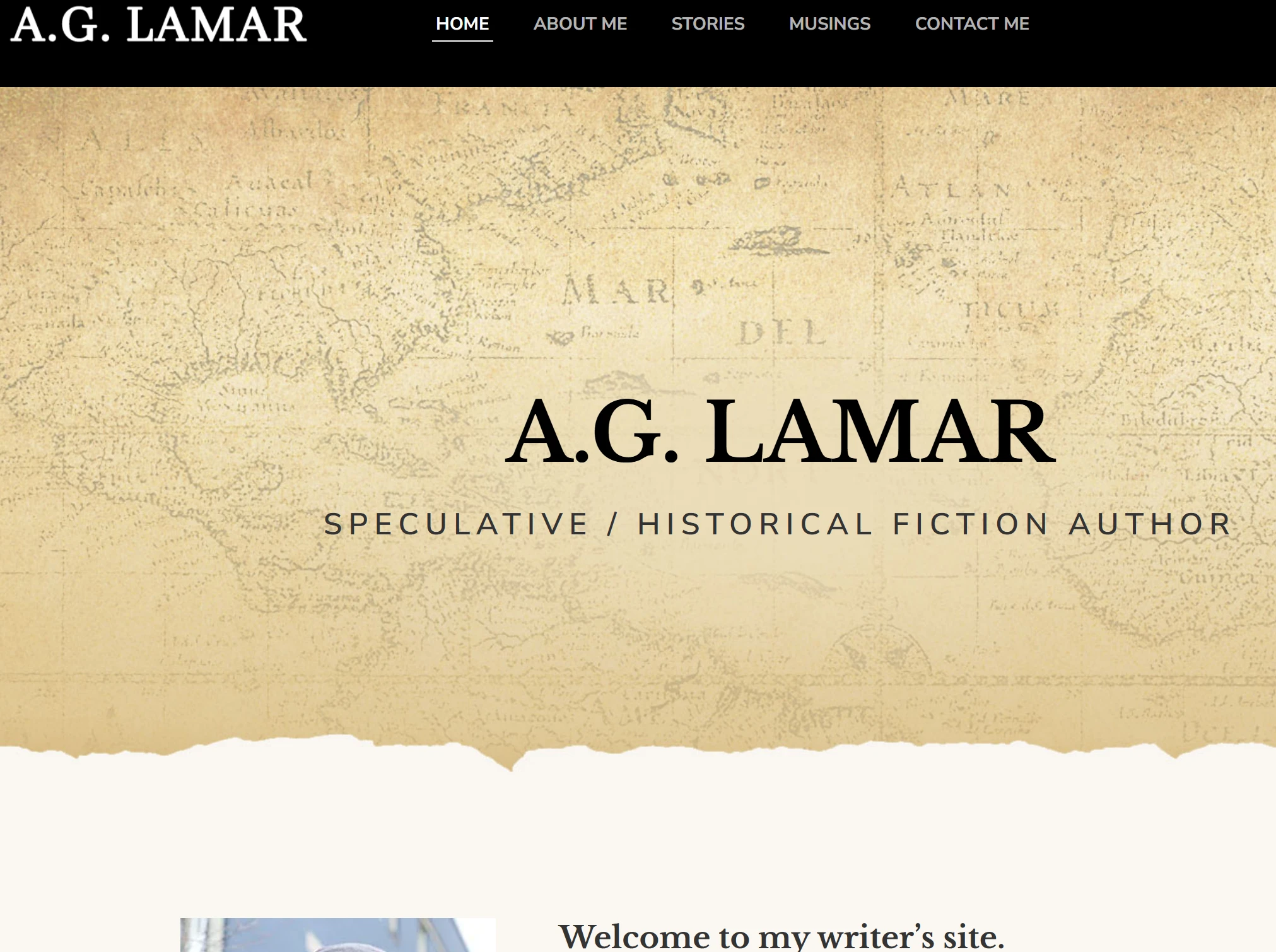
A. G. Lamar's indie speculative and historical fiction website, designed by Reedsy's Matthew P., instantly communicates genre through visual design. Instead of generic stock photos, Lamar uses a textured nautical map header and striking visuals like fighter planes and tall ships that evoke action and historical atmosphere.
- The lesson for self-published authors is clear: signpost your genre visually.
Nita Prose
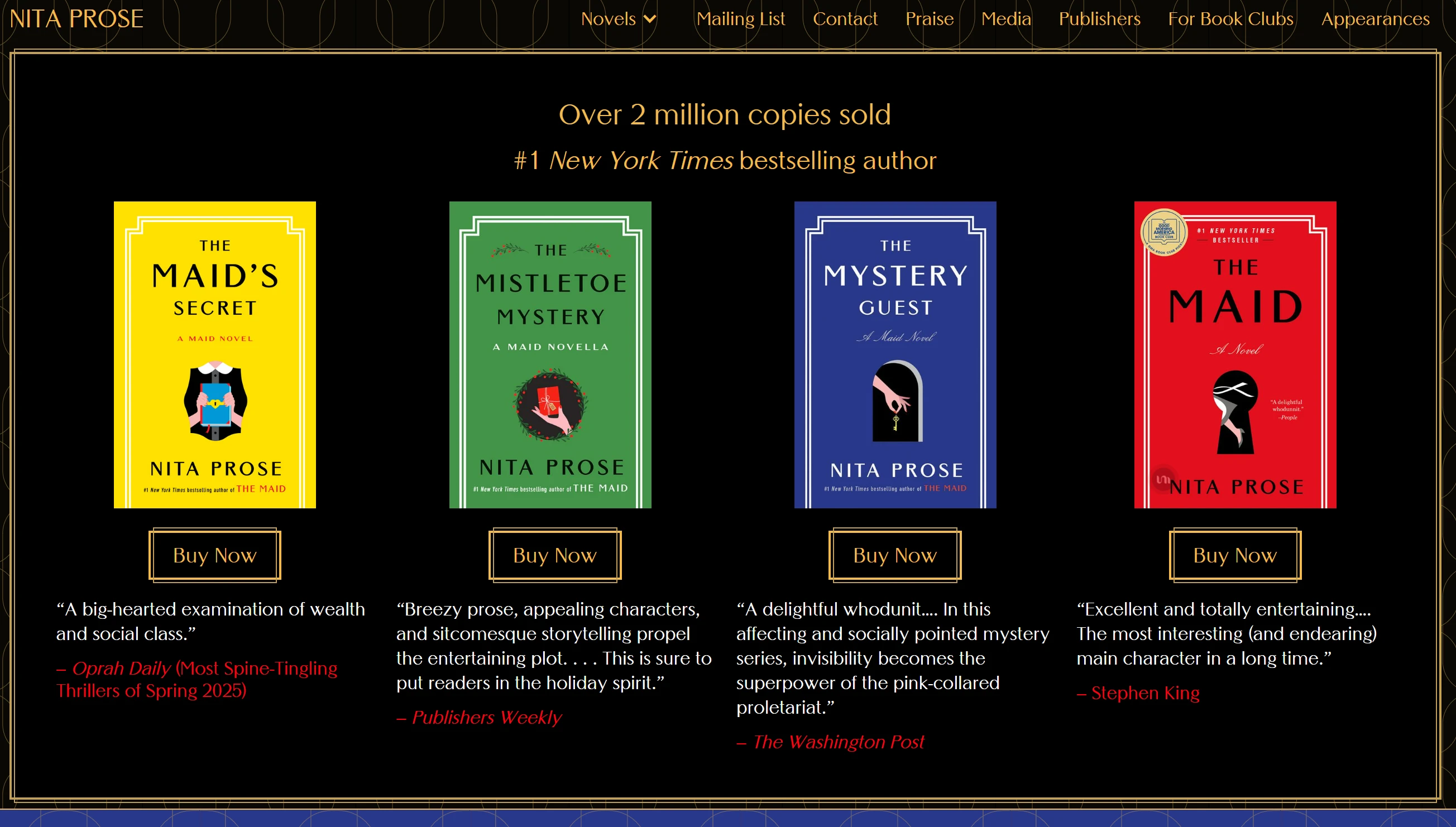
Nita Prose, author of The Maid, builds her entire website around the visual identity of her book. The typography, color palette, and layout are designed to look and feel like her novel. The books are framed with the same graphic borders used on the covers, and her author photo is placed inside the signature doorway motif readers recognize from the book.
- Consistency builds trust, and trust sells books: use your book's fonts, colours, and visual motifs throughout your site.
Mark Dawson
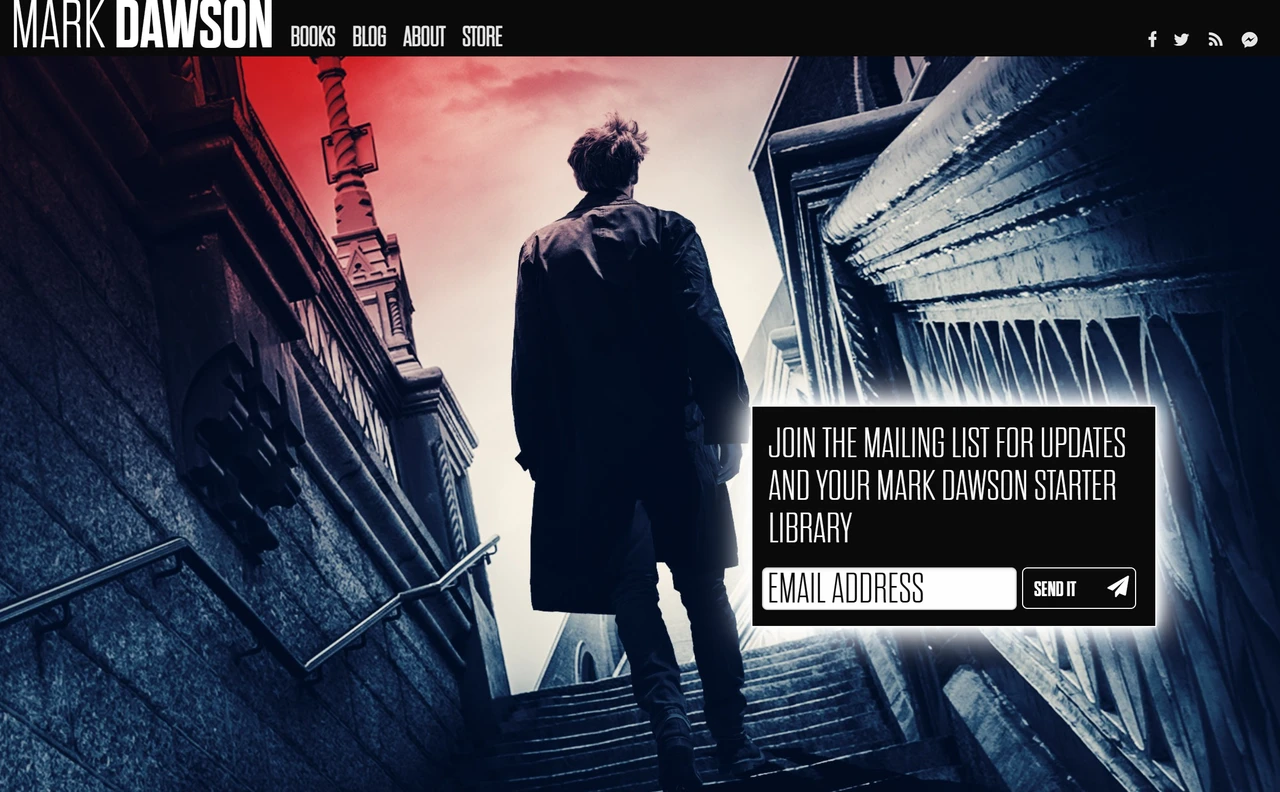
Mark Dawson's website presents his career as a bestselling thriller author with a straightforward design that makes it easy for fans and newcomers to navigate through his extensive collection of works. The site features his various book series like John Milton and Beatrix Rose with clear organization and prominent buy buttons.
- Clear information: good navigation directly impacts sales.
Colleen Coble
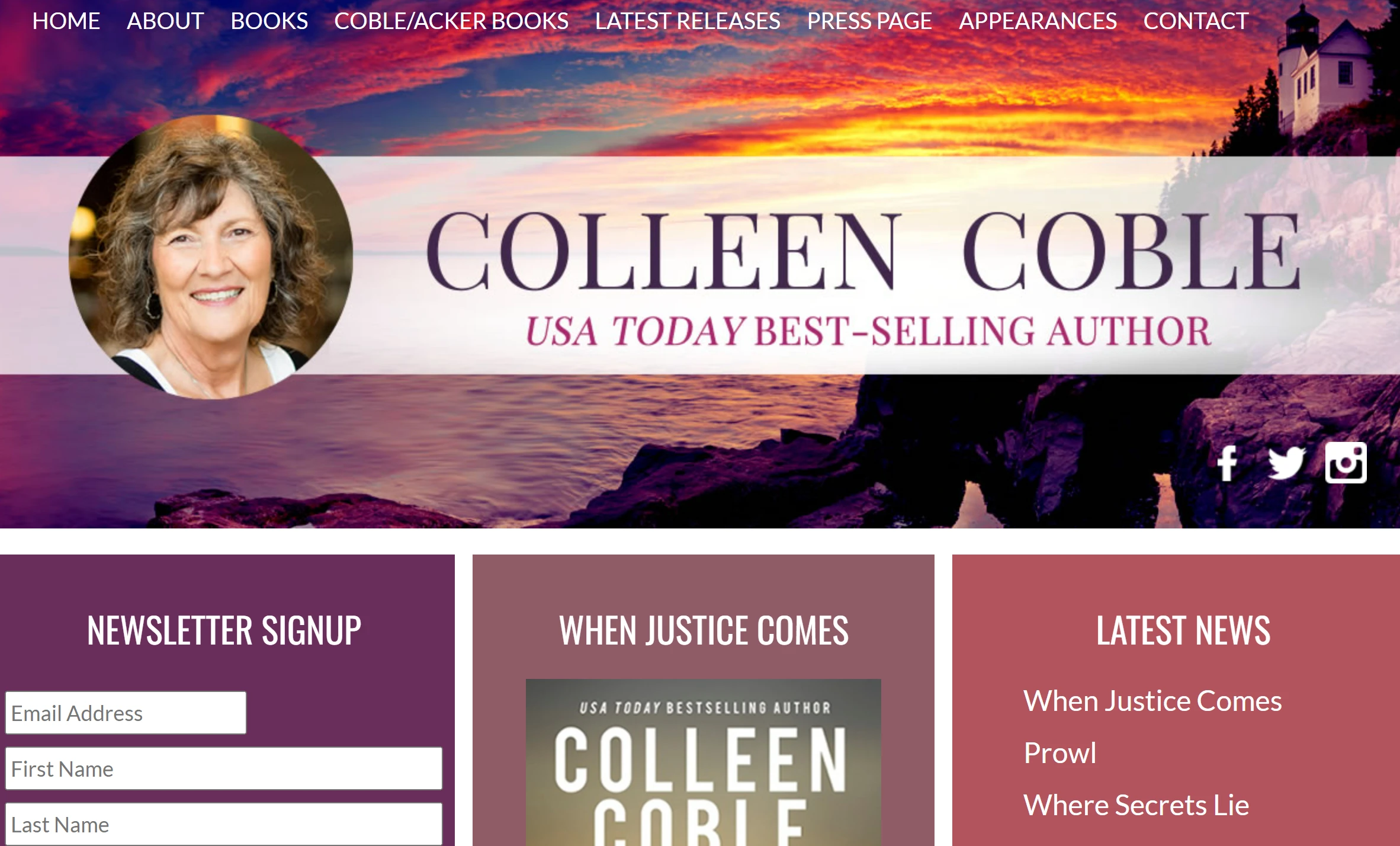
Colleen Coble's website showcases her work as a bestselling author with a blend of latest news, upcoming book releases, and a personal touch through her blog. The site stands out by offering fans and newcomers a deep dive into her literary world while maintaining professional polish.
- Professional presentation and personal connection are crucial: regular blog updates, behind-the-scenes content, and personal stories.
Helen Hoang
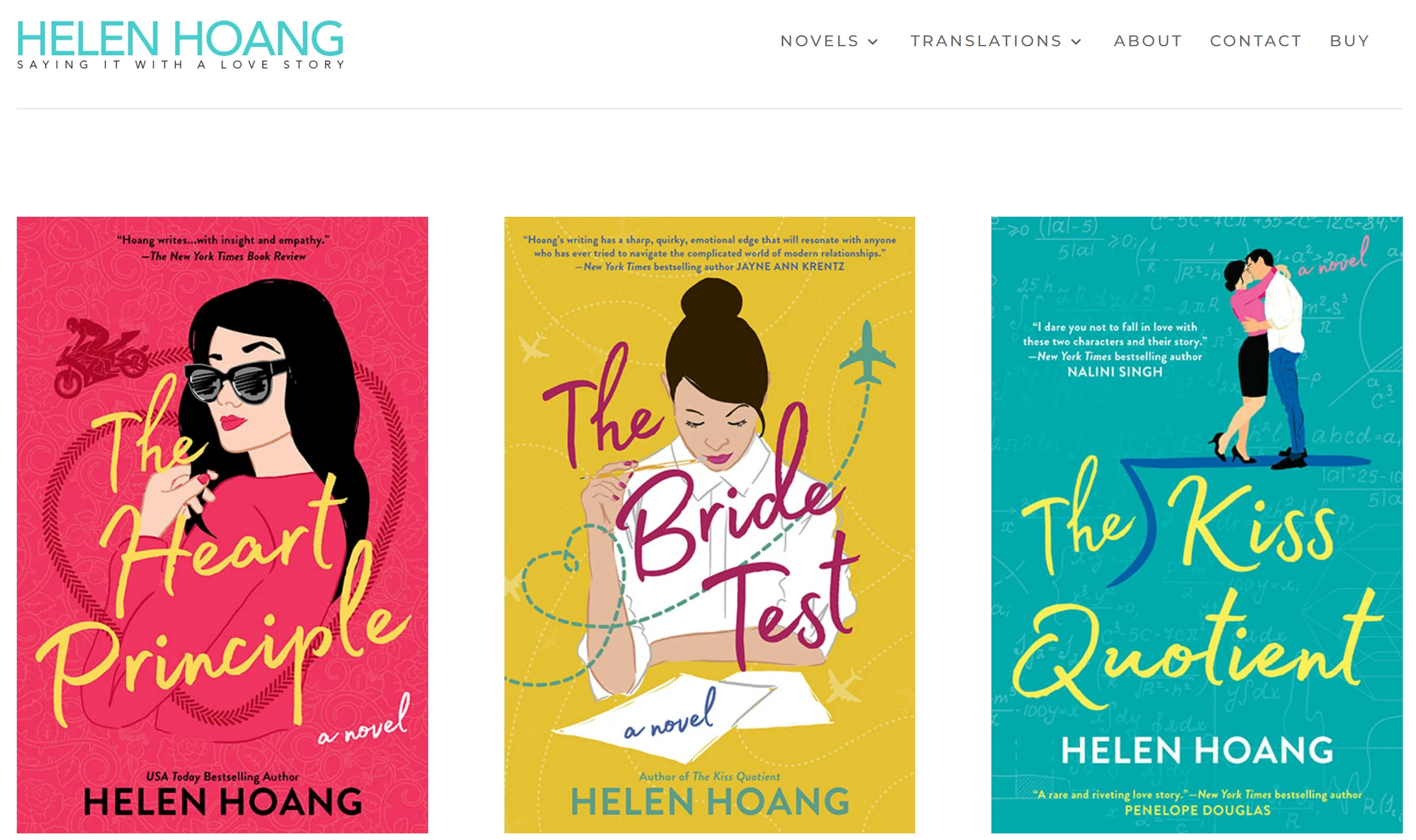
Helen Hoang's romance author website showcases her bestselling novels with a clean, modern design that appeals to contemporary romance readers. The site features prominent book covers, clear series information, and direct buy links that make purchasing frictionless.
- Genre-appropriate design: the color palette, typography, and imagery, helping the right readers feel at home.
How to Build Your Author Website in Minutes with Wegic AI
Traditional website builders like WordPress, Wix, and Squarespace demand weeks of learning, hundreds of setup costs, and ongoing technical maintenance. Wegic eliminates these barriers completely. It's an AI website builder that works through conversation, generating professional author websites in minutes without coding or design skills.
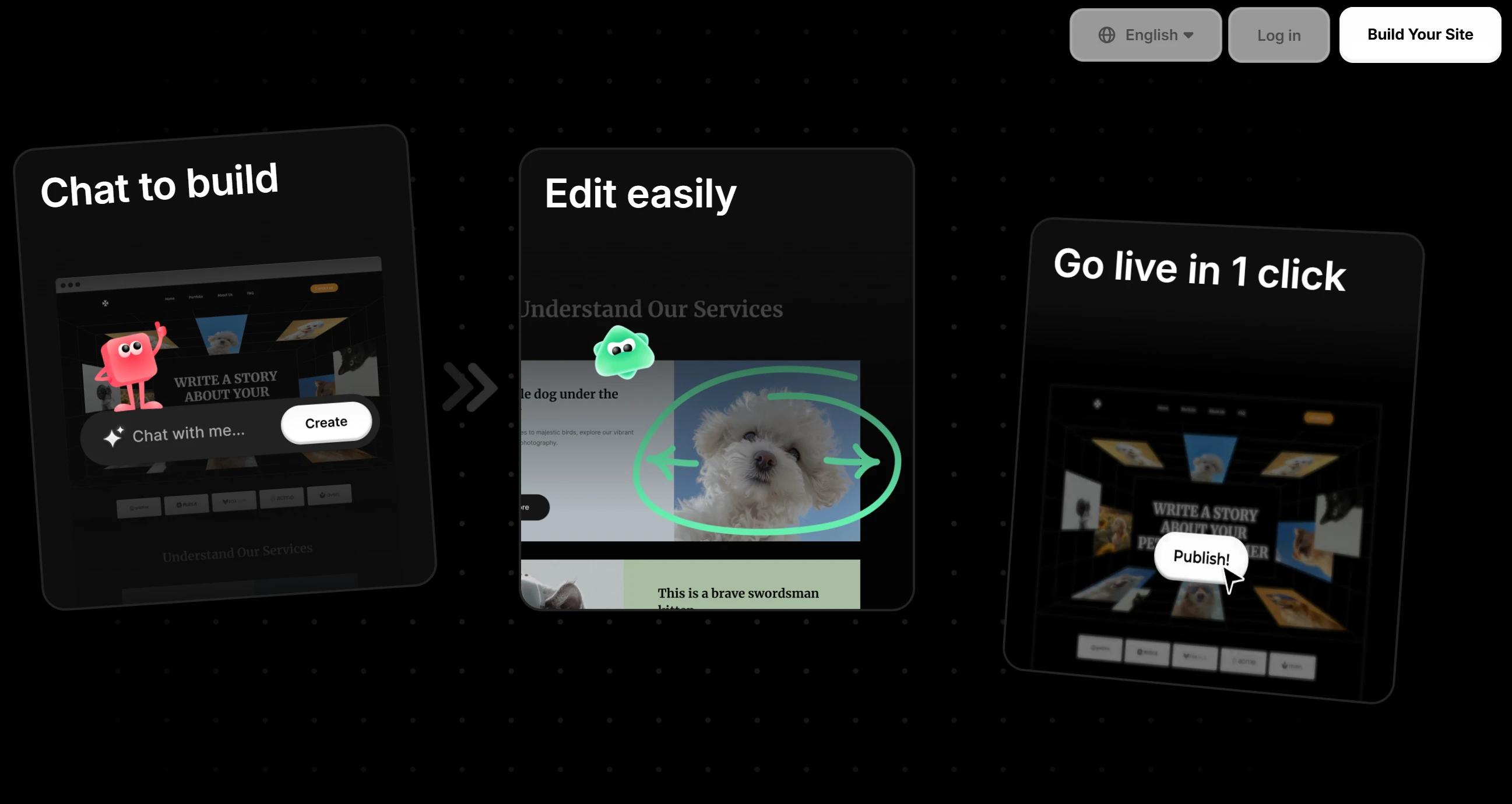
Simply describe your needs in plain English
"I'm a fantasy novelist who needs a website to showcase my trilogy and collect email subscribers."
Wegic's AI understands your requirements and asks clarifying questions to nail down specifics.
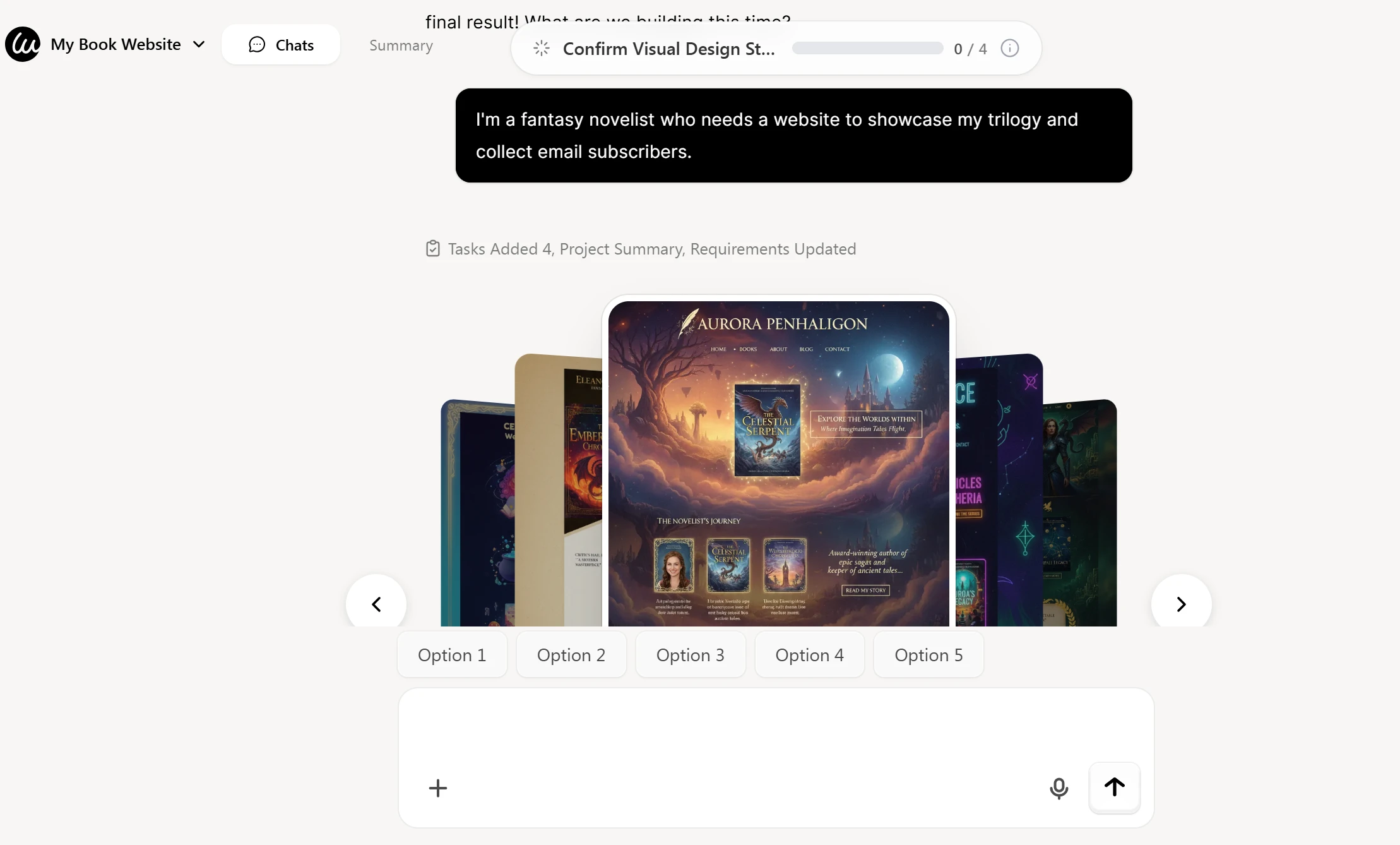
You can also choose from professionally designed templates created specifically for authors, from minimalist designs to immersive genre-specific layouts. Each Wegic template is fully customizable through simple conversation.
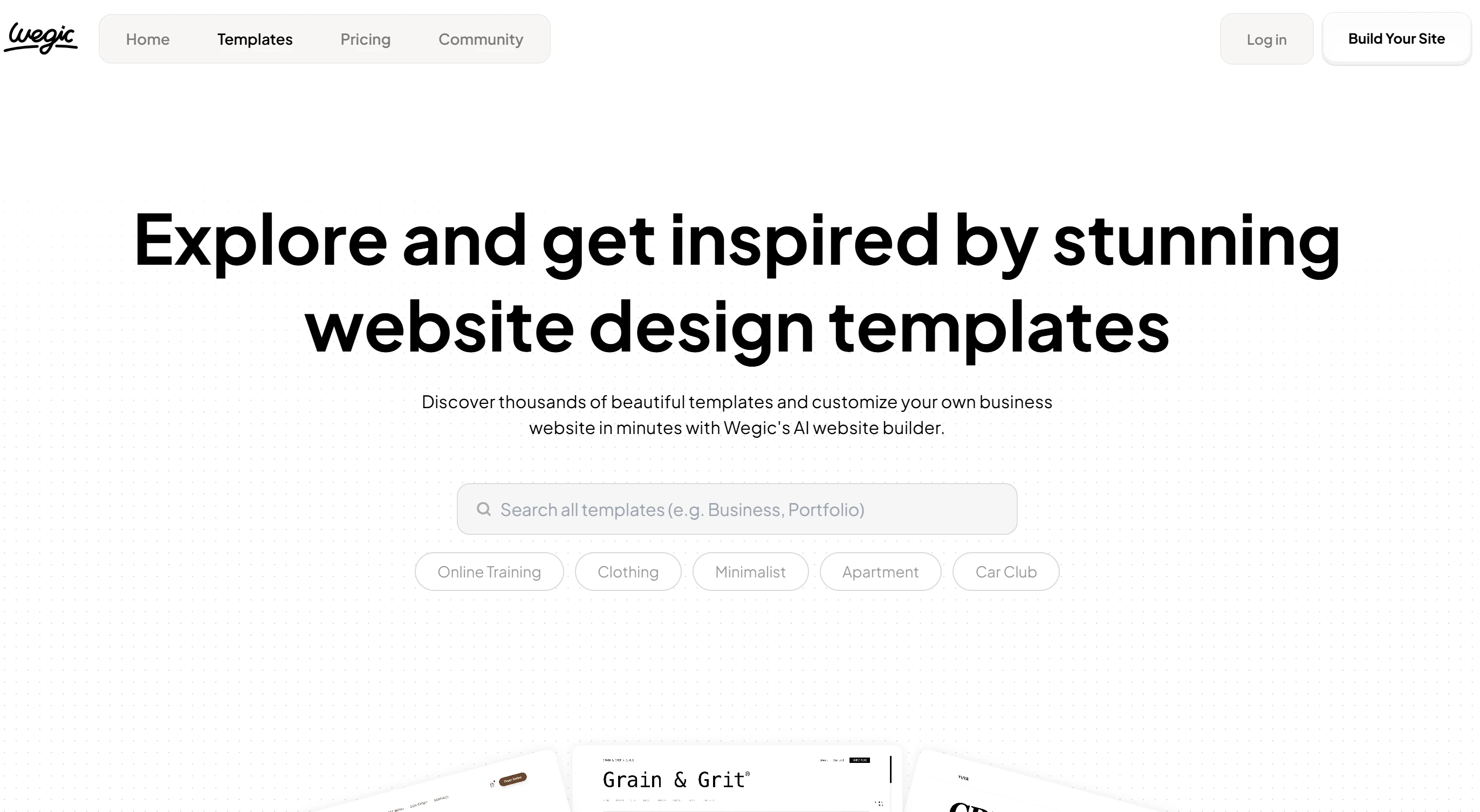
Wegic creates your complete website structure
Refine any element by chatting:
"Add a newsletter signup form above the fold."
Once satisfied, publish instantly and bind a custom domain with one click. No hosting setup, no server configuration, no SSL certificate headaches.
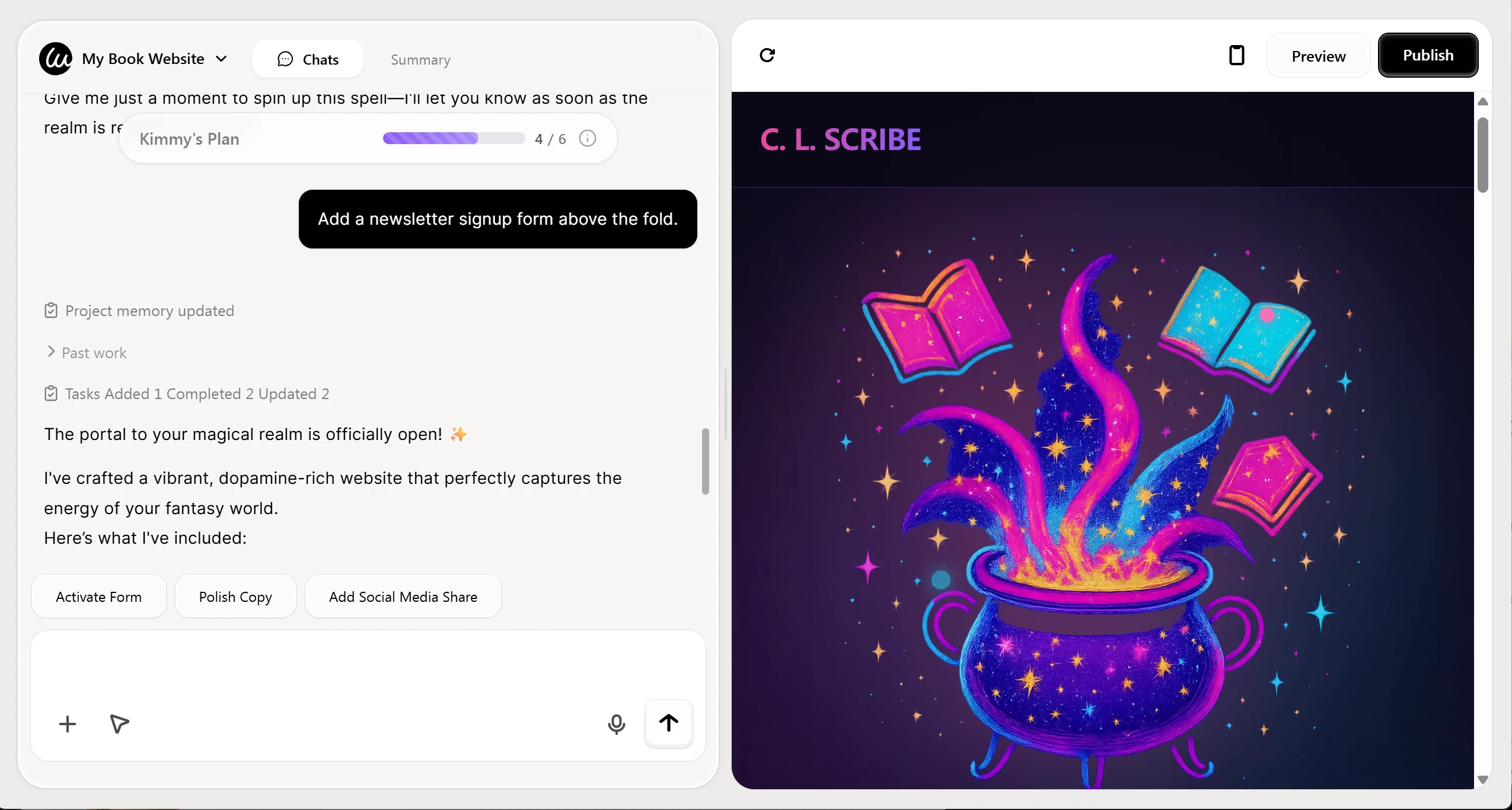
The layout includes Home, About, Books, Blog, and Contact pages. The AI automatically generates layout, selects complementary colors, and creates cohesive design matching your genre and brand. If you have no handy assets, you use placeholder content.
The cost comparison is stark:
- WordPress requires 2-3 weeks of learning plus a $200-500 setup and $15-30 monthly.
- Wix and Squarespace need 3-5 days setup plus $150-300 annually with limited customization.
- Wegic AI offers 5-10 minutes setup with a free tier and premium features from $2.99-41.90 monthly.
For self-published authors on tight budgets or established authors who value their time, Wegic delivers custom-designed websites without custom-design prices.
7 Must-Have Elements Every Author Website Needs
After analyzing hundreds of successful author websites, certain elements consistently appear on sites that convert visitors into readers and fans. Here's your essential checklist.
Professional Author Bio with Photo
Your About page is often the second most visited page after your homepage. Readers want to know the person behind the books. Include a professional headshot, a compelling bio that balances credentials with personality, and links to your social media. Don't write a resume; write a story about why you write and what drives your work.
Clear Book Showcase with Buy Links
Your books should be prominently displayed with high-quality cover images, brief descriptions, and direct purchase links to multiple retailers. Don't make readers hunt for where to buy. Include buttons for Amazon, Barnes & Noble, Apple Books, and any other platforms where your books are available. If you have multiple books, organize them by series or publication date for easy navigation.
Lead Magnet
Offer something valuable in exchange for email addresses. This could be a free chapter of your book, a short story, a writing guide, character artwork, or exclusive bonus content. The lead magnet should be relevant to your genre and appealing to your target readers. Make the signup form prominent and the value proposition crystal clear.
Newsletter Signup Form
Beyond the lead magnet, include newsletter signup forms in multiple locations: homepage, sidebar, end of blog posts, and footer. Make it easy for interested readers to stay connected. Be clear about what subscribers will receive and how often you'll email them. Transparency builds trust.
Contact Page
Make it easy for readers, media, agents, and publishers to reach you. Include a contact form or email address. If you do speaking engagements or school visits, mention that. If you're open to media interviews, say so. Don't hide your contact information on some obscure page buried in your site navigation.
Blog or News Section
Regular content updates keep your website fresh and give readers reasons to return. This doesn't mean you need to blog daily or even weekly. Monthly updates about your writing process, book progress, or industry insights are enough to show you're active. Blog content also helps with SEO, giving search engines more pages to index and more opportunities to rank for relevant keywords.
Social Proof
Display reviews, testimonials, media mentions, awards, and bestseller badges. If your book hit any bestseller lists, show it. If a respected publication reviewed your work, feature that quote. If readers leave glowing Amazon reviews, showcase them. Social proof reduces purchase hesitation and builds credibility, especially for new authors without name recognition.
Tips for Optimizing Your Author Website for Conversions
Having a beautiful website means nothing if it doesn't convert visitors into subscribers and buyers. Here are five optimization strategies that actually move the needle.
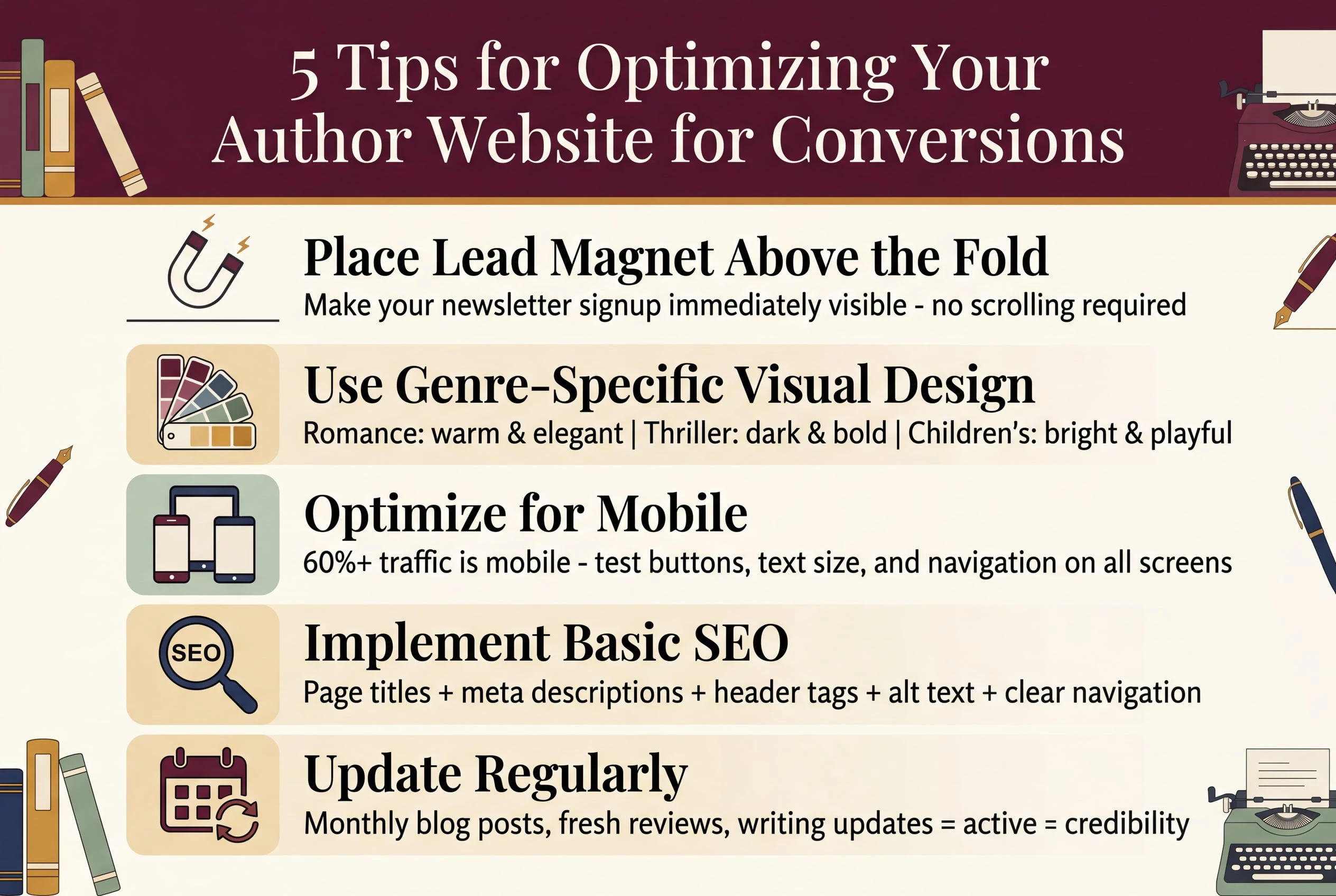
Tip 1: Place Your Lead Magnet Above the Fold
"Above the fold" means visible without scrolling. Your most important conversion element, typically your lead magnet or newsletter signup, should be immediately visible when someone lands on your homepage. James Clear does this perfectly with his free chapter offer. Don't make visitors hunt for how to connect with you.
Tip 2: Use Genre-Specific Visual Design
Your website design should signal your genre within seconds. Romance authors might use elegant fonts and warm colors. Thriller writers might choose dark, high-contrast designs. Children's book authors need bright, playful layouts. This visual shorthand helps visitors immediately understand what kind of books you write and whether they're in the right place.
Tip 3: Optimize for Mobile
If your author website doesn't work perfectly on phones and tablets, you're losing more than half your potential audience. Test your site on multiple devices. Make sure buttons are large enough to tap easily, text is readable without zooming, and navigation works smoothly on small screens.
Tip 4: Implement Basic SEO
Search engine optimization doesn't need to be complicated. Start with these fundamentals: write descriptive page titles that include relevant keywords, add meta descriptions to every page, use header tags (H1, H2, H3) to structure your content, include alt text for all images describing what they show, and create a logical site structure with clear navigation. These basics help search engines understand your site and rank it for relevant searches.
Tip 5: Update Regularly
Nothing kills credibility faster than an abandoned website with outdated information. Even if you're between book launches, find ways to keep your site current. Update your blog monthly, refresh your homepage banner for seasons or holidays, add new reviews as they come in, or share writing updates. Regular activity signals to both visitors and search engines that you're an active, engaged author worth following.
Transcend Genre and Publication Status
You don't need to be a web designer or spend thousands of dollars to create a website that works. AI website builders like Wegic have democratized professional web design, letting you build a custom author website through simple conversation in minutes instead of weeks. The authors who succeed online aren't necessarily the most talented writers; they're the ones who make it easy for readers to discover them, connect with them, and ultimately buy their books.
Start building your author website today. Your future readers are already searching for their next favorite author. Make sure they can find you.
Frequently Asked Questions
Do I need a website as a new author?
Yes, absolutely. While 87.5% of authors have websites, the ones who build them early have a significant advantage. Your website serves as your home base on the internet, a place you control completely unlike social media platforms that can change algorithms or disappear. Even if you're still working on your first book, having a website lets you start building an email list and establishing your author brand. The authors who wait until after publication to build their platform struggle much more than those who start early.
What's the best platform for author websites?
The best platform depends on your technical comfort level and budget. WordPress offers maximum control and customization but requires more technical knowledge and ongoing maintenance. Wix and Squarespace provide easier drag-and-drop interfaces but with less flexibility. For authors who want professional results without the technical headaches, AI website builders like Wegic offer the best balance: you get custom-designed sites through simple conversation without needing to learn complicated tools or write any code.
How much does an author website cost?
Traditional author websites typically cost $200-500 for initial setup plus $15-50 per month for hosting and maintenance. If you hire a designer, expect to pay $1,000-5,000 for custom work. However, modern website builders have dramatically reduced these costs. Wegic offers free tiers for basic sites and premium plans starting around $15 per month for advanced features. The total cost depends on your needs, but you can absolutely create a professional author website for under $200 per year.
Should I blog on my author website?
Blogging helps but isn't mandatory. Regular blog posts improve SEO, give readers reasons to return, and help you build authority in your genre. However, blogging requires consistent effort. If you can commit to monthly posts about your writing process, industry insights, or topics related to your books, it's worthwhile. If blogging feels like a burden that takes time away from actual writing, skip it and focus on other content like newsletter updates or social media. Quality matters more than quantity.
How do I drive traffic to my author website?
Start with your existing networks: share your website on social media, include the link in your email signature, mention it in your author bio on Amazon and Goodreads, and add it to your business cards. Beyond that, focus on SEO by creating quality content with relevant keywords, guest post on book blogs and writing websites with links back to your site, engage in online writing communities and forums, run targeted social media ads during book launches, and collaborate with other authors for cross-promotion. Building traffic takes time, but consistent effort compounds.
Can I sell books directly from my website?
Yes, and you should consider it. While only 29.6% of authors currently sell directly from their websites, those who do keep significantly more profit per sale compared to selling through Amazon or other retailers. You can use e-commerce platforms like WooCommerce, Shopify, or built-in store features from website builders. Selling direct also lets you capture customer email addresses for future marketing. However, don't abandon Amazon and other retailers; use direct sales as an additional revenue stream, not a replacement.