Where to Set Up Your Online Store: Best E-commerce Platforms for Small Businesses Now
Find the best e-commerce platforms for your small business. Our 2025 guide compares top online store builders like Shopify, Wix, and Wegic.AI to help you choose the perfect e-commerce solution for your business.

Embarking on the journey of entrepreneurship is an exciting venture, but it often comes with a crucial question: where do you sell your products online? The vast landscape of e-commerce platforms can be overwhelming, with countless options promising to be the perfect fit for your brand. Choosing the right e-commerce platform is arguably the most important decision a small business owner will make, as it forms the foundation of their digital presence, marketing efforts, and operational efficiency. The best choice isn’t always the most popular one; it’s the one that aligns with your specific needs, budget, and long-term goals. This comprehensive guide will explore the top contenders in the market today, helping you navigate the options and find the ideal home for your small biz online store.
The Core Features Every Small Business Should Prioritize
Before you can choose the right e-commerce platforms, it's essential to understand the key features that will determine your success. A platform that looks great on the surface may hide hidden costs or lack the necessary tools for growth. When evaluating your options, consider these critical elements to ensure you're making a strategic decision for your business.
- Ease of Setup and Use: For a busy entrepreneur, time is a precious commodity. The best online shops for small business owners offer intuitive, no-code interfaces that allow you to launch your store quickly and efficiently. Look for drag-and-drop builders and pre-designed templates that simplify the process, so you can focus on your products rather than complex coding.
- Transparent Pricing: Budgeting is a significant concern for any small business. A good platform will have clear, upfront pricing with no hidden fees. Understand the difference between monthly subscription costs, transaction fees, and the price of add-ons or apps. Being able to predict your total cost of ownership is vital for managing your finances effectively.
- Mobile-First Design: Today’s consumer shops on the go. A responsive design is no longer a luxury but a necessity. Your chosen platform must offer themes that are automatically optimized for mobile devices, ensuring a seamless and visually appealing shopping experience for all customers, regardless of the device they use.
- Flexible Payment Options: Catering to a diverse customer base means offering multiple ways to pay. The platform should support various payment methods, including major credit cards, digital wallets like Apple Pay and Google Pay, and modern options like buy-now-pay-later (BNPL) services.
- Customization Capabilities: Your online store is an extension of your brand. The platform should provide ample opportunities to customize your storefront, product pages, and checkout process to reflect your brand's unique identity. This includes everything from fonts and colors to custom code, if you have the technical expertise.
- Built-in Marketing and SEO Tools: Driving traffic to your site is just as important as having a great store. Look for platforms that offer integrated marketing tools, such as the ability to generate discount codes, run email campaigns, and perform basic SEO management. This ensures your store is visible in search results and can effectively attract customers.
- Integrations with Business Software: As your business grows, you’ll need to integrate your store with other tools. Compatibility with CRM systems, accounting software like QuickBooks, and inventory management platforms is crucial for streamlining operations and avoiding manual data entry.
- Scalability: A great e-commerce solution must be able to grow with you. The platform should handle an increasing number of products, higher traffic volumes, and new sales channels without a complete overhaul.
- Support and Security: The security of your customers' data and the reliability of your store are paramount. Ensure the platform provides robust customer support and includes essential security features like SSL certificates and secure hosting.
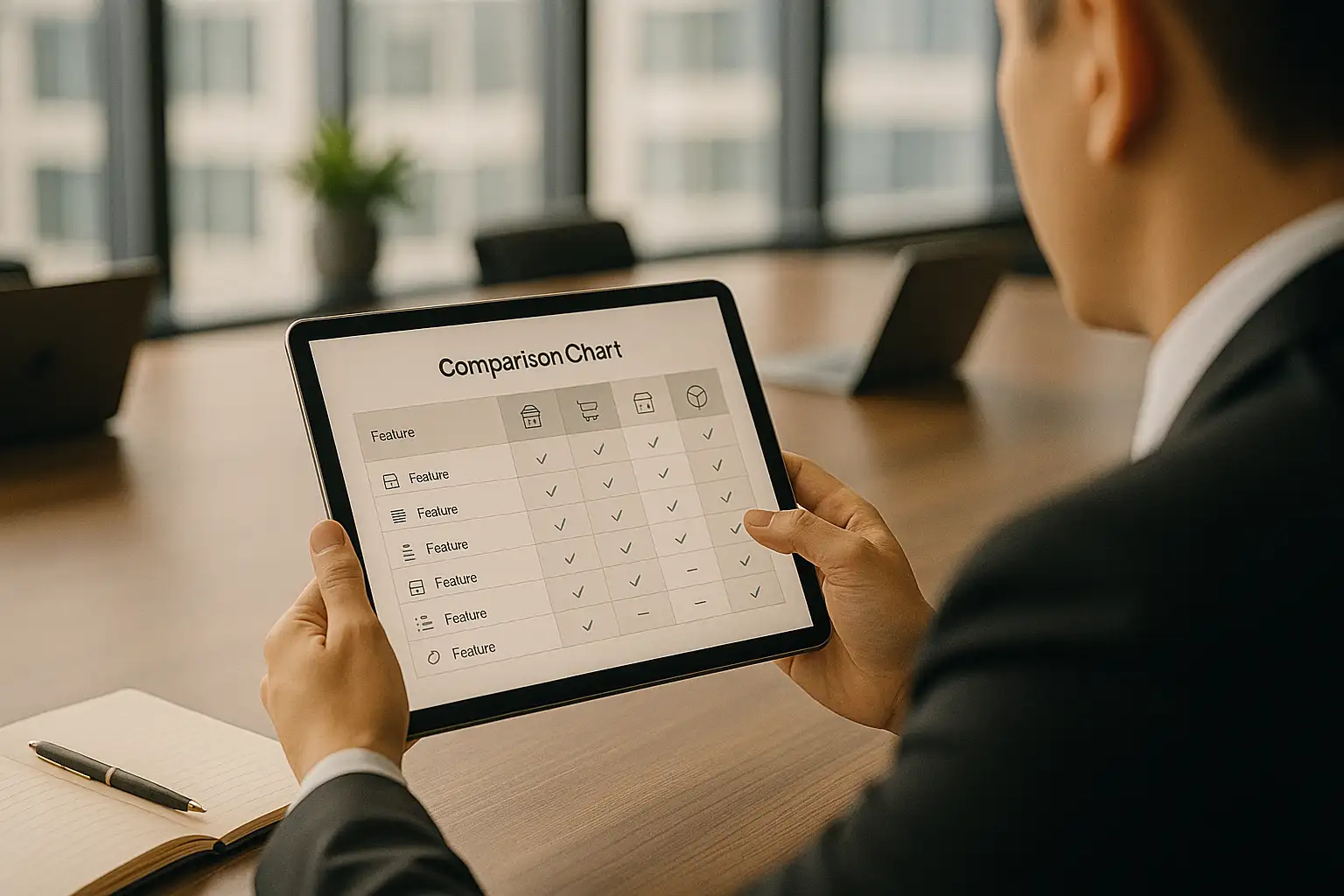
A person's hands navigate a tablet, comparing features of different online store builder platforms.In-Depth Platform Reviews: The Best E-commerce Platforms for Small Biz
With a clear understanding of what to look for, let's explore the leading e-commerce platforms and see how they stack up.
Shopify: The All-in-One Powerhouse
For many, Shopify is synonymous with modern e-commerce. It's an all-in-one, hosted solution that has become a dominant force for a reason. Its user-friendly interface makes it incredibly accessible for beginners, while its extensive features and app ecosystem provide a powerful foundation for businesses of all sizes.
- Best For: Shopify is the ideal choice for most small business owners who want to get an online store up and running quickly and have plans to scale. Its intuitive design means you can launch your store in a matter of days.
- Pros: The platform boasts a massive library of apps that can add almost any functionality you can imagine, from advanced inventory management to sophisticated marketing automation. Its integrated payment gateway, Shopify Payments, simplifies the checkout process, and its 24/7 customer support is renowned for its quality and responsiveness. The robust POS (Point of Sale) system also makes it a great option for businesses with a physical storefront.
- Cons: While the core plans are affordable, costs can increase significantly as you add premium apps and features. Shopify also charges transaction fees if you choose to use an external payment gateway, which can eat into your profits.
- Pricing: Shopify offers a range of plans. The Basic plan starts at around $39 per month, while the mid-tier and advanced plans offer more features for a higher price point.
Wix: The Drag-and-Drop Innovator
Wix has built its reputation on empowering users to create stunning websites with its famous drag-and-drop editor. Over the years, its e-commerce capabilities have evolved to become a strong, standalone offering, especially for those who prioritize design. This makes the Shopify vs Wix debate a key consideration for many new entrepreneurs.
- Best For: Wix is a fantastic option for creatives, artists, and small businesses that want a beautiful, highly customized website with integrated e-commerce features. It’s perfect for brands where visual storytelling is key.
- Pros: The design freedom offered by Wix is nearly unparalleled. Its intuitive builder allows you to place elements exactly where you want them, and it offers hundreds of aesthetically pleasing, mobile-optimized templates. The platform includes a suite of marketing and SEO tools, making it easy to manage your entire online presence from a single dashboard.
- Cons: While its e-commerce functionality is solid, it may not be as feature-rich as a dedicated platform like Shopify for high-volume sales. Once you select a template, changing it can be a challenge, so choosing the right design from the start is crucial.
- Pricing: Wix offers several e-commerce-specific plans starting from around $29 per month, which include features like secure payment processing and customer accounts.
BigCommerce: The Scalability-Focused Solution
BigCommerce is an e-commerce solution built for growth. It’s known for its powerful, built-in features that cater to businesses with large product catalogs and those that are focused on scaling rapidly.
- Best For: BigCommerce for small business is the perfect choice for ambitious entrepreneurs who are planning for rapid growth and need a platform that can handle a high volume of products and traffic without additional costs.
- Pros: A key differentiator for BigCommerce is its no-transaction-fee policy, which can lead to significant savings for high-volume stores. The platform includes a wide array of advanced features out of the box, such as robust SEO tools, multi-channel selling capabilities, and comprehensive analytics. It’s designed to be a long-term e-commerce solution that can grow with you.
- Cons: The platform can have a steeper learning curve for beginners compared to Shopify or Wix. Pricing is also tiered based on annual sales, which can feel restrictive for some businesses.
- Pricing: Plans start at about $39 per month, with higher tiers automatically unlocking more features as your sales grow.
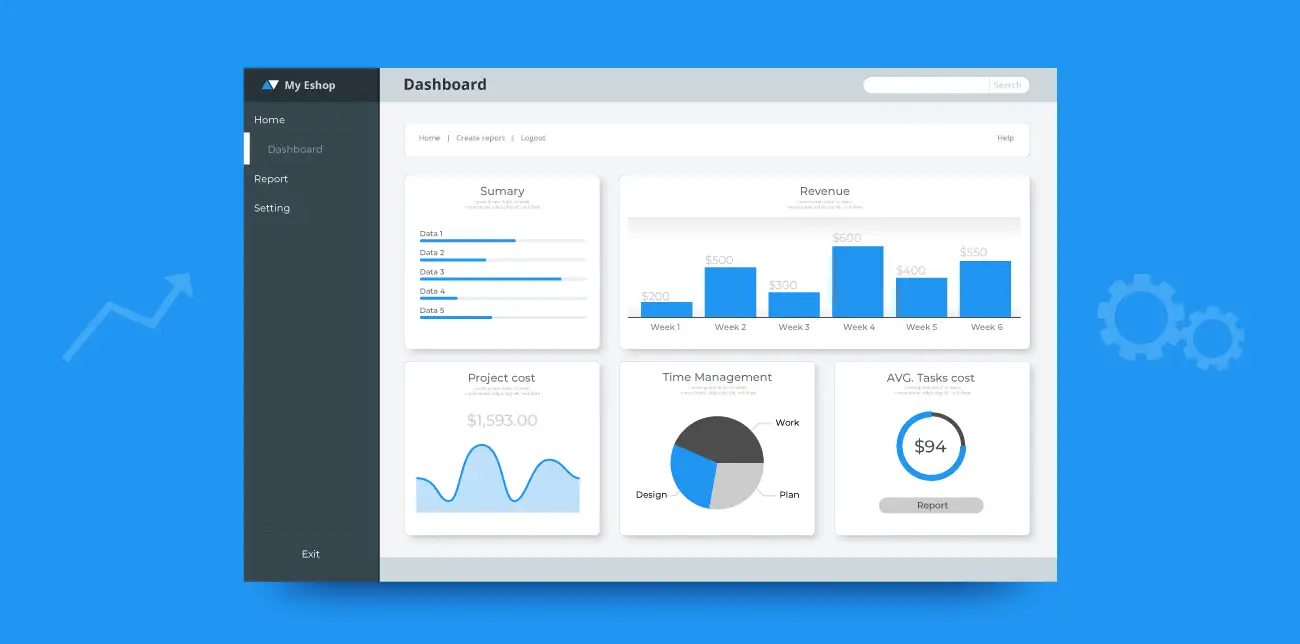
Comparison of three ecomm platforms dashboards, showing the different user interfaces for managing an online store.The Open-Source Advantage and the AI Revolution
Not all online store builder platforms follow the traditional hosted model. Some offer unparalleled flexibility, while new AI-powered solutions are redefining what it means to build an online store.
WooCommerce: The Flexible WordPress Plugin
For those who value complete control and want to integrate an online store with an existing content-rich website, WooCommerce is the go-to solution. It’s a free, open-source plugin for WordPress, the world's most popular content management system.
- Best For: Businesses that already use WordPress or those with the technical know-how to manage their own hosting and security. It offers limitless customization for a truly unique online presence.
- Pros: As a free plugin, the barrier to entry is extremely low. WooCommerce provides full ownership of your site, its data, and its code. The WordPress ecosystem offers thousands of free and premium themes and plugins, allowing for a level of customization that is simply not possible with all-in-one platforms.
- Cons: The "free" aspect can be misleading. You are responsible for all other costs, including hosting, domain registration, and security. It requires a certain level of technical expertise to set up and maintain, and the total WooCommerce costs for hosting and premium plugins can add up quickly.
- Pricing: The core WooCommerce plugin is free, but you must factor in the cost of hosting, a domain name, and any premium plugins or themes.
Squarespace: The Visual Brand's Best Friend
Known for its stunning, minimalist templates, Squarespace is a favorite among artists, designers, and small businesses where aesthetics are a top priority. It offers a seamless, all-in-one experience for building both a website and a store.
- Best For: Creative professionals, artists, and lifestyle brands that need a beautiful, professional website with robust e-commerce capabilities. It’s perfect for selling both physical and digital products.
- Pros: Squarespace is praised for its elegant, mobile-responsive templates that make any brand look high-end. The platform is easy to use, and all essential features, including hosting and a free custom domain for the first year, are bundled into the price.
- Cons: Compared to Shopify or BigCommerce, the app and extension market is smaller, which can limit functionality for more complex stores. While its e-commerce tools are solid, they are not as powerful as those of dedicated platforms for high-volume sales.
- Pricing: E-commerce plans start around $27 per month when billed annually, which provides a comprehensive package with no extra transaction fees.

A close-up of handmade jewelry on a website, showcasing the clean, professional design typical of Squarespace for small business.Comparison Table: Choosing Your Platform
To help you make a final decision, here’s a quick reference table summarizing the key aspects of each platform.
- Shopify:
- Best For: All-purpose stores
- Starting Price: ~$39/month
- Key Pro: The massive app store and a robust, all-in-one ecosystem.
- Key Con: Transaction fees if not using Shopify Payments.
- Wix:
- Best For: Design-focused brands
- Starting Price: ~$29/month
- Key Pro: Unparalleled design freedom with a drag-and-drop editor.
- Key Con: Not as scalable for high-volume, feature-heavy stores.
- BigCommerce:
- Best For: Scaling businesses
- Starting Price: ~$39/month
- Key Pro: No transaction fees and powerful built-in features.
- Key Con: Can be more complex for beginners to set up and manage.
- Squarespace:
- Best For: Creatives and visual brands
- Starting Price: ~$27/month (annually)
- Key Pro: Stunning, elegant, and mobile-optimized templates.
- Key Con: Smaller app ecosystem compared to other platforms.
- WooCommerce:
- Best For: Full control and customization
- Starting Price: Variable (free plugin)
- Key Pro: Limitless customization and total ownership of your site.
- Key Con: Requires technical expertise and manual maintenance.
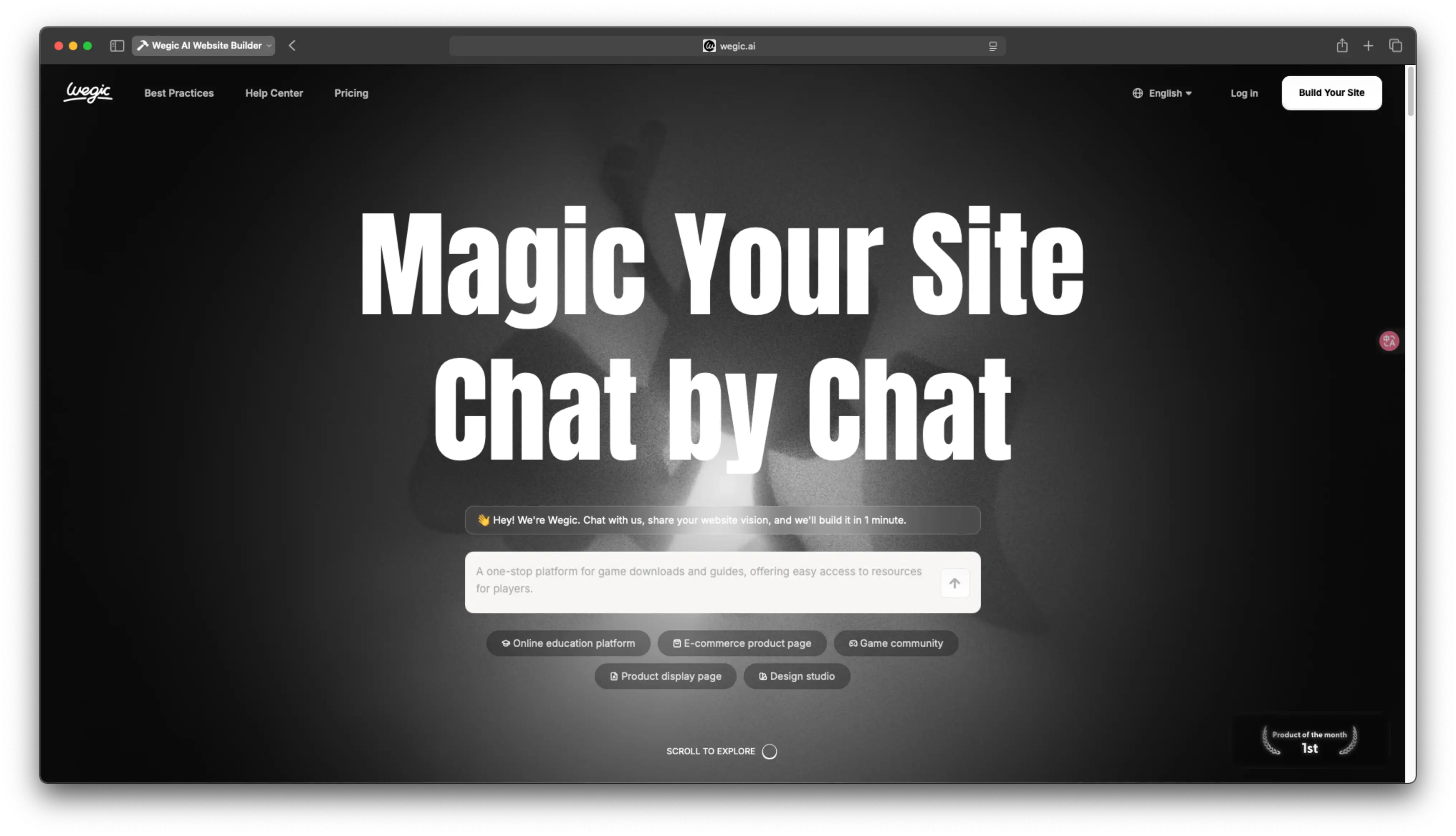
- Wegic.AI:
- Best For: Non-technical founders
- Starting Price: Variable (free plan)
- Key Pro: Build a complete website in minutes using a conversational AI.
- Key Con: It's a new player in a very competitive market, so its long-term scalability and support may still be evolving.

An entrepreneur examines a comparison chart of e-commerce platforms on a tablet, planning their e-commerce solution.Making the Right Choice for Your Business
The decision of where to set up your online store is a critical one that will shape your business's future. There is no single "best" platform; the right choice is a reflection of your unique vision, budget, and skillset. Whether you are a creative individual seeking a beautiful, design-centric platform like Squarespace for small business, a new entrepreneur who needs the comprehensive and user-friendly ecosystem of Shopify, or a tech-savvy builder who wants the complete freedom of WooCommerce, a perfect match exists.

A diverse group of business owners celebrates their successful small business online store launch.The advent of AI-powered platforms like Wegic.AI further expands your options, offering a new path for those who want to bypass traditional web design and build a professional site in minutes. By carefully evaluating your needs against the key features outlined in this guide and taking advantage of free trials, you can confidently select the e-commerce platforms that will serve as the engine for your business growth. Your online store builder is the digital home of your brand, and with the right foundation, you can turn your entrepreneurial dreams into a thriving reality.
Written by
Kimmy
Published on
Mar 12, 2026
Share article
Read more
Our latest blog
Webpages in a minute, powered by Wegic!
With Wegic, transform your needs into stunning, functional websites with advanced AI
Free trial with Wegic, build your site in a click!
What kind of website do you want to build?